FAA Lifts Nationwide Ground Stop After Critical Air Traffic Communication Failures Disrupted U.S. Aviation

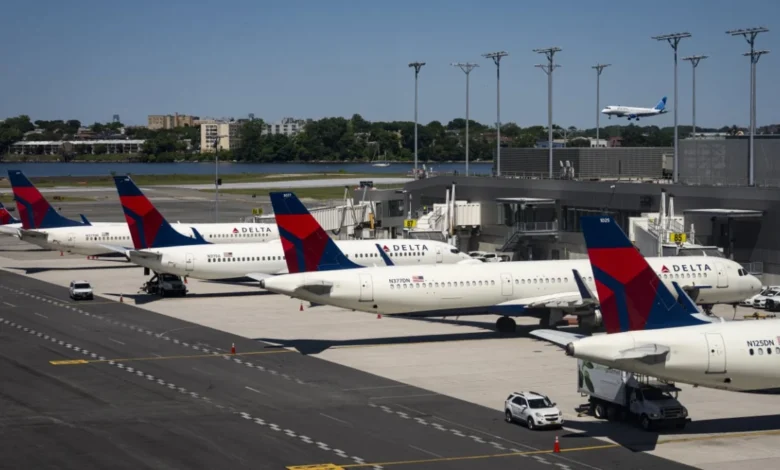
The Federal Aviation Administration officially lifted a sweeping nationwide ground stop that temporarily halted all departing domestic flights across United States airports, plunging the national transportation network into sudden chaos. The unprecedented directive, which was enacted during a busy afternoon travel window, sent ripples of anxiety through terminal buildings nationwide as passengers, airline carriers, and federal regulators scrambled to assess the scope of the disruption. According to official updates released late Friday evening, the regulatory body rescinded the grounding order at approximately 8:41 p.m., paving the way for a gradual and highly complex recovery process as airlines attempt to untangle snarled schedules, reposition stranded aircraft, and accommodate frustrated travelers.
The sudden crisis began unfolding during the early afternoon hours when the Federal Aviation Administration issued an urgent directive ordering a complete ground stop for all departing flights at airports across the country. The emergency action was triggered by severe communication malfunctions that heavily impacted multiple critical Air Route Traffic Control Centers. These regional facilities serve as the invisible backbone of the American airspace architecture, managing high-altitude en-route air traffic and ensuring safe separation intervals between commercial, cargo, and private aircraft as they traverse the nation. When the internal communication pathways binding these facilities together began to fail, regional controllers lost vital data feeds and verbal communication channels, forcing federal safety authorities to pull an emergency brake on the entire system to avert catastrophic mid-air incidents.
A Rare and Historic Intervention in American Airspace
A nationwide ground stop of this magnitude represents an exceptionally rare event in the history of modern commercial aviation. Industry historians and federal records indicate that total nationwide ground stops have only been ordered twice before under peacetime circumstances. The first and most somber instance occurred immediately following the coordinated terrorist attacks of September 11, 2001, when the entire United States airspace was entirely cleared of civilian traffic for several days.
The second modern occurrence took place in January 2023, when a corrupted database file crippled the Notice to Air Missions, commonly known as NOTAM, which provides essential safety alerts and hazard warnings to pilots before takeoff. That particular technical failure resulted in a nationwide ground stop that lasted roughly 90 minutes, delaying thousands of flights and prompting intense congressional scrutiny regarding the modernization timelines of aging federal aviation technology infrastructure. Friday’s communication breakdown marks the third time in aviation history that the federal government has been forced to halt the nation’s air traffic machinery entirely due to an internal system failure.
Practical Strategies for Tracking Flights During System Disruptions
For millions of passengers caught in the logjam of the nationwide ground stop, obtaining accurate, real-time flight statuses became an immediate priority. When entire networks experience disruptions, relying on traditional terminal departure boards can often lead to confusion due to lagging updates. Travel technology experts recommend several robust methods to monitor flight statuses independently.
If travelers possess their specific flight number, the most rapid approach remains utilizing major search engines such as Google. Entering a flight number directly into the search bar generates an integrated, live tracking module at the top of the search results page, pulling real-time data from global aviation registries. Alternatively, passengers can navigate directly to the dedicated flight status portals maintained by commercial carriers. Major airlines—including United Airlines, Delta Air Lines, and American Airlines—operate robust tracking systems where customers can input either their specific flight numbers or origin-and-destination city pairs to view real-time movement and estimated departure adjustments.
For users seeking a comprehensive look at the entire airspace, independent tracking platforms such as FlightAware provide granular visibility. These services allow individuals to monitor specific aircraft paths, provided they know the routing details. Furthermore, Apple ecosystem users possess built-in utilities: entering a flight number into the iOS Spotlight search bar activates an integrated live tracking card. Users can also text a flight number to contacts within the Messages app; tapping the resulting underlined flight number preview instantly launches a pop-up window detailing the aircraft’s current status, altitude, and expected arrival adjustments.

The Broader Context: Software Outages and Modernization Initiatives
The timing of the communication failure has drawn intense scrutiny from aviation analysts, cybersecurity experts, and lawmakers, coming on the heels of several high-profile technological anomalies across the technology and transportation sectors. Just one day prior to the FAA’s emergency order, Microsoft officially issued apologies for a massive, widespread global service outage that disrupted enterprise users relying on cloud productivity tools, including Outlook, Teams, and Azure infrastructure. While federal authorities have not formally linked the Microsoft cloud disruptions to the air traffic control communication failures, the close temporal proximity has fueled widespread public speculation regarding the fragility of interconnected digital systems.
Compounding the atmosphere of technological transition, the disruption also coincided with reports detailing the ongoing modernization of the nation’s skies. Just prior to the incident, industry publications reported that the Federal Aviation Administration was actively expanding the rollout of artificial intelligence-powered advisory tools designed to optimize air traffic flow and manage chronic congestion across dense regional airspaces. While the agency has maintained that the AI tools are intended to assist controllers rather than automate core safety communication networks, the dual narrative of high-tech integration and fundamental infrastructure vulnerabilities has intensified the ongoing national debate regarding federal IT modernization spending.
Official Responses and Ongoing Investigations
As the dust begins to settle following the lifting of the ground stop, federal lawmakers, transportation unions, and the Department of Transportation are demanding comprehensive transparency regarding the root cause of the communication failure. Representatives from the National Air Traffic Controllers Association have frequently warned lawmakers that critical air traffic control infrastructure suffers from chronic underfunding, outdated hardware, and legacy software systems that are increasingly difficult to maintain in an era of surging air travel demand.
The Federal Aviation Administration has announced that an immediate, comprehensive technical audit will be launched to investigate the exact nature of the communication breakdown at the affected Air Route Traffic Control Centers. Agency leadership is expected to brief congressional committees on Capitol Hill in the coming days to outline the specific hardware or software vulnerabilities that precipitated the nationwide grounding order.
Implications for Travelers and the Aviation Industry
The immediate economic and logistical fallout from the nationwide ground stop will take days to fully resolve. Even though the FAA formally lifted the restriction late Friday evening, the cascading effect of thousands of delayed and canceled flights means that airline scheduling departments face a monumental recovery challenge. Planes are out of position, flight crews have been displaced past their mandatory federal rest limits, and airport terminals remain congested with weary travelers seeking rebooking assistance.
For the broader aviation industry, the incident serves as another stark reminder of the delicate balance underpinning modern global mobility. As air traffic volume continues to scale toward pre-pandemic highs—and potentially surpass them—the resilience of ground control networks, communication channels, and digital infrastructure remains a paramount national security and economic priority. Airlines are strongly advising all passengers scheduled to fly over the weekend to check their flight statuses directly through official carrier applications well in advance of arriving at the airport, anticipate rolling schedule adjustments, and review their carrier’s passenger rights policies regarding meal vouchers, hotel accommodations, and rebooking options in the wake of system-wide weather and technical irregularities.