SaaStr Founder Jason Lemkin and Granola VP of Sales Bardia Shahali to Host Exclusive San Francisco GTM Series Event on AI-Driven Sales Strategies


The shifting paradigm of modern B2B sales organizations is set to take center stage on December 8, as SaaStr founder Jason Lemkin joins Bardia Shahali, Vice President of Sales at Granola, for an intimate, highly focused industry gathering at Granola’s San Francisco headquarters. Abandoning the traditional format of massive convention centers, lengthy badge lines, and towering auditorium stages, GTM Series #05 is designed as an unvarnished, boots-on-the-ground working session. The event aims to strip away the corporate varnish surrounding artificial intelligence in the workplace, offering attendees a candid, transparent examination of how modern go-to-market teams are actually selling, scaling, and surviving in an increasingly automated software ecosystem.
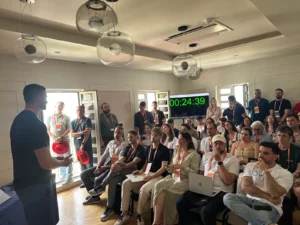
Unlike standard keynote presentations that rely on high-level theories and generalized predictions, this exclusive meetup offers a direct, practitioner-led dialogue. Industry leaders will convene in a standard boardroom setting to dissect the operational realities of deploying autonomous software agents, managing human-AI hybrid workforces, and redefining the traditional quota-carrying roles that have anchored B2B sales for decades.
The Anatomy of a Radical Shift: From Traditional Teams to Autonomous Agents
To understand the urgency behind the upcoming San Francisco session, one must examine the dramatic structural evolution that has taken place within leading technology companies over the past 24 months. Not long ago, the operational blueprint for a growing B2B software venture relied on a familiar, standardized sales engine. Organizations typically employed a balanced mix of roughly ten Sales Development Representatives (SDRs) and Account Executives (AEs). This human-heavy model came with a predictable set of operational challenges: lengthy ramp-up times for new hires, standard software tool stacks, rigorous management overhead, and a perpetual cycle of recruitment and turnover driven by SDR burnout.
Today, however, the operational landscape at organizations like SaaStr has undergone a radical compression and reinvention. The traditional roster of ten sales professionals has been replaced by a lean configuration consisting of a single Account Executive supported by more than twenty specialized AI agents operating continuously in production environments. These autonomous digital workers handle core revenue-generating workflows, ranging from securing high-value event sponsorships and processing inbound inquiries to executing intricate outbound prospecting campaigns. Crucially, these agents also manage the vast, neglected long tail of low-priority leads that human sales teams historically lacked the bandwidth to pursue, effectively unlocking hidden revenue streams from dormant pipelines.
Conversely, hyper-growth AI application developer Granola represents a fascinating counter-narrative within the same economic landscape. While some organizations are aggressively downsizing their human headcount in favor of automation, Granola is actively scaling up its human sales organization to meet surging enterprise demand. Bardia Shahali finds himself building a rapidly expanding sales apparatus right at the epicenter of this technological upheaval. Balancing the onboarding of human talent with the deployment of cutting-edge machine learning tools, Shahali is navigating the delicate equilibrium between automation and human touch in real time.
The December 8 session is strategically framed around this tension. Rather than prescribing a single, universally applicable formula, Lemkin and Shahali will contrast their divergent organizational approaches. Lemkin represents the lean, agent-first restructuring model, while Shahali embodies the high-growth, human-augmented scaling strategy. Both methodologies hold validity depending on a company’s operational maturity, Average Contract Value (ACV), and core go-to-market motion. The event will unpack how these variables dictate the optimal blend of silicon and carbon within a modern revenue organization.
Background Context: The AI Agent Gold Rush in Modern Enterprise Software
The convening of GTM Series #05 arrives against a backdrop of sweeping transformation across the enterprise software sector. Throughout 2024 and 2025, venture capital and corporate budgets shifted decisively away from basic conversational chatbots and toward autonomous agentic workflows capable of executing multi-step business processes with minimal human intervention. Sales and marketing departments, traditionally among the highest consumers of operational labor and software licensing costs, became immediate testing grounds for these advanced capabilities.
As large language models matured from predictive text generators into reasoning engines capable of utilizing external Application Programming Interfaces (APIs), the definition of sales productivity shifted dramatically. Companies discovered that generative AI could draft hyper-personalized outbound sequences at scale, analyze earnings calls to identify trigger events, update Customer Relationship Management (CRM) databases autonomously, and conduct initial qualification calls without human fatigue.
However, this technological leap introduced complex managerial dilemmas. Sales leaders were suddenly forced to determine how compensation structures should apply to agent-generated pipeline, how to maintain brand voice consistency across automated touchpoints, and how to train human account executives to manage fleets of digital assistants rather than junior human sales reps. These foundational anxieties created an urgent demand for peer-to-peer working sessions where sales executives could share unfiltered insights regarding what works in practice versus what remains marketing hype.
Granola’s Rising Prominence in the B2B Ecosystem
Granola has quickly established itself as one of the most closely watched productivity and AI applications within the B2B software community. Designed to capture, summarize, and synthesize meeting notes without relying on intrusive, standalone virtual meeting bots, the platform captured significant market traction by integrating seamlessly into the natural workflows of knowledge workers and enterprise sales teams.
Because Granola sits at the intersection of everyday professional communication and artificial intelligence, the company’s internal sales and go-to-market strategies serve as a bellwether for the broader software industry. Bardia Shahali’s position as Vice President of Sales places him on the front lines of enterprise deployment, customer feedback loops, and internal tool adoption. Shahali brings a practitioner’s perspective to the table, having spent his career scaling revenue operations and managing enterprise sales cycles. His daily oversight of Granola’s commercial expansion provides him with unique visibility into how buyers are reacting to AI-driven products, making him an ideal foil for Lemkin’s provocative views on organizational downsizing and automation.
Event Logistics, Format, and Registration Protocols
GTM Series #05 is structured intentionally to foster deep, candid dialogue rather than superficial networking. By capping attendance and removing the formalities of a standard trade show floor, the organizers intend to create an environment conducive to problem-solving and tactical debate.
- Date: December 8
- Location: Granola Headquarters, San Francisco, California
- Format: Unfiltered fireside chat followed by an extensive, interactive Q&A session and informal networking.
- Featured Speakers: Jason Lemkin (Founder, SaaStr) and Bardia Shahali (VP of Sales, Granola).
- Registration: Attendance is strictly application-based, with requests to join managed via the official Luma platform at luma.com/gtm-series-jason-lemkin.
Prospective attendees—ranging from early-stage startup founders and seasoned Chief Revenue Officers to enterprise sales directors and modern go-to-market strategists—are encouraged to bring their most challenging operational inquiries. The agenda explicitly invites tough questions regarding data governance, agent error rates, quota allocation in automated environments, and the long-term career trajectory of human sales professionals. Following the moderated discussion, both Lemkin and Shahali will remain on-site to participate in extended peer discussions and informal networking.
Broader Industry Implications and Future Outlook
The discussions slated for GTM Series #05 highlight a broader, structural realignment that will likely define the enterprise software industry for the remainder of the decade. As autonomous agents transition from experimental novelties into core production infrastructure, the traditional career ladder within sales is undergoing a profound mutation. For decades, the standard path into enterprise account management began with cold-calling outbound prospecting as an SDR, progressing gradually toward closing complex deals as an AE.
If lean organizations can successfully replace entire tiers of entry-level SDRs with software agents managed by a single high-performing executive, the traditional talent pipeline faces an existential reckoning. Junior professionals will need to cultivate higher-order analytical, technical, and strategic skills much earlier in their careers, shifting their value proposition from manual execution to orchestration, prompt architecture, and relationship synthesis.
At the same time, companies adopting aggressive automation strategies must navigate the delicate psychological threshold of their prospective buyers. In an era where B2B buyers are inundated with millions of hyper-personalized, AI-generated emails and automated connection requests, the ability to project authentic human empathy, strategic clarity, and genuine partnership becomes an increasingly scarce and valuable commodity. This paradox—utilizing maximum automation to buy back the time required for deep human connection—will undoubtedly form the core of the debate between Lemkin and Shahali in San Francisco.
As the corporate world continues to grapple with the operational realities of the artificial intelligence boom, sessions like GTM Series #05 provide a vital forum for pragmatic experimentation. By moving past the theoretical hype and examining the granular realities of running production-grade AI sales agents alongside human teams, industry leaders are beginning to map out the contours of the next generation of business software commerce. For those participating on December 8, the insights gathered inside Granola’s San Francisco headquarters will serve as a critical tactical playbook for navigating the automated revenue landscape of tomorrow.
Related posts: