Natera revolutionizes clinical laboratory operations with the deployment of an agentic AI system for automated equipment maintenance and support

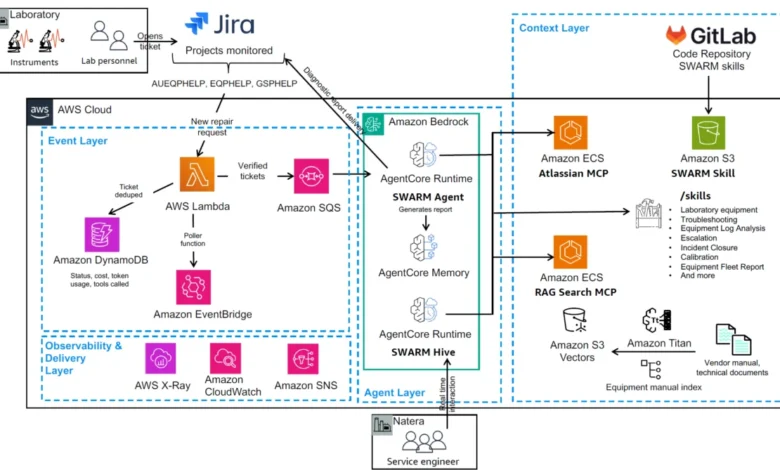
In the high-stakes environment of clinical diagnostics, where every minute of equipment downtime can translate into delayed patient reporting, the laboratory engineering team at Natera has achieved a significant operational breakthrough. Led by Ariel Jirau, the team has successfully deployed SWARM (Systematic Workflow Analytics and Resolutions Manager), an agentic AI architecture designed to capture and deploy institutional knowledge at scale. By leveraging Amazon Bedrock AgentCore, Natera has transformed its approach to instrument maintenance, achieving a 130-fold improvement in first response times and establishing a new paradigm for AI integration in regulated clinical settings.
The challenge of maintaining high-precision laboratory infrastructure is twofold: the complexity of the equipment and the fragility of the human knowledge base required to service it. Natera operates a vast fleet of diagnostic instruments, each with idiosyncratic failure modes and unique maintenance requirements. Previously, the resolution of technical issues relied heavily on the deep, individual expertise of senior technicians. When these personnel departed the company, the institutional knowledge they possessed—often undocumented or trapped in legacy silos—was effectively lost. This knowledge gap, combined with a daily volume exceeding 65 support tickets across three Jira queues, created a bottleneck. With an average first response time of 17.4 hours, the status quo was unsustainable for a clinical laboratory where speed is intrinsic to the value of patient results.
The development of SWARM began as a response to the urgent need for a scalable, automated diagnostic layer. The engineering team sought to move away from reliance on individual tribal knowledge toward a system that could standardize troubleshooting while maintaining the high level of accuracy required in a HIPAA-regulated environment. The project followed a deliberate, multi-phase development cycle, beginning with an initial analysis of the failure points in the existing ticketing system. Following a rigorous selection process, the team opted for Amazon Bedrock AgentCore, identifying it as the optimal managed runtime to handle agent orchestration, security, and integration without the overhead of managing custom infrastructure.
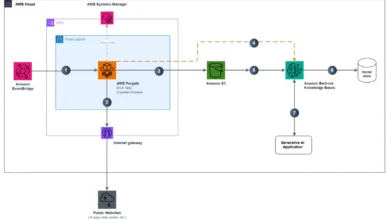
The architecture of SWARM is built upon two distinct yet synergistic runtimes: the swarm-agent and the swarm-hive. The swarm-agent functions autonomously, scanning incoming tickets to generate structured diagnostic reports, complete with root-cause hypotheses and ranked troubleshooting steps, before a human engineer even opens the request. The swarm-hive, conversely, serves as an interactive environment where technicians can engage with the AI to upload diagnostic imagery, explore alternative troubleshooting pathways, and refine the agent’s reasoning. This two-tier system ensures that human oversight remains the final authority, effectively augmenting, rather than replacing, the engineering staff.
Security and compliance were the foundational pillars of the project. Operating within a clinical laboratory necessitates strict adherence to data governance and privacy standards. Natera utilized a keyless deployment model, incorporating OpenID Connect (OIDC) and AWS Security Token Service (AWS STS) to generate temporary, scoped credentials, thereby eliminating the risks associated with long-lived access keys. Furthermore, the system was architected to ensure that no patient-identifiable information (PII) ever reaches the vector index or the language model. By adhering to a Business Associate Agreement (BAA) with AWS, Natera ensured that the entire stack—from the document ingestion pipeline to the agentic runtime—remained HIPAA-eligible.
The efficacy of SWARM is rooted in the quality of its knowledge base. During the early stages of development, the team discovered that general-purpose retrieval systems were insufficient for the nuances of laboratory equipment. Consequently, they developed a custom document processing pipeline that utilizes Amazon Titan Text Embeddings to convert technical manuals, vendor documentation, and historical ticket data into searchable vectors. The team found that "data quality is a diagnostic accuracy problem first." By specifically targeting gaps in vendor documentation for the most frequently failing instrument families, they were able to boost diagnostic accuracy from 71 percent to 75 percent without requiring any modifications to the underlying machine learning models.
The skill library within SWARM is equally vital to its performance. Instead of embedding logic within static prompts, the Natera team created a versioned, modular library containing 33 distinct skills. These include 24 instrument-specific skills and nine cross-cutting workflow skills. By separating deterministic tasks—such as parsing Jira fields or formatting HTML reports—from the reasoning capabilities of the Large Language Models (LLMs), the system remains auditable and easily debuggable. If an incorrect diagnosis occurs, engineers can isolate the specific skill that failed, rather than attempting to troubleshoot the entire AI system.
Observability played a critical role in moving SWARM from a prototype to a production-ready tool. The team implemented comprehensive tracing using AWS X-Ray and Amazon CloudWatch. This allows for per-invocation monitoring, where every step of a diagnostic process is recorded, from ticket intake to the final output. In a regulated clinical setting, the ability to audit why an AI reached a specific conclusion is not merely an operational convenience; it is a regulatory requirement. The inclusion of an automated evaluation loop further ensures the system improves over time. Each diagnostic report generated by the agent is graded by engineers as Accurate, Partial, or Wrong. This feedback is fed back into the development cycle, allowing for continuous refinement of the knowledge base.
The quantitative results of the SWARM implementation are profound. Across a 90-day production evaluation period, the average first response time was reduced from 17.4 hours to approximately 8 minutes—an acceleration of roughly 130 times. Furthermore, the system achieved 96.2 percent coverage, meaning the vast majority of incoming support tickets receive an initial, automated diagnostic assessment without any manual intervention. The correlation between the system’s self-rated confidence labels and actual accuracy has provided engineers with a reliable indicator of when to trust the AI’s output and when to apply additional human scrutiny.
Looking toward the broader implications of Natera’s work, the SWARM project serves as a blueprint for other organizations in the healthcare and life sciences sectors. The combination of agentic AI with a structured, auditable, and compliant infrastructure demonstrates that highly complex, mission-critical workflows can be successfully automated. As laboratory environments continue to digitize and expand, the ability to convert institutional knowledge into a persistent, accessible, and evolving digital asset will likely become a primary competitive differentiator.
Industry analysts observe that Natera’s success highlights a shift in enterprise AI strategy. Rather than seeking "all-knowing" models, successful organizations are focusing on "agentic workflows" that are deeply integrated into existing operational systems like Jira and AWS. By building for observability, security, and continuous evaluation, Natera has mitigated the common pitfalls of hallucination and lack of interpretability that have hampered AI adoption in other sectors.
As the system matures, the Natera team expects the divergence between confidence tiers to become more pronounced, further sharpening the utility of the diagnostic reports. The scalability of the current architecture suggests that as new instruments are introduced to the laboratory, they can be integrated into the SWARM ecosystem with relative ease by expanding the skill library and the document pipeline.
The successful deployment of SWARM represents more than just an engineering achievement; it signifies a maturation of AI in the clinical sector. By successfully balancing the need for rapid technological innovation with the stringent requirements of clinical safety, Natera has provided a replicable framework for operational excellence. For other organizations facing similar challenges—where expertise is siloed, documentation is scattered, and downtime is costly—the SWARM methodology offers a clear path toward building reliable, agentic systems that serve as a force multiplier for human talent. The future of clinical lab operations appears to be one where technology acts not as a replacement for human skill, but as a robust, tireless partner in the pursuit of diagnostic accuracy.