The Strategic Architecture of Deep Work: A Sixty-Day Framework for Cognitive Mastery

The modern professional landscape is defined by an unprecedented density of cognitive friction. From the persistent ping of digital notifications to the predictable disruption of environmental noise, the ability to maintain sustained focus—often termed "deep work"—has become a scarce commodity. Research from the University of California, Irvine, indicates that it takes an average of 23 minutes and 15 seconds to regain deep focus after a single interruption. Given this baseline, the traditional approach to time management, which relies on willpower alone, is increasingly viewed by productivity experts as insufficient. A new systemic framework, structured over a 60-day period, seeks to move beyond mere "hacks" to build a foundational, hierarchical approach to human performance.
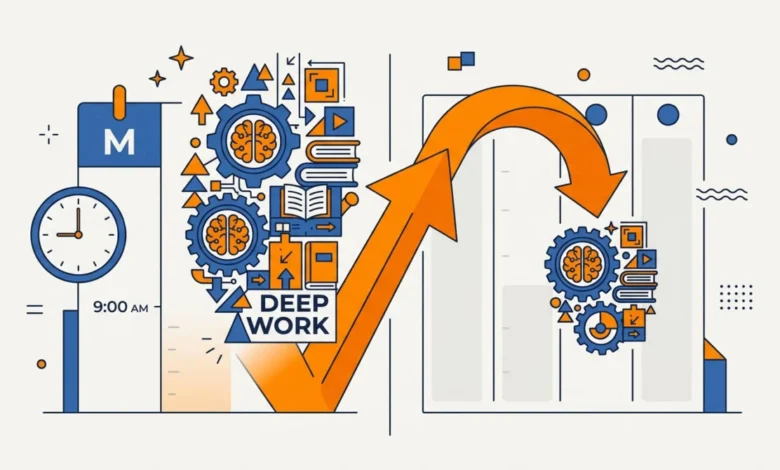
The concept of the "traffic jam rule" serves as a central pillar in this methodology. Much like a commuter who re-routes their journey to avoid predictable congestion, a professional must treat their schedule with the same spatial and temporal awareness. If a specific hour is consistently compromised by environmental variables—such as the recurring sound of a lawn mower on Monday mornings—the logical solution is not to grit one’s teeth and attempt to focus through the distraction. Rather, the strategy dictates a structural relocation of tasks to a "smoother route," be it a different room, a library setting, or an alternative time of day. Attempting to engage in complex cognitive labor while battling known environmental stressors is, as practitioners argue, akin to running a marathon while carrying a weighted backpack.
The Hierarchical Model of Cognitive Optimization
The methodology mirrors Maslow’s hierarchy of needs, asserting that cognitive performance is built upon three distinct levels: tactical distraction elimination, habit formation, and biological optimization. The base of the pyramid is the removal of external interference. Without first addressing the "leaks" in one’s environment—such as cluttered desks, persistent digital pings, or predictable noise—higher-level efforts like time-blocking or meditation are rendered largely ineffective.
A focused individual is defined not by their ability to "multitask," but by three core capabilities: the capacity to engage in prolonged, solitary work without digital assistance; the discipline to prioritize tasks in the face of competing demands; and the resilience to decline interruptions—including emails and instant messages—in favor of pre-scheduled output. This prioritization process is the most rigorous aspect of focus. A truly focused person operates under a philosophy of "committed goals," where saying "yes" to one primary objective serves as the justification for saying "no" to the myriad of distractions that threaten to dilute energy.
A Sixty-Day Roadmap for Structural Transformation
The transition from a reactive state to a state of sustained focus is rarely accomplished in the standard 30-day window often cited in self-help literature. Instead, a 60-day cycle is recommended to account for the necessary cognitive recalibration. This roadmap is divided into four distinct phases, each building upon the previous one.
Weeks 1-2: Tactical Distraction Elimination
The initial phase focuses on a "dopamine reset." This involves an aggressive audit of digital stimuli. Professionals are encouraged to deactivate non-essential notifications, enforce a 50% reduction in screen time, and strictly limit the consumption of email and messaging platforms to fixed time slots. Data suggests that constant connectivity creates a "state of partial attention," which significantly degrades the quality of output. By creating hard boundaries around when these tools are accessed, the professional regains control over their attention span.
Weeks 3-4: Habit Formation and Intentionality
Once the environment is stabilized, the focus shifts to the calendar. The objective here is to eliminate "empty gaps" that invite aimless activity. Every block of time must be assigned a specific intention. A calendar entry labeled "Write Newsletter" holds more psychological weight than an empty slot labeled "Work." By defining the intent before the day begins, the professional moves from a state of reactive "task-switching" to proactive execution.

Weeks 5-6: Physiological Upgrading
Only after the environmental and procedural foundations are set does the model address biological optimization. This phase integrates physical health as a performance lever. Key components include consistent exercise three to four times per week, rigorous sleep hygiene, and intentional hydration. For instance, the practice of consuming 16 ounces (500ml) of water immediately upon waking has been shown in various productivity case studies to correlate with higher baseline energy levels throughout the morning. This is the stage where the physical vessel is tuned to support the mental work.
Weeks 7-8: Reflection and Maintenance
The final phase is dedicated to auditing the changes made during the previous weeks. It is a period of reinforcement where the professional assesses whether the 90-minute blocks of deep work have held, if the environmental distractions remain suppressed, and if the biological habits have become integrated into the daily routine.
Supporting Data and Organizational Implications
The benchmark for high performance within this system is a single, uninterrupted 90-minute block of deep work per day. For most professionals, even a 60-minute window is a struggle, making the 90-minute goal a significant, yet achievable, standard. Achieving two hours of deep work daily is classified as an elite level of productivity.
This approach reflects a growing trend in corporate psychology: the shift from "time management" to "energy and attention management." Industry analysts note that companies implementing these types of deep-work protocols often report higher rates of employee retention and higher quality of output. By shielding employees from the "always-on" culture of instant communication, organizations can foster environments where complex problem-solving can thrive.
However, the barrier to entry remains high. The primary obstacle is the psychological discomfort of saying no. When an employee prioritizes a 90-minute deep-work session, they are effectively choosing to ignore the immediate demands of colleagues or managers. This necessitates a cultural shift, where leadership recognizes that the "urgency" of an email is rarely synonymous with the "importance" of a project.
Conclusion: Protecting the Primary Objective
The core philosophy of this 60-day roadmap is that focus is not a personality trait; it is a discipline that must be architected. The "yes" that defines an individual’s career must be clear before the calendar is ever opened. If the objective is not clearly defined, the "no" to distractions becomes impossible to sustain.
As the modern workplace continues to accelerate, the ability to carve out these 90-minute "smoother routes" will likely become the primary differentiator between those who merely react to the demands of their day and those who achieve meaningful, long-term output. The process begins not with a new app or a complex software tool, but with the simple, foundational act of identifying the loudest noise and moving away from it. By systematically removing distractions, building intentional habits, and optimizing physical health, the professional can transform their cognitive capacity from a fragmented resource into a precision instrument. The challenge remains: are you prepared to protect your 90 minutes tomorrow?