Stop Processing the Same Work Twice: A Strategic Guide to Eliminating Micro-Decision Fatigue

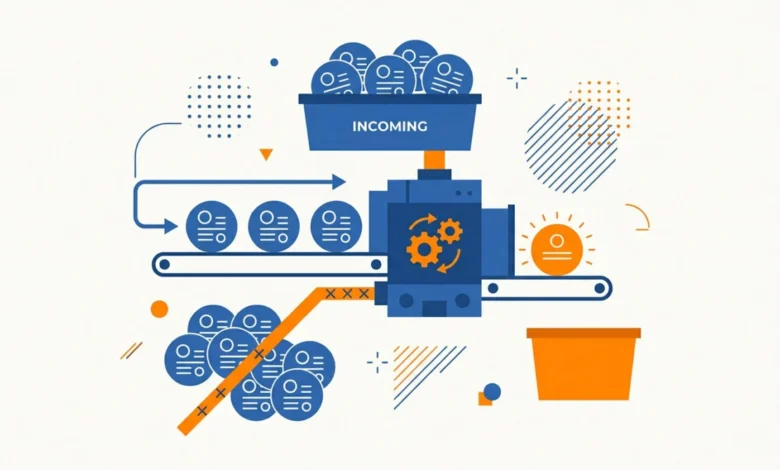
The modern professional landscape is increasingly defined by a phenomenon often referred to as "decision fatigue," a state of cognitive depletion resulting from the sheer volume of choices required throughout a standard workday. Research from the American Psychological Association suggests that the human capacity for high-quality decision-making is a finite resource; once exhausted, individuals tend to default to avoidance behaviors. In the context of digital workflows, this manifests as the repetitive opening and closing of emails, the accumulation of unorganized files, and the constant deferral of minor administrative tasks. These "open loops"—tasks that are initiated but not completed—create significant mental clutter, reducing overall productivity and increasing stress levels.
The Economics of Cognitive Load and Processing Costs
Every time an individual opens an email or a document without taking action, they incur what is known as a "processing cost." This is the expenditure of mental energy required to re-orient oneself to the content of the message, recall the context of the sender, and weigh potential responses. When a task is left pending, the brain does not simply delete the information; it retains the "open loop" in active working memory. This phenomenon, often linked to the Zeigarnik Effect—a psychological theory proposing that people remember uncompleted or interrupted tasks better than completed ones—explains why pending emails feel like a weight on one’s attention.
Data from the University of California, Irvine, indicates that it takes an average of 23 minutes and 15 seconds to return to deep work after a single interruption. When employees cycle through their inboxes multiple times a day without finalizing decisions, the cumulative loss of "flow state" time is substantial. By failing to "touch it once"—a principle advocating for an immediate decision to delete, archive, or delegate—professionals effectively tax their own cognitive bandwidth.
Establishing Tactical Rituals for Efficiency
The transition from a reactive to a proactive workflow requires the implementation of structured temporal boundaries. The "Weekly Review," a concept popularized by productivity researchers, serves as a mechanism to clear this backlog. By dedicating a specific window of time each week to process the inbox, archive outdated materials, and capture pending action items, professionals can reset their cognitive state.
However, experts emphasize that the Weekly Review should remain tactical rather than strategic. To prevent "review bloat," where administrative cleanup is conflated with long-term planning, organizational psychologists recommend separating these activities. The "Monthly Review" is the appropriate venue for high-level adjustments, such as setting monthly intentions—for example, focusing on sleep hygiene or professional development—which then act as a North Star for the subsequent four weeks of tactical execution. This separation ensures that the weekly process remains fast, actionable, and focused on maintenance rather than existential analysis.
Template-First Strategies and the Role of Automation
The redundancy inherent in recurring tasks, such as project kick-offs or routine status updates, provides a significant opportunity for optimization. Decision fatigue is often exacerbated by the need to both design the structure of a document and compose its content simultaneously. To mitigate this, organizations are increasingly adopting "template-first" methodologies. By pre-defining the structure, tone, and formatting of repetitive communications, professionals can reduce the "blank page" friction that contributes to procrastination.
Technological aids, specifically text expanders and macro-based tools, further automate this process. Text expanders allow users to store "stock" language for common responses, effectively automating 80% of the writing process while leaving the remaining 20% for unique, context-specific input. Similarly, macro-based hardware, such as stream decks, allows users to execute complex sequences of actions—such as launching specific software suites, arranging browser tabs, or initiating daily journaling prompts—with a single keystroke. These tools minimize the friction of switching tasks, allowing for a more seamless transition between different modes of work.
Managing Workflow Friction: Beyond the Inbox
The challenge of "open loops" extends beyond text-based communication. The management of digital files often leads to similar inefficiencies. Professionals frequently lose time navigating complex folder hierarchies in operating systems like Finder or Windows Explorer. The adoption of "shelf apps," which serve as a staging area for files, allows users to keep necessary documents in a readily accessible menu-bar interface. This acts as a digital clipboard, preventing the need to re-locate files during the course of a project.
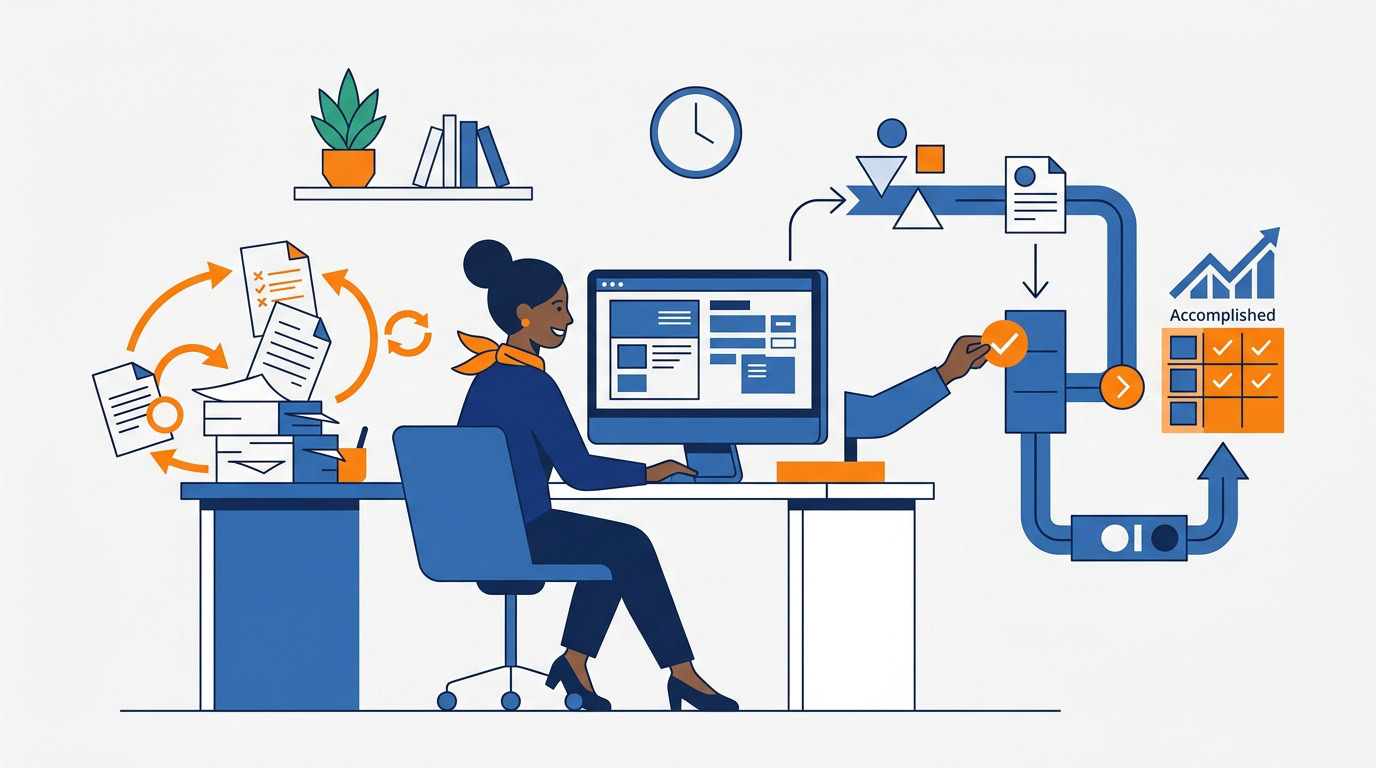
Furthermore, physical-digital integration, such as the use of analog whiteboards for brainstorming, provides a necessary reprieve from the screen-centric environment. For visual thinkers, externalizing complex problems onto a physical surface can accelerate problem-solving by bypassing the limitations of digital interface navigation.
The 45-15 Rule and the Psychology of Buffer Time
A primary contributor to daily burnout is the "back-to-back" meeting culture. When calendars are stacked without intervals, the brain is denied the "bio-break" required for cognitive recovery. This leads to what is colloquially termed a "productivity hangover," where the quality of output degrades throughout the day.
The "45-15 Rule"—a structural change to calendar management where 60-minute meetings are scheduled for 45 minutes—is gaining traction in corporate settings. The remaining 15 minutes serve as a critical buffer, allowing participants to record action items immediately while the context is fresh. This practice reduces the likelihood of "dropped" tasks and ensures that meetings result in concrete, actionable outcomes rather than vague, unresolved threads.
Navigating the "Plan B" Contingency
Even with perfectly buffered calendars, professional plans are subject to external volatility. Meetings are canceled or delayed, leaving gaps in the schedule. Without a pre-defined strategy, these gaps are often filled by "doom scrolling" or low-value administrative tasks.
Productivity experts suggest that individuals should maintain a "Plan B" task list. By choosing three high-priority items at the start of the day and designating a specific "Plan B" task to be addressed in the event of an unplanned schedule opening, the professional maintains momentum. This proactive decision-making ensures that when a surprise block of time appears, the brain does not need to expend energy choosing what to do next; the work is already identified, and the transition can be instantaneous.
Leveraging AI for Knowledge Management
The modern information intake process—reading articles, listening to podcasts, and consuming industry reports—can also create open loops if the information is not effectively captured. The tendency to pause work to manually transcribe or organize notes creates a break in flow that discourages consistent learning.
AI-native capture tools have transformed this dynamic. Applications that allow for real-time snippets of audio or text, which are then indexed and made searchable by artificial intelligence, enable "just-in-time" learning. By offloading the burden of organization to automated systems, professionals can maintain focus during the consumption phase while ensuring that their knowledge remains a searchable, living asset.
Conclusion: The Cumulative Impact of Micro-Decisions
The cumulative effect of these strategies—touching items once, utilizing templates, buffering calendars, and employing AI-assisted capture—is the systematic reduction of "cognitive debt." By addressing the micro-decisions that plague the modern workday, individuals can reclaim significant portions of their time and mental energy. The objective is not to work more, but to ensure that the work performed is intentional and free from the friction of repetitive, unresolved, and poorly managed administrative loops. As the digital landscape continues to evolve, the ability to manage one’s cognitive load will become an increasingly critical skill for sustainable professional success.