ChartMogul Unveils Native AI Analyst to Transform Subscription and Revenue Data Investigation

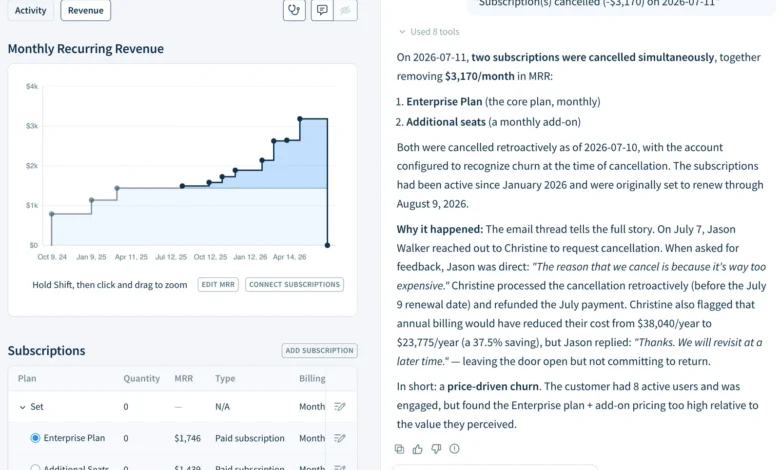
Subscription revenue analytics platform ChartMogul has officially launched ChartMogul AI, an advanced in-product data analyst designed to autonomously investigate complex subscription metrics, trace revenue fluctuations back to individual customer behaviors, and streamline financial reporting. Announced by CEO Nick Franklin, the new tool aims to bridge the gap between high-level headline figures—such as Annual Recurring Revenue (ARR)—and the granular, often messy operational realities that drive them.
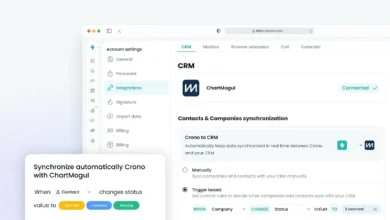
The launch represents a significant evolution for the 12-year-old company, which has spent over a decade refining how organizations translate complex, real-world billing scenarios into standardized subscription metrics. In tandem with the AI rollout, ChartMogul has also announced that its integrated Customer Relationship Management (CRM) platform will now be available for free to all users, removing previously required paid seat tiers to feed more comprehensive qualitative data into the new analytics engine.
The Complexity of Subscription Data and the Genesis of ChartMogul AI
For subscription-based businesses, accurate data management is notoriously challenging. Processing upgrades, downgrades, churn, reactivations, multi-component subscriptions, refunds, credits, and multi-currency conversions requires rigorous logic. Minor discrepancies in these calculations can result in misleading financial dashboards that require constant internal explanation. ChartMogul was originally built to automate and standardize this logic, establishing trust in recurring revenue metrics for thousands of global companies.
However, company executives noted that while calculating accurate numbers is essential, understanding the underlying qualitative narrative still demanded significant time, specialized technical knowledge, and curiosity. Traditionally, identifying why a specific metric moved unexpectedly required operators to know precisely which questions to ask, apply complex data filters manually, and trace multi-step evidence trails across disparate systems.
Consequently, deep data investigations were typically reserved for high-stakes scenarios, such as impending fundraises, board meetings, major pricing strategy overhauls, or severe, unexplained metric volatility. On a day-to-day basis, most business leaders relied on surface-level dashboard checks—confirming that metrics like ARR aligned with broad expectations before moving on. ChartMogul AI was developed to lower the barrier to entry for these deeper investigations, allowing users to initiate complex data inquiries simply by typing natural language questions.

Technical Architecture and Capabilities: Beyond Dashboard Chatbots
Unlike generic chatbots bolted onto software dashboards, ChartMogul AI is deeply integrated into the platform’s core architecture. It possesses native awareness of the specific reports, segments, and customer records currently visible on a user’s screen. Rather than merely describing static charts, the system executes multi-step investigative workflows: selecting relevant metrics, constructing precise filters and segments, evaluating customer movements, and synthesizing qualitative insights.
A primary technical hurdle in financial analysis is that quantitative metrics can accurately illustrate what happened, but rarely explain why. To bridge this gap, ChartMogul AI analyzes unstructured customer interaction data, including emails, meeting notes, call logs, and support tickets. The platform pre-processes this information at scale to extract actionable knowledge indicators, such as cancellation reasons, competitor mentions, customer sentiment, and direct product feedback.
Engineering teams behind the product addressed early AI reliability challenges—such as tool selection errors, superficial investigations, and inaccurate data linking—by developing a multi-agent modular architecture. According to project engineers, the system delegates specific tasks to specialized sub-agents. For example, rather than allowing a general language model to guess data filters, a dedicated sub-agent queries real-world billing plans and tags before writing expressions in ChartMogul Filter Language (CFL). Similarly, structured step-by-step methodologies, termed "skills," guide the AI through specific types of financial investigations to ensure thoroughness.
Strategic Shift: CRM Made Free for All Users
To maximize the analytical accuracy of ChartMogul AI, the platform requires a comprehensive, holistic view of each customer account. Recognizing that quantitative billing data alone is insufficient for deep root-cause analysis, ChartMogul has restructured its pricing model by incorporating its native CRM platform directly into the core subscription tier at no additional cost.
Previously, connecting corporate email accounts and accessing full CRM functionality required purchasing dedicated "CRM Pro" user seats. By removing these paid barriers entirely, ChartMogul enables all platform users to seamlessly integrate their inboxes and centralize customer communication histories. Company leadership emphasizes that expanding access to qualitative customer context directly enhances the analytical reliability and depth of AI-driven insights across the entire user base.
Integration with External AI Ecosystems via MCP
The launch of ChartMogul AI follows the company’s broader push into AI infrastructure. In June, ChartMogul introduced an expanded version of its Model Context Protocol (MCP) server, featuring more than 80 tools and official listings in the Claude and ChatGPT integration directories.
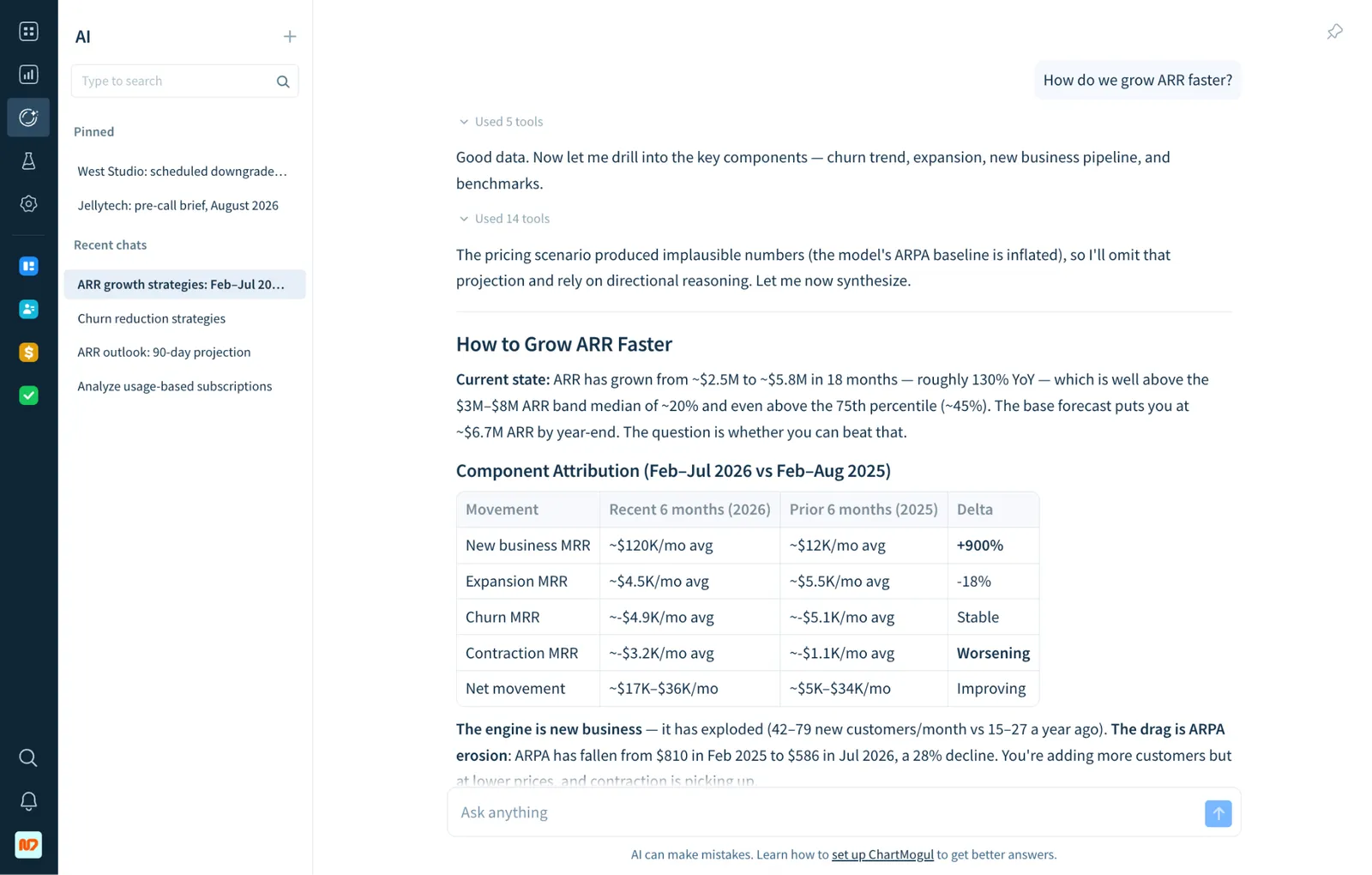
While the MCP server provides secure, general-purpose AI tools with access to the underlying ChartMogul data layer—ideal for cross-platform workflows—the new native ChartMogul AI experience offers specialized domain expertise. By combining native product context, rigorous subscription data models, and over a decade of recurring-revenue industry expertise, the native interface is optimized specifically for SaaS and subscription business metrics.
Current Limitations and Future Development Roadmap
In its initial release, ChartMogul AI operates in a read-only capacity to ensure data safety and system reliability. The current iteration cannot yet execute direct modifications or write actions within connected accounts.
Looking forward, the company plans to progressively expand the system’s capabilities. Future updates will enable the AI to execute administrative and operational tasks, such as automatically drafting targeted email campaigns for churned accounts, updating CRM records based on conversational insights, or dynamically restructuring billing tiers based on utilization patterns.
Industry Implications and the Future of Data Interfaces
ChartMogul’s latest release underscores a broader technological shift across the enterprise software sector: the transition from traditional, static dashboards to conversational, AI-driven analytical systems. While interactive charts, custom filters, and traditional user interfaces will remain essential, industry observers note that AI is increasingly poised to operate those controls on behalf of the user, potentially reshaping how financial data is monitored, interpreted, and acted upon in real-time.
ChartMogul AI is available immediately to all platform users, offering organizations a new method to diagnose metric changes, streamline financial reporting, and uncover actionable insights hidden within their subscription data.