Inside the Global Push to Redefine Product-Led Growth: Lessons from ChartMogul’s PLG Growth Lab Roadshow

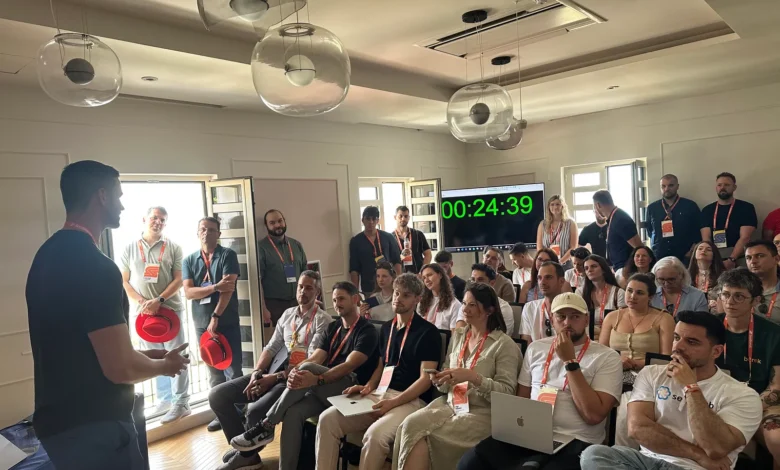
The modern software-as-a-service (SaaS) industry has long been captivated by headline-grabbing unicorn success stories, often detached from the daily operational grind of scaling a business. To bridge this gap between high-level theory and gritty execution, ChartMogul Chief Revenue Officer Sara Archer spearheaded the PLG Growth Lab roadshow, an international initiative designed to bring together founders, revenue leaders, and product innovators. Spanning seven major global tech hubs—San Francisco, Šibenik, Paris, London, Warsaw, Utrecht, and New York—the series provided a collaborative forum for tech professionals grappling with the realities of product-led growth (PLG), artificial intelligence integration, and shifting go-to-market strategies.
Background Context and the Genesis of the Roadshow
Launched in October of the previous year, the PLG Growth Lab was conceived out of a growing industry fatigue with generalized keynote presentations. Archer and her team at ChartMogul recognized that mid-stage and scaling companies faced distinct, localized challenges that standard tech conferences rarely addressed. Whether navigating the complexities of AI-driven product marketing, restructuring sales compensation models around usage-based pricing, or transitioning from individual self-serve users to enterprise-level contracts, operators needed a space for transparent peer-to-peer problem-solving.

Rather than hosting traditional, one-way lectures, the roadshow utilized a format combining boardroom workshops, intimate panel discussions, and collaborative dinners. Each city’s event was co-hosted in partnership with prominent local organizations and tech leaders, ensuring that the content resonated with regional market dynamics while addressing universal SaaS hurdles.
Chronology and Regional Highlights Across Seven Global Hubs
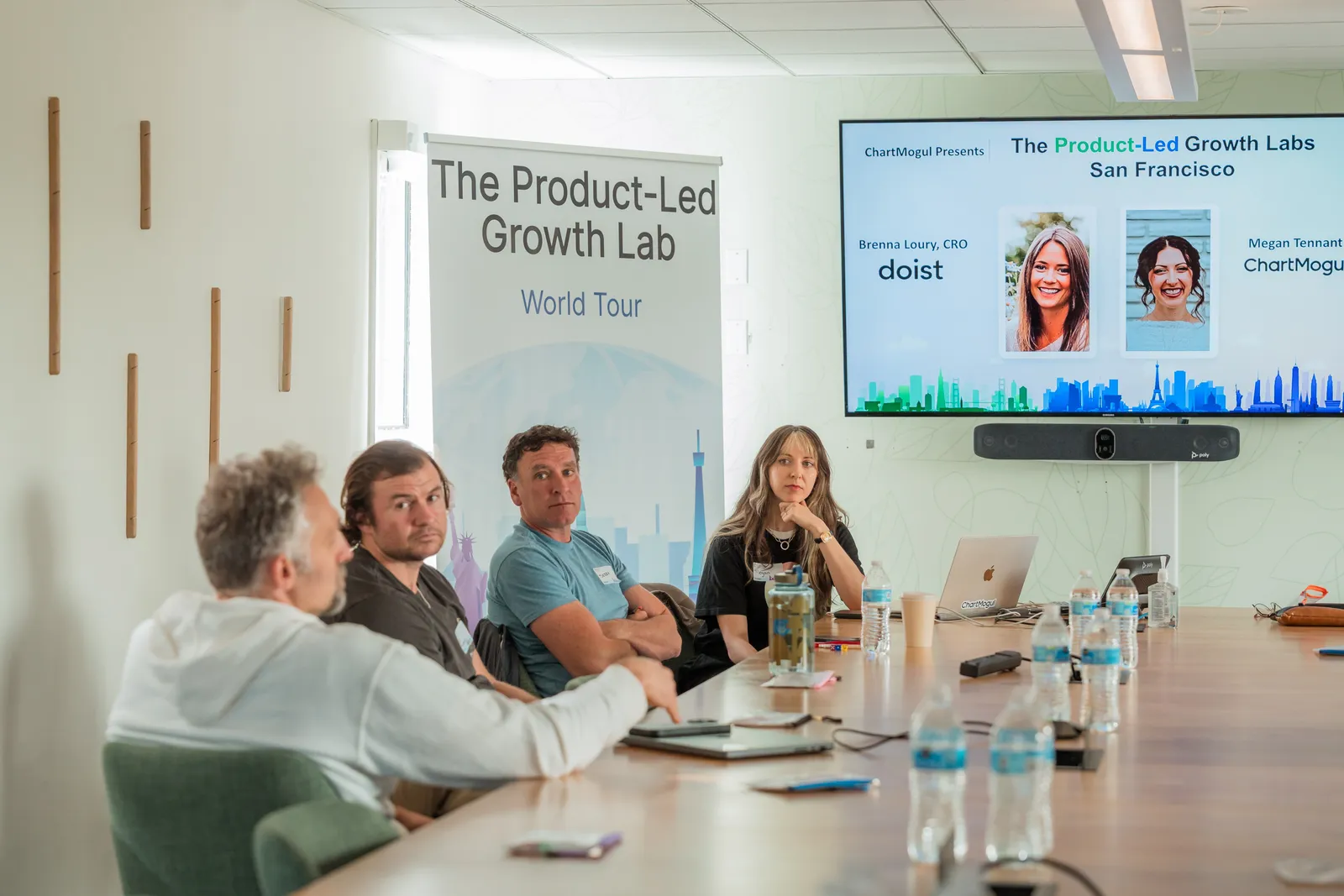
The roadshow kicked off concurrently with Stripe Sessions in San Francisco, focusing heavily on moving upmarket. Partnering with Brenna Loury, Chief Revenue Officer of productivity software giant Doist, the San Francisco leg examined how companies can convert individual, entry-level users into enterprise accounts. Discussions centered on the delicate mechanics of timing sales involvement, helping internal champions build business cases, and restructuring internal teams to close high-value contracts.
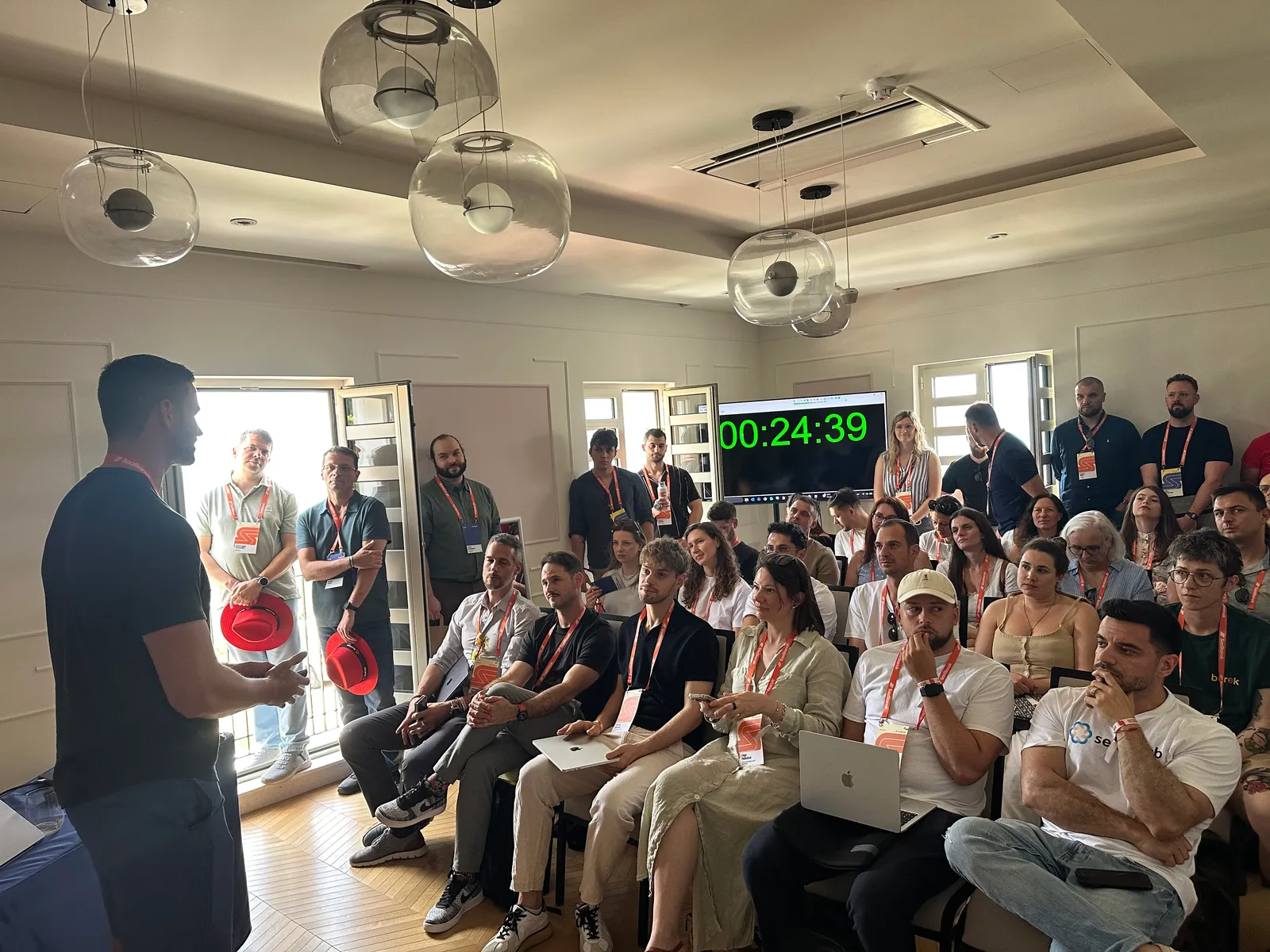
Following the North American launch, the roadshow moved to the Croatian coastal city of Šibenik, partnering with SaaStanak for a deep dive into the operational mechanics of PLG. Held during a regional heat wave, the standing-room-only sessions explored advanced attribution, behavioral analytics, and user activation metrics. Industry experts, including Tom Andrews and Aleksandra Korczyńska, dissected the gap between quantitative usage data and qualitative user intent—emphasizing that low upgrade rates often stem from hidden barriers like corporate budget constraints or missing features rather than mere disinterest. Additional workshops led by Kyle Poyar and Archer mapped out critical growth levers required for businesses scaling from $1 million to $20 million in Annual Recurring Revenue (ARR).
In Paris, the focus shifted to the practical friction of merging self-serve and sales-led models. Hosted by Guideflow with panoramic views of the Eiffel Tower, the panel featured Wisepops CEO Benjamin Cahen, who shared insights from a bold corporate experiment: temporarily disabling free trials and freemium funnels to route all inbound traffic directly through sales. Concurrently, Lisa Heiss addressed the evolving role of trust and expertise in AI-driven products, arguing that as software automates complex workflows, maintaining user confidence is paramount.
The tour then progressed to London, gathering an elite cohort of founders and revenue executives from firms such as Intruder, Physitrack, and CharlieHR. The London discussions challenged conventional onboarding paradigms. While standard user journeys rely heavily on linear automated sequences and standardized dropdown menus, the panel argued for a more flexible, intent-driven approach. Recognizing that modern B2B buyers often possess diverse preferences—some preferring independent exploration while others demand immediate human interaction—attendees debated leveraging artificial intelligence to capture and act upon these nuanced buyer signals at the point of signup.
Warsaw offered a culturally unique venue—an operational historic movie theater where attendees debated AI monetization strategies over popcorn. Hosted alongside Survicate and featuring industry voices such as Olga Padulosi and Piotr Cygan, the Warsaw leg tackled the difficult metric of measuring AI feature efficacy. Participants concluded that raw usage statistics are insufficient; true validation requires qualitative audits of AI outputs, direct customer interviews, and rigorous product intuition built through relentless engagement with frontline support tickets and bug reports.
In Utrecht, severe weather failed to deter participants from gathering at the headquarters of Trengo. Joined by Wolter Rebergen and Claudiu Murariu, the panel confronted the marketing hurdles inherent in pioneering entirely new software categories. Discussions on data attribution yielded a pragmatic consensus: while tracking every touchpoint in decentralized communication channels like WhatsApp is impossible, maintaining a consistent, directional view of marketing efficiency is sufficient to guide intelligent capital allocation.

The tour concluded in New York during Pavilion’s GTM Summit, bringing together 18 select founders and executives for a closing dinner. Ingmar Zahorsky, ChartMogul’s VP of Customer Success, joined Archer to anchor discussions around foundational SaaS health metrics—specifically Monthly Recurring Revenue (MRR) growth rate, Net Revenue Retention (NRR), and Customer Acquisition Cost (CAC) payback periods.
Supporting Data, Economic Realities, and Fact-Based Analysis
The underlying impetus for the PLG Growth Lab series reflects broader macroeconomic shifts in the technology sector. Following a prolonged period of hyper-growth characterized by abundant venture capital and prioritized top-line acquisition, the SaaS market has pivoted sharply toward capital efficiency, sustainable expansion, and net revenue retention.
Data from recent enterprise software benchmarks indicate that companies employing hybrid go-to-market motions—effectively blending self-serve product-led acquisition with targeted enterprise sales—demonstrate superior capital efficiency compared to those relying exclusively on traditional outbound sales or pure-play freemium models. However, operationalizing this hybrid model introduces significant friction, particularly in sales compensation alignment, data pipeline integration, and attribution modeling.
The roadshow’s emphasis on metrics such as CAC payback and NRR addresses a central vulnerability in modern tech organizations: departmental misalignment. As emphasized during the New York summit, individual sales or marketing teams frequently achieve localized key performance indicators while the overarching enterprise stalls. By educating revenue leaders on holistic unit economics, initiatives like the PLG Growth Lab provide a framework for diagnosing structural inefficiencies before they manifest as critical growth bottlenecks.
Broader Impact and Industry Implications
The success of ChartMogul’s multi-city initiative underscores a broader evolution within the B2B software industry. As artificial intelligence lowers the technical barriers to software development, product differentiation is increasingly driven not merely by feature sets, but by operational execution, go-to-market precision, and deep customer empathy.
The willingness of industry leaders to openly discuss failed experiments, structural missteps, and unresolved operational challenges points to a maturing tech ecosystem. Rather than clinging to polished, idealized narratives of frictionless scaling, modern software executives are recognizing that sustainable growth requires iterative experimentation, cross-functional collaboration, and a willingness to question foundational assumptions about how software is built, marketed, and monetized.

Ultimately, the insights cataloged across San Francisco, Šibenik, Paris, London, Warsaw, Utrecht, and New York serve as a practical blueprint for the next generation of software companies. By prioritizing human connection and shared operational intelligence over superficial growth metrics, initiatives like the PLG Growth Lab provide the foundational knowledge necessary for navigating an increasingly competitive global market.