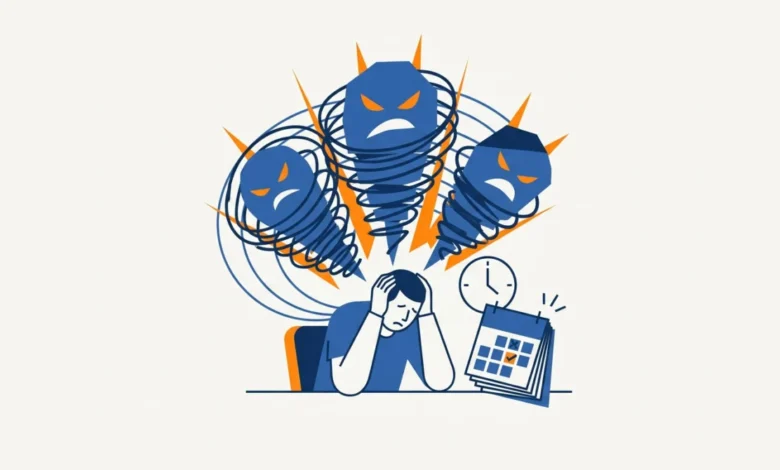
The modern workplace has increasingly shifted toward an obsession with time management, yet data suggests that the root cause of professional inefficiency is rarely a lack of hours in the day. Instead, organizational psychologists point to the TEA Framework—Time, Energy, and Attention—as the fundamental pillars of productivity. When stress compromises energy and attention, traditional time-management strategies, such as calendar blocking or task prioritization, often fail to produce meaningful results. For many professionals, the feeling of being "behind" is not a scheduling error but a biological and psychological response to chronic overwhelm.
The Anatomy of Overwhelm
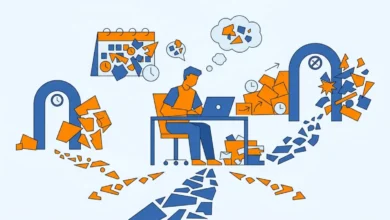
Research from the American Psychological Association (APA) consistently highlights that stress acts as a cognitive tax, significantly reducing executive function. When an individual experiences high stress, the brain’s prefrontal cortex—the area responsible for planning, decision-making, and impulse control—is inhibited. This leads to a phenomenon known as "open loops," where incomplete tasks and unresolved worries persist in the working memory, consuming cognitive bandwidth.
Historically, the push for increased productivity in the 21st century has led to a reliance on complex digital task management systems. However, experts argue that when the nervous system is in a state of high arousal, these systems become additional sources of friction. A 2023 study by the Journal of Occupational Health Psychology found that workers who attempted to organize complex workflows while in a state of high stress experienced higher rates of burnout than those who practiced basic, low-friction cognitive offloading.
The Biology of Stress and Performance
The correlation between physical health and cognitive output is well-documented. Often, symptoms of mental fatigue are misattributed to professional inadequacy when they are, in fact, symptoms of physiological neglect.
Dehydration, for example, is a primary driver of reduced cognitive performance. Studies from the Georgia Institute of Technology indicate that even mild dehydration—a loss of just 1-2% of body weight—can impair attention and memory. Similarly, fluctuating blood glucose levels due to irregular eating habits contribute to the "afternoon slump" often mistaken for a lack of motivation. By addressing these basic physiological needs—hydration and consistent fueling—professionals can often alleviate the physical tension that manifests as mental anxiety.
Furthermore, the autonomic nervous system plays a critical role in productivity. The "fight-or-flight" response, characterized by rapid, shallow breathing, signals to the brain that the environment is hostile. This physiological state prevents deep, focused work. Techniques such as the 4-7-8 breathing method have been utilized in high-stress environments, including clinical settings and elite sports performance, to manually trigger the parasympathetic nervous system, effectively "resetting" the body’s stress response.
Implementing Cognitive Offloading
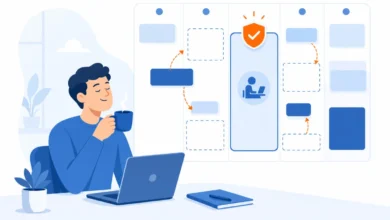
The most effective way to clear the "open loops" that cause paralysis is through the process of externalization. By transferring information from the mind to an external medium—such as a physical notepad or a digital document—individuals reduce the cognitive load required to maintain those thoughts. This practice, often referred to in cognitive science as "distributed cognition," allows for the objective assessment of tasks.
Once thoughts are documented, they can be categorized through the lens of priority, delegation, or elimination. This process serves as a bridge between the chaos of an overwhelmed mind and the clarity required for execution. Organizations that encourage this practice report higher employee satisfaction and lower rates of task-related anxiety.

Strategic Tools for Maintaining Focus
While offloading is a critical first step, sustained focus requires tactical application. The Pomodoro Technique, developed in the 1980s, has evolved into a standard tool for breaking the paralysis of large, overwhelming projects. By constraining work into 25-minute intervals, individuals can circumvent the fear associated with massive, ill-defined objectives. This temporal constraint creates an artificial sense of urgency that often facilitates the transition into a "flow state."
In addition to task-specific tools, emotional regulation remains a key component of high-level performance. The implementation of a "Praises Folder"—a curated record of professional wins and positive feedback—functions as a hedge against the negative bias inherent in human psychology. During periods of high stress, individuals are prone to "imposter syndrome" or self-doubt. Objective evidence of competence, kept readily available, helps maintain a stable self-image and fosters resilience.
The Role of Environment and Boundaries
The physical environment is a significant factor in stress management. Research into "biophilia"—the human tendency to interact with nature—demonstrates that access to green spaces can significantly lower cortisol levels. Even in dense urban centers, access to small "green pockets" or quiet, nature-integrated spaces provides a necessary mental reset.
Beyond the physical environment, the concept of "mise en place," borrowed from the culinary arts, is increasingly being applied to the digital workplace. Clearing the workspace to a "neutral" state at the end of each day ensures that the following morning can begin with deep, focused work rather than the clutter of the previous day. This ritual, combined with a "hard stop" to the workday, is essential for preventing the chronic stress that leads to professional burnout.
Establishing a definitive end time for professional tasks is crucial, particularly in the era of remote and hybrid work. Without a clear boundary, the brain remains in a state of low-level alertness, which inhibits recovery. By treating the end of the workday as a non-negotiable engagement, professionals can protect their personal time, thereby ensuring that they return to their duties with renewed energy and attention.
Broader Implications for Productivity
The shift from managing time to managing energy and attention represents a paradigm shift in how corporations and individuals approach work. Rather than optimizing for the number of hours worked, the focus is increasingly on the quality of output generated during those hours.
Analysis from the Asian Efficiency research team suggests that when individuals prioritize their internal resources—Energy and Attention—the Time component of the TEA Framework naturally aligns. This creates a sustainable feedback loop: lower stress leads to better focus, which leads to higher-quality work, which in turn reduces future stress.
Ultimately, the path to sustained productivity is not found in the acquisition of more complex tools, but in the disciplined application of foundational habits. By addressing physiological needs, externalizing mental burdens, and enforcing clear boundaries, professionals can build a framework for success that is resistant to the pressures of a high-demand environment. As the modern workplace continues to evolve, the ability to manage one’s own internal state will likely become the most significant differentiator between those who merely survive and those who thrive.