Unveiling the 2021 KBCM SaaS Survey Part 2: Comprehensive Insights into Software-as-a-Service Growth Trends and Market Metrics


The release of the second installment of the 2021 SaaS Survey, conducted in a premier partnership between industry experts and KBCM, marks a critical milestone for technology entrepreneurs, venture capitalists, and enterprise software executives worldwide. As the Software-as-a-Service (SaaS) sector continues to mature amid shifting global economic landscapes, post-pandemic operational adaptations, and evolving venture capital dynamics, this comprehensive research report serves as an indispensable roadmap. Building upon the foundational metrics established in the first part of the survey—which focused heavily on early-stage growth vectors, initial go-to-market strategies, and baseline customer acquisition costs—this second segment delves deep into the granular operational mechanics, scaling efficiencies, financial benchmarks, and long-term strategic planning necessary for modern software companies to thrive.
For over a decade, the annual KBCM SaaS Survey has established itself as the gold standard for empirical data within the cloud software ecosystem. By aggregating self-reported data from hundreds of private and public SaaS enterprises ranging from early-stage startups to late-stage giants generating tens of millions in annual recurring revenue (ARR), the survey illuminates the quantitative realities behind building and scaling a modern subscription-based software business. The release of this year’s data comes at a particularly fascinating juncture in macroeconomic history, following unprecedented surges in digital transformation initiatives and subsequent normalization periods across global markets.
Background Context and Historical Significance of the Survey
To fully understand the weight of the 2021 KBCM SaaS Survey, one must examine the broader historical context of the software industry over the preceding decade. The SaaS business model—characterized by predictable recurring revenue, high gross margins, and scalable cloud infrastructure—fundamentally transformed how enterprises procure and utilize technology. However, navigating the lifecycle of a SaaS company has historically been fraught with uncertainty regarding capital allocation, sales efficiency, churn management, and international expansion.
Recognizing a critical blind spot in the market for reliable, standardized benchmark data, industry thought leaders partnered with financial institutions like KBCM to survey practitioners directly. Over the years, these annual reports have tracked seismic shifts in the industry: the transition from perpetual licenses to cloud subscriptions in the early 2010s, the explosion of product-led growth (PLG) motions in the mid-2010s, and the hyper-growth capital influx seen during the digital acceleration phases of the early 2020s.
The 2021 survey captures a unique moment in time when businesses globally were forced to reassess remote work infrastructure, cybersecurity, supply chain visibility, and cost optimization. Consequently, the metrics outlined in the survey slides—spanning customer retention, sales and marketing expenditures, research and development investments, and valuation multiples—reflect a maturing industry grappling with both immense opportunity and heightened operational scrutiny.
Chronology and Survey Methodology
The execution of the 2021 KBCM SaaS Survey followed a rigorous, multi-month methodology designed to ensure statistical relevance and data integrity.

- Q1 2021 (Design and Distribution): Survey parameters, financial questions, and operational metrics were finalized in collaboration with top-tier venture capitalists and SaaS founders. The survey was then distributed globally to a curated database of software executives.
- Q2 2021 (Data Collection and Aggregation): Responses were collected, anonymized, and scrubbed for anomalies. Participants ranged from pre-revenue startups to mega-cap enterprises with ARR exceeding $100 million.
- Q3 2021 (Analysis and Validation): Industry analysts cross-referenced the self-reported data against public market comparables and historical survey trends to identify emerging anomalies or structural market shifts.
- October 2021 (Publication and Rollout): The findings were bifurcated into two distinct publication phases. Part 1 focused on top-line growth rates, funding environments, and initial sales structures, while Part 2—detailed extensively in the survey’s second release—focused on deep operational efficiencies, retention dynamics, and long-term financial scaling.
Deep-Dive Analysis of Part 2 Metrics
The second part of the 2021 SaaS Survey shifts focus from sheer top-line expansion to the quality of growth, examining the internal gears that drive sustainable enterprise value. Key areas of focus include net revenue retention (NRR), gross churn, sales and marketing productivity, and organizational headcount planning.
Customer Retention and Net Revenue Retention (NRR)
One of the most heavily scrutinized metrics in the modern software economy is Net Revenue Retention, which measures the percentage of recurring revenue retained from existing customers over a given period, inclusive of upgrades, downgrades, and churn.
The 2021 data indicates that top-quartile SaaS companies continue to achieve NRR figures well in excess of 115%, with elite enterprise-focused platforms pushing past 120%. This structural ability to "land and expand" remains the primary differentiator between average software companies and hyper-growth category leaders. Conversely, gross customer churn rates stabilized across most cohorts, though SMB-focused SaaS providers continued to report higher attrition rates compared to their enterprise counterparts, underscoring the ongoing volatility in the small business sector.
Sales and Marketing Efficiency (CAC Payback and LTV)
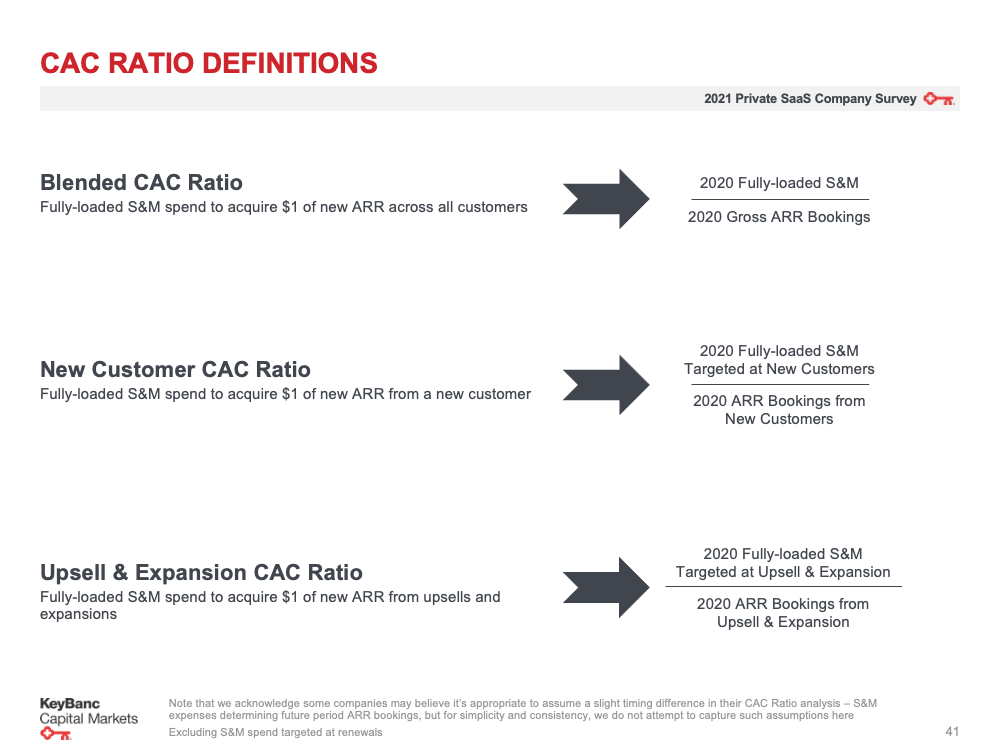
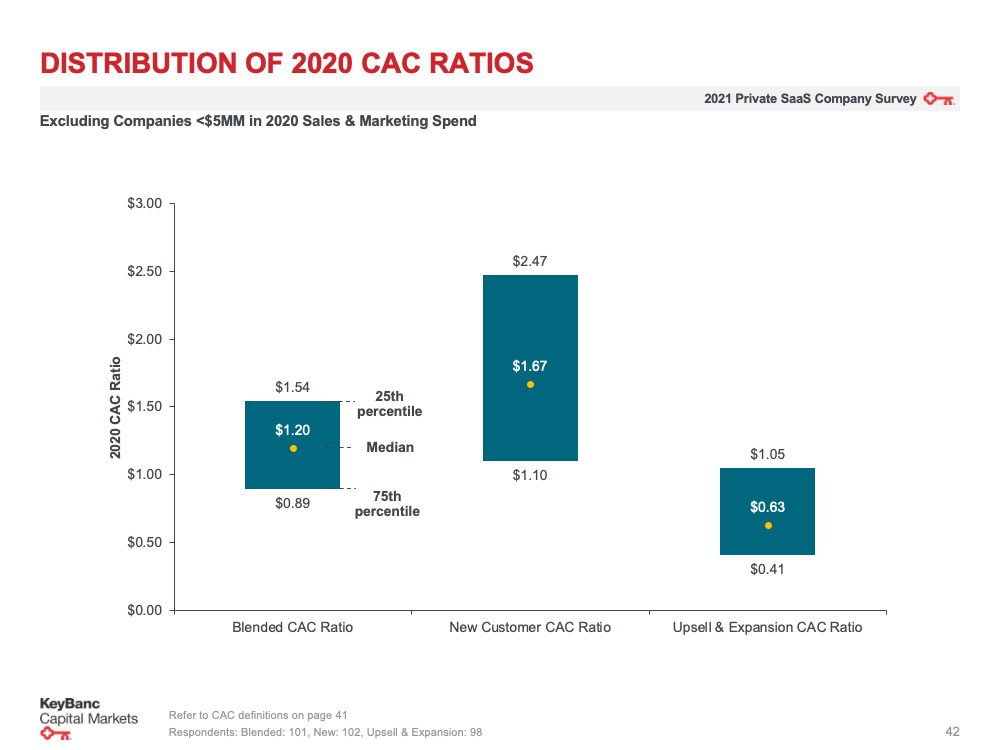
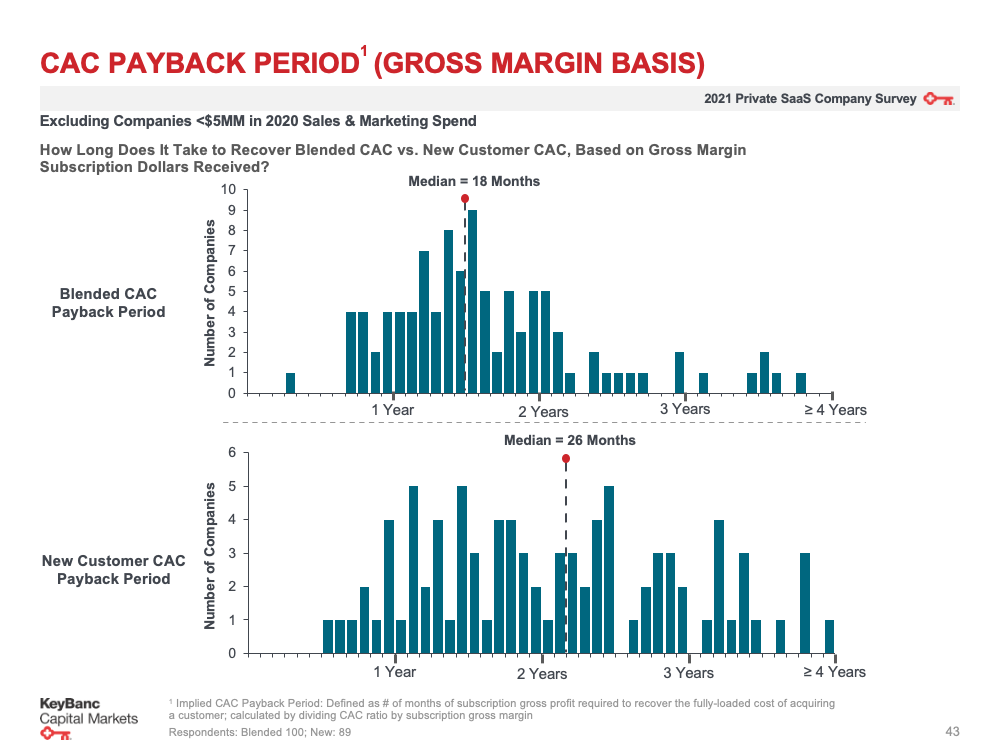
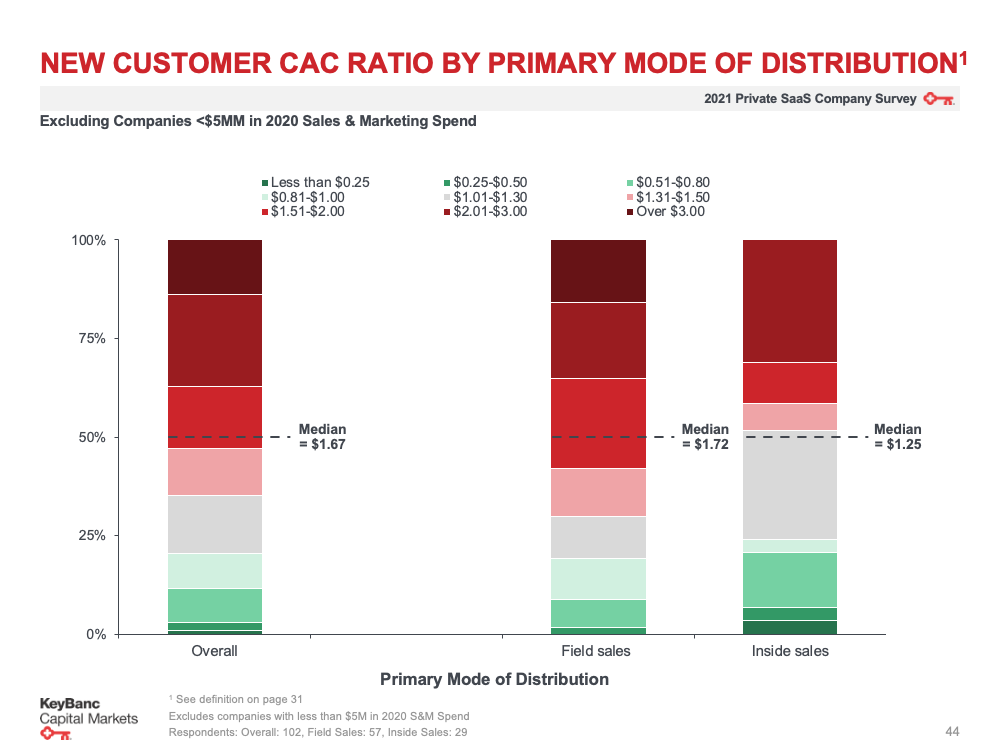
Acquiring customers in an increasingly crowded SaaS marketplace has driven up customer acquisition costs (CAC). The survey data highlights a nuanced picture of sales and marketing (S&M) efficiency.
While median CAC payback periods lengthened slightly for mid-market and enterprise motions due to longer sales cycles and heightened competition, top-performing companies leveraged product-led growth (PLG) strategies to compress payback periods to under 12 months. The survey provides comprehensive breakdowns of magic numbers, LTV/CAC ratios, and quota attainment rates for sales representatives, offering founders a concrete benchmark against which to measure their go-to-market teams.

Research, Development, and Infrastructure Investments
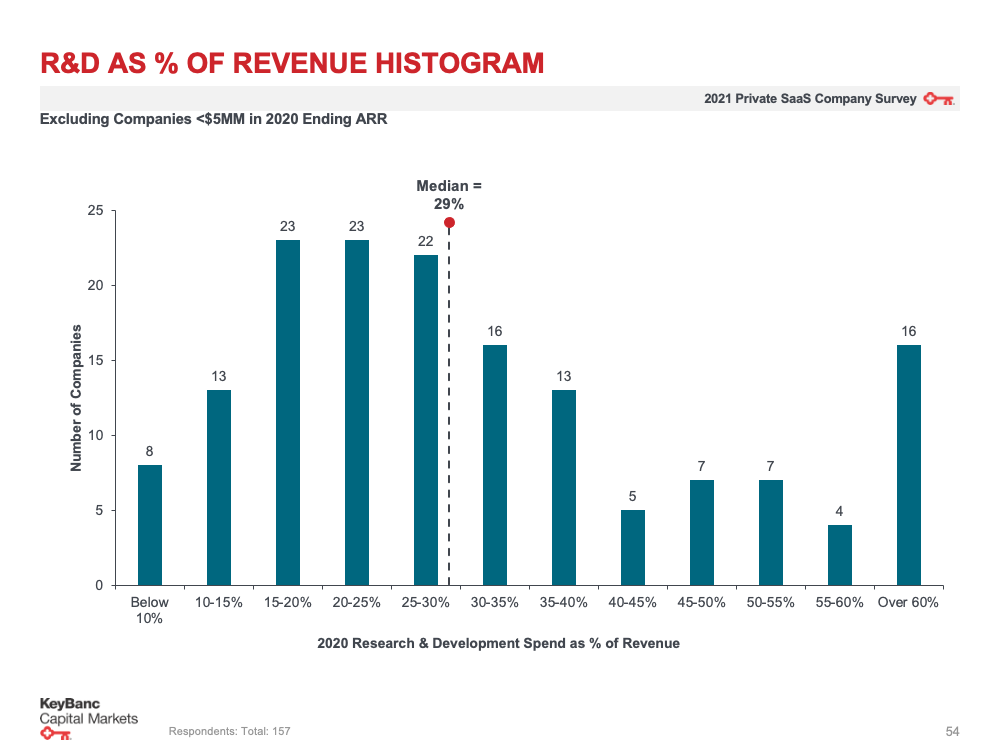
Innovation velocity remains the lifeblood of the software industry. The 2021 KBCM survey meticulously tracked R&D expenditures as a percentage of total revenue across various ARR brackets.
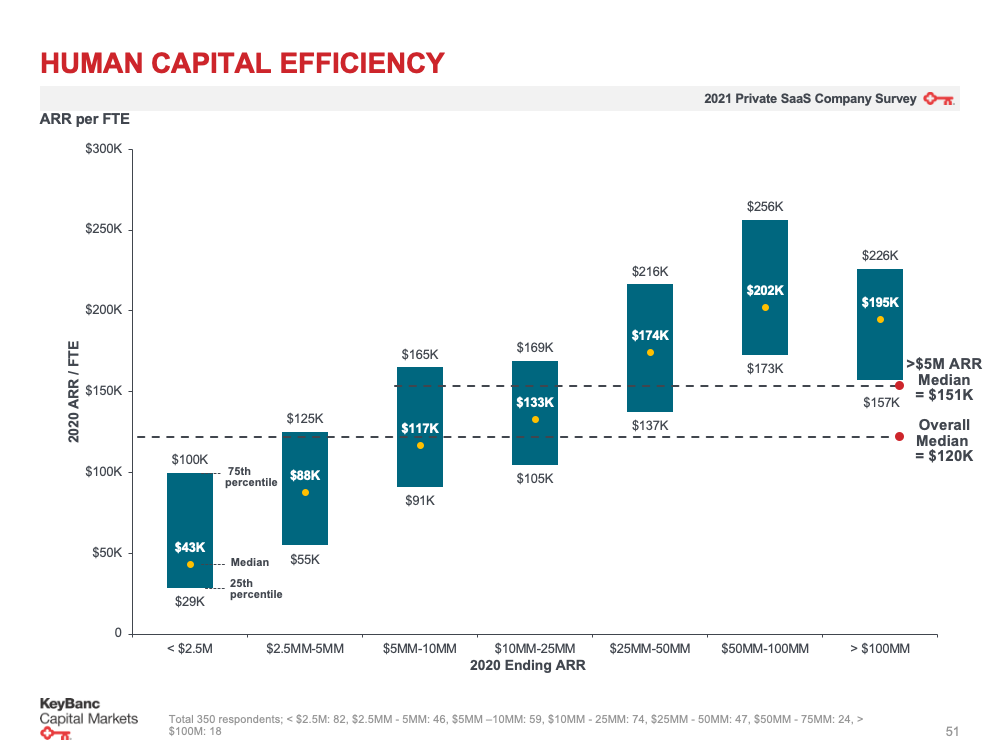
Early-stage companies naturally allocate a disproportionate share of their capital—often exceeding 40% to 50% of revenue—toward engineering and product development as they build out core functionality. As companies scale past $50 million in ARR, R&D spending normalizes as a percentage of revenue, yet absolute dollar investments increase dramatically to support platform extensibility, enterprise security compliance, and artificial intelligence integration.
Industry Statements and Stakeholder Reactions
The release of the 2021 KBCM SaaS Survey elicited widespread commentary from venture capitalists, tech founders, and financial analysts across Silicon Valley, New York, and European tech hubs.
Leading venture capital investors noted that the survey provided timely validation for shifting investment theses. "In an environment where capital is abundant, founders often get distracted by vanity metrics like top-line ARR growth without paying sufficient attention to unit economics," remarked a prominent enterprise software investor. "The 2021 KBCM data forcefully reminds the ecosystem that long-term enterprise value is dictated by durable retention, efficient CAC payback, and scalable gross margins."
Tech entrepreneurs echoed these sentiments, pointing specifically to the survey’s benchmarking data on workforce compensation and remote work operational costs as vital tools for navigating post-pandemic labor markets. With remote and hybrid work models becoming permanent fixtures of the technology sector, software companies utilized the survey’s human resources and compensation metrics to recalibrate their global hiring strategies and equity distribution models.

Broader Economic Impact and Strategic Implications
The implications of the 2021 KBCM SaaS Survey extend far beyond academic interest; they actively shape corporate budgeting, capital deployment strategies, and merger and acquisition (M&A) valuations.
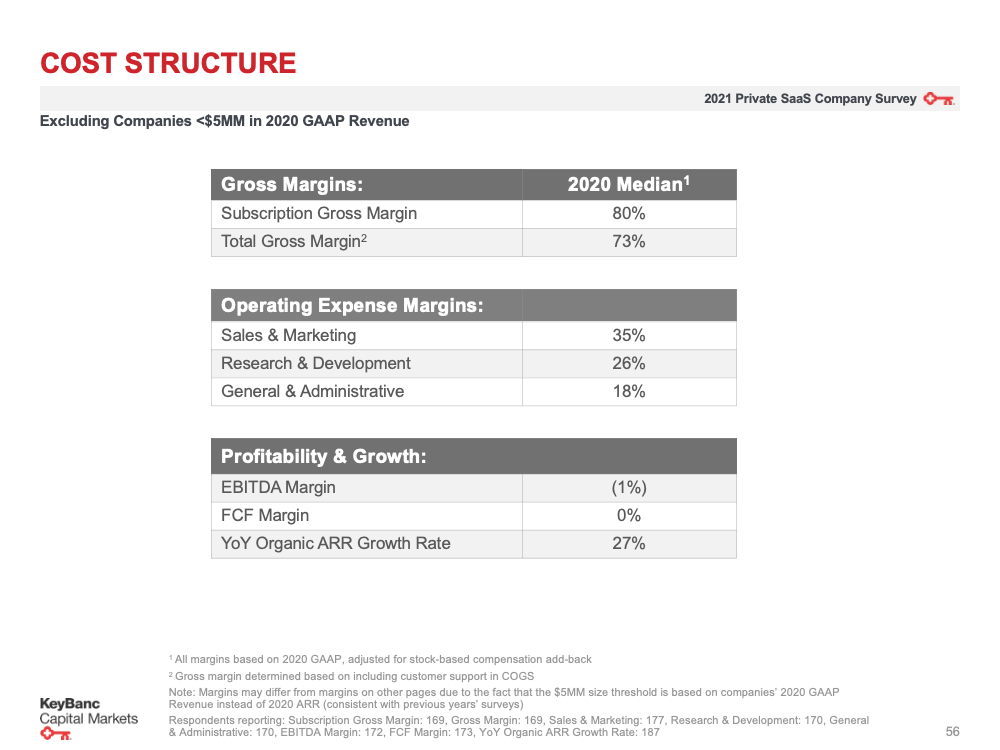
- Valuation Multiples and Capital Allocation: Institutional investors utilize KBCM benchmark data to calibrate public and private market valuation multiples. Companies demonstrating metrics that significantly outperform survey medians—particularly in NRR and free cash flow margins—commanded premium valuations, while underperformers faced severe market corrections.
- Operational Discipline: As macroeconomic headwinds began to emerge late in 2021 and into subsequent years, the emphasis on capital efficiency highlighted in the survey prompted forward-thinking management teams to implement rigorous financial controls, optimize cloud infrastructure expenditures, and prioritize net-new profitability over unconstrained growth.
- Strategic M&A and Consolidation: Enterprise software acquirers routinely analyze survey metrics to identify emerging product categories and evaluate potential acquisition targets based on standardized operational health indicators.
Conclusion and Access to Resources
The 2021 SaaS Survey, produced in partnership with KBCM, stands as an essential archival and operational document for the technology sector. By bridging the gap between raw data and actionable strategic insight, the survey empowers a new generation of software leaders to build resilient, highly efficient, and enduring enterprises.
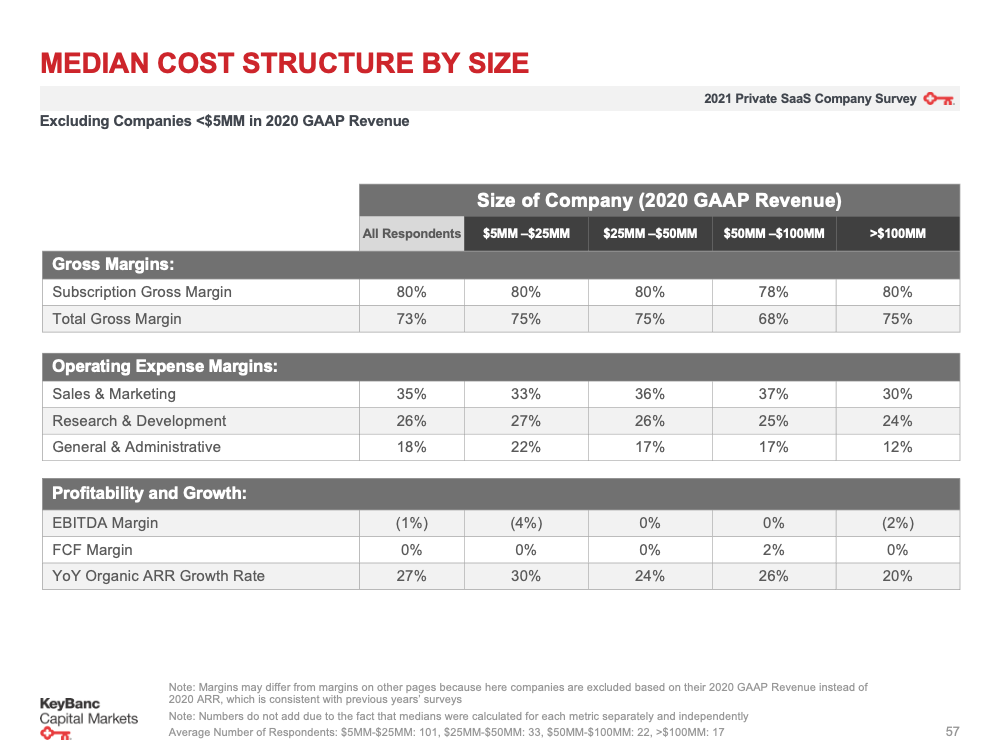
Industry professionals, founders, and financial analysts seeking to examine the complete dataset, detailed slide decks, and granular sub-segment analyses can access the comprehensive 2021 KBCM SaaS Survey in its entirety through official distribution channels, complementing the foundational insights found in the widely referenced first installment of the research series.