The Evolution of Enterprise Rank Tracking Software and the Strategic Shift Toward AI-Integrated Visibility

The landscape of search engine optimization has undergone a fundamental transformation, moving from the simplistic monitoring of keyword positions to the sophisticated management of multi-dimensional data ecosystems known as enterprise rank tracking. For modern global organizations, the ability to monitor millions of data points across diverse geographies, devices, and search features is no longer a peripheral marketing function but a core business intelligence requirement. As search engines transition into "answer engines" driven by generative artificial intelligence, the tools used to track visibility must now account for AI Overviews, featured snippets, and local packs, integrating this intelligence directly into corporate dashboards, CRM workflows, and executive reports to drive high-level decision-making.
The Technological Shift from Basic to Enterprise-Grade Tracking
Enterprise rank tracking is distinguished from standard SEO monitoring by its scale, complexity, and integration capabilities. While basic trackers are designed for small-to-medium businesses (SMBs) to monitor a few hundred keywords on a daily or weekly basis, enterprise-grade platforms are built to handle the demands of high-traffic websites with international footprints. These platforms provide granular location targeting—often down to the city or zip code level—and offer real-time or near-real-time data refresh rates.
The methodology behind data collection has also become a point of critical evaluation. Leading vendors now employ a sophisticated mix of dedicated datacenter IPs and residential proxies to bypass personalization filters and anti-bot measures, ensuring that the data reflects what a real user sees in a specific locale. This accuracy is paramount for organizations where a shift of two positions for a high-volume commercial keyword can result in millions of dollars in revenue fluctuations.

A Chronology of Search Evolution and the Rise of AI
The history of rank tracking can be viewed through the lens of Google’s algorithmic milestones. In the early 2010s, tracking focused almost exclusively on the "ten blue links." However, the introduction of the Knowledge Graph (2012) and the subsequent rise of SERP features like "People Also Ask" and "Featured Snippets" forced a shift toward tracking "pixel position"—the actual vertical space occupied on a screen—rather than just numerical rank.
By 2023, the emergence of Search Generative Experience (SGE) and AI Overviews marked the most significant disruption in the industry’s history. This transition created a "visibility gap" where traditional trackers could no longer accurately report on a brand’s presence. Consequently, the timeline of enterprise software development has accelerated to include Answer Engine Optimization (AEO) and Large Language Model (LLM) tracking. Current industry standards now require platforms to monitor which URLs are cited within AI-generated responses and to capture prompt-level data to understand how brands are characterized by generative search environments.
Strategic Evaluation Criteria for Global Organizations
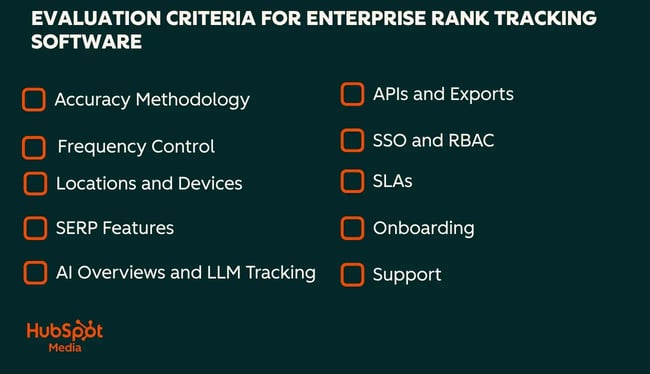
When selecting an enterprise rank-tracking solution, stakeholders must look beyond feature lists to assess how a tool fits within the broader corporate data stack. Industry analysts identify several non-negotiable pillars for enterprise evaluation:
- Accuracy and Frequency Control: Organizations require the ability to set custom crawl schedules. During high-stakes events such as product launches or global sales cycles (e.g., Black Friday), SEO teams need hourly refresh capabilities to react to volatile market shifts.
- Multi-Device Granularity: Desktop and mobile rankings frequently diverge due to location-based factors and mobile-first indexing. Enterprise tools must track these independently to provide a true picture of user experience.
- Governance and Security: For large organizations, Single Sign-On (SSO) and Role-Based Access Control (RBAC) are essential for maintaining data integrity. These features ensure that regional teams can access relevant local data without compromising global campaign settings.
- API and BI Integration: Enterprise teams rarely operate within a single UI. The most effective tools offer well-documented APIs that push ranking data into Business Intelligence (BI) tools like Tableau or PowerBI, allowing SEO metrics to be viewed alongside sales and pipeline data.
Analysis of Market-Leading Enterprise Platforms
Several platforms have emerged as the standard for enterprise-level operations, each offering distinct advantages depending on an organization’s specific needs.
HubSpot’s SEO and Content Ecosystem
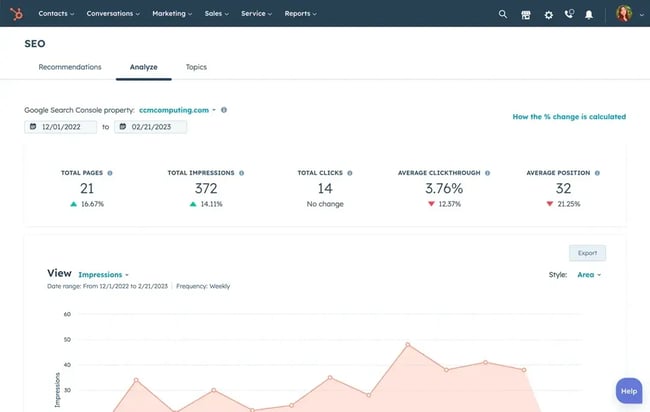
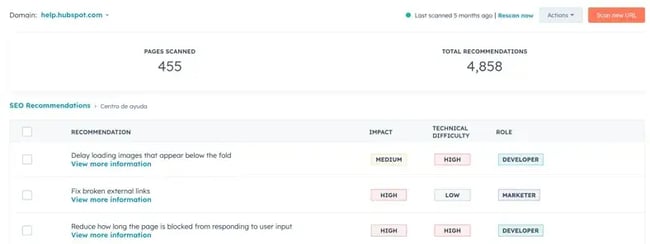
HubSpot has positioned itself as a leader in "unified search management." By integrating SEO Marketing Software within its Marketing Hub, the platform removes the silos that typically separate SEO data from CRM insights. This integration allows marketing teams to draw a direct line between a keyword moving from position eight to position two and a measurable uptick in the sales pipeline.
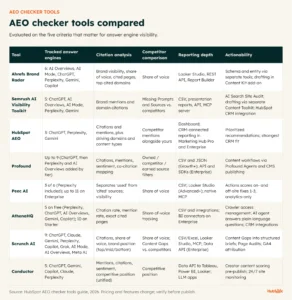
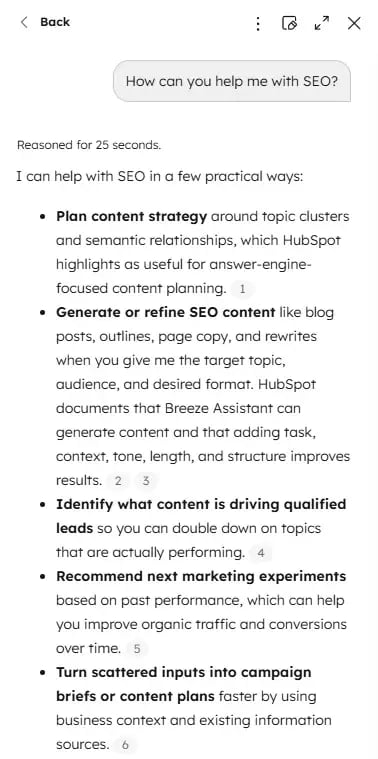
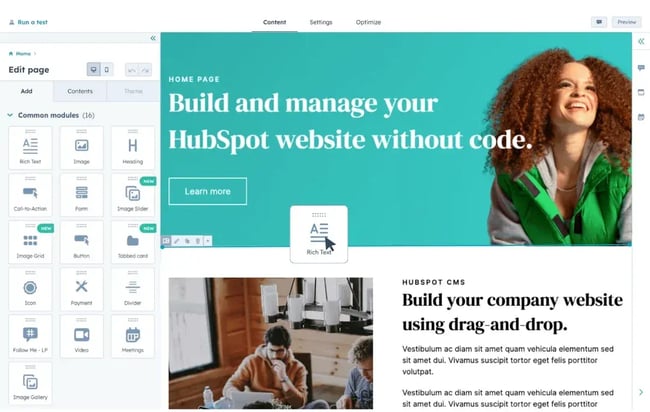
Furthermore, HubSpot’s Content Hub and AEO Grader represent a forward-looking approach to search. The Content Hub embeds SEO guidance directly into the authoring workflow, ensuring that content contributors adhere to structural consistency and schema requirements before a page is even published. The AEO Grader, a specialized tool for the AI era, evaluates brand sentiment and recognition across platforms like ChatGPT, Gemini, and Perplexity, providing a "brand share of voice" metric within AI-generated responses.
Semrush One
Semrush remains a dominant force due to its massive data infrastructure. Its "Semrush One" enterprise suite pairs traditional keyword research and technical audits with an AI Visibility Toolkit. This allows brands to monitor their "Share of Voice" across traditional SERPs and emerging AI platforms simultaneously. Semrush is frequently cited for its competitive intelligence capabilities, allowing organizations to track not just their own performance but the domain health and ranking shifts of their primary rivals at scale.
Profound
Unlike legacy tools that added AI tracking as a secondary feature, Profound was designed from the ground up as an AI visibility platform. It focuses on how brand narratives are shaped across the entire AI ecosystem. For enterprise brand managers, Profound provides critical data on "sentiment patterns" and "citation depth," which are essential for maintaining brand equity in an environment where AI models act as the primary gatekeepers of information.
Advanced Competitive Intelligence at Scale
At the enterprise level, competitor tracking has evolved into a discipline of "SERP Real Estate Management." This involves several advanced methodologies:
- Share of Voice (SoV) Tracking: Instead of looking at individual keywords, enterprises track SoV across entire topic clusters. This reveals which competitor is gaining ground in specific product categories or buyer stages over a 12-month horizon.
- Pixel Position Analysis: Because AI Overviews and local packs often push organic results "below the fold," enterprises now measure the actual vertical distance from the top of the page to their first result. This metric provides a more honest assessment of click-through potential than traditional rank.
- Brand Variant and Affiliate Monitoring: Large corporations often struggle with "internal cannibalization" or unauthorized affiliate activity. Enterprise trackers monitor sub-brands, regional domains, and resellers to ensure that the primary brand property maintains the most prominent position for high-intent branded queries.
Broader Impact and Industry Implications
The shift toward enterprise-grade tracking is having a profound impact on corporate structure. SEO is moving out of the "marketing tactics" bucket and into "strategic operations." Chief Marketing Officers (CMOs) are increasingly demanding that search data be integrated with customer data platforms (CDPs) to create a 360-degree view of the customer journey.

Industry experts suggest that the "democratization of data" within an organization is the ultimate goal. When an SEO tool provides automated alerts to the product team about a competitor’s new feature ranking, or provides the sales team with insights into trending search queries, the value of the software is multiplied.
However, this transition is not without challenges. The primary hurdle for many enterprises is the migration from legacy systems. Running parallel platforms during a transition period is often necessary to validate data consistency. Furthermore, the pricing models of enterprise tools—which can scale based on keyword volume, seats, or API calls—require careful long-term financial planning to avoid "cost creep" as an organization expands into new global markets.
Future Outlook: The Autonomous Search Environment
Looking ahead, the next frontier for enterprise rank tracking is likely to be "autonomous optimization." As AI-driven search becomes more dynamic, the window for manual intervention is shrinking. Future iterations of enterprise software are expected to not only track rankings but also use predictive analytics to suggest real-time content adjustments to maintain visibility.
In conclusion, enterprise rank-tracking software has become an indispensable component of the modern corporate infrastructure. By providing a scalable, accurate, and integrated view of a brand’s presence across traditional and AI-driven search environments, these tools enable organizations to turn raw data into actionable business strategy. Whether through the unified CRM-SEO workflows of HubSpot or the deep data mining of Semrush, the ability to own one’s search presence is now a primary driver of global revenue and brand authority.