The Permissionless Pilot: A New Paradigm for Enterprise Sales and Accelerated Customer Value

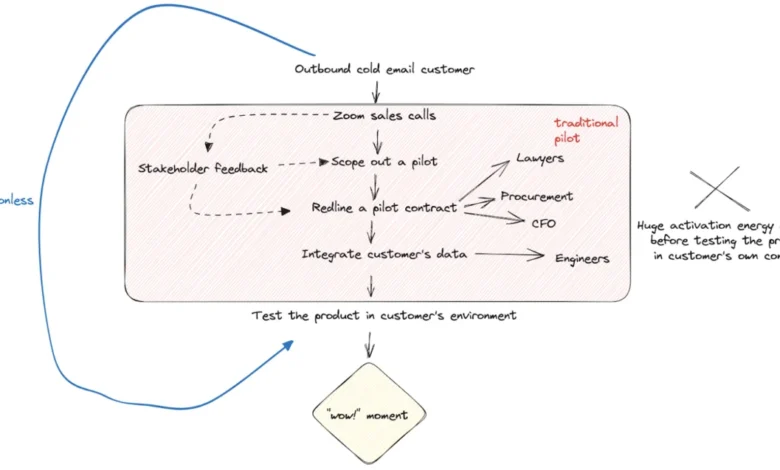
A decade ago, David Skok, a renowned figure in the SaaS industry, introduced the concept of "Time to Wow!" to highlight the transformative impact of customers experiencing a profound moment of value realization with a product. This foundational idea explored strategies to expedite this critical "wow" moment. Today, a new pattern is emerging, enabling startups to secure substantial enterprise contracts with unprecedented speed. These forward-thinking founders and their early teams are effectively inverting the traditionally protracted enterprise sales cycle by front-loading the customer’s "wow" moment to the very outset of their engagement, ushering in the era of "permissionless" pilots.
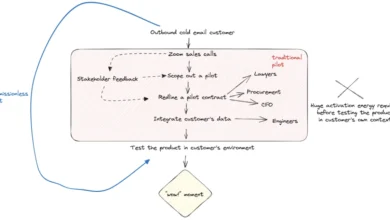
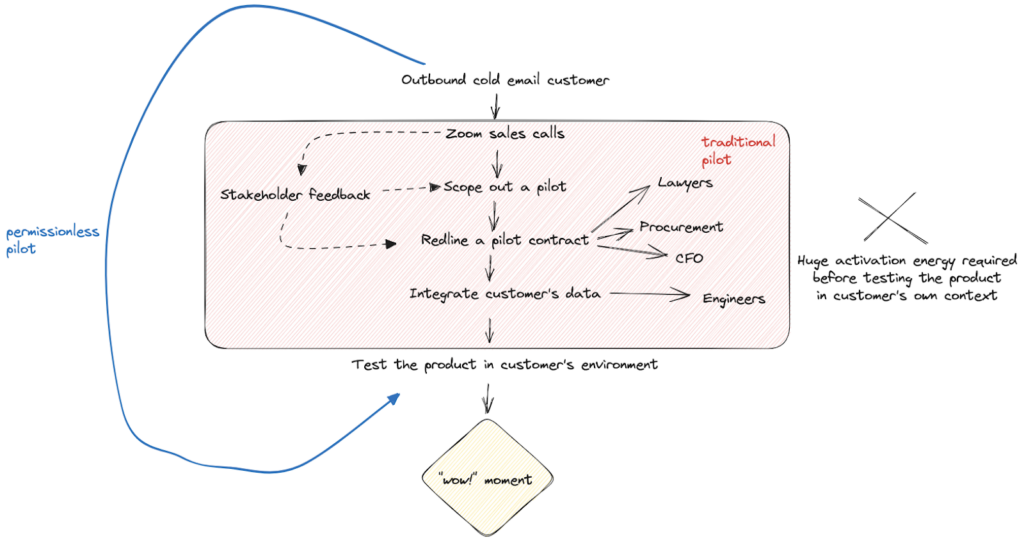
The widely accepted principle that a product’s ability to deliver a "wow" experience quickly correlates with its success is more relevant than ever. However, a significant number of contemporary products still require an extended period to reach this pivotal point. The conventional enterprise sales process is characterized by a series of arduous steps: numerous sales calls, intricate procurement procedures, complex contract negotiations, and often lengthy technical integrations. Only after navigating this labyrinth can a prospect truly experience the product’s value and gain confidence in its suitability for their specific use case. Candidly, it often feels like a testament to perseverance that any enterprise sales are closed at all.

The "Catch-22": The Data Dilemma in Enterprise Sales
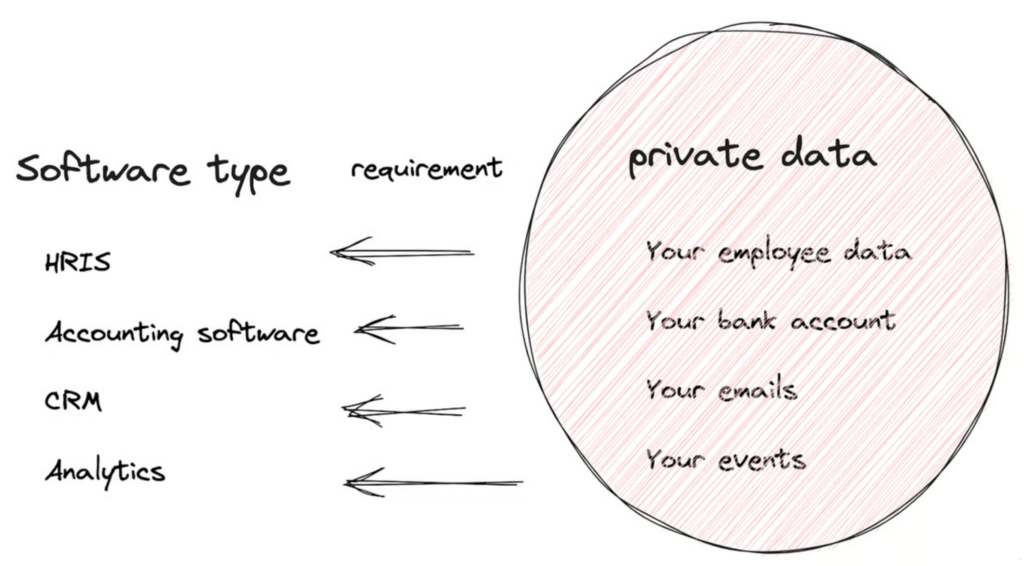
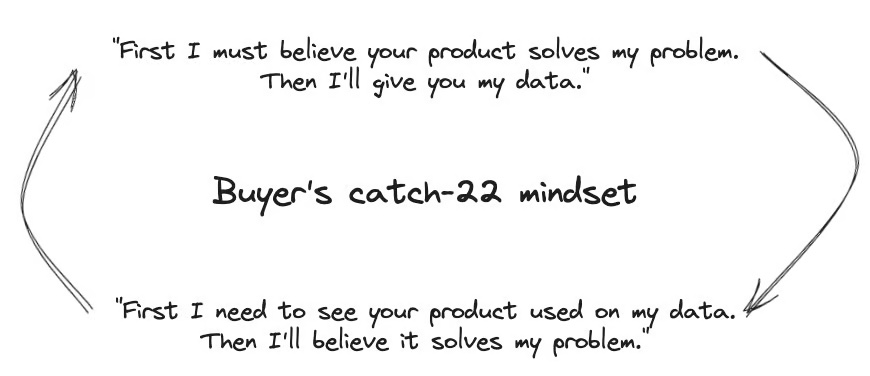
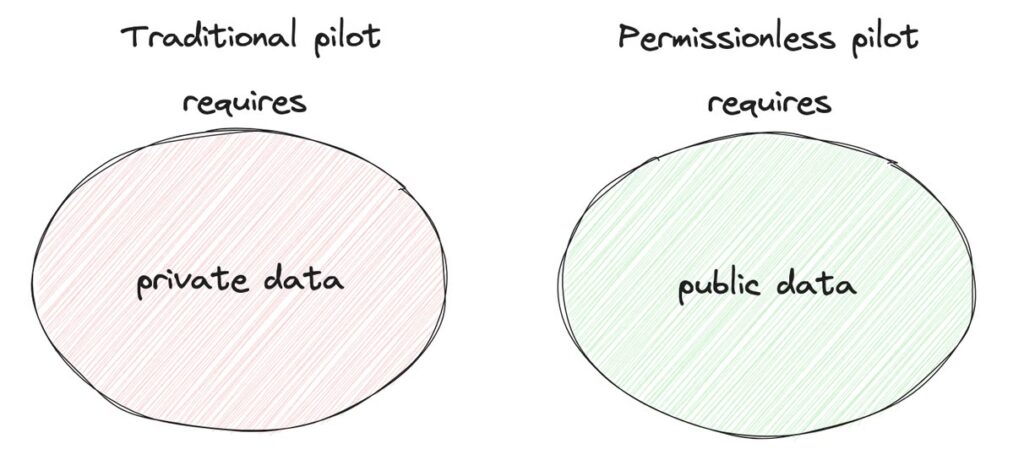
A fundamental reason for this protracted process lies in a classic "catch-22" scenario: "I’ll share my sensitive data only once I’m convinced the product works with my data." Enterprise software solutions, by their very nature, often require access to a customer’s proprietary data to function effectively. To circumvent this obstacle, many product demonstrations resort to utilizing simulated dummy data. While this can provide a theoretical glimpse into the user experience, it’s akin to a car dealership allowing a customer to watch someone else test-drive a vehicle. The true excitement and conviction arise from the personal experience of driving the car oneself.
The challenge is compounded by the fact that most potential clients are hesitant to grant access to their organization’s sensitive data until they are thoroughly convinced of the product’s tangible benefits. Obtaining approval to share or integrate company data with a third-party vendor involves navigating a complex web of internal protocols and approvals. Prospects must expend considerable social capital to secure internal political support and to successfully navigate formal approval processes.
Conversely, customers rarely achieve a genuine "wow" moment until they have witnessed the product in action within their own specific operational context, utilizing their own data. This creates a self-perpetuating cycle of skepticism and delay.
Introducing the Permissionless Pilot: Eliminating the Time-to-Value Barrier
To break free from this restrictive cycle, imagine a scenario where a product could instantly demonstrate its capabilities using a customer’s own data, in their unique environment, before any significant investment of time in sales calls, procurement, legal reviews, or technical integration. Such a paradigm shift would fundamentally alter the sales landscape.
This is precisely where the "permissionless pilot" emerges as a powerful solution. It acts as a strategic shortcut, effectively reducing the customer’s time-to-value to near zero. This innovative approach serves as a critical tool to overcome customer skepticism and build immediate confidence.
With a permissionless pilot, the crucial "wow" moment is moved from the conclusion of the sales process to its very beginning, occurring the instant a prospect first encounters the product. The term "permissionless" signifies that the demo functions seamlessly without requiring prior agreement, configuration, or data sharing from the prospect.
In essence, the permissionless pilot is a product demonstration that leverages publicly available, customer-specific data to deliver an immediate and impactful "wow" moment.
Constructing a Permissionless Pilot: A Three-Step Framework
While the specifics will vary based on the product and industry, the fundamental steps involved in creating a permissionless pilot generally include:
- Identify Relevant Public Data Sources: The first crucial step involves pinpointing publicly accessible data that is directly relevant to the target customer’s industry, operations, or challenges. This could range from publicly available financial filings and industry reports to website data, social media trends, or even open-source code repositories. The proliferation of data over the past decade has significantly expanded the availability of such resources.
- Develop a "Cool Demo" Using This Data: Once the relevant public data is identified, the next step is to build a demonstration that showcases the product’s capabilities in a compelling and insightful manner, utilizing this data. The emphasis here is on demonstrating a "cool" or impactful outcome that resonates with the prospect’s potential needs. This doesn’t necessarily require a fully polished, production-ready feature; rather, it needs to be a compelling illustration of value. Advances in machine learning, including natural language processing (NLP) and computer vision, are increasingly enabling the structuring and analysis of vast amounts of unstructured public data, opening up new avenues for permissionless pilot creation.
- Make the Demo Accessible: The final, and perhaps most critical, step is to ensure that this demonstration is easily accessible to potential customers, ideally through a simple link or a quick lookup mechanism. The goal is to remove any barriers to entry, allowing prospects to experience the "wow" moment with minimal effort.
It is important to note that not every company or product is an ideal candidate for permissionless pilots. However, the increasing availability of public data and advancements in data processing technologies present significant, often untapped, opportunities for creating more impactful "wow" moment demonstrations.
Real-World Application: Emerge Tools and the Power of Reverse Engineering
The efficacy of permissionless pilots is not merely theoretical; it is being actively demonstrated in the market by companies achieving rapid growth and securing significant enterprise clients. Emerge Tools, a portfolio company, provides a compelling case study, leveraging a particularly ingenious source of public data: the binary code of every mobile application available on the iOS and Android app stores.
Emerge Tools offers a mobile application performance management (APM) and optimization suite designed to help developers reduce the size of their mobile applications. Smaller app sizes translate to reduced storage requirements on user devices, lower data consumption, faster download times, and quicker application startup. In less than three years, Emerge Tools has attracted a prestigious client roster that includes industry giants like DoorDash, Square, Airbnb, Duolingo, Dropbox, Classpass, Bumble, and Faire, among others whose names remain confidential. Remarkably, this growth has been achieved largely without a traditional sales force.
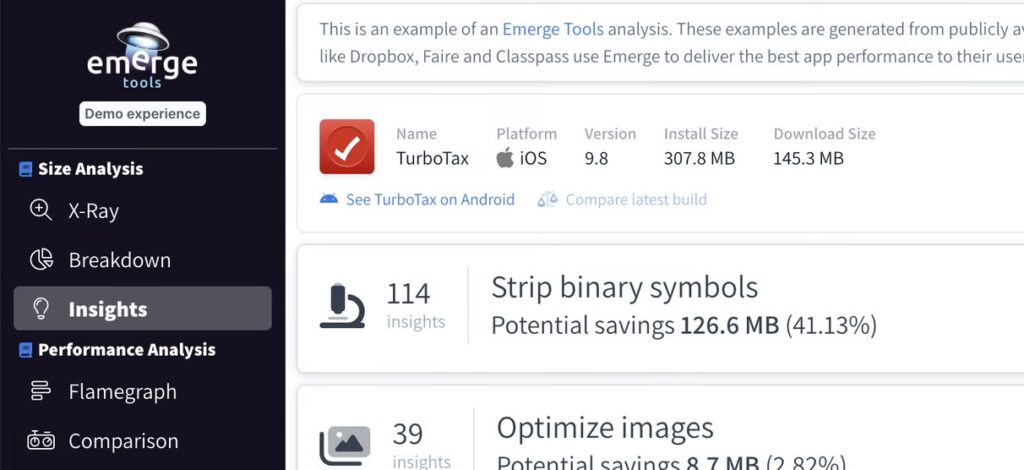
The success of Emerge Tools can be significantly attributed to their strategic deployment of permissionless pilots. While their full product integrates deeply into a mobile engineering team’s development workflow, requiring considerable stakeholder buy-in and potentially leading to extended sales cycles, Emerge’s approach circumvents this. To accelerate the "time-to-wow," the team developed a system capable of providing instant analysis demos for any prospect by reverse-engineering the publicly available versions of native mobile applications. This allows Emerge to showcase their product’s value proposition by simply searching for an app by name, eliminating the need for any integration or data sharing upfront.
For instance, Emerge provides an example of their analysis for the TurboTax iOS app. Their automated insights revealed potential optimizations that could reduce the app’s size by over 40%. Crucially, throughout this analysis process, Intuit, the multi-billion dollar corporation that owns TurboTax, was not required to provide any proprietary data, engage in contract redlining, or lobby for internal support for a new vendor.
In early 2023, Emerge began systematically automating their analysis of apps, creating dedicated web pages for each. This initiative saw their analysis scope expand from approximately 500 apps to over 10,000 public apps on a regular basis. This expanded library of analyses serves as a powerful content marketing engine. Emerge leverages these app analyses to generate original content, including blog posts, in-depth articles, and engaging social media threads. Because each app analysis resides on a unique, public URL, these "mini-pilots" act as organic assets that prospects are inclined to explore and often share internally. Since the beginning of the year, this engagement strategy has fueled a remarkable 400% increase in their Twitter followers, substantial growth in organic search traffic, and a significant rise in impressions.
The substantial enterprise contracts followed, not as a result of a fleeting gimmick, but because the target audience – mobile developers – could quickly access and evaluate specific insights pertaining to their own applications and immediately implement the recommended improvements. For many developers, this direct, data-driven experience proves far more compelling than engaging in traditional sales conversations.

Expanding Horizons: Where Else Can Permissionless Pilots Thrive?
The potential applications for permissionless pilots extend far beyond the example of Emerge Tools. The underlying principle of leveraging public data to demonstrate value upfront can be adapted across numerous industries. Consider these potential use cases:
- Search Engine Optimization (SEO): Companies in the SEO space could analyze public Google search results to provide businesses with immediate, data-driven suggestions for improving their search engine rankings and online visibility, akin to the offerings of companies like Conductor.
- E-commerce Optimization: Platforms could cross-reference millions of public e-commerce listings to identify and recommend conversion-driving improvements to product copy, imagery, pricing, and video content. This echoes the journey of companies like Salsify, which has explored similar permissionless pilot strategies.
- Cybersecurity and Bug Bounty Hunting: Security firms could offer real-time vulnerability and threat detection scans of public-facing web applications, providing immediate insights for organizations, similar to the model employed by platforms like HackerOne.
- Hedge Funds and Financial Analysis: Specialized firms could provide forensic intelligence by analyzing publicly available SEC filings to detect potential instances of fraud or earnings quality issues, mirroring the capabilities of companies like Bedrock AI.
- Web-Based Marketing Personalization: Companies such as Mutiny are already demonstrating how prospects can visualize personalized landing page experiences based on various audience attributes, all without requiring account creation, thereby showcasing the power of their platform upfront.
The world of publicly available data is vast, encompassing everything from open-source repositories on GitHub and rental listings to YouTube videos and job postings. The key to unlocking these opportunities lies in a creative approach to data utilization.
To spark innovation, businesses should begin by cataloging all relevant public data sources pertinent to their product or industry. Subsequently, they should pose the question: "What impactful demonstration could my product offer if it were to leverage these public data sources, even without access to proprietary customer data?" The aim is to conceptualize a demo that elicits a genuine sense of excitement or "coolness" – an adjective that frequently resonates with product builders when envisioning such demonstrations. It is not necessary for these initial demos to be perfect or directly monetizable; "something cool" often serves as an excellent starting point for a successful permissionless pilot.
Cultivating Brand Equity Through Permissionless Pilots
As a concluding thought, it is crucial to emphasize that permissionless pilots are a potent strategic tool that must be deployed thoughtfully. Their implementation should be geared towards building and enhancing brand equity, rather than risking its erosion. Companies must carefully consider the tone and message they wish to convey to prospects when they encounter these demonstrations. A well-executed permissionless pilot can foster trust, demonstrate immediate value, and set the stage for a more efficient and successful sales engagement. As businesses explore this innovative approach, the potential for accelerated growth and deeper customer engagement is significant.