The Gallon of Good and the Ounce of Bad: How Strategic Celebration Drives Organizational Resilience and Employee Engagement

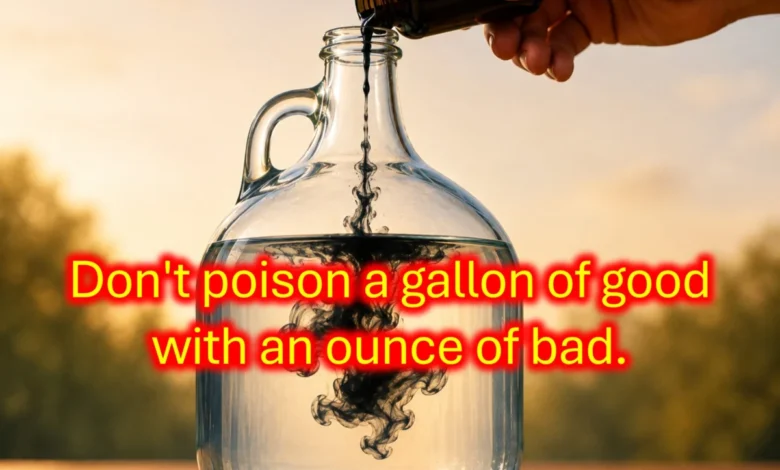
The modern corporate landscape is often defined by a relentless pursuit of excellence, where the achievement of one milestone serves merely as the starting line for the next. Within this high-pressure environment, a common leadership paradox has emerged: the tendency to overshadow collective success with immediate critiques. While the drive for continuous improvement is a hallmark of high-performing organizations, the timing of such feedback can inadvertently dismantle the very morale required to sustain long-term growth. Management experts and organizational psychologists are increasingly pointing to a phenomenon known as "poisoning the gallon of good," a practice where leaders introduce an "ounce of bad"—in the form of premature constructive criticism—during moments intended for celebration. By failing to separate the act of acknowledging success from the process of refining performance, leaders risk fostering a culture of perpetual inadequacy rather than one of achievement.
The Psychology of the "Yes-But" Leader
At the heart of this leadership challenge is the "Yes-But" mentality. This occurs when a manager acknowledges a team’s success but immediately follows it with a qualifying statement. For example, a leader might say, "The product launch was a massive success, but we really could have handled the client onboarding more efficiently." While the observation regarding onboarding may be factually correct, its placement within the celebratory window serves to negate the positive reinforcement of the launch.
Psychologically, this approach triggers a negativity bias in employees. Research in cognitive science suggests that humans are wired to weigh negative information more heavily than positive information. When a leader provides a "Yes-But" statement, the brain’s amygdala—the center for processing emotions and threats—prioritizes the criticism over the praise. Consequently, the "gallon of good" (the successful launch) is chemically and emotionally tainted by the "ounce of bad" (the critique). Over time, this pattern leads to "feedback fatigue," where employees become desensitized to praise because they are constantly bracing for the inevitable "but."
Supporting Data: The Impact of Recognition on Retention and Productivity
The importance of pure, unadulterated celebration is supported by a wealth of organizational data. According to the Gallup "State of the Global Workplace" report, employees who do not feel adequately recognized are twice as likely to say they will quit within the next year. Furthermore, the "Losada Ratio," or the Positive-to-Negative Emotion Ratio, suggests that high-performing teams typically experience at least three positive interactions for every one negative interaction. In elite teams, that ratio often climbs to six to one.
When a leader introduces criticism during a celebration, they effectively lower this ratio, moving the team toward a state of languishing. A study published in the Harvard Business Review highlighted that the most significant driver of daily motivation is a sense of progress. When celebration is cut short by a focus on what "could have been better," the psychological sense of progress is stunted, leading to a decrease in discretionary effort—the extra energy employees put into their work when they feel valued.

The Chronology of a Successful Feedback Cycle
To avoid the pitfalls of "Yes-But" leadership, organizational consultants suggest a structured chronology for managing success and improvement. This timeline ensures that both celebration and critique receive the dedicated focus they require to be effective.
- The Achievement Phase: A goal is met, a project is completed, or a milestone is reached.
- The Immediate Celebration (The "Gallon of Good"): Within 24 to 48 hours of the achievement, the focus remains exclusively on what went right. This is the period for savoring success and reinforcing the behaviors that led to the win. No "buts" are allowed during this window.
- The Cooling-Off Period: A brief interval—typically two to five days—allows the team to fully absorb the positive reinforcement and recover from the intensity of the project.
- The "Make it Better" Meeting: A formal, scheduled session dedicated entirely to process improvement. Because this is separated from the celebration, the team enters the room with a mindset of objective analysis rather than defensive reaction.
- The Implementation Phase: Insights from the "Make it Better" meeting are integrated into the next project cycle.
By following this chronology, leaders ensure that the "ounce of bad" is transformed into "actionable intelligence" rather than "emotional poison."
Strategic Celebration: Three Methods for Leadership Efficacy
Effective leaders do not simply "throw a party"; they use celebration as a strategic tool to encode success into the organization’s DNA. Experts recommend three primary methods for mastering this balance.
1. Digging into Specificities
Generic praise, such as "Great job, everyone," often rings hollow and fails to provide a roadmap for future success. To make a celebration meaningful, leaders must identify and highlight specific contributions. This involves naming the individual or sub-team and detailing exactly how their actions led to the outcome. For instance, instead of praising a sales quarter in general, a leader might highlight the specific negotiation tactics used by a junior associate to secure a difficult account. Specificity validates the effort and clarifies the standards of excellence for the rest of the team.
2. Protecting the Emotional Integrity of the Win
The most difficult task for a high-achieving leader is to remain silent about flaws during a victory lap. However, the "ounce of bad" rule suggests that any criticism shared during a moment of triumph is amplified. Leaders must develop the self-discipline to "hold their fire." If a voice in the leader’s head says, "We could do better," they must acknowledge that this thought is a sign of high standards—a positive trait—but recognize that the timing for sharing it is wrong. Protecting the win means allowing the team to feel the full weight of their success without the distraction of immediate correction.
3. Establishing Dedicated "Make it Better" Rituals
To satisfy the organizational need for continuous improvement, leaders should institutionalize "Make it Better" meetings. These are distinct from "Post-Mortems," which often carry a negative or investigative connotation. A "Make it Better" meeting is framed as a forward-looking strategy session. By scheduling these meetings in advance, the leader signals that improvement is a standard part of the workflow, not a reaction to failure. This allows the team to enjoy the celebration, knowing there is a designated, safe space later to discuss adjustments and optimizations.

Broader Impact: Culture and Organizational Resilience
The long-term implications of how success is handled are profound. Organizations that prioritize pure celebration build "psychological capital." This capital acts as a buffer during times of crisis. When a team has a "gallon of good" that has remained unpoisoned, they are more resilient when things inevitably go wrong. They have a reservoir of confidence and mutual trust to draw upon.
Conversely, in cultures where every win is met with a "but," organizational cynicism begins to take root. Employees may start to view achievements as burdens, knowing that a "success" will only lead to an exhausting list of things they did wrong. This leads to a "culture of compliance" rather than a "culture of excellence," where staff do the bare minimum to avoid critique rather than striving for innovation.
The "Yes-But" leader often believes they are being helpful or maintaining high standards. In reality, they may be undermining the very performance they seek to improve. As modern management moves toward a more human-centric model, the ability to savor success is becoming a competitive advantage.
Conclusion: The Loudest Voice After Victory
In the wake of a significant achievement, the voice that a leader chooses to amplify—gratitude or improvement—will determine the team’s trajectory for the next quarter. While the desire to "do better" is essential for survival in a global market, it must not come at the expense of the team’s emotional and psychological well-being.
By separating the "gallon of good" from the "ounce of bad," leaders create an environment where excellence is not just a goal, but a sustainable practice. The most effective leaders are those who understand that celebration is not a distraction from work; it is the fuel that makes future work possible. In the final analysis, constant improvement without celebration is not a path to greatness—it is a recipe for burnout and failure. Leaders must learn to celebrate generously and improve thoughtfully, ensuring that the sweetness of victory is never curdled by the bitterness of premature critique.