Rethinking the Software Development Life Cycle: How AI is Forging a New Gold Standard for Software Delivery

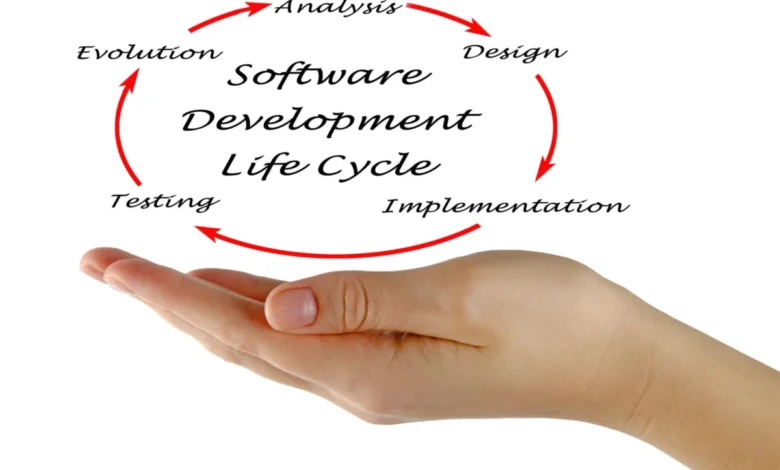
The traditional software development life cycle (SDLC), a structured methodology that has underpinned software creation for decades, is currently undergoing its most significant transformation yet, propelled by the rapid advancements in artificial intelligence. While its established stages – planning, analysis, design, coding, testing, deployment, and maintenance – were meticulously crafted to prioritize safety, stability, and robust risk management from a project’s inception to its final delivery, this rigid framework was not conceived for the dynamic, high-speed demands of the AI era. Its inherent inflexibility, reliance on fixed assumptions, and built-in constraints, though once foundational for quality, now often translate into tangible costs: protracted software delivery pipelines, limitations on engineers’ capacity for flexible innovation, and a significant impedance to an organization’s ability to operate at the unprecedented velocity that AI now enables.
This imperative to rethink the SDLC does not, however, advocate for an abandonment of established best practices. Instead, it calls for a profound evolution, a strategic adaptation that acknowledges and leverages the distinct strengths of both human intelligence and artificial intelligence. Modern software engineers are tasked with striking a delicate yet critical balance: maintaining the integrity of secure, stable code while embracing the rapid, iterative development cycles that define the contemporary enterprise. The ultimate goal is to achieve significantly compressed delivery timelines and accelerate market responsiveness without compromising the bedrock principles of software stability, quality, or, crucially, customer focus.
The Foundational SDLC: A Legacy of Structure and Control
To fully appreciate the current paradigm shift, it is essential to understand the historical context of the SDLC. Originating in the mid-20th century with the rise of complex computing systems, the SDLC emerged as a necessity to manage the inherent complexities and risks associated with software development. Early models, such as the Waterfall methodology, were highly sequential, prescribing a strict order of phases that had to be completed before the next could begin. This was particularly suited for projects with well-defined requirements and stable environments, ensuring comprehensive documentation and rigorous control. Over the decades, the SDLC evolved through various iterations, including iterative, spiral, and ultimately, agile methodologies, which emphasized flexibility, collaboration, and rapid iteration in response to changing requirements. DevOps further extended this evolution by integrating development and operations, aiming to shorten the systems development life cycle and provide continuous delivery with high software quality. Each evolution sought to address the limitations of its predecessors, primarily concerning speed and adaptability. Yet, even with Agile and DevOps, many core assumptions about human-centric coding, manual oversight, and sequential quality gates persisted, assumptions now challenged by AI.
The AI Inflection Point: Reshaping the Development Landscape
The current wave of AI, particularly the proliferation of large language models (LLMs) and advanced machine learning techniques, represents an inflection point comparable to the introduction of high-level programming languages or the internet itself. Tools like GitHub Copilot, Amazon CodeWhisperer, and various AI-driven code analysis platforms have moved beyond theoretical discussions to become practical, everyday aids for developers. These tools excel at tasks that involve synthesis, pattern recognition, rapid iteration, and the efficient execution of well-defined, often repetitive, operations. This capability fundamentally reshapes how software is built, not by eliminating the need for structured development but by augmenting the often-overworked engineers who navigate its complexities.
This augmentation is most profoundly transformative in several key areas, moving beyond the single point mentioned in earlier discussions to encompass a broader spectrum of development activities:
- Automated Code Generation and Boilerplate Reduction: AI’s ability to generate foundational code, write boilerplate, and fill in routine patterns significantly accelerates the initial phases of development. This includes creating basic CRUD (Create, Read, Update, Delete) operations, setting up project structures, and adhering to specific architectural patterns. Studies, such as those conducted by GitHub, have indicated that developers using AI coding assistants can complete tasks significantly faster, with some reporting up to a 55% increase in speed for specific coding challenges. This frees engineers from the tedious, repetitive aspects of coding before meaningful, high-level building even commences.
- Maintenance Toil and Dependency Management: A substantial portion of an engineer’s time is typically consumed by maintenance tasks, including dependency upgrades, patching security vulnerabilities, and ensuring compatibility across various software components. AI tools can batch and automate these repetitive tasks across dozens or even hundreds of repositories simultaneously. They can identify outdated libraries, suggest compatible upgrades, and even generate pull requests with necessary code changes, drastically reducing the "toil" that often saps developer energy and project velocity.
- Intelligent Testing and Debugging Assistance: AI algorithms are increasingly adept at generating comprehensive test cases, identifying potential edge cases that humans might overlook, and even suggesting fixes for identified bugs. By analyzing code patterns and historical bug reports, AI can predict areas prone to errors, automate unit test generation, and assist in debugging by pinpointing potential root causes, thereby enhancing software quality and reliability while speeding up the testing phase.
- Automated Documentation and Knowledge Management: Generating and maintaining accurate documentation is a notoriously time-consuming but critical part of the SDLC. AI can automatically draft technical specifications, generate API documentation, summarize code blocks, and even create user manuals based on design specifications and code changes. This ensures that documentation remains current with the evolving codebase, significantly improving knowledge transfer and reducing the burden on engineers.
- Proactive Security Vulnerability Identification: Integrating AI into the DevSecOps pipeline allows for continuous, real-time scanning of code for common security vulnerabilities, adherence to compliance standards, and identification of potential exploits. AI tools can analyze vast amounts of code to detect subtle patterns indicative of security flaws, suggesting remediation steps and integrating seamlessly into the development workflow to "shift left" security, making it an inherent part of coding rather than a post-development afterthought.
- Requirement Analysis and Specification Drafting: While human judgment remains paramount in understanding complex business requirements, AI can assist in the early stages of the SDLC by analyzing natural language descriptions of requirements, identifying ambiguities, and even drafting initial technical specifications or user stories. This helps to clarify project scope and reduce misinterpretations early on, setting a clearer path for development.
These advancements underscore a fundamental truth: AI changes how engineers deliver code, but it does not alter the why. The core drivers – customer needs, the problems they face, and the value engineers strive to deliver – remain constant. Similarly, the fundamentals of good engineering practices, sound architectural principles, clear ownership, and robust reliability do not diminish in importance; if anything, they become more critical. As AI democratizes development and accelerates the pace of code generation, the scope for errors and security risks inherently increases, making human oversight, strategic thinking, and accountability more vital than ever before.

The Indispensable Human Advantage: Judgment, Context, and Empathy
While AI efficiently handles much of the computational and repetitive "toil" involved in software development, the human role undergoes a profound and strategic shift. Humans bring capabilities that AI, in its current and foreseeable forms, cannot replicate: judgment, nuanced contextual understanding, and empathy. These are skills that operate at a system level and are crucial for the strategic direction and success of any complex software project.
- Strategic Oversight and Architectural Vision: Engineers are increasingly focused on higher-order tasks such as defining complex problems, evaluating trade-offs between competing solutions, making critical architectural decisions that impact scalability and maintainability, and ensuring production discipline across the entire system. Their day-to-day work shifts from writing and debugging individual lines of code to defining system boundaries, orchestrating interactions between different components, and ensuring alignment with broader business objectives.
- Contextual Understanding and Business Acumen: AI operates based on patterns and data, but it lacks real-world experience, an understanding of implicit business context, and the ability to interpret non-technical cues. Humans provide this critical layer of contextual understanding, translating abstract business needs into concrete technical specifications and ensuring that the software solves the right problems in the right way for the right users. This includes navigating organizational silos and optimizing resource deployment for maximum impact.
- Empathy and Customer Focus: At its heart, software development is about solving human problems. Engineers, with their capacity for empathy, are uniquely positioned to understand customer pain points, anticipate user behavior, and design intuitive, human-centric solutions. AI can process user feedback, but it cannot truly empathize with a user’s frustration or delight, nor can it make ethical decisions that require a deep understanding of societal values.
- Accountability and Quality Assurance: Critically, in this human + AI model, engineers remain unequivocally accountable for the outcomes. This involves rigorous review of AI-generated code to assess its quality, identify potential security vulnerabilities, catch subtle edge cases that AI might miss, and ultimately ensure the reliability and integrity of the production system. The role evolves to that of an "AI conductor," directing AI tools, validating their output, and bearing the ultimate responsibility for the final product. Engineers who cultivate strong oversight skills for AI toolchains, coupled with deep domain expertise, are expected to be the most valuable assets in this new paradigm.
Addressing Risks: The Crucial Need for a Standardization Layer
The rapid adoption of AI in code generation, while offering immense benefits, also introduces new vectors of risk, particularly "AI-generated code drift." Without a robust standardization layer that embeds approved patterns, libraries, security requirements, and coding standards directly into every AI agent session, AI-generated code can diverge significantly from established quality and compliance benchmarks across different teams and projects. This unmanaged divergence can rapidly accumulate new forms of technical debt, complicate maintenance, and dramatically increase security exposure, especially as more developers integrate AI code generation tools into their workflows.
To mitigate these risks, organizations must invest in creating sophisticated governance frameworks for AI-assisted development. This includes:
- Centralized Pattern Libraries: Establishing approved component libraries and coding patterns that AI tools are trained on and enforced to use.
- Automated Security Scans: Integrating AI-powered security analysis tools that actively review generated code for vulnerabilities before integration.
- Compliance Checklists: Embedding regulatory and compliance requirements into the AI’s generation process, ensuring code meets legal and industry standards from the outset.
- Human Review Gates: Maintaining mandatory human review stages, particularly for critical code paths, to catch subtle errors, ensure architectural alignment, and validate security.
- Version Control and Traceability: Ensuring all AI-generated code is properly versioned and traceable, allowing for auditing and rollback if necessary.
- Ethical AI Guidelines: Developing internal guidelines for the ethical use of AI in development, addressing potential biases in generated code and ensuring fairness and transparency.
Forging a New Gold Standard for Software Delivery
The vision for modern software delivery is not merely a handoff of manual work to AI, nor is it about AI replacing human creativity. Organizations that approach AI as a bolt-on solution, automating existing processes without fundamentally rethinking the underlying SDLC model, will likely achieve only incremental gains at best. The true opportunity lies in something far more fundamental: rebuilding the SDLC from the ground up, seamlessly weaving human expertise and AI capabilities together to create a new gold standard that maximizes the respective strengths of each.
This integrated "human + AI" model envisions a symbiotic relationship where AI accelerates execution, handles repetitive tasks, and provides intelligent assistance, while humans provide the invaluable judgment, contextual understanding, creativity, and ultimate accountability that technology cannot replicate. This synergistic approach leads to a truly transformative SDLC, characterized by:
- Accelerated Time-to-Market: Products and features reach customers significantly faster, allowing businesses to react swiftly to market changes and maintain a competitive edge.
- Enhanced Reliability and Quality: With AI assisting in testing, debugging, and security analysis, coupled with strategic human oversight, software systems become more robust, reliable, and secure.
- Optimized Resource Allocation: Engineers are freed from mundane tasks, allowing them to focus their intellectual capital and creative energy on solving complex customer problems, innovating, and designing future-proof architectures.
- Increased Developer Satisfaction: By reducing toil and empowering engineers with powerful tools, the development experience improves, leading to higher job satisfaction and retention.
The benefits of getting this integration right will resonate far beyond the engineering teams, permeating the entire business ecosystem. As humans and AI collaborate effectively, the entire organization transforms. Products are launched with unprecedented speed, systems demonstrate superior reliability, and engineering resources are strategically channeled towards high-value initiatives that directly address core customer needs and drive business growth. The organizations that proactively embrace and rebuild their development processes around this sophisticated "human + AI" model will not only move faster but, crucially, build better software for a more dynamic and demanding future.