The Behavioral Reframe of Bravery in Leadership
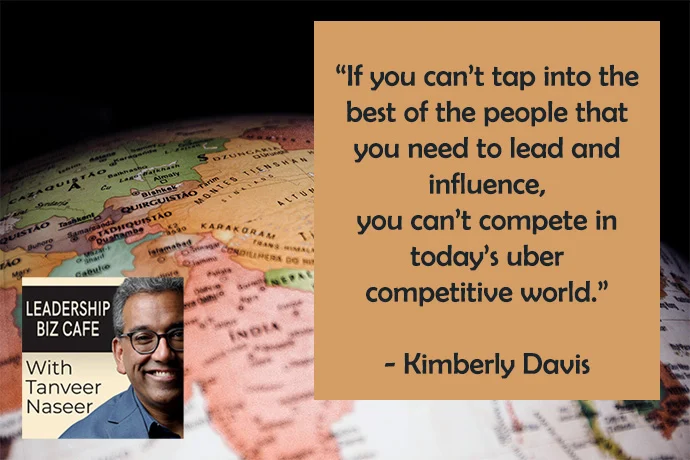
The core thesis presented by Kimberly Davis, author of the award-winning book "Brave Leadership: Unleash Your Most Confident, Powerful, and Authentic Self to Get the Results You Need," is that waiting to feel brave before acting is a strategic error. In high-stakes professional environments, the "feeling" of courage is often elusive. By reframing bravery as a behavior—something one does—leaders can bypass the paralysis of self-doubt. This approach aligns with modern psychological perspectives on "action-first" behavioral changes, where the internal state follows the external movement.
Davis, who serves as an educator at Southern Methodist University’s Cox School of Business Executive Education, posits that bravery in a leadership context is defined by the decision to prioritize the mission and the team over personal comfort. This involves a transition from self-centered anxiety (how do I look? will I fail?) to other-centered purpose (what does the team need? how do we achieve the goal?). This shift is particularly relevant in an era characterized by "VUCA" (Volatility, Uncertainty, Complexity, and Ambiguity), where the traditional command-and-control structures are increasingly ineffective.
The Global Context: From the Boardroom to the WE Lead Program
The development of Davis’s "Brave Leadership" framework is rooted in diverse and demanding environments. A significant portion of her research and practical application stemmed from her four-year tenure with the Bush Institute’s WE Lead (Women’s Initiative Fellowship) program. This initiative focused on empowering female leaders across the Middle East and North Africa (MENA) region—territories where leadership often requires navigating profound social, political, and economic hurdles.
In these contexts, bravery was rarely about the absence of fear; it was about the presence of purpose. The fellowship participants demonstrated that influential leadership is built on authenticity and the ability to inspire others to follow by choice rather than by obligation. Davis’s work in the MENA region provided a rigorous testing ground for the idea that "brave leadership" is a universal requirement for progress, regardless of the cultural or geographical setting. This experience informed the recently revised and updated edition of her book, which incorporates lessons learned from global crises and the shifting dynamics of the modern workforce.
A Chronology of Leadership Evolution (2018–2024)
To understand the urgency of Davis’s message, it is necessary to examine the timeline of leadership trends over the last several years:
- 2018–2019: The Authenticity Movement. Following the initial release of "Brave Leadership," the corporate world began a significant pivot toward "authentic leadership." Organizations started to move away from the "stoic executive" archetype toward leaders who could show vulnerability.
- 2020–2021: The Crisis Catalyst. The global pandemic served as a massive stress test for leadership bravery. Leaders were forced to make high-stakes decisions with minimal data. Those who waited to "feel" certain often struggled, while those who focused on "doing" the next right thing for their employees saw higher retention and trust.
- 2022–2023: The Trust Deficit. As hybrid work became the norm, the "engagement gap" widened. Data from Gallup indicated a decline in employee engagement for the first time in a decade. This period highlighted the need for leaders to understand "what matters to employees," a core tenet of Davis’s philosophy.
- 2024 and Beyond: The Strategic Re-update. The release of the updated edition of "Brave Leadership" reflects a world where uncertainty is no longer a temporary state but a permanent condition. The focus has shifted from managing stability to leading through perpetual change.
Supporting Data: The Cost of the Fear-Based Leadership
The necessity for brave action is supported by recent organizational data. According to the 2023 Edelman Trust Barometer, employees increasingly look to their employers and CEOs to lead on social issues and provide a sense of stability. However, there remains a significant gap in perceived leadership courage:
- Employee Retention: A study by McKinsey & Company found that "uncaring leaders" was one of the top three reasons employees cited for quitting their jobs during the "Great Attrition." Brave leadership, which involves having difficult conversations and advocating for employee needs, is directly correlated with higher retention rates.
- Innovation and Risk: Research published in the Harvard Business Review suggests that psychological safety—a byproduct of brave leadership—is the number one predictor of team performance. When leaders act bravely by admitting mistakes or taking calculated risks, they give their teams the "permission" to do the same, fostering innovation.
- The Trust Gap: Only 23% of U.S. employees strongly agree that they trust the leadership of their organization, according to Gallup. Davis argues that this trust is earned through the "brave" act of understanding and aligning with employee values, rather than relying on the authority of a title.
The "Super Objective": Aligning Action with Results
A central component of the brave leadership methodology is the "Super Objective." Borrowed from theatrical training, the Super Objective is the ultimate goal that drives every action an actor takes on stage. In a leadership context, Davis applies this to mean the singular, overarching purpose that a leader serves.
When a leader identifies their Super Objective—such as "empowering the next generation of engineers" or "revolutionizing sustainable energy"—the focus shifts away from the leader’s internal fears. The "bravery" becomes a tool to achieve that objective. If a difficult conversation is required to reach the goal, the leader does it not because they feel courageous, but because the objective demands it. This utilitarian view of bravery removes the ego from the equation, making leadership a more objective, results-oriented discipline.
Professional Analysis: Implications for Modern Organizations
The implications of Kimberly Davis’s work suggest that organizations must change how they identify and train future leaders. If bravery is an action rather than a personality trait, it can be taught and scaled. This contradicts the "great man theory" of leadership, which suggests that leaders are born with innate qualities like courage.
From a strategic standpoint, "brave leadership" serves as a hedge against organizational stagnation. In many legacy companies, "fear of the wrong move" leads to analysis paralysis. By institutionalizing Davis’s concept of bravery—encouraging action in the face of uncertainty—companies can maintain agility. Furthermore, the emphasis on understanding what matters to employees is no longer a "soft skill" but a hard requirement for talent acquisition and brand reputation.
Reactions and Broader Impact
Industry reactions to the "bravery as action" model have been largely positive, particularly among HR professionals and middle managers who often feel the most pressure to "appear" confident. Analysts suggest that this approach democratizes leadership, allowing individuals who may be naturally introverted or anxious to lead effectively by focusing on their actions and objectives rather than their temperament.
The broader impact of this shift is seen in the rising demand for "human-centric" leadership development. As AI and automation take over technical tasks, the uniquely human elements of leadership—such as moral courage, empathy, and the ability to inspire voluntary following—become the primary value drivers for executives.
In conclusion, the dialogue between Tanveer Naseer and Kimberly Davis serves as a vital reminder that the most effective leaders are not those who are fearless, but those who are willing to act despite their fears. By focusing on the "Super Objective" and the genuine needs of their workforce, leaders can cultivate a culture of bravery that drives authentic results. As Davis notes, bravery is not a stroke of luck or a fleeting emotion; it is a professional practice that requires consistency, purpose, and a relentless focus on the people being led. In a world of perpetual uncertainty, the ability to "do" brave things remains the most significant competitive advantage an organization can possess.