Alphabet’s AI Investments Begin to Reassure Investors as Cloud Business Soars

Alphabet investors, who have publicly voiced concerns regarding the substantial financial outlay for the company’s artificial intelligence initiatives, are finding some solace in the latest earnings report. The search giant’s cloud division, powered significantly by the surging enterprise adoption of AI, has demonstrated robust growth, exceeding expectations and suggesting that the hefty investments may indeed be yielding tangible returns.
Cloud Business Surges on the Back of Enterprise AI Adoption
The most striking revelation from Alphabet’s recent financial disclosures is the exceptional performance of Google Cloud. The segment experienced a remarkable year-over-year revenue increase of 82%, climbing to $24.8 billion. This growth significantly surpasses the 63% year-over-year jump reported in the preceding quarter, which saw revenue reach $20 billion. Furthermore, the latest figures comfortably exceeded Wall Street analysts’ projections, who had anticipated cloud revenue to reach $22.46 billion.
This impressive acceleration in Google Cloud’s revenue is directly attributed to the widespread adoption of enterprise AI solutions and the underlying infrastructure required to support them. Companies are increasingly relying on Google Cloud’s capabilities to develop, deploy, and scale their AI applications, from machine learning models to sophisticated data analytics platforms. The company highlighted this trend, noting that its backlog of cloud contracting work – representing future revenue yet to be recognized – has swelled to an impressive $514 billion. This substantial backlog signals sustained demand and a strong pipeline of future business for Google Cloud.
Financial Performance Beyond Cloud: Overall Growth and Profitability
Beyond the stellar performance of Google Cloud, Alphabet’s overall financial health presents a picture of significant expansion and profitability. The company reported a staggering profit of $112.1 billion for the quarter, a monumental leap from the $28.1 billion profit recorded during the same period last year. This substantial increase in profitability underscores the company’s ability to translate its revenue growth into substantial bottom-line gains.
Overall revenue for Alphabet also saw a healthy increase, growing by 24% year-over-year to $119.8 billion during the past quarter. The core Google Services segment, which includes Search, Ads, YouTube, and other consumer-facing products, contributed significantly to this growth, with revenue rising 15% to $94.5 billion. This indicates continued strength in Alphabet’s established business lines, even as it aggressively pursues innovation in emerging areas like AI.
Sundar Pichai: AI Investments are Redefining Possibilities
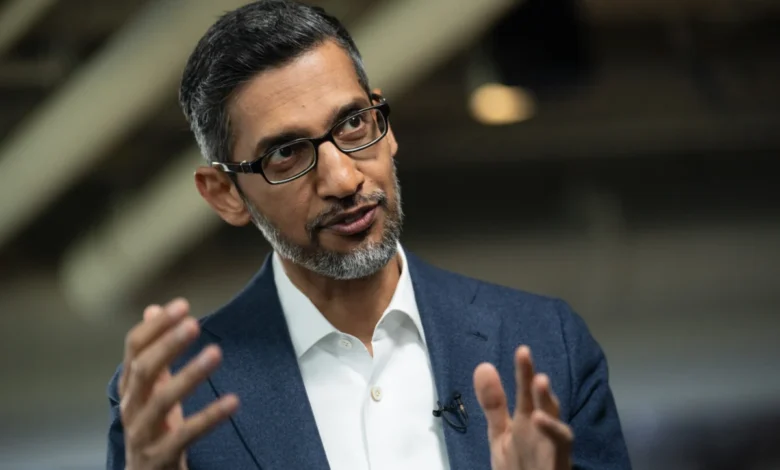
Google CEO Sundar Pichai, speaking during the company’s earnings call, expressed confidence in the strategic direction of Alphabet’s AI investments. "Our AI investments are redefining what’s possible across every part of our business," Pichai stated. "We have exciting momentum across the board." This sentiment reflects a belief that the company’s commitment to AI research and development is not merely an expenditure but a foundational element for future growth and market leadership.
The increasing adoption of Gemini, Google’s flagship AI chatbot, further supports Pichai’s claims of momentum. The company reported that Gemini now boasts 950 million monthly active users, a notable increase from the 750 million users reported in the fourth quarter of 2025. This expansion in user base for its AI products suggests a growing acceptance and integration of Google’s AI offerings into consumer and enterprise workflows.
A Pattern of Consistent Growth, but This Quarter Stands Out
It is important to note that robust revenue growth is not an anomaly for Google. The company has established a consistent track record, marking its 12th consecutive quarter of double-digit revenue growth. This sustained performance underscores the resilience and adaptability of Alphabet’s business model. However, even within this pattern of strong growth, the most recent quarter stands out as particularly bountiful, highlighting the significant impact of its current strategic initiatives.
The Hefty Price Tag of AI Ambition and Investor Scrutiny
Despite the positive financial results, the significant capital expenditures associated with Alphabet’s AI ambitions remain a point of investor focus. The company’s capital expenditures, which encompass investments in data centers, chip procurement, and infrastructure expansion, are estimated to be between $180 billion and $190 billion for the current year. This substantial outlay naturally raises questions about the timeline and magnitude of returns on these investments.
During the earnings call, analysts pressed Sundar Pichai on these very issues. When questioned about the payoff from these investments, Pichai indicated a positive outlook, citing strong demand indicators and long-term deals. "I think our compute capacity investments in ’27," he stated, implying that the benefits are expected to materialize and grow significantly in the coming years. He further elaborated, "We are seeing strong demand indicators, including long-term deals. I think, if anything, the dynamics look healthier than where we were about a year ago, so that’s what gives us the confidence to undertake those investments." This suggests that while the upfront investment is considerable, the company foresees a robust future demand that will justify and reward this strategic commitment.
Background and Context: The AI Race Intensifies
Alphabet’s substantial AI spending is part of a broader, intensified race among major technology companies to dominate the artificial intelligence landscape. For years, the company has been a pioneer in AI research, with its DeepMind division and internal research teams making significant breakthroughs. However, the recent surge in generative AI, exemplified by models like OpenAI’s ChatGPT, has accelerated the competitive pressure.
In late 2025 and early 2026, the market witnessed a significant uptick in AI-related investments and product launches across the tech sector. Companies like Microsoft, through its partnership with OpenAI, made substantial strides, prompting Alphabet to accelerate its own AI development and deployment. This led to a period of significant investment in AI infrastructure, including the acquisition of advanced AI chips (such as those from NVIDIA) and the expansion of its global data center network to support the massive computational needs of AI models.
The initial investor reaction to this ramp-up in spending was cautious, with some questioning whether the projected revenue from AI services would justify the enormous capital outlay. The sheer scale of the investment – a reported $80 billion planned for AI buildout – fueled these concerns, especially in an economic climate where market uncertainties can quickly impact investor sentiment.
Timeline of AI Investment and Growth
- Early to Mid-2025: Increased public discourse and investor apprehension surrounding Alphabet’s significant AI spending plans. Reports emerge detailing the projected $80 billion investment in AI infrastructure.
- Late 2025: Continued investment in AI research and development, alongside the expansion of data center capacity and acquisition of AI hardware. Google begins to integrate AI more deeply into its existing products.
- Fourth Quarter 2025 Earnings: Google reports 750 million monthly active users for its Gemini app, indicating early traction for its AI chatbot.
- Early 2026: Intensified competition in the AI space, with rivals also making substantial investments and product announcements.
- Latest Earnings Report (Mid-2026): Alphabet announces a significant surge in Google Cloud revenue (82% year-over-year), directly linked to enterprise AI adoption. Profitability also sees a dramatic increase. Gemini user base grows to 950 million monthly active users. Capital expenditures for the year projected between $180 billion and $190 billion.
Broader Implications and Future Outlook
The recent earnings report offers a crucial data point for investors and industry observers alike. It suggests that Alphabet’s aggressive AI strategy is beginning to translate into tangible business growth, particularly within its enterprise-focused cloud division. This validates the company’s long-term vision and its ability to monetize its AI advancements.
The success of Google Cloud in attracting enterprise clients for AI solutions positions Alphabet as a key player in the ongoing digital transformation across industries. As businesses continue to leverage AI for efficiency, innovation, and competitive advantage, Google Cloud is poised to benefit from this trend. The substantial backlog of cloud contracts further solidifies this outlook, indicating a strong demand pipeline for the foreseeable future.
However, the sheer scale of Alphabet’s ongoing investments means that continued scrutiny from investors is inevitable. The company will need to demonstrate a sustained ability to convert these investments into profitable growth and maintain its competitive edge in the rapidly evolving AI landscape. The success of Gemini and other AI-powered products will be critical in driving both consumer and enterprise adoption, further solidifying Alphabet’s position.
While the current results offer a welcome reprieve for concerned investors, the long-term success of Alphabet’s AI strategy will depend on its continued innovation, effective execution, and the ability to consistently deliver value to its customers and shareholders. The company’s commitment to AI is a marathon, not a sprint, and this latest quarter represents a significant and encouraging milestone on that journey. The coming years will be crucial in determining whether Alphabet can fully capitalize on its substantial AI investments and maintain its leadership in the technology sector.
Related posts: