GitHub Overhauls Issues Navigation Architecture, Significantly Boosting Performance Through Client-Side Innovations

GitHub has fundamentally redesigned the navigation architecture powering its ubiquitous Issues feature, a critical component for millions of developers worldwide. This significant engineering undertaking aims to drastically reduce perceived latency by shifting a substantial portion of processing and data management to the client-side. The strategic overhaul introduces advanced techniques such as client-side caching, predictive prefetching, and service worker-based request handling, collectively elevating instant navigation experiences from a mere 4% to an impressive 22%. This architectural pivot directly confronts a pervasive challenge in large-scale web applications: mitigating delays stemming from repetitive network requests and client-side initialization during frequently executed user workflows.
The impetus behind this ambitious project stemmed from a deep analysis of user behavior, particularly focusing on GitHub Issues users who frequently traverse between individual issues, issue lists, and various related views. In these high-frequency scenarios, the engineering team identified a significant opportunity to reuse previously retrieved information rather than repeatedly fetching it from backend services. This recognition led to the adoption of a "local-first" approach, a paradigm shift where available data is rendered instantaneously from the browser, while background processes are tasked with retrieving newer information only when necessary to maintain data freshness. This sophisticated architecture leverages multiple client-side storage layers, including IndexedDB for robust, persistent storage and in-memory caching for frequently accessed data during active user sessions, ensuring both speed and reliability.
The Evolution of Web Performance: From Server-Centric to Client-Centric
For decades, the conventional wisdom in web application development leaned heavily on server-side rendering and processing. While robust, this model inherently introduces latency as every user interaction, particularly navigation, typically necessitates a full round trip to the server. As web applications grew in complexity and user expectations for instantaneous feedback escalated, the limitations of this server-centric model became increasingly apparent. GitHub, as one of the largest and most critical platforms for software development, experiences these challenges acutely. Developers spend countless hours interacting with GitHub Issues, making even minor delays translate into significant cumulative productivity losses.
The shift towards a client-side architecture represents a broader industry trend, acknowledging the increasing power and capabilities of modern web browsers. By offloading computational and data management tasks to the user’s device, applications can deliver a desktop-like experience on the web, characterized by fluid transitions and immediate responsiveness. This move is not merely about cosmetic improvements; it fundamentally alters the user’s perception of the application’s speed and efficiency, transforming what was once a series of discrete page loads into a seamless, interactive experience. For GitHub Issues, a tool central to project management, bug tracking, and collaborative development, such a transformation has profound implications for developer workflow and satisfaction.
Deep Dive into Architectural Innovations
The success of GitHub’s Issues navigation redesign hinges on several interconnected architectural components, each playing a crucial role in enhancing performance:
1. Client-Side Caching: A Multi-Layered Approach
At the heart of the new architecture is a sophisticated client-side caching strategy. Instead of relying solely on browser-level caching, GitHub implemented a multi-layered system:
- IndexedDB: This powerful browser API provides a low-level API for client-side storage of large amounts of structured data, including files/blobs. GitHub utilizes IndexedDB for persistent storage of issue data, ensuring that even after closing and reopening the browser, frequently accessed issues and lists can be retrieved locally. This is particularly beneficial for users who regularly interact with a specific set of projects or issues.
- In-Memory Caching: For data accessed during an active session, an in-memory cache provides ultra-fast retrieval. This cache holds data for immediate use, minimizing the need to hit even IndexedDB for very recent interactions.
- Stale-While-Revalidate Strategy: This caching model is critical for balancing responsiveness with data freshness. When a user navigates to content that has been previously accessed, the application immediately displays the locally stored (potentially "stale") data. Simultaneously, in the background, the system initiates a network request to the server to fetch the latest version of that data. Once the fresh data arrives, it updates the cache and, if necessary, the displayed content, ensuring consistency without blocking the user’s initial interaction. This pattern provides the best of both worlds: instant display and eventual consistency.
2. Predictive Prefetching and Preheating
To proactively minimize perceived latency, GitHub introduced predictive prefetching. This technique anticipates user actions and pre-loads data that is likely to be requested next. By analyzing navigation patterns and user interactions, the system intelligently populates relevant cache entries before the user explicitly requests them. This is akin to "preheating" the cache, making sure the oven is ready before the food goes in. For instance, if a user is viewing an issue, the system might prefetch data for related issues, comments, or the next item in a list, based on common navigation flows.
However, as highlighted by BareStack, a company specializing in application performance, an important distinction around prefetching must be considered: "Prefetching pays when the data graph is small and read-heavy like Issues. Most applications have a larger graph with read/write collisions, so prefetched views may re-fetch after landing. The reusable pattern is the shell-first render + cache-hit hydration, not prefetching itself." This expert commentary underscores that while prefetching is powerful, its effectiveness is context-dependent. For GitHub Issues, which tends to be read-heavy with a relatively contained data graph, prefetching proves highly beneficial. In more complex applications with frequent data modifications and intricate interdependencies, the risk of serving stale prefetched data increases, making the "shell-first render + cache-hit hydration" pattern (where the basic UI loads instantly and then content is filled from cache/network) a more universally applicable strategy.
3. Service Worker-Based Request Handling
Service workers are programmable proxies that sit between web applications and the network. GitHub has leveraged these powerful JavaScript files to intercept browser requests, offering a robust mechanism for controlling network interactions. When a user initiates a request:
- The service worker intercepts it.
- It first checks its local cache for the requested resource.
- If available and fresh enough (according to the stale-while-revalidate strategy), the service worker serves the cached data immediately, providing an instant response.
- Concurrently, or if the data is stale/unavailable, the service worker can initiate a background network request to fetch the latest data from the backend.
- Requests for data that are neither available nor suitable in the cache are allowed to proceed through the normal backend path.
This intelligent orchestration by service workers significantly enhances offline capabilities and network resilience, making the application feel faster and more reliable even under suboptimal network conditions.
Measuring Success: A Quantifiable Leap in Performance
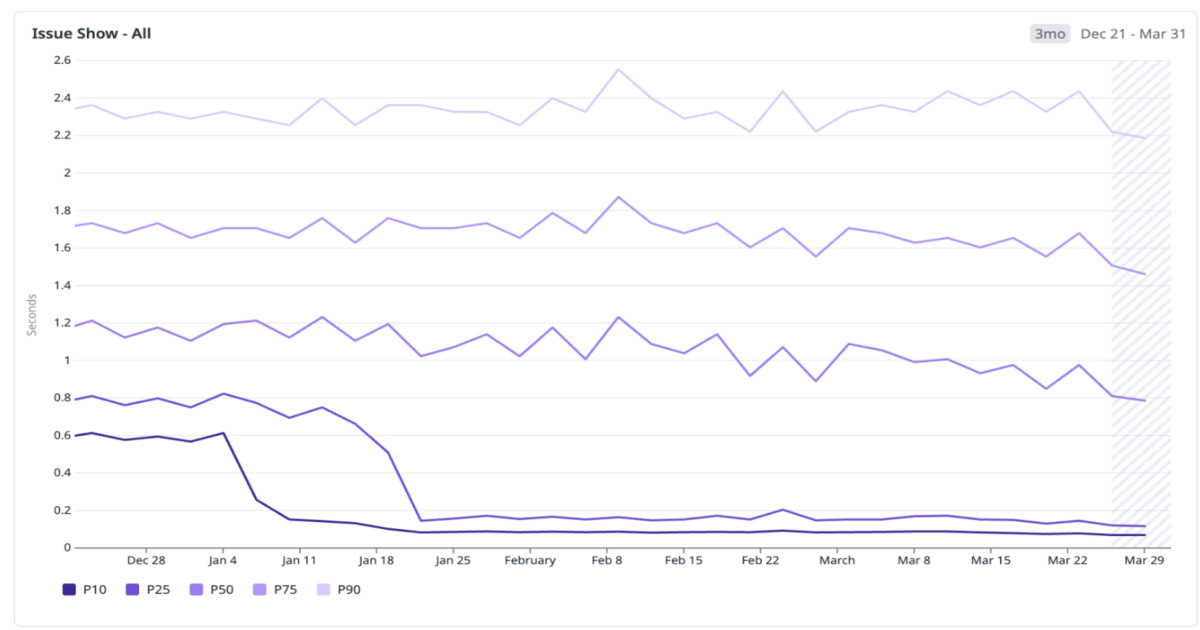
The tangible benefits of this architectural overhaul are evident in the significant improvements across various latency distributions, a testament to the engineering team’s focus on "distribution quality" rather than just isolated metrics. As Oguz Guven astutely observed, "Shifting from the p99 tail to distribution quality is the real engineering maturity here." This statement emphasizes that true performance improvement isn’t just about reducing the worst-case (p99) scenarios but about making the average experience consistently faster for a broader spectrum of users.
GitHub’s measurements reveal dramatic reductions in navigation latency:
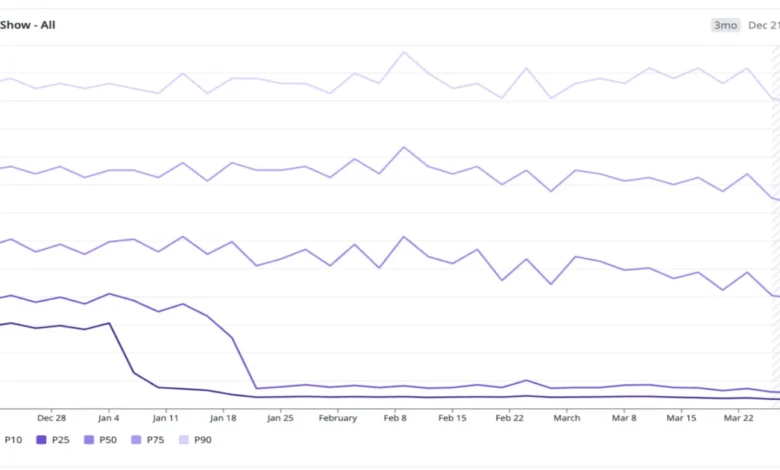
- P10 latency (meaning 10% of users experienced this latency or less) plummeted from approximately 600 milliseconds to a mere 70 milliseconds.
- P25 latency saw a substantial drop from 800 milliseconds to 120 milliseconds.
- Median (P50) latency, representing the experience of the average user, decreased by over 40%, from 1,200 milliseconds to 700 milliseconds.
- Even the higher percentiles, P75 and P90 latency, which represent the experiences of users facing more challenging network conditions or complex interactions, showed notable improvements, decreasing from 1,800 to 1,400 milliseconds and 2,400 to 2,100 milliseconds, respectively.
These figures are not just abstract numbers; they translate directly into a smoother, more productive user experience. A reduction of hundreds of milliseconds in navigation time for frequent actions like switching between issues can cumulatively save developers hours over the course of a week or month. The increase in "instant navigation experiences" from 4% to 22% is particularly telling, indicating that a much larger proportion of users now perceive navigation as instantaneous, a stark contrast to the previous state.
Beyond Metrics: Latency as a Context Switch
/filters:no_upscale()/news/2026/07/github-issues-navigation/en/resources/1clientside-1783811916296.jpeg)
Alexander Lelidis, a senior software engineer at GitHub, provided a profound insight into the team’s philosophical approach to performance: "Latency isn’t just a metric. It’s a context switch." This statement encapsulates the psychological impact of delays on user productivity and focus. Every moment a user waits for a page to load, their mental flow is interrupted. They might switch tabs, check another application, or simply lose their train of thought. These "context switches" are costly, requiring mental effort to regain focus and re-engage with the task at hand. By minimizing latency, GitHub is not just making the application faster; it is actively preserving developer focus and reducing cognitive load, thereby enhancing overall productivity and job satisfaction.
Broader Impact and Implications for the Industry
GitHub’s architectural modernization of Issues navigation carries significant implications, both for its vast user base and for the wider web development ecosystem:
1. Enhanced Developer Productivity and User Satisfaction: For millions of developers who rely on GitHub Issues daily, faster navigation translates directly into a more fluid and less frustrating workflow. Reduced waiting times mean more time spent coding, collaborating, and solving problems, rather than staring at loading spinners. This directly impacts project timelines and overall development efficiency.
2. Setting New Industry Standards for Large-Scale Web Applications: As a leading platform, GitHub’s move towards sophisticated client-side architectures serves as a blueprint and inspiration for other large-scale web applications struggling with similar performance challenges. It demonstrates the feasibility and benefits of investing in complex front-end engineering to deliver superior user experiences. The adoption of local-first, stale-while-revalidate, and service worker patterns by a platform of GitHub’s stature validates these approaches and encourages broader industry adoption.
3. Future-Proofing the Platform: By building a robust client-side foundation, GitHub is better positioned to introduce more complex and interactive features within Issues without compromising performance. The ability to render data quickly and efficiently from the client-side opens doors for richer user interfaces, real-time updates, and more dynamic interactions, ensuring GitHub remains at the forefront of collaborative development tools.
4. Addressing Global User Needs: GitHub has a global user base, meaning varying network conditions are a constant challenge. The client-side caching and service worker strategy inherently improves resilience to slow or intermittent network connections, offering a more consistent experience to users regardless of their geographical location or internet infrastructure. This commitment to equitable access to a high-performance platform is crucial for a global enterprise.
5. A Continued Trend Towards Decentralized Computing on the Web: This architectural shift is part of a larger trend in web development where more intelligence and processing power are distributed to the edge – the user’s browser. This decentralization helps scale applications more effectively, reduces the load on central servers, and fundamentally improves the perceived responsiveness for the end-user.
In conclusion, GitHub’s redesign of its Issues navigation architecture is more than just a performance tweak; it represents a strategic engineering investment that addresses core user experience pain points and leverages cutting-edge web technologies. By embracing a local-first, client-side approach powered by advanced caching, predictive prefetching, and service workers, GitHub has not only dramatically improved the speed and responsiveness of a critical feature but has also set a new benchmark for performance in large-scale web applications, ultimately empowering developers worldwide to work more efficiently and seamlessly.