Scrunch and Ahrefs Brand Radar Lead the Transition to AI-First Brand Visibility and Answer Engine Optimization.


The digital marketing landscape has reached a pivotal inflection point as traditional Search Engine Optimization (SEO) evolves into Answer Engine Optimization (AEO). As Large Language Models (LLMs) like ChatGPT, Claude, and Perplexity increasingly serve as the primary interface for information retrieval, brands are shifting their focus toward how they are cited within AI-generated responses. Two platforms have emerged as leaders in this specialized sector: Scrunch and Ahrefs Brand Radar. While both aim to solve the problem of brand visibility in the age of artificial intelligence, they represent fundamentally different philosophies in software architecture and data methodology.
Scrunch is positioned as a purpose-built AI visibility platform, engineered specifically for the technical nuances of AEO. It monitors AI citations, audits site crawlability for bots, and actively optimizes how AI agents experience a website. In contrast, Ahrefs Brand Radar functions as an integrated module within the broader Ahrefs SEO ecosystem. It is designed for marketing teams that require AI visibility data to be layered alongside traditional search metrics, such as backlinks, keyword rankings, and web mentions, within a single dashboard.
The Evolution of Discovery: A Chronology of AEO
The transition from traditional search to AI-driven discovery did not happen overnight. To understand the current competition between Scrunch and Ahrefs, it is necessary to examine the timeline of technological shifts that necessitated these tools.
- Late 2022: The public release of ChatGPT by OpenAI marks the beginning of the "Generative AI" era. For the first time, brands realize that being the first link on Google is secondary to being the "recommended" solution in a conversational interface.
- Early 2023: The term "Answer Engine Optimization" (AEO) gains traction. Early adopters begin manually prompting LLMs to see if their brands are mentioned, identifying a massive gap in traditional SEO tracking.
- Mid 2023: Google announces Search Generative Experience (SGE), later renamed AI Overviews (AIO). This signals that the world’s largest search engine is officially moving toward a summarized, answer-based format.
- 2024: Ahrefs launches Brand Radar to provide its massive user base with a way to track brand mentions across AI platforms without leaving their existing workflow. Simultaneously, specialized platforms like Scrunch gain enterprise momentum by offering "edge-side" optimization for AI bots.
- 2025-2026: The market matures into two distinct segments: enterprise brands seeking deep, specialized AEO technical suites (Scrunch) and agile marketing teams seeking unified visibility across all discovery channels (Ahrefs).
Methodology: Synthetic Prompts vs. Real-User Signals
The most significant technical divide between Scrunch and Ahrefs Brand Radar lies in how they collect and interpret data. AI visibility data is inherently volatile, as LLMs rarely provide the exact same answer twice.
Scrunch utilizes a combination of browser automation and official platform APIs. Its methodology is grounded in "synthetic prompts," where keyword data is converted into specific, brand-relevant questions. This gives marketing teams precise control over the exact queries they want to benchmark. For example, a B2B SaaS company can track the prompt, "What is the best CRM for mid-market manufacturing?" and receive a daily report on their share of voice. Scrunch applies machine learning and Natural Language Processing (NLP) to analyze the sentiment of these responses and identify which specific domains the AI is citing as sources.
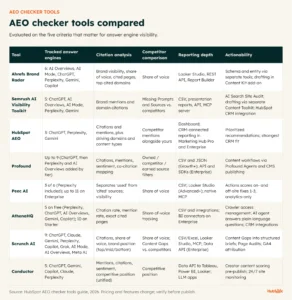
Ahrefs Brand Radar takes a different approach by leveraging its massive existing data infrastructure. It draws from a database of over 406 million monthly prompts derived from real user keywords. This allows teams to benchmark their visibility against actual organic signals rather than just the prompts they have manually written. Ahrefs provides a broader signal, though it currently faces limitations in platform coverage; while it includes Grok and Perplexity, third-party reports suggest accuracy gaps in ChatGPT tracking, and it currently lacks coverage for Anthropic’s Claude.
Technical Optimization: The Rise of the AI Experience Platform (AXP)
A key differentiator for Scrunch, particularly at the enterprise level, is its AI Experience Platform (AXP). This feature addresses a growing technical problem: modern websites are often too "heavy" or complex for AI bots to parse efficiently. JavaScript-heavy frameworks and intricate CSS can consume an excessive amount of an AI agent’s "token budget," leading to incomplete indexing or total exclusion from citations.
Scrunch’s AXP operates at the network edge, serving a token-light, AI-optimized version of a site specifically to bots like GPTBot or ClaudeBot. According to technical benchmarks, this can reduce token loads by up to 26%, effectively unblocking AI agents that would otherwise struggle with complex markup. This creates a "dual-web" architecture: one version of the site is optimized for human aesthetics and SEO, while the other is a streamlined, data-rich version designed for machine consumption.
Ahrefs Brand Radar, while lacking a parallel "edge-optimization" feature, focuses on "Bot Analytics" and IndexNow integration. This allows SEOs to track which bots are visiting their site and ensure that new content is indexed as quickly as possible. For many teams, the goal is not to create a separate site version but to ensure their existing SEO foundation is robust enough for AI discovery.
Comparative Pricing and Market Positioning
The financial commitment for these platforms reflects their target audiences. Scrunch is a premium, specialized tool, while Ahrefs Brand Radar is positioned as a scalable add-on.

Scrunch Pricing Structures:
- Brand Core ($250/month): Includes 125 tracked prompts and coverage across ChatGPT, Perplexity, Google AIO, and Copilot.
- Agency Core ($500/month): Expands to 250 prompts and includes dedicated workspaces for pitching and client management.
- Enterprise (Custom): Unlocks the AXP optimization layer and expands coverage to nine LLMs, including Claude, Gemini, and Meta AI.
Ahrefs Brand Radar Pricing Structures:
- Standalone Entry ($199/month): The lowest barrier to entry for dedicated AI tracking.
- All Platforms ($699/month): Provides access to the full 406 million+ prompt database and 2,500 custom checks.
- Bundled: Existing Ahrefs users can add custom prompt tracking starting at $50/month, making it the most cost-effective option for teams already utilizing the Ahrefs SEO suite.
Strategic Implications for Modern Marketing Teams
The choice between these platforms often depends on the specific problem a marketing department is trying to solve. Industry analysts suggest that the "wrong tool" is rarely defined by price, but rather by the misalignment of goals.
For teams asking, "Why is my brand not appearing in buying-stage AI answers, and what technical fix is required?" Scrunch is the logical choice. Its workflow is built entirely around the AEO lifecycle: audit, optimize, and monitor. It is particularly effective for enterprise brands that have a dedicated budget for AI visibility and need to show ROI through "Agent Traffic"—a metric that proves AI bots are actually consuming and citing their content.
For teams asking, "How is our brand performing across all discovery channels, including search, Reddit, and AI?" Ahrefs Brand Radar is superior. It prevents "tool fatigue" by keeping all data in one ecosystem. This is critical for SEO-led teams where AI visibility is just one part of a larger multi-channel strategy.
Supporting Data: The Value of Citations
Recent data from HubSpot’s State of AEO report highlights the urgency of this transition. Marketing teams that actively optimized for AI citations saw a 433% improvement in brand mentions over a 12-month period. The report also noted that AI models prioritize "trusted sources of sources"—meaning that appearing in niche industry publications and forums is now more important than ever, as LLMs use these as their primary training and citation data.
Furthermore, the concept of "Keyword Difficulty" (KD) is being replaced by "Prompt Competitiveness." While traditional KD measures how hard it is to rank on page one of Google, Prompt Competitiveness measures the density and quality of sources an AI must choose from when generating an answer. Scrunch’s "AI Search Trends" feature is specifically designed to track these shifts, allowing brands to see which topics are gaining momentum in AI conversations before they become high-volume search terms in Google.
Analysis of the Broader Impact
The competition between Scrunch and Ahrefs underscores a larger shift in the internet’s architecture. We are moving toward a "machine-readable" web. As AI agents begin to handle more of the "research" phase of the buyer’s journey, the traditional click-through rate (CTR) becomes less relevant than "mention share."
However, industry experts warn against abandoning traditional SEO. AEO and SEO are complementary; a brand with a weak SEO foundation—poor technical health or low-quality content—will rarely succeed in AEO. AI models still rely on the same high-quality, authoritative content that Google rewards. The consensus among digital strategists is that AEO should be viewed as a "delivery optimization" for the high-quality content already being produced for SEO.
In conclusion, the decision between Scrunch and Ahrefs Brand Radar should be dictated by the organization’s maturity in AI adoption. Smaller, SEO-focused teams will likely find the most value in the integrated approach of Ahrefs. In contrast, enterprise organizations looking to lead their category in the AI era will require the specialized, technical "edge" provided by Scrunch. Regardless of the tool chosen, the data is clear: visibility in 2026 and beyond will be defined not just by where a brand ranks, but by how it is spoken about by the world’s most powerful algorithms.