Google Unlocks Billions in New Ad Revenue as AI Max Moves Beyond Keywords and Traditional Search

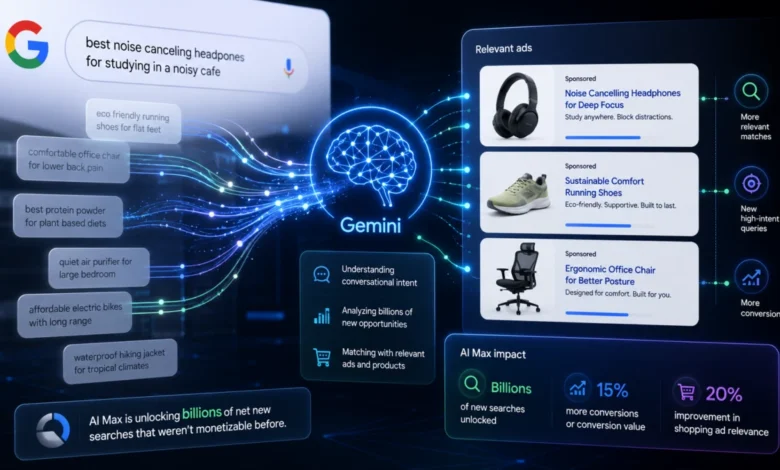
Alphabet Inc. has signaled a transformative shift in the digital advertising landscape, revealing that its latest artificial intelligence integration, AI Max, is successfully monetizing "billions" of search queries that previously lacked commercial viability. During Alphabet’s Q2 2026 earnings call, Google Senior Vice President and Chief Business Officer Philipp Schindler detailed how the company is leveraging advanced large language models to bridge the gap between complex, conversational user intent and advertiser offerings. This development marks a pivotal moment for the search giant, as it seeks to maintain its dominance in an era where user behavior is shifting from fragmented keyword searches to sophisticated, multi-turn dialogues.
The announcement centers on the graduation of AI Max from its beta phase to a full-scale production environment. Now adopted by more than 500,000 advertisers, AI Max represents the next evolution of Google’s automated advertising suite. According to Schindler, the system is designed to navigate searches that were historically too ambiguous or structurally complex for traditional keyword-based targeting. By interpreting the nuances of human language rather than relying on exact word matches, Google is expanding the "addressable market" of its search results page, effectively creating new inventory out of thin air.
The Mechanics of AI-Driven Monetization
For decades, the backbone of Google Search revenue was the "keyword." Advertisers bid on specific terms, and Google’s algorithms matched those terms to user queries. However, as users have become more accustomed to voice search and AI-powered assistants, queries have become longer and more descriptive. These "long-tail" queries often left traditional systems confused, leading to either irrelevant ads or no ads at all.
AI Max, powered by the Gemini model architecture, changes this dynamic. Google reported that Gemini has improved the relevance of Shopping ads for complex queries by approximately 20%. This improvement stems from the model’s ability to interpret "commercial intent" even when a user does not use explicit transactional language. For example, a query like "what kind of shoes should I wear for a rainy hike in the Pacific Northwest that won’t make my feet sweat" is difficult for a keyword system to parse efficiently. AI Max can analyze the environmental context (rainy, Pacific Northwest), the functional requirements (breathable, waterproof), and the product category (hiking shoes) to serve a highly relevant ad from a retailer’s product feed.
Google’s data suggests that this approach is yielding significant results for the bottom line. Advertisers currently utilizing AI Max or its predecessor, Performance Max, are seeing an average 15% increase in conversions or conversion value. Crucially, this lift is occurring at a similar return on ad spend (ROAS), suggesting that the AI is finding high-quality traffic rather than simply increasing volume at the expense of efficiency.
Chronology of Google’s AI Search Evolution
The path to AI Max has been a multi-year journey characterized by rapid iteration and significant infrastructure investment. The timeline of this evolution highlights Google’s urgency in responding to the rise of generative AI competitors.
- Early 2023: Google introduces the Search Generative Experience (SGE) as a laboratory experiment, testing how AI-generated summaries could coexist with traditional search links.
- Late 2023: The integration of the Gemini model into the core search infrastructure begins, primarily focusing on improving organic search results and featured snippets.
- Early 2024: Performance Max (PMax) becomes the standard for automated campaigns, introducing advertisers to the concept of "black box" optimization where Google controls placements across Search, YouTube, and Display.
- Late 2024 – 2025: Google begins testing "AI Max" in beta, specifically designed to handle conversational queries and "AI Mode" searches where users interact with a chatbot interface rather than a list of links.
- Q2 2026: AI Max officially exits beta with half a million advertisers on board, signaling the end of the keyword-exclusive era for Google Search.
Supporting Data and Financial Implications
The financial stakes of this transition cannot be overstated. Search remains Alphabet’s primary engine of growth, and as the cost of computing (Capex) rises due to the energy demands of AI data centers, the company must find ways to extract more value from every millisecond of user interaction.
The "billions" of unmonetized searches mentioned by Schindler represent a massive untapped reservoir of data. Industry analysts estimate that roughly 15% of daily searches on Google are entirely new or have never been seen before. Historically, these were the hardest to monetize. By applying AI Max to this 15%, Google is essentially expanding its "real estate" without increasing the number of users, but rather by increasing the "monetizability" of existing user behavior.
Furthermore, the 20% increase in Shopping ad relevance suggests a direct threat to specialized e-commerce platforms. If Google can accurately match a complex query to a specific SKU (Stock Keeping Unit) in a merchant’s feed better than a user can find it on a dedicated retail site, Google cements its position as the starting point for the "path to purchase."

Official Responses and Industry Reaction
Philipp Schindler’s remarks during the earnings call were met with a mix of optimism from investors and caution from the advertising community. "AI Max is not just a feature; it is a fundamental shift in how we think about the relationship between a user’s question and an advertiser’s solution," Schindler stated. He emphasized that the goal is to make the ad experience feel like a "helpful suggestion" rather than an interruption.
However, the "Why We Care" section of the industry discourse highlights a growing concern: the loss of transparency. For years, PPC (Pay-Per-Click) specialists have relied on "Search Term Reports" to see exactly what users typed to trigger an ad. With AI Max, the matching process is increasingly obscured. Advertisers provide the "inputs"—product feeds, creative assets, and landing pages—and the AI determines the "outputs."
Marketing analysts suggest that this shift will force a reorganization of the digital marketing profession. The role of the "keyword manager" is being replaced by the "asset optimizer." Success in the AI Max era depends less on bidding on the right words and more on providing the AI with high-quality data signals. This includes high-resolution imagery, detailed product descriptions, and landing pages that are optimized for technical performance and user experience.
Broader Impact and Future Implications
The transition to AI Max has broader implications for the open web and the future of information discovery. As Google moves toward "AI Mode" ads—where ads are integrated directly into conversational responses—the distinction between organic content and paid promotion may become even thinner.
One significant implication is the potential impact on SEO (Search Engine Optimization). If Google can satisfy a complex query through an AI-generated answer accompanied by a relevant AI Max ad, the user may never need to click through to an organic website. This "zero-click" environment could consolidate more of the internet’s economic value within Google’s ecosystem, a point of contention that has already drawn the attention of antitrust regulators in the United States and the European Union.
Additionally, the rise of AI Max signals a move toward "intent-based marketing" on a global scale. As Gemini continues to learn from trillions of interactions, its ability to predict what a user wants before they even finish typing will improve. This predictive capability could eventually lead to "proactive search," where Google suggests products or services based on a user’s previous conversational context and real-time activity.
The Bottom Line for the Digital Economy
Google’s Q2 2026 earnings call has made one thing clear: the company is no longer waiting for users to adapt to search; it is adapting search to the users. By unlocking billions of previously unmonetized queries, Alphabet is positioning itself to thrive in a post-keyword world.
For advertisers, the message is equally clear: the tools of the past are becoming obsolete. To compete in the new landscape, businesses must embrace automation and focus on the quality of the "signals" they provide to Google’s AI. While the loss of granular control is a bitter pill for some to swallow, the promise of a 15% lift in conversion value is a powerful incentive to migrate toward AI Max.
As AI continues to redefine the boundaries of what is "searchable" and "monetizable," Google’s latest move ensures that the company remains at the center of the global digital economy. The "billions" of new opportunities identified by Schindler are just the beginning of a new chapter in the history of advertising—one where the algorithm doesn’t just find the answer, but also finds the buyer.