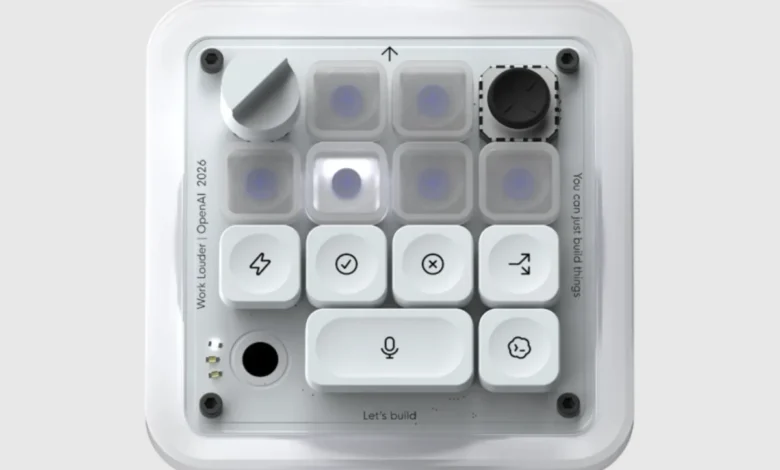
OpenAI, the artificial intelligence powerhouse that has captivated the world with its advanced language models, has ventured into uncharted territory with the launch of its first piece of proprietary hardware: the Micro keypad. This compact, artisanal device, developed in collaboration with specialty keyboard designer Work Louder, is positioned as a bespoke accessory designed to enhance the user experience with ChatGPT and its associated AI tools. However, this debut is not without its share of controversy, arriving amidst a backdrop of significant legal challenges and questions surrounding OpenAI’s broader hardware ambitions. The Micro, a tangible manifestation of OpenAI’s expanding ecosystem, has sparked debate among tech enthusiasts and industry observers alike, prompting a closer examination of its utility, design, and place in the evolving landscape of AI interaction.
The Genesis of Micro: A Tangible Interface for the Digital Mind
The Micro keypad represents a deliberate attempt by OpenAI to bridge the gap between the abstract nature of artificial intelligence and the physical world. In a move that signals a departure from its purely software-centric origins, OpenAI has introduced a device engineered to streamline interaction with its AI models, particularly ChatGPT. The keypad boasts a minimalist design, featuring six customizable "agent" keys at the top, intended for assigning specific tasks or functions within ChatGPT or its coding companion, Codex. Below these are six command keys, designed to manage program operations. Connectivity is offered through both Bluetooth and USB, catering to diverse user preferences.
The development of the Micro keypad underscores a growing trend in the tech industry: the creation of specialized hardware to optimize interaction with powerful software platforms. Just as dedicated gaming peripherals enhance the experience for gamers, or professional audio interfaces improve workflows for musicians, the Micro aims to offer a more efficient and intuitive way for users to engage with AI. The concept of assigning predefined commands and agents to physical keys suggests a desire to reduce the cognitive load associated with navigating complex AI interfaces, allowing for quicker execution of routine tasks and a more fluid workflow for power users.
A Troubled Launch: Legal Battles and Speculation
OpenAI’s foray into hardware has been far from smooth, marked by significant legal entanglements and industry speculation. Several weeks prior to the Micro’s announcement, Apple initiated legal proceedings against OpenAI, leveling accusations of trade secret theft. This lawsuit has ignited what is anticipated to be a protracted legal battle, casting a shadow over OpenAI’s expansion efforts. The specifics of Apple’s claims remain a subject of intense scrutiny, but the implication is that OpenAI may have improperly utilized proprietary information in its development processes.
Adding to the intrigue, reports emerged of another OpenAI hardware product in development: a screenless smart home speaker designed to integrate with ChatGPT. This device, reportedly conceived by former Apple engineers, has further fueled speculation about OpenAI’s strategic direction and its potential to challenge established players in the consumer electronics market. The involvement of individuals with deep roots in Apple’s hardware design and development ecosystem has not gone unnoticed, prompting questions about the provenance of OpenAI’s hardware vision and its potential competitive implications. These parallel developments – a high-profile lawsuit and the emergence of ambitious hardware projects – paint a complex picture of OpenAI’s current operational and strategic landscape.
Design and First Impressions: A Tactile AI Accessory
Upon receiving a test unit of the Micro keypad, initial impressions focused on its build quality and aesthetic. The device is described as remarkably sturdy, possessing a heft that could easily lend itself to use as a paperweight should its primary function prove less than revolutionary. This solid construction suggests a commitment to durability and a premium feel, aligning with the artisanal positioning of the product.
The packaging itself has drawn comparisons to Apple’s signature minimalist and pristine design philosophy. An immaculate white box with a sleek, clean aesthetic has led some observers to note a familiar, almost imitative, design sensibility. While this could be attributed to a shared understanding of effective product presentation in the tech space, it also invites further parallels and questions about OpenAI’s design inspirations and brand identity as it expands into hardware.
Functionality and User Customization: Tailoring the AI Experience
The Micro keypad is engineered with a clear focus on functional customization. The six "agent" keys, located at the top of the device, are designed to be programmed for specific actions within ChatGPT or its coding counterpart, Codex. This allows users to assign complex prompts, recurring tasks, or specific agent functionalities to a single key press. The six command keys below offer direct control over program operations, further streamlining interaction.
A key feature highlighted is the dedicated voice dictation button. This functionality allows users to speak their commands or queries into the device, which are then transcribed and sent to the AI. The process involves holding down the dictation button while speaking and then tapping a nearby "send" button to submit the request. This aims to expedite the input process, particularly for longer or more complex instructions that might otherwise require extensive typing.
Customization of the Micro keypad is managed directly within ChatGPT. A dedicated "Micro" tab within the interface provides users with granular control over various aspects of the device. This includes adjusting the illumination of the keys, as well as assigning specific commands and projects to individual keys. This integrated approach suggests that the Micro is intended to be an extension of the ChatGPT experience, rather than a standalone peripheral.
The Voice Dictation Advantage: Streamlining AI Interaction
The inclusion of a voice dictation button is perhaps one of the most immediately apparent convenience features of the Micro keypad. In an era where voice assistants are becoming increasingly ubiquitous, OpenAI’s integration of this technology into a dedicated AI hardware accessory offers a compelling proposition for users seeking to interact with AI more naturally and efficiently. The ability to simply speak commands and have them processed by ChatGPT bypasses the need for manual typing, which can be a significant bottleneck, especially when dealing with intricate prompts or extensive coding tasks.
The workflow is straightforward: users press and hold the dictation button, articulate their request, and then release the button. A subsequent tap of the "send" button transmits the dictated input to ChatGPT for processing. This seemingly simple mechanism has the potential to dramatically improve the speed and ease with which users can leverage AI for a variety of applications, from generating creative text to debugging code. For individuals who find typing cumbersome or who are engaged in tasks that require hands-on activity, the voice dictation feature could prove to be a game-changer in their AI interactions.

The Color-Coded Interface: Navigating AI Status
Beyond its functional keys, the Micro keypad employs a color-coded lighting system to provide users with visual feedback on the AI’s operational status. This intuitive system aims to keep users informed at a glance, reducing the need to constantly monitor the software interface for updates. The color scheme is as follows:
- White: Indicates that an agent is currently idle, meaning it is ready to receive input or is not actively engaged in a task.
- Blue: Signals that an agent is actively thinking or processing a request. This visual cue helps users understand when the AI is engaged and when to expect a response.
- Green: Denotes that a task has been successfully completed. This positive reinforcement confirms that the AI has fulfilled the user’s request.
- Red: Alerts the user to an error that has occurred during processing. This immediate feedback allows users to quickly identify and address any issues with their requests or the AI’s performance.
While these color codes are designed to be helpful, they also introduce a learning curve. Users will need to memorize the meaning of each color and associate them with the specific projects and agents assigned to their keys. This memorization, coupled with the initial programming of the keypad, highlights the device’s target audience as those willing to invest time in optimizing their AI workflows.
Target Audience and Market Reception: A Niche Appeal?
The Micro keypad appears to be meticulously engineered to appeal to a specific segment of the tech community: dedicated AI enthusiasts and "code monkeys" who frequently utilize ChatGPT and related tools. The customization options and the focus on streamlining workflows suggest a product designed for power users who are willing to invest time in configuring their tools for maximum efficiency.
However, early market reception has been mixed, with significant skepticism emerging from the very audience it aims to serve. Reviews on platforms like Reddit have largely leaned negative, with some users dismissing the Micro as a novelty or even a "prank" rather than a serious productivity tool. Critiques often point to the perceived lack of necessity for such a dedicated piece of hardware when existing input devices can already perform the required functions.
Furthermore, the $230 price tag has been a significant point of contention. Independent reviews, such as the one from Aftermath, have been particularly harsh, deeming the cost unjustifiable when compared to the availability of cheaper DIY macropad kits and off-the-shelf alternatives. The sentiment expressed in some reviews suggests that the Micro, despite its sophisticated design and AI integration, may not offer a compelling enough value proposition to warrant its premium price, especially when considering the effort required to learn and program it.
The Learning Curve and Practicality Debate: Is it Worth the Effort?
The core question surrounding the Micro keypad revolves around its practical utility and whether the learning curve justifies its integration into daily workflows. For users already proficient with their existing computer setups, the prospect of spending considerable time learning to program and operate a new device can be daunting. The argument is often made: why invest weeks in mastering a specialized AI keypad when one is already adept at using a mouse and keyboard?
The effectiveness of the Micro is inherently tied to the user’s reliance on and engagement with ChatGPT. For individuals who utilize AI extensively throughout their day, the potential for enhanced efficiency and a more enjoyable interaction may outweigh the initial learning investment. The ability to quickly toggle between different AI projects and commands via physical keys, combined with the convenience of voice dictation, could indeed lead to a more streamlined and satisfying experience.
However, for those who use AI sporadically or for less demanding tasks, the Micro might feel like an unnecessary complication. The device requires users to not only program its keys but also to memorize the color-coded status indicators and the specific functions assigned to each key. This added layer of complexity can detract from the overall user experience if the perceived benefits do not significantly outweigh the effort.
A Glimpse into OpenAI’s Hardware Future?
While the Micro keypad may represent OpenAI’s first tangible hardware offering, it is widely viewed as a precursor to potentially more ambitious projects. The reported development of a screenless smart home speaker, allegedly designed by former Apple engineers, suggests a broader strategy to embed AI into various aspects of daily life. If these projects materialize, OpenAI could transition from being solely a software provider to a comprehensive AI ecosystem player, offering both the intelligence and the hardware interfaces to access it.
The success of the Micro, however divisive, will likely inform OpenAI’s future hardware decisions. If it resonates with a significant user base, it could pave the way for more refined and perhaps more broadly appealing hardware products. Conversely, if the criticisms regarding price, complexity, and necessity persist, OpenAI may need to reassess its hardware strategy and focus on delivering solutions that offer clearer, more demonstrable advantages over existing technologies.
The Verdict: A Niche Product for Dedicated Enthusiasts
Ultimately, the OpenAI Micro keypad appears to be a product with a highly specific target audience. For the dedicated ChatGPT power user who possesses a budget of $230, appreciates vintage-inspired hardware with tactile clicky buttons, and is eager to explore new ways of interacting with AI, the Micro might offer a unique and potentially enjoyable addition to their setup. It could, as suggested, even "brighten their day a little" by adding a novel and personalized element to their AI workflow.
However, for the casual user, or even for many professional developers who prioritize established and efficient workflows, the Micro’s value proposition remains questionable. The substantial investment in both cost and learning time may not translate into a sufficiently significant improvement in productivity or user experience to justify its adoption. As OpenAI continues to navigate the complex landscape of AI development and hardware innovation, the Micro keypad stands as an intriguing, albeit controversial, first step, offering a glimpse into a future where our interaction with artificial intelligence is increasingly physical and personalized. The true impact of this move will only become clear as OpenAI’s broader hardware ambitions unfold and the market collectively responds to its evolving product portfolio.
Related posts: