How AI Wealth Management Tools Are Reshaping Portfolio Transparency and Risk Mitigation


Modern investment portfolios have become increasingly complex, often spanning multiple brokerage accounts, retirement funds, and diverse asset classes. This fragmentation frequently creates "blind spots," where investors struggle to maintain an accurate view of their aggregate risk exposure. Recent developments in artificial intelligence are now addressing this challenge, providing investors with real-time analytical capabilities that were previously reserved for institutional wealth managers. A case study involving the AI-driven platform Mezzi highlights how automated "diversification X-rays" can uncover significant hidden stock concentrations and prevent material financial losses.
The Problem of Portfolio Fragmentation
For many high-net-worth individuals and long-term investors, the primary barrier to effective risk management is the lack of a unified, interactive data layer. Investors often maintain accounts across various institutions, including 401(k) plans, individual retirement accounts (IRAs), and taxable brokerage accounts. Because these platforms operate in silos, it is difficult to calculate the "true" weighting of a specific security.
When an investor holds individual stocks—such as Alphabet (Google)—and simultaneously invests in broad-market index funds like the S&P 500, they are often unaware of the cumulative exposure. Because the S&P 500 is market-cap weighted, top-tier technology companies frequently comprise a significant portion of these funds. Without an automated tool to aggregate these holdings, an investor might mistakenly believe they are diversified, while in reality, they are heavily over-indexed to a single sector or company.
Chronology of an AI-Driven Intervention
In the summer of 2024, the limitations of traditional, static financial tracking became evident during a portfolio audit conducted by an experienced investor using the Mezzi platform. The process began with the integration of multiple equity portfolios, real estate holdings, and liquid bank assets into a centralized AI dashboard.
The chronology of the intervention was as follows:

- Initial Integration: Over several months, the user connected various disparate accounts to the Mezzi interface to establish a comprehensive net worth snapshot.
- The Discovery Phase: The AI’s "Diversification X-ray" feature identified an unexpected $300,000 in additional Google exposure. While the investor believed they held approximately $1 million in the stock, the total reached $1.3 million once the underlying assets within various index funds were accounted for.
- The Strategic Adjustment: Acting on the platform’s recommendation to rebalance, the investor executed a sale of $200,000 of Google stock across tax-advantaged accounts. A portion of these proceeds was held in cash, while the remainder was rotated into broader market instruments.
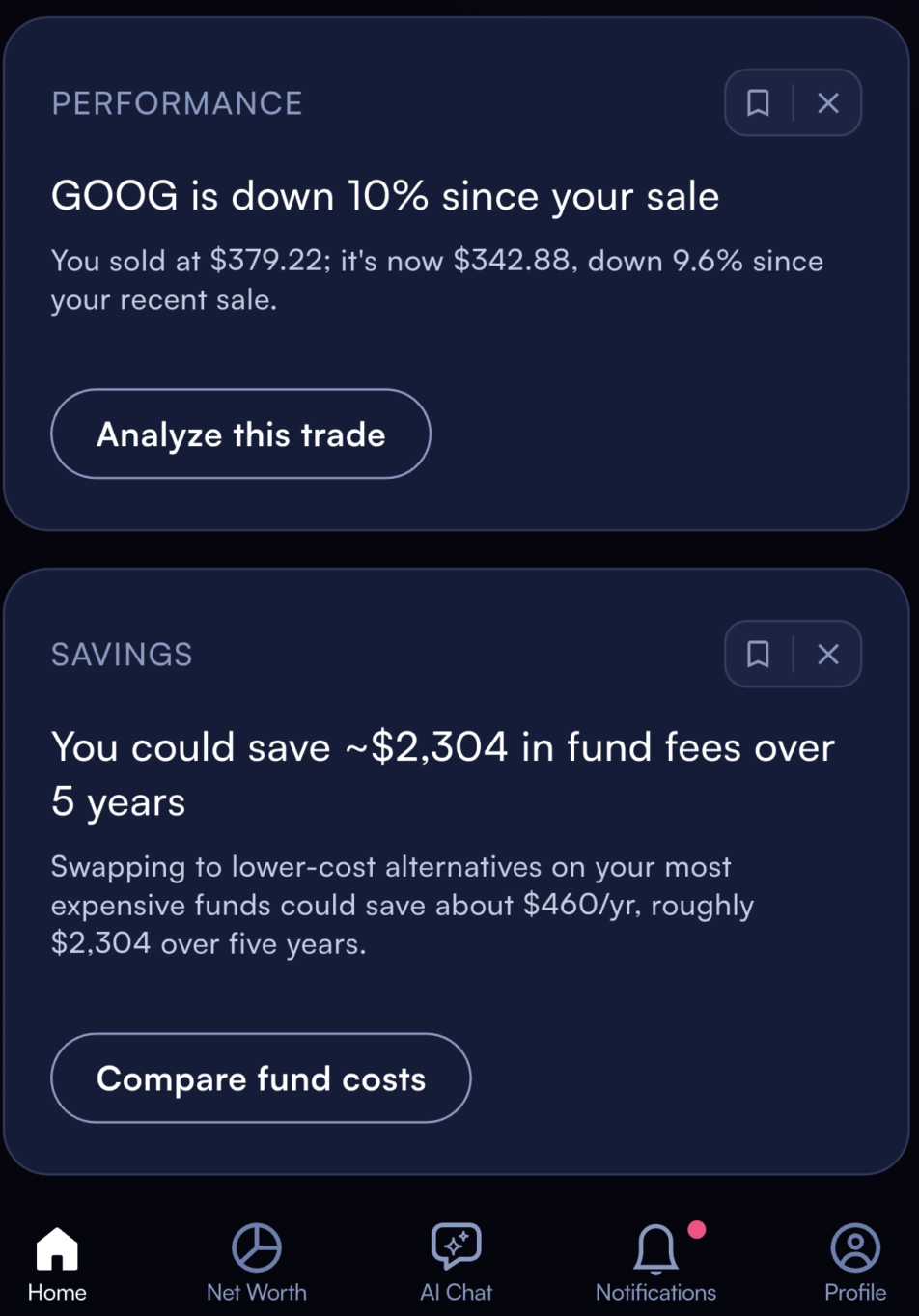
- The Market Reaction: Within weeks of the rebalancing, Alphabet experienced a significant sell-off, triggered in part by the departure of key technical leadership, including Chief Scientist Jeff Dean. This 10% decline in share price resulted in the avoidance of over $20,000 in potential losses.
The Mechanics of AI Wealth Advisors
Unlike traditional dashboard software, which typically provides historical reporting, AI wealth advisors like Mezzi function as interactive analytical agents. These systems utilize natural language processing (NLP) to allow users to "interrogate" their portfolios. By asking specific questions about tax implications, sector weightings, or fee structures, users receive real-time, data-backed insights.
From a technical standpoint, these platforms aggregate data through secure APIs, then perform a "look-through" analysis. This involves deconstructing ETFs and mutual funds to identify the specific companies held within those products. By mapping these findings against the user’s individual stock holdings, the AI generates a consolidated view of risk. This capability is particularly relevant for investors who practice "pro forma" thinking—anticipating future market scenarios and adjusting their asset allocation accordingly.
Industry Context and Institutional Viability
The emergence of these tools occurs against a backdrop of increasing interest in the intersection of artificial intelligence and fintech. While the AI sector has seen a surge in speculative startups, the institutional viability of such platforms is typically measured by their development lifecycle and regulatory status. Mezzi, for instance, operates as an SEC-registered investment advisor and has spent three years in development before its public scaling phase.
For professional investors and venture capital observers, this represents a shift in distribution moats. In the past, wealth management was dominated by large-scale institutions with proprietary software. Today, specialized AI firms are leveraging data aggregation to provide granular, institutional-grade analytics to retail and high-net-worth investors. The ability to provide an "always-on" financial analyst—one that monitors for market volatility and suggests rebalancing actions—marks a departure from the "set it and forget it" model of traditional index investing.
Broader Implications for Individual Investors
The psychological component of investing often works against the individual. Investors frequently suffer from "anchoring bias," where they rely on outdated price points, or "loss aversion," where they ignore underperforming assets to avoid the pain of realizing a loss.
Data from the aforementioned audit illustrated this perfectly. The investor believed a specific position in Nike was down approximately $10,000. Upon closer examination by the AI tool, the actual loss was closer to $20,000. By surfacing the accurate data, the tool enabled the investor to execute a tax-loss harvesting strategy, using the loss to offset long-term capital gains from other transactions. This process underscores the value of objective, automated oversight in eliminating the emotional biases that often plague long-term wealth management.
Regulatory and Ethical Considerations
As AI becomes more deeply integrated into personal finance, transparency remains a critical priority. Investors must distinguish between AI-generated data analysis and automated financial advice. Platforms like Mezzi, as SEC-registered entities, are subject to regulatory standards that ensure the fiduciary responsibility of their recommendations.
However, users are advised that such tools are supplements to, rather than replacements for, comprehensive financial planning. The primary utility of these platforms lies in their ability to provide visibility. When an investor can see their entire financial footprint, they are better equipped to make informed decisions regarding tax optimization, estate planning, and asset allocation.
Future Outlook
The integration of AI into wealth management is still in its nascent stages. As these systems ingest more data and refine their predictive models, the gap between retail investors and institutional-level portfolio management will likely continue to narrow. The ability to identify hidden concentrations, optimize for tax efficiency, and react to market-moving news in real time is transforming the landscape of personal finance.
For those managing complex, multi-account portfolios, the primary takeaway is the necessity of an integrated data strategy. As demonstrated by the recent shift in market dynamics and the subsequent mitigation of losses, the "hidden" nature of modern investment exposure is a risk that can no longer be ignored. Investors who embrace these analytical layers are finding that the "knowable" nature of their wealth is the most effective tool for long-term preservation and growth.
Disclaimer: This report is for informational purposes and does not constitute personalized financial or investment advice. SEC registration of an investment advisory firm does not imply a specific level of skill or training. All investment activities carry inherent risks, and past performance is not a guarantee of future results.