Stack Overflow Co-Founder Jeff Atwood Launches Monthly TWiT Podcast Off By One Offering Tech Insights and Social Commentary

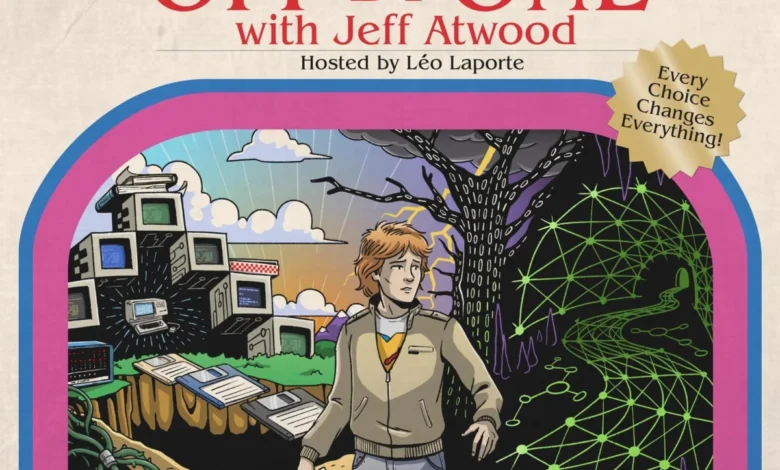
The digital media landscape has welcomed a fresh addition to its audio-visual offerings with the debut of Off By One with Jeff Atwood, a monthly collaborative podcast hosted by industry veteran Leo Laporte and software developer Jeff Atwood. Broadcasted on the TWiT (This Week in Tech) network, the program merges decades of computing history, philosophical discussions on software engineering, and broader societal reflections into a single, unscripted format. The show represents a new chapter for Atwood, best known for co-founding programming community Stack Overflow and open-source forum platform Discourse, as he expands his public footprint from written essays to live video streaming.
Background Context and Evolution of the Collaboration
The genesis of Off By One traces back to industry connections and a guest appearance that set a distinctly eccentric tone for the partnership. Wesley Faulkner, a prominent developer advocate and technologist, initially introduced Atwood to Laporte, encouraging him to appear as a guest on the TWiT network. Atwood subsequently appeared on Intelligent Machines episode #859, recorded on February 25, alongside co-panellists Paris Martineau and Jeff Jarvis.
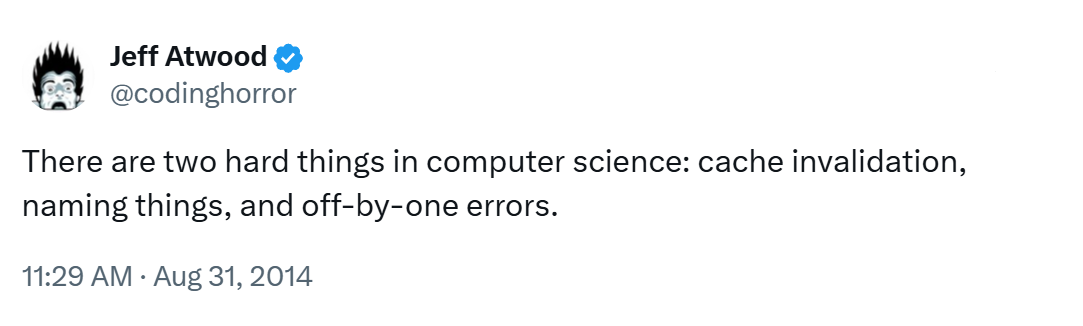
That initial appearance, characterized by high-energy discourse and playful friction among the guests, proved successful enough to convince Laporte and Atwood to formalize their chemistry into a dedicated monthly series. Naming the show proved to be a lighthearted nod to computer science culture. Referencing the famous quip by Martin Fowler and other software pioneers—that there are only two hard things in computer science: cache invalidation, naming things, and off-by-one errors—the duo settled on the title Off By One.
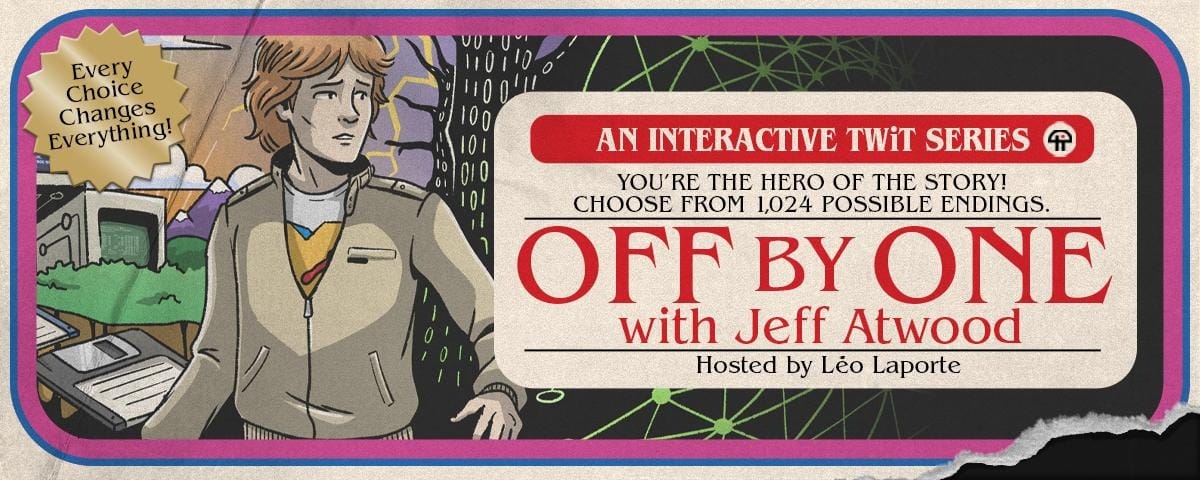
Chronology of the Launch and Production Schedule
The production schedule for the series moves swiftly. Following the recording of the inaugural episode approximately three weeks prior to the second installment’s release, the hosts established a monthly cadence with live recordings accessible primarily to Club TWiT subscribers. The second episode, running at one hour and forty-seven minutes, dives into wide-ranging topics from the legacy of Stack Overflow to systemic societal issues.
Production takes place in front of a live digital audience of Club TWiT members, who are given access to real-time streams and interactive participation. To foster community growth, Atwood introduced an initiative covering one full year of Club TWiT memberships for the first ten respondents of a designated application form, provided they viewed the full episode.
Core Themes: Software Engineering and "Survivable Code"
During the second episode, the conversation pivoted toward software development philosophy, where Atwood reflected on his career in the tech industry. Despite his massive influence on modern programming infrastructure through Stack Overflow and his long-running Coding Horror blog, Atwood demurred at the label of "elite coder," attributing his success instead to persistence.

Expanding on software design principles, Atwood introduced the concept of "survivable code"—engineering practices designed to minimize catastrophic system failures and reduce overall complexity. In a sentiment that resonated with veteran developers, Atwood asserted that the ultimate goal of good engineering is often to write no code at all, emphasizing that minimalist software architecture reduces maintenance burdens and human error. Furthermore, both hosts emphasized that effective software development must account for human psychology, arguing for collaborative, empathetic engineering processes rather than high-stress corporate environments.
Socioeconomic Commentary and the Second Gilded Age
Beyond technical matters, Off By One frequently ventures into socio-economic critique, drawing parallels between the historical Gilded Age of the late 19th century and contemporary wealth concentration in the technology sector. In the second episode, Atwood addressed the distribution of wealth, noting that economic disparity has concentrated unprecedented capital in the hands of a relative few, echoing the era of historical railroad barons.
Atwood and Laporte discussed potential remedies for systemic economic issues, specifically referencing the feasibility of eradicating poverty through targeted taxation models. Citing basic macroeconomic calculations, Atwood suggested that implementing modest, fair taxation structures on billionaires could theoretically lift all American citizens above the 100 percent Federal Poverty Level threshold, which sits at approximately $15,000 per year. The dialogue underscored a recurring thesis of the show: that modern society possesses the financial and technological means to eliminate baseline poverty, but frequently lacks the political and institutional will to execute such solutions.
Analysis of Artificial Intelligence and Large Language Models
As artificial intelligence continues to dominate technology discourse, the podcast dedicated significant time to evaluating the capabilities and limitations of Large Language Models (LLMs). Atwood offered a nuanced critique of generative AI, comparing its synthesis of information to a lossy data compression algorithm.
Using the analogy of image compression formats, Atwood described AI-generated text summaries as a "JPEG for words." He noted that while he was initially skeptical of integrating AI summarization tools into the Discourse platform, internal testing revealed surprising accuracy in condensing complex community discussions without introducing factual errors. However, Atwood also cautioned against over-relying on LLMs for critical logic tasks, warning that models often optimize for statistical probabilities rather than genuine comprehension—likening automated code optimization to a system blindly returning default Boolean values because it lacks fundamental situational awareness.
Community Engagement and the Power of the Written Word
In tandem with the video broadcast, Atwood continues to champion traditional long-form communication. He frequently directs followers away from algorithmic social media platforms and toward structured community spaces, such as the official TWiT Discourse community.
Reflecting on his decades-long history as a technical writer, Atwood emphasized the psychological importance of shared experiences. Referencing his essays on the meaning of the Coding Horror blog, he noted that personal satisfaction is magnified when articulated and shared with a community. To encourage thoughtful discourse online, Atwood continues to advocate for the humble paragraph—the pilcrow—as an essential tool for cultivating coherent narratives, improving communication skills, and fostering genuine human connection in an increasingly fragmented digital ecosystem.