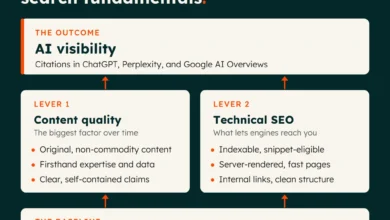
In the contemporary digital marketing landscape, having an aesthetically impressive website, high-caliber content, and a seamless user experience is no longer sufficient to guarantee online discoverability. Despite meticulous technical optimization, organizations frequently find themselves entirely invisible to modern search engines and artificial intelligence tools. This phenomenon occurs because platforms such as Google and OpenAI’s ChatGPT do not evaluate a domain in isolation. Instead, these sophisticated algorithms perform cross-web audits, scrutinizing third-party commentary, expert opinions, and external editorial coverage to construct a comprehensive profile of a brand’s identity, credibility, and authority.
When trusted publications, professional communities, and industry experts reference an organization, they actively contribute to its digital reputation. This evolution in search engine behavior has transformed brand mentions from a secondary public relations metric into a foundational pillar of search engine optimization (SEO) and artificial intelligence optimization (AIO). Industry analysts project that as generative AI search experiences continue to displace traditional blue-link search engine result pages (SERPs), the necessity of capturing robust third-party validation will only accelerate. This comprehensive analysis explores the mechanics of brand mentions, distinguishes between web and large language model (LLM) ecosystems, outlines high-impact acquisition strategies, and establishes rigorous measurement frameworks for corporate leadership.

Understanding the Anatomy and Classification of Brand Mentions
A brand mention is formally defined as any external reference to a business, product, or executive by an independent third party. These occurrences manifest across a diverse array of digital mediums, including editorial journalism, community discussion threads on platforms like Reddit, specialized video content on YouTube, industry podcasts, and academic research papers. Within digital marketing taxonomy, brand mentions are fundamentally categorized into two distinct types: linked mentions and unlinked mentions.
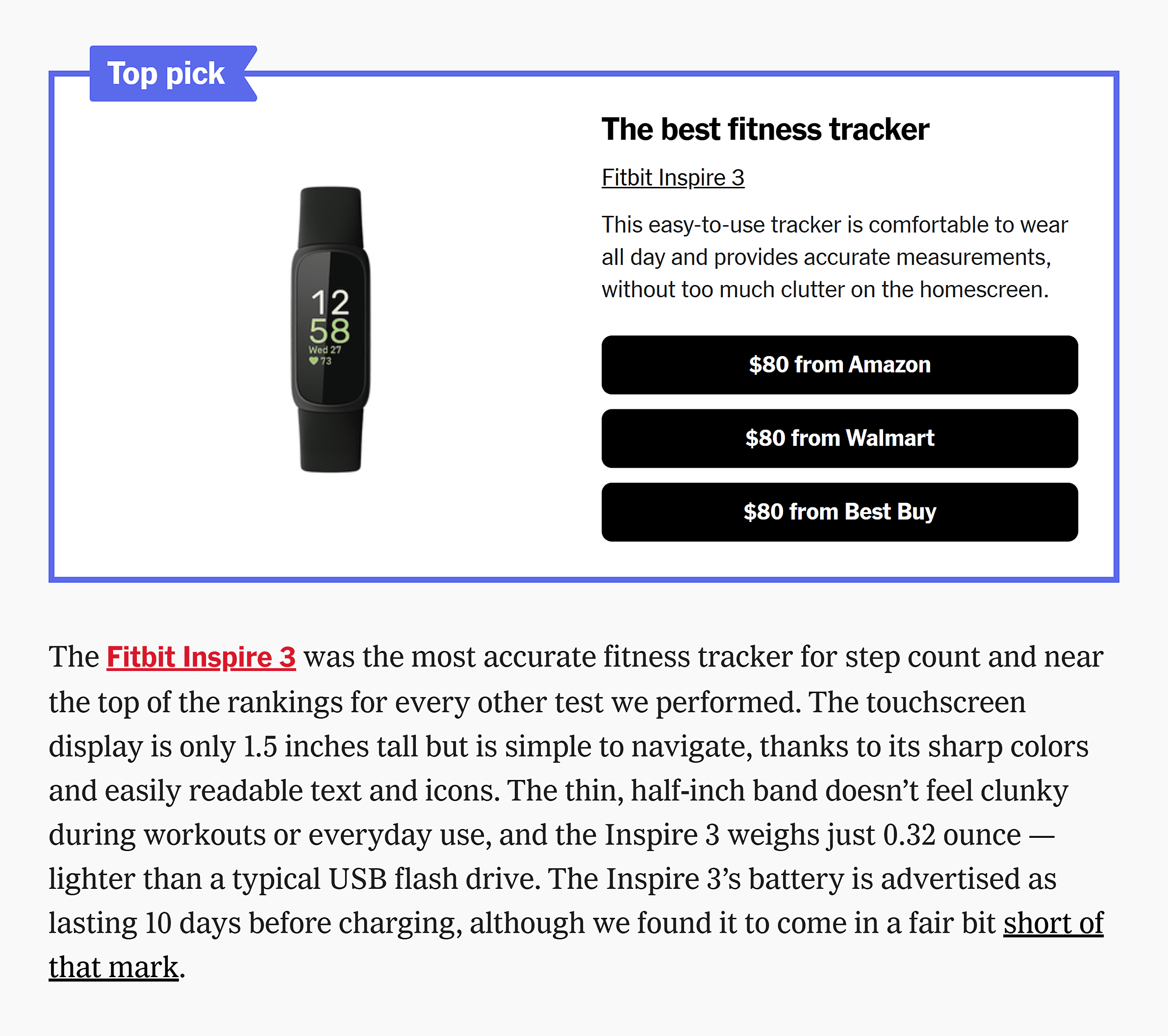
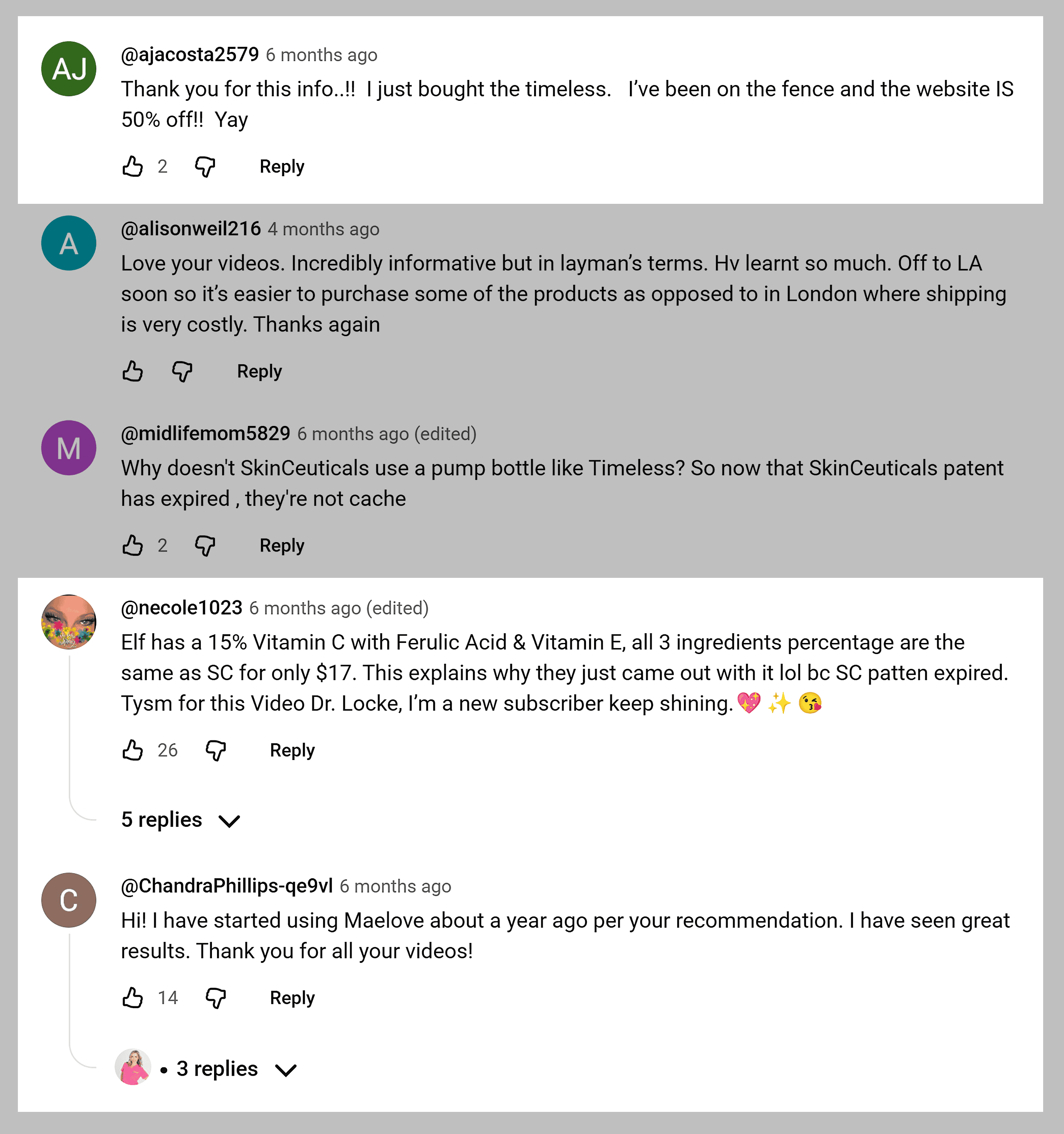
Linked mentions incorporate a direct, clickable hyperlink pointing to the target domain alongside the explicit brand name. For example, major metropolitan newspapers evaluating consumer technology products routinely mention specific manufacturers while providing direct referral links to product purchase pages. Conversely, unlinked mentions reference the brand identity explicitly within the body of text or discourse without embedding a navigational hyperlink. A consumer discussing a fitness wearable or software utility on a niche discussion board by name alone generates an unlinked mention.

While both variations hold significant strategic value, their functional mechanisms differ. Linked mentions provide the dual advantage of passing direct algorithmic authority (often referred to as link equity) and driving immediate referral traffic to a destination site. Unlinked mentions, on the other hand, do not generate direct referral traffic or pass explicit link juice, but they play a critical role in establishing contextual entity recognition for search crawlers and AI training algorithms. Modern search engines are increasingly proficient at extracting brand sentiment and context from unlinked text, making a diversified portfolio of both linked and unlinked references essential for holistic digital visibility.
The Divergence Between Web Mentions and LLM Mentions
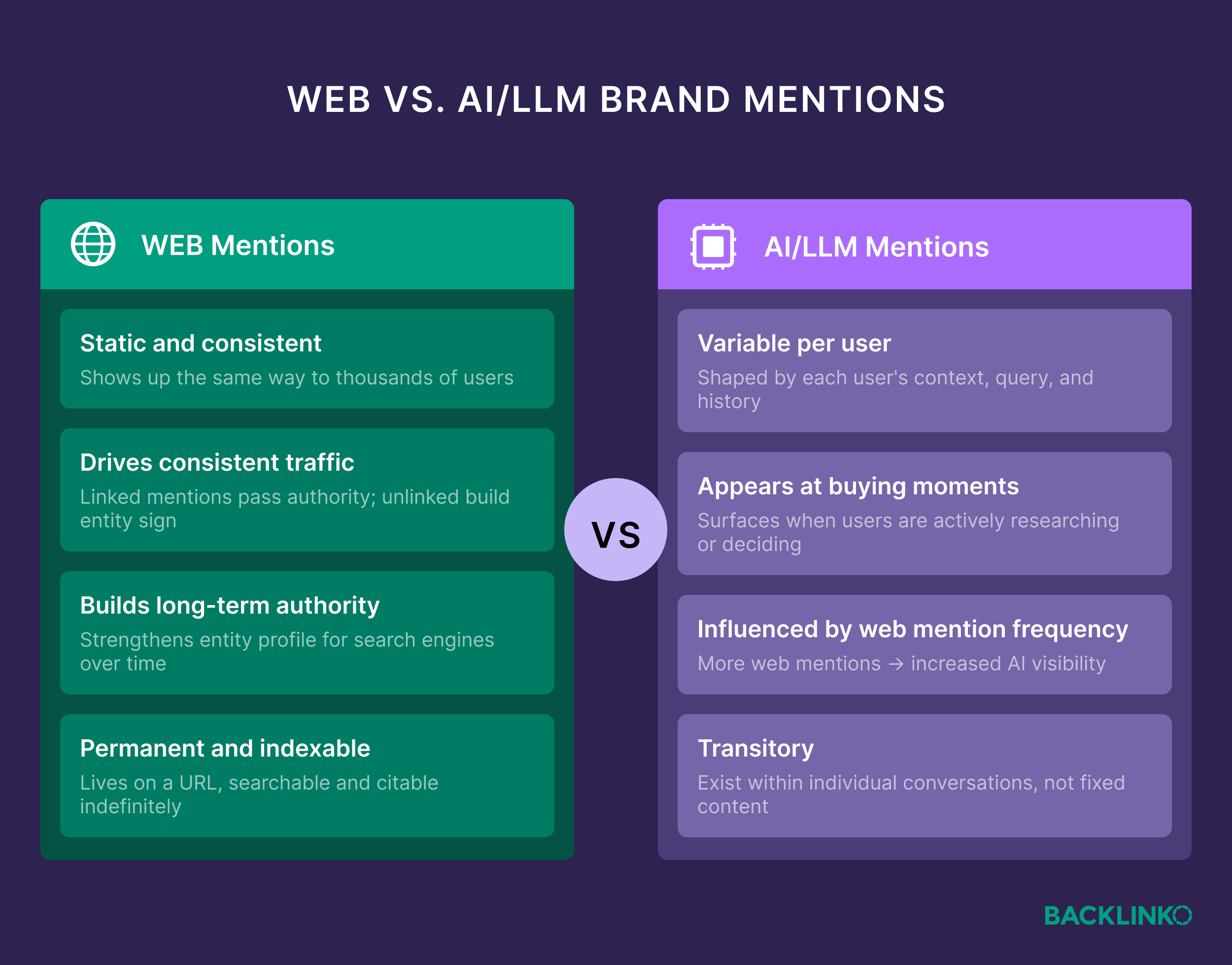
A critical distinction must be drawn between traditional web-based brand mentions and those generated within conversational large language models. Web-based mentions are static; an article published on an industry news portal appears identically to thousands of concurrent visitors over an extended temporal window.
In contrast, mentions within conversational AI interfaces, such as ChatGPT or Anthropic’s Claude, are dynamic and highly contextualized. LLM-generated responses vary based on individual user parameters, historical interaction threads, search intent qualifiers, and real-time retrieval-augmented generation (RAG) parameters. Furthermore, these AI-generated references remain localized to the specific user session and do not exist as static, publicly indexed documents accessible to the wider internet.
Despite this operational divergence, the two concepts are inextricably linked. AI tools do not generate brand recommendations out of a vacuum; they synthesize data ingested from the open web. Consequently, establishing a consistent, authoritative footprint of brand mentions across trusted web properties acts as the primary training and retrieval input required to secure prominent positioning within AI-generated search recommendations.
Why Brand Mentions Matter in the Modern Algorithmic Era
The elevation of brand mentions to primary ranking and recommendation signals is driven by three fundamental shifts in how machines interpret digital trust.
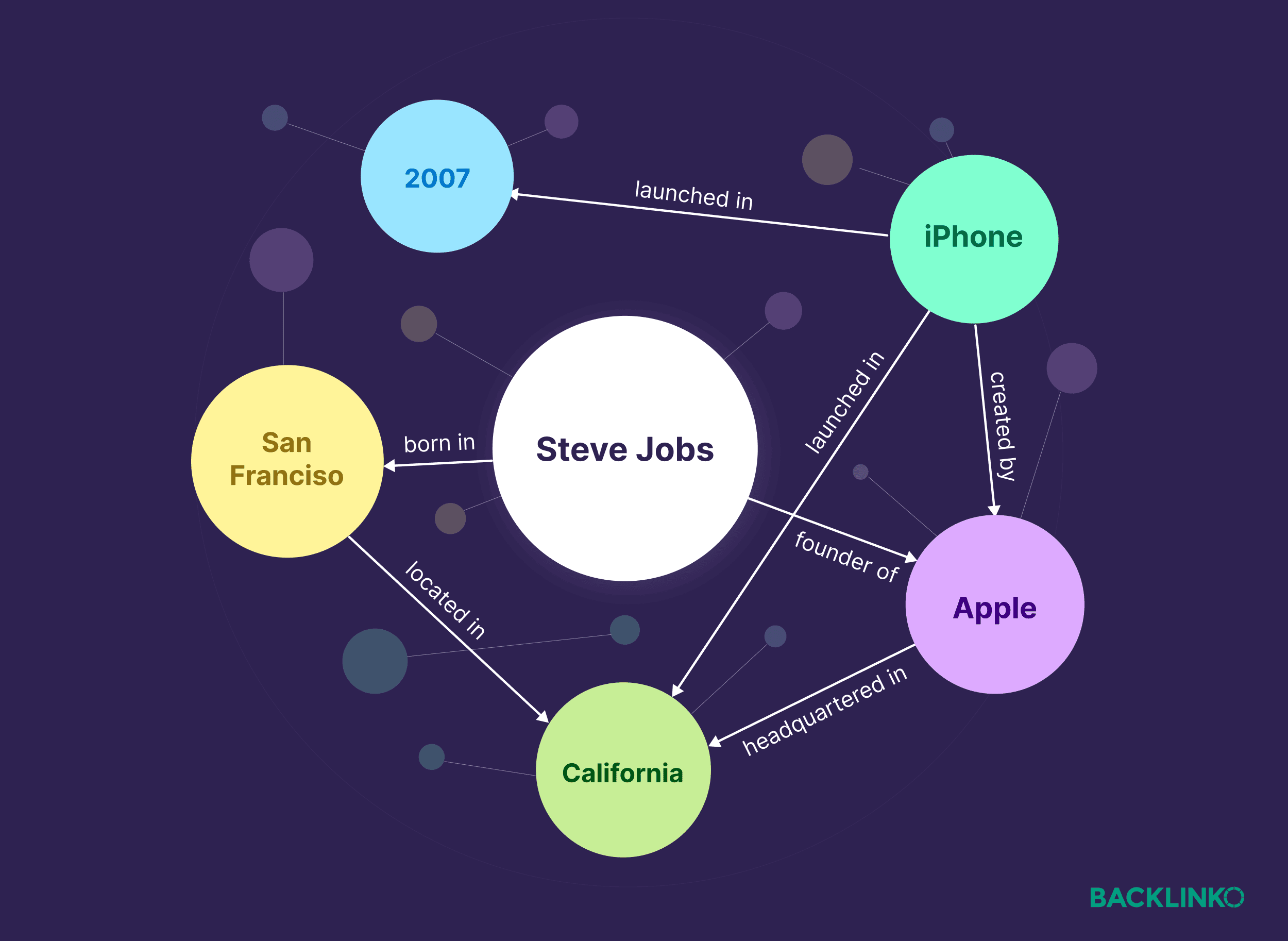
First, search engines utilize brand mentions to signal and validate authority through entity recognition frameworks. Google’s Knowledge Graph functions as a massive, structured database mapping the complex relationships between people, organizations, locations, and concepts. To evaluate whether a business is a legitimate commercial entity worthy of top-tier rankings, search algorithms analyze who talks about the brand, the thematic context of those discussions, and the consistency of the sentiment over time. Mentions serve as the conversational data points that build and refine this entity-level authority.
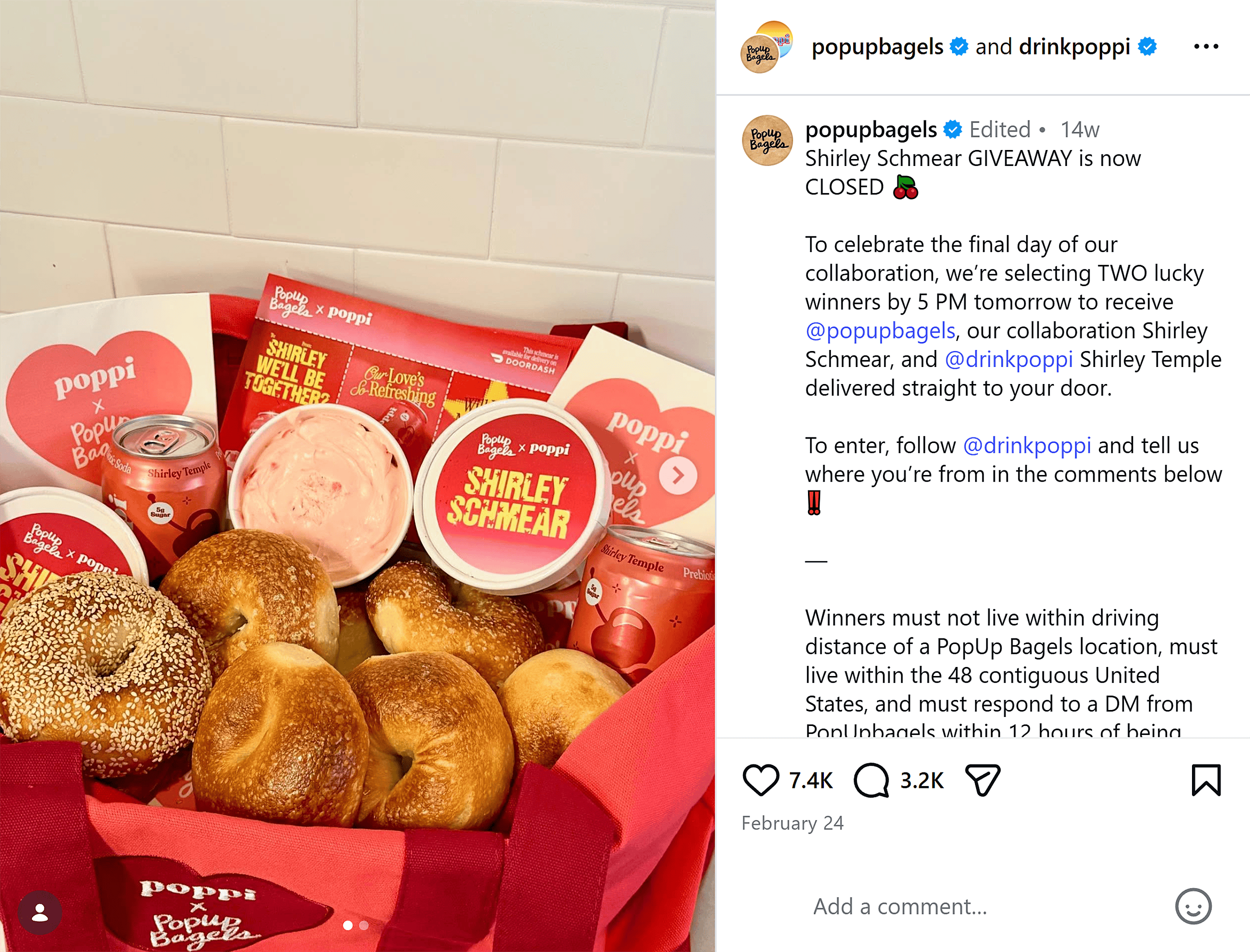
Second, brand mentions dramatically expand organizational visibility into previously untapped audience segments. When an influential content creator or industry podcast features a brand within a broader evaluative piece—such as a cost-comparison video or a best-practices roundup—they expose the company to prospective buyers who are not actively searching for that specific brand name. This top-of-funnel exposure frequently translates into high-intent conversions from consumers who discovered the product tangentially.
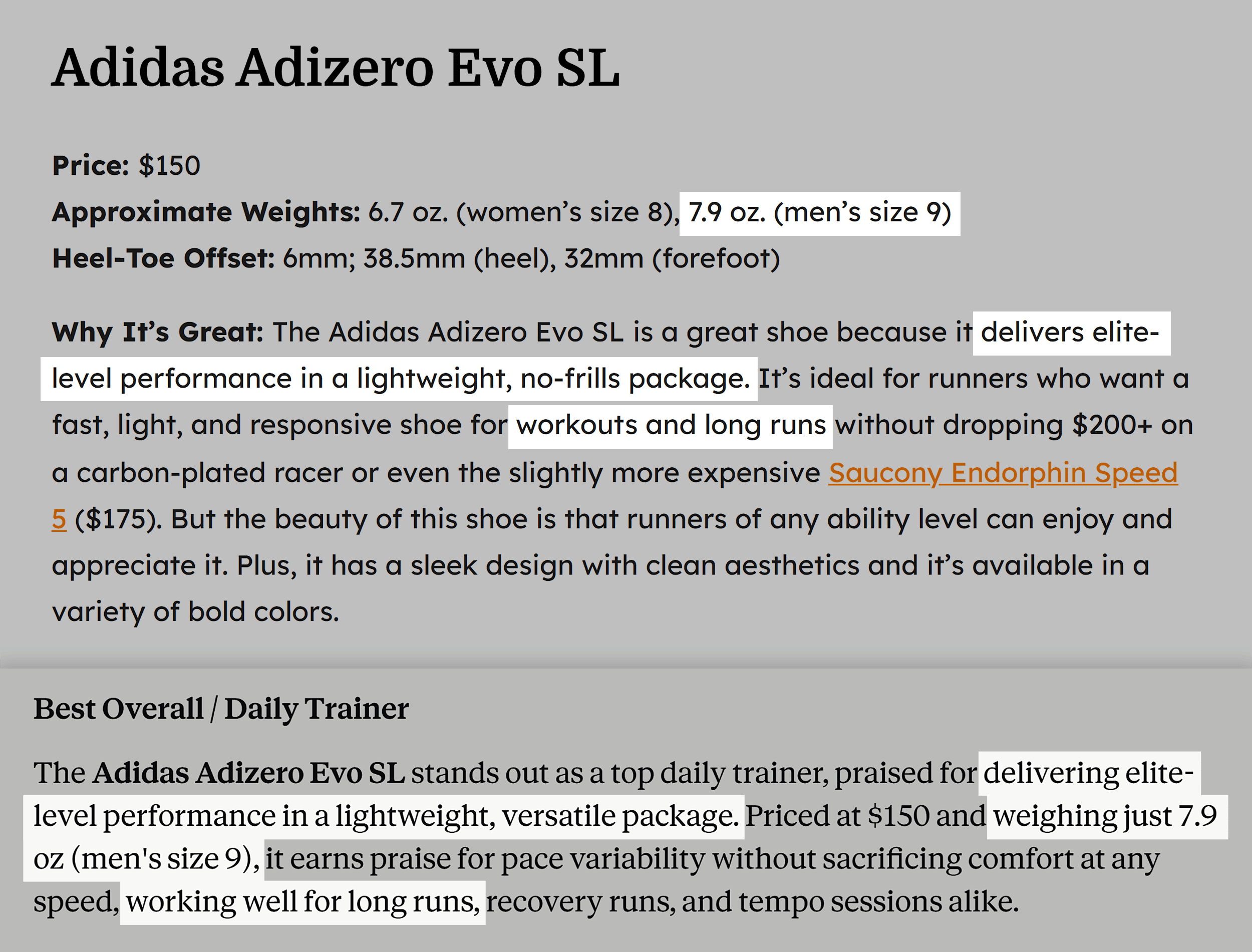
Third, large language models rely heavily on web-based sentiment and descriptive language when formulating recommendations. Empirical analyses of running shoe reviews, software evaluations, and consumer hardware roundups demonstrate a striking linguistic correlation. When an authoritative industry blog describes a product using specific adjectives and performance metrics—such as "elite-level performance in a lightweight, no-frills package"—subsequent queries directed at conversational AI models often yield product descriptions and recommendation rationales that mirror the original web publication’s terminology almost verbatim.
Evaluating the Quality Metrics of Brand Mentions
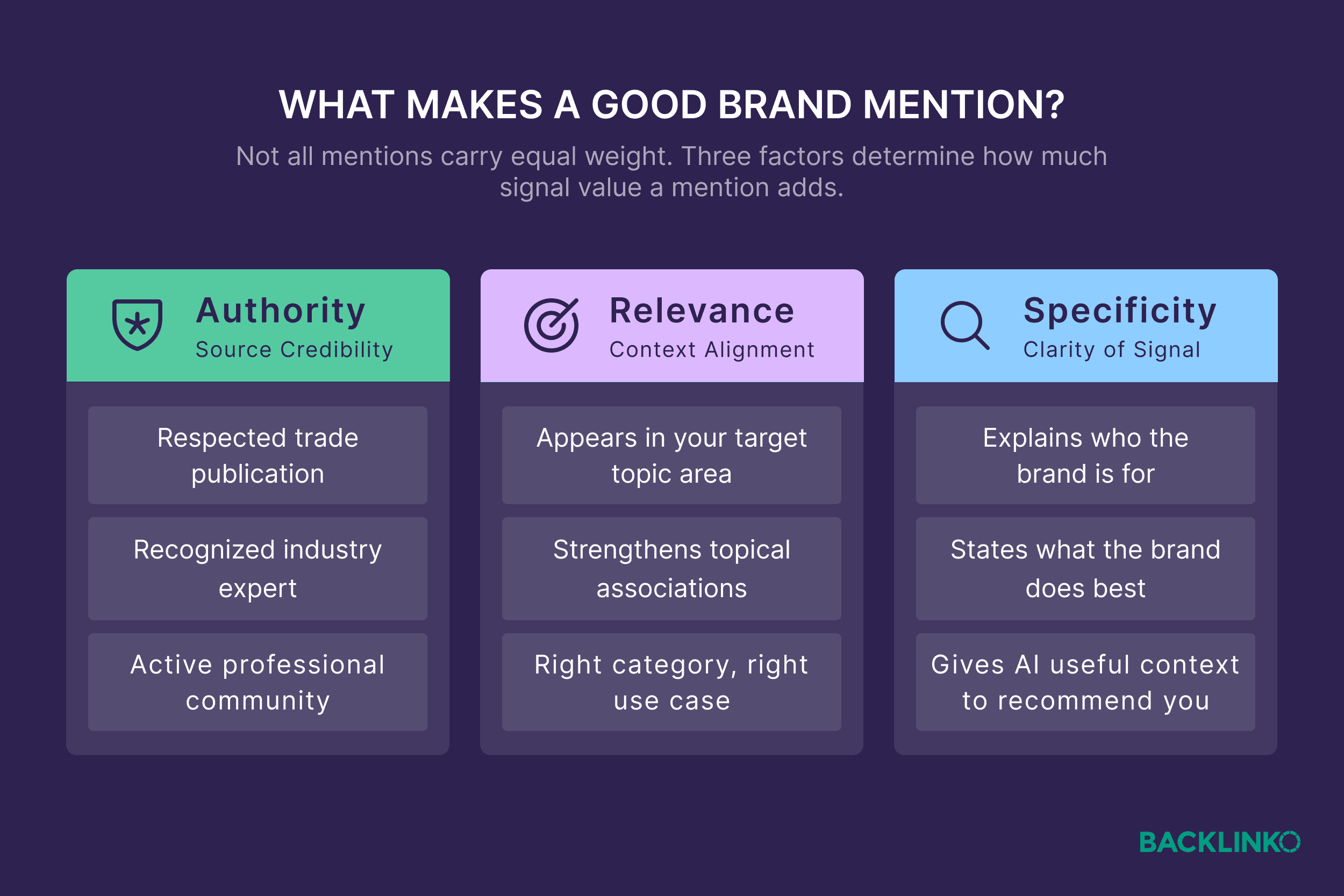
Not all brand mentions carry equal weight within algorithmic evaluation systems. Digital strategists evaluate the potency of a mention across three primary dimensions: authority, relevance, and specificity.
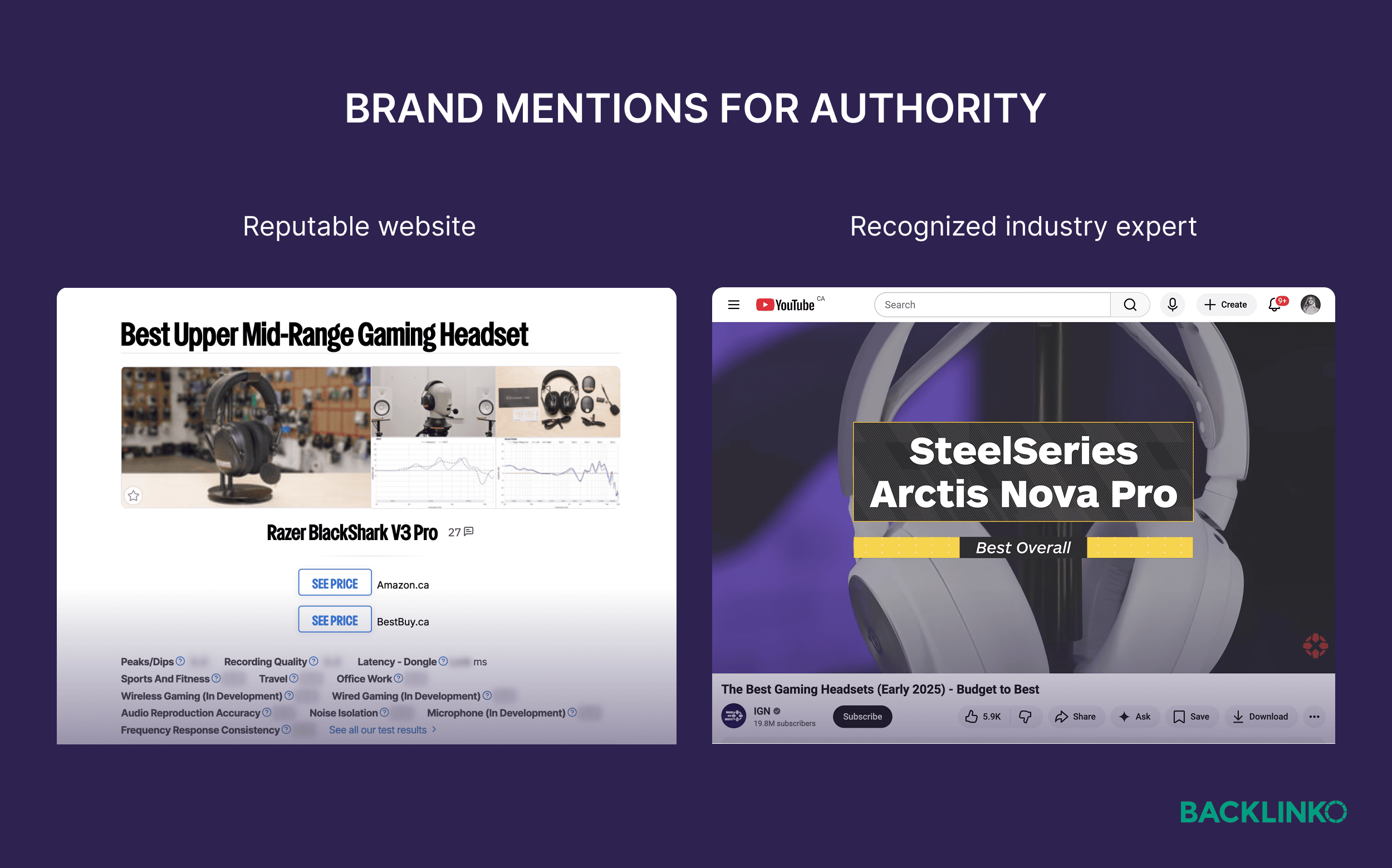
Authority pertains to the institutional credibility and domain strength of the publishing source. A reference within a recognized, peer-reviewed industry journal or a mainstream publication carries significantly more algorithmic and reputational weight than a passing comment on an unmoderated, low-traffic blog. High-authority mentions validate an organization’s market standing and signal to search engines that the brand is recognized by trusted industry leaders.
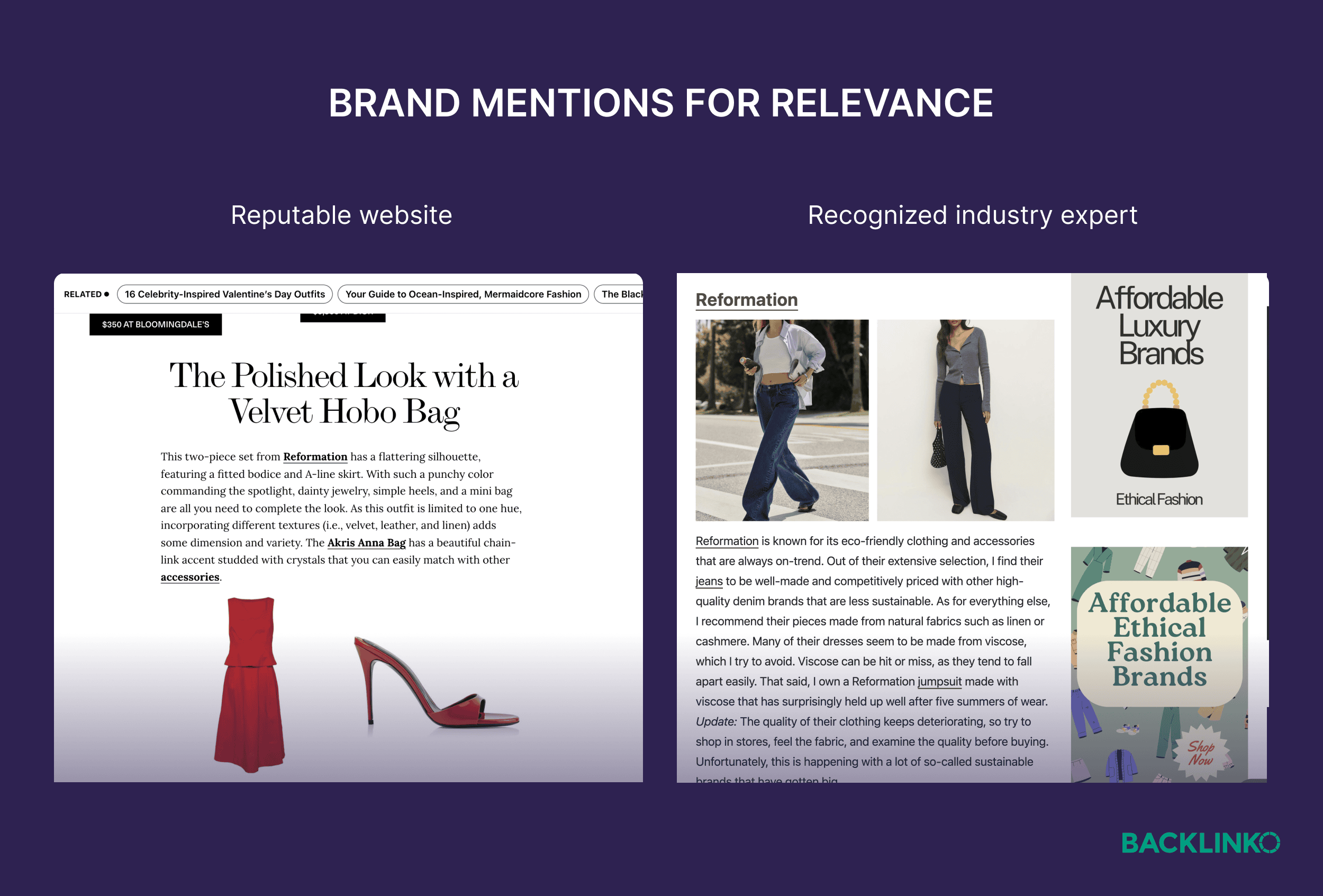
Relevance operates on both a topical and a categorical level. To maximize algorithmic impact, a brand mention must occur within a thematic context that aligns with the organization’s core value proposition. For instance, a sustainable fashion label securing mentions in dedicated style guides and eco-friendly apparel roundups reinforces its topical authority within the fashion sector. If the same brand were mentioned on an automotive repair forum, the contextual relevance would be diluted, rendering the mention far less effective for search positioning.

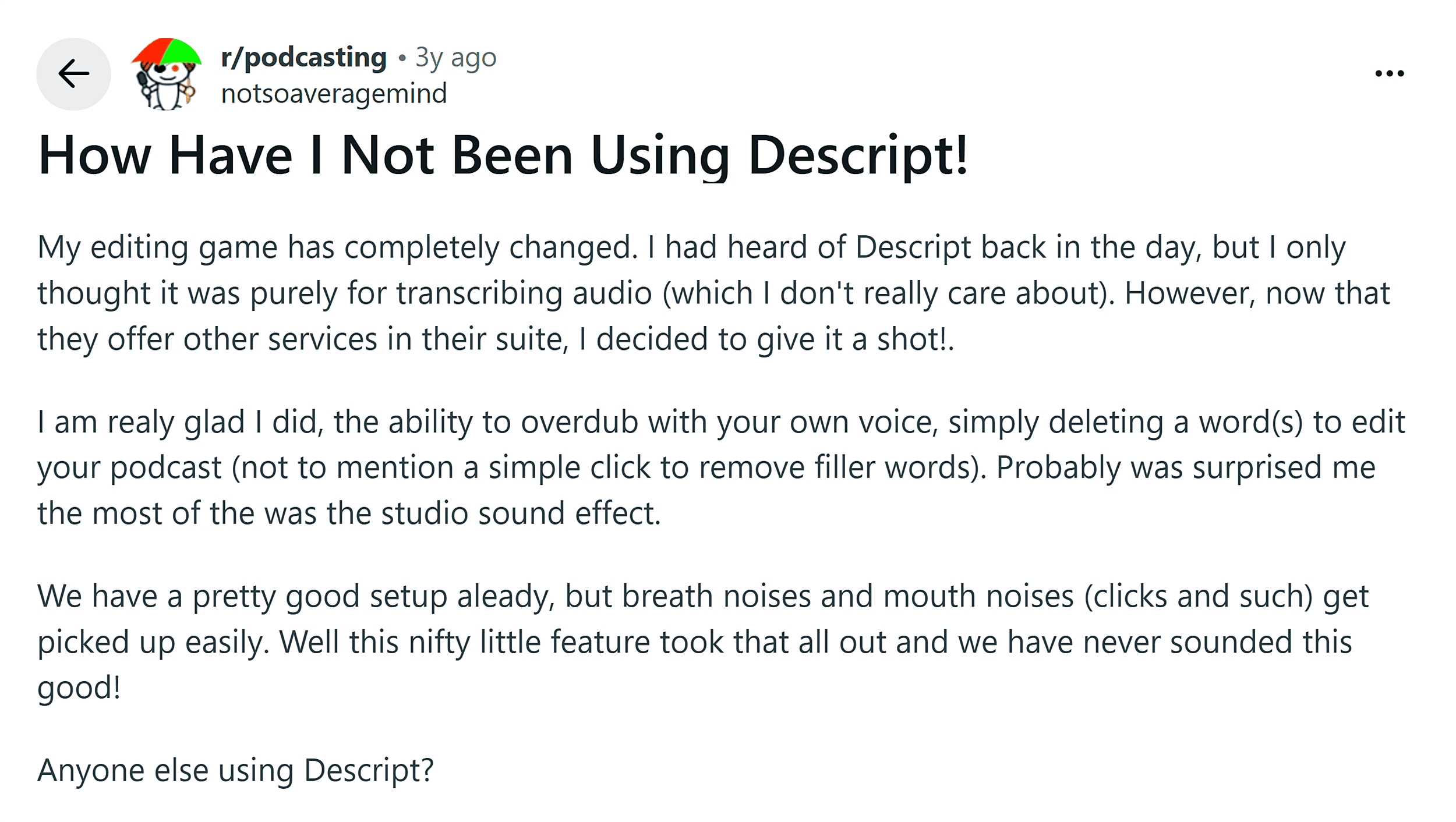
Specificity involves the inclusion of granular, actionable insights rather than vague platitudes. High-value mentions frequently articulate specific use cases, feature highlights, pricing advantages, or comparative benefits. When a third-party review details precisely how a software tool solved a complex workflow bottleneck, search engines and AI systems extract clear, structured signals regarding the product’s exact utility. These specific details enable algorithms to match the brand accurately with complex, long-tail user queries.
Four Core Tactics to Earn High-Value Brand Mentions
Achieving a consistent stream of valuable brand mentions requires proactive, strategic execution. Organizations can implement four primary methodologies to build brand citations regardless of their current market share.
- Create Data-Driven, Citable Content
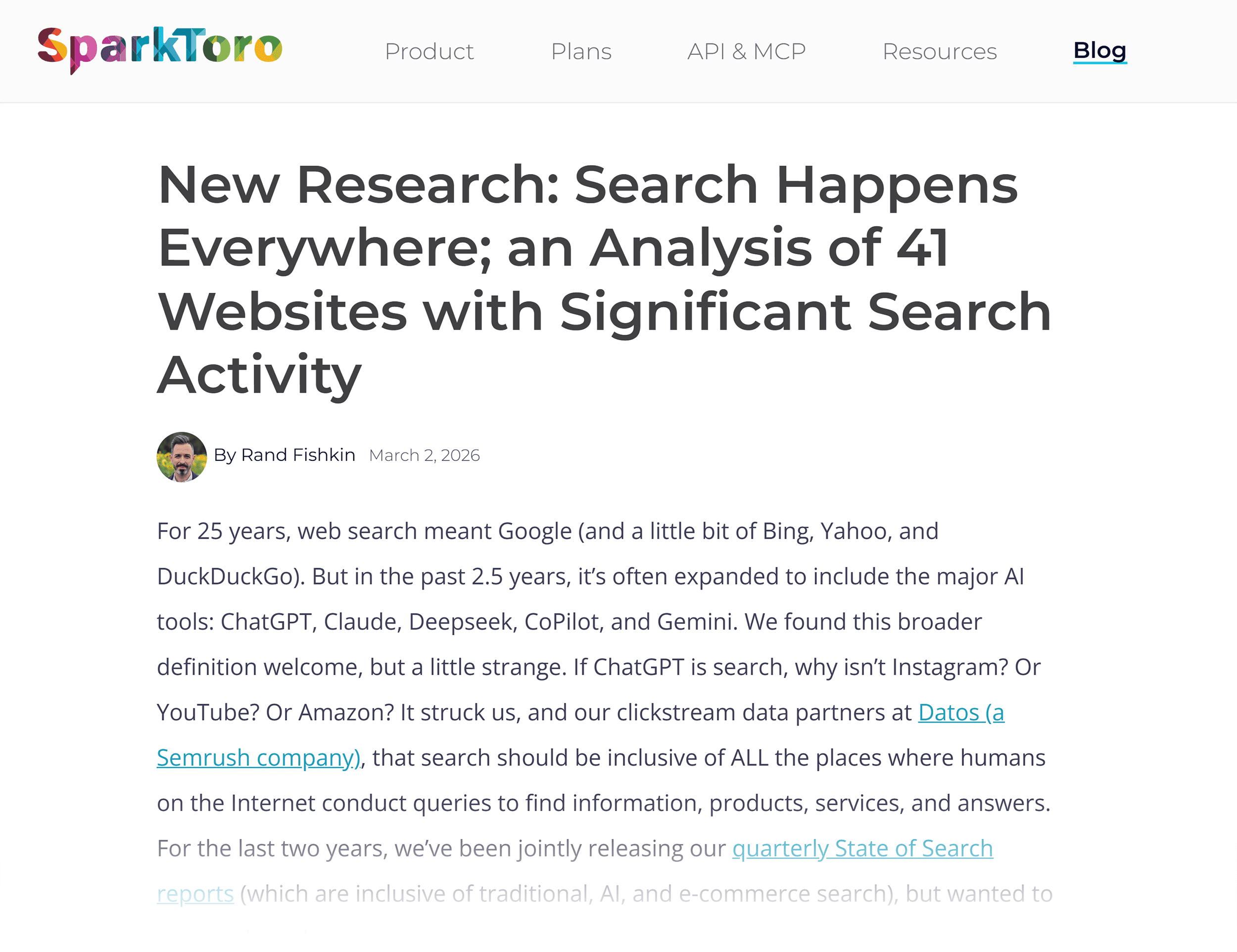
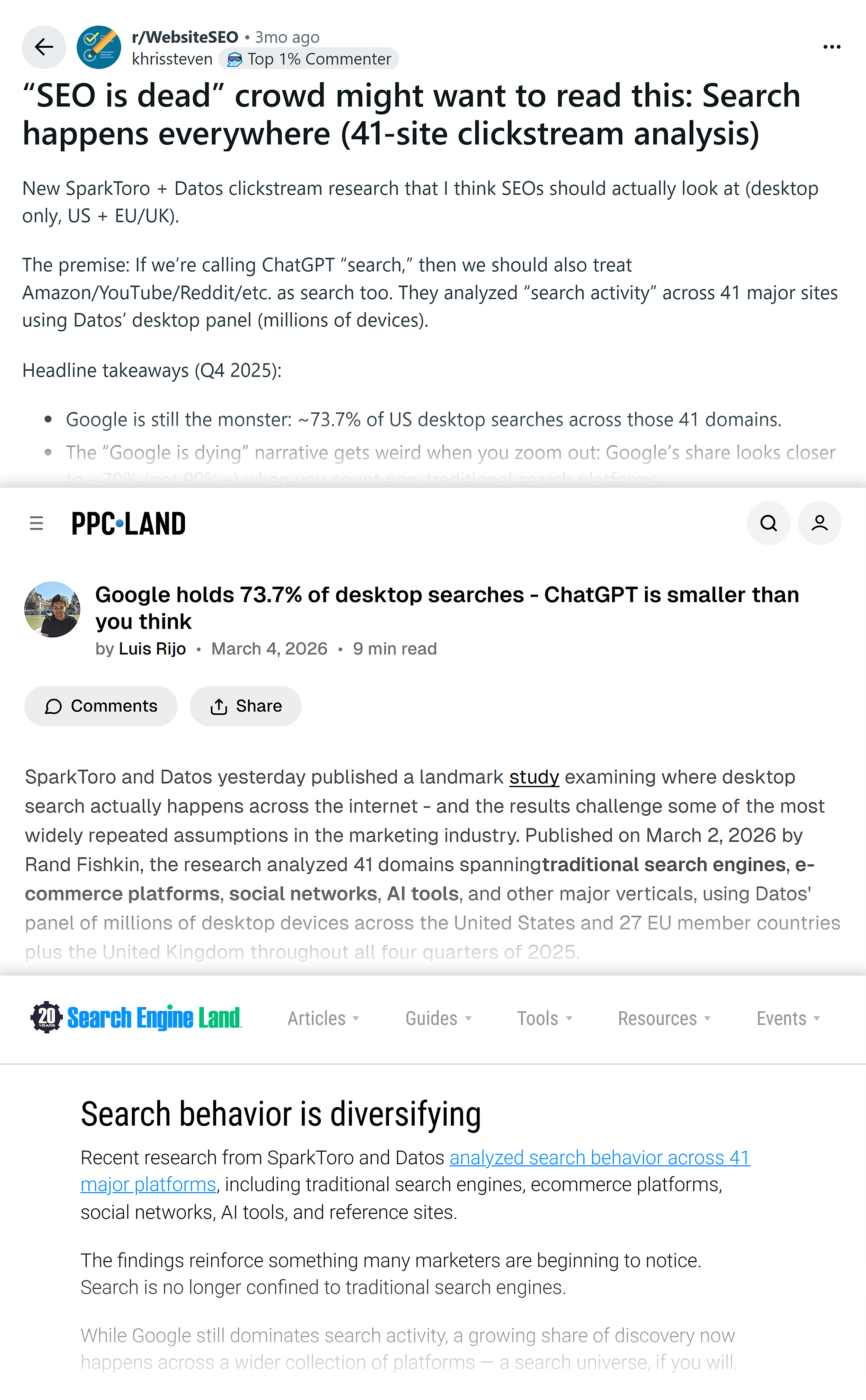
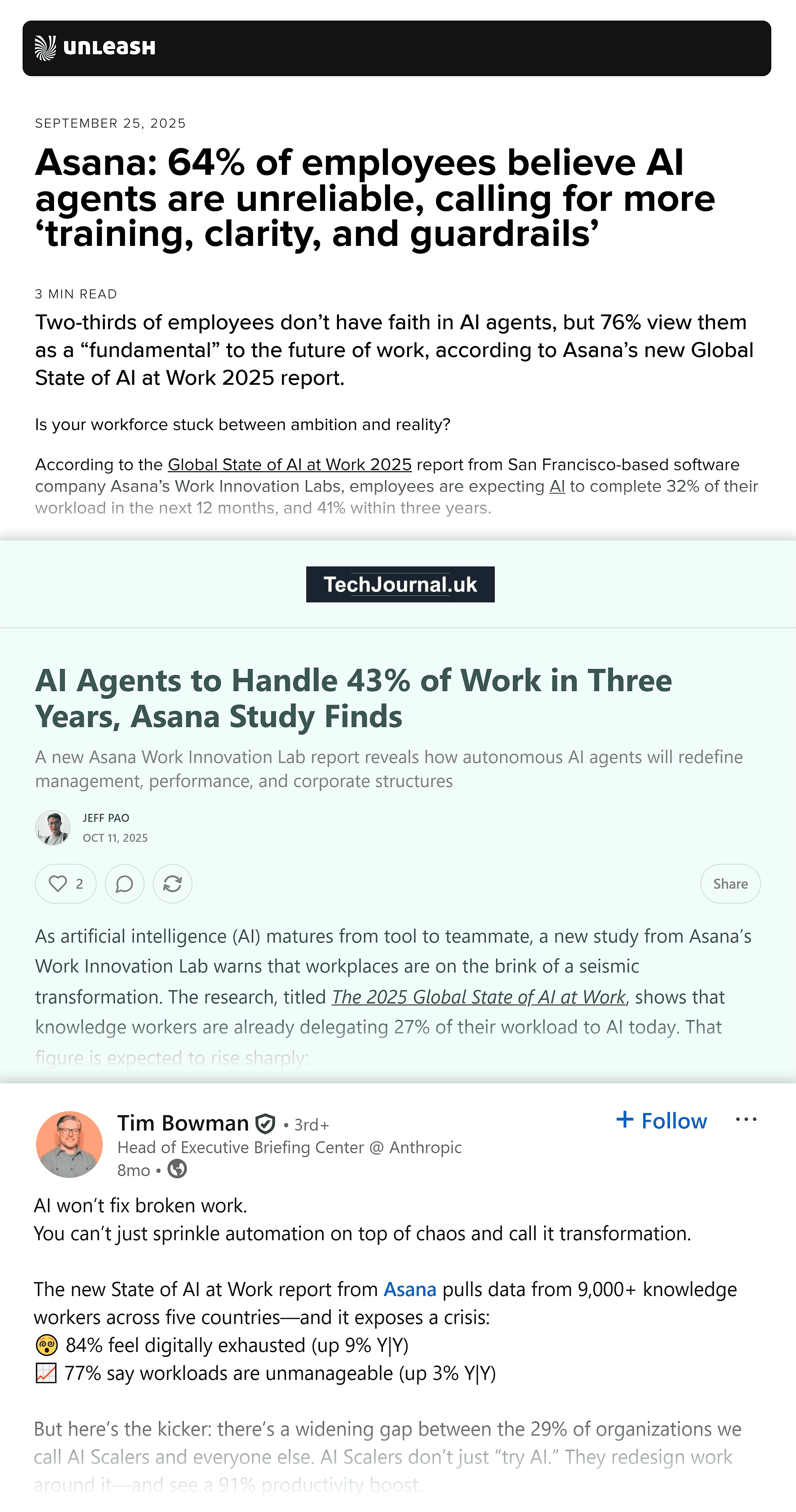
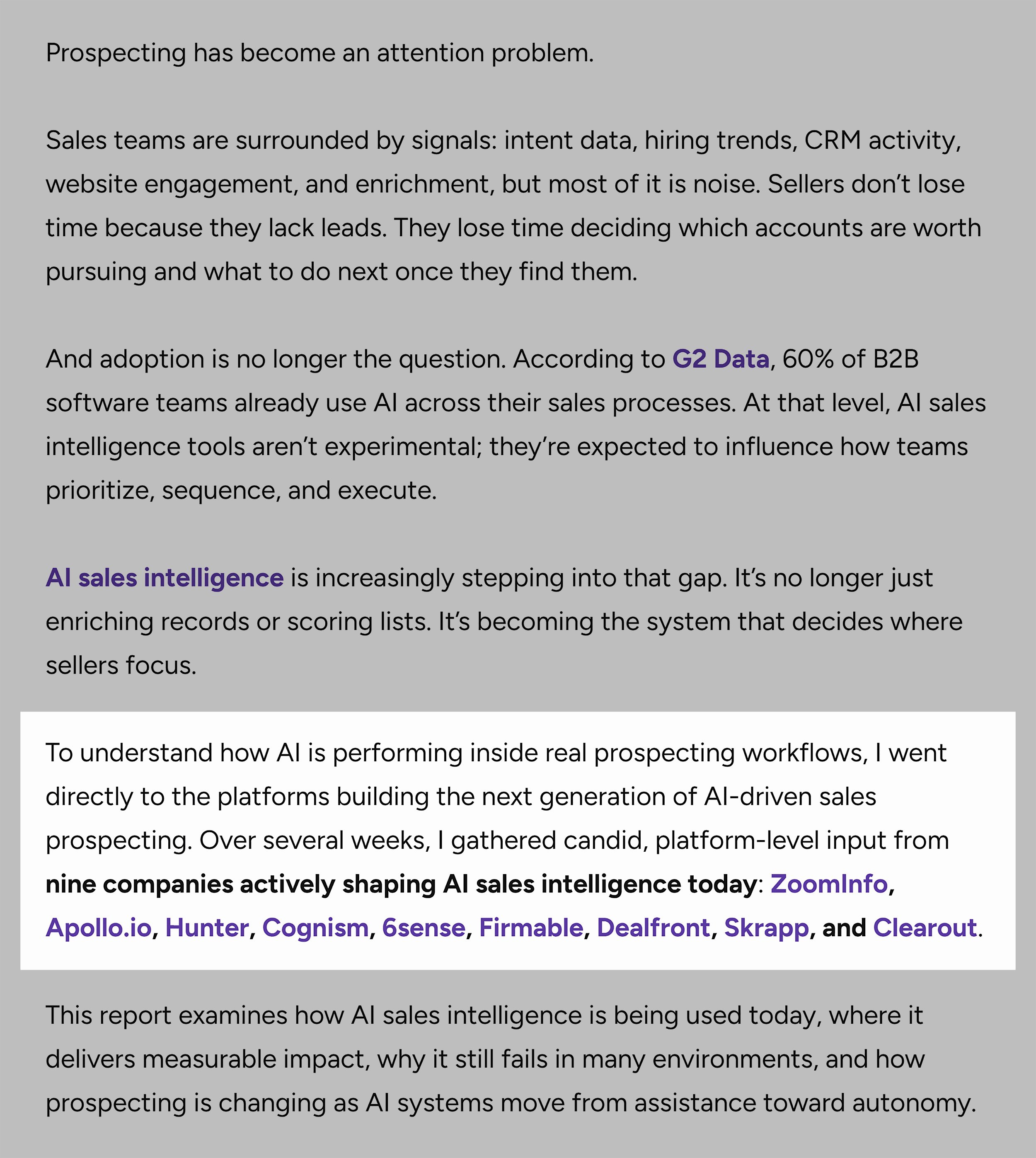
Original research remains one of the most reliable vehicles for securing sustained brand citations. By conducting proprietary studies, surveys, or industry data analyses that address hotly contested questions within a vertical, organizations create indispensable reference assets. When journalists, researchers, and bloggers discuss these industry debates, citing the proprietary data becomes mandatory, thereby securing an organic brand mention. Successful execution requires packaging research with clear executive summaries, downloadable data sets, and easily referenceable statistical callouts that other publishers can seamlessly integrate into their own reporting.
- Partner with Complementary Brands on Co-Created Assets
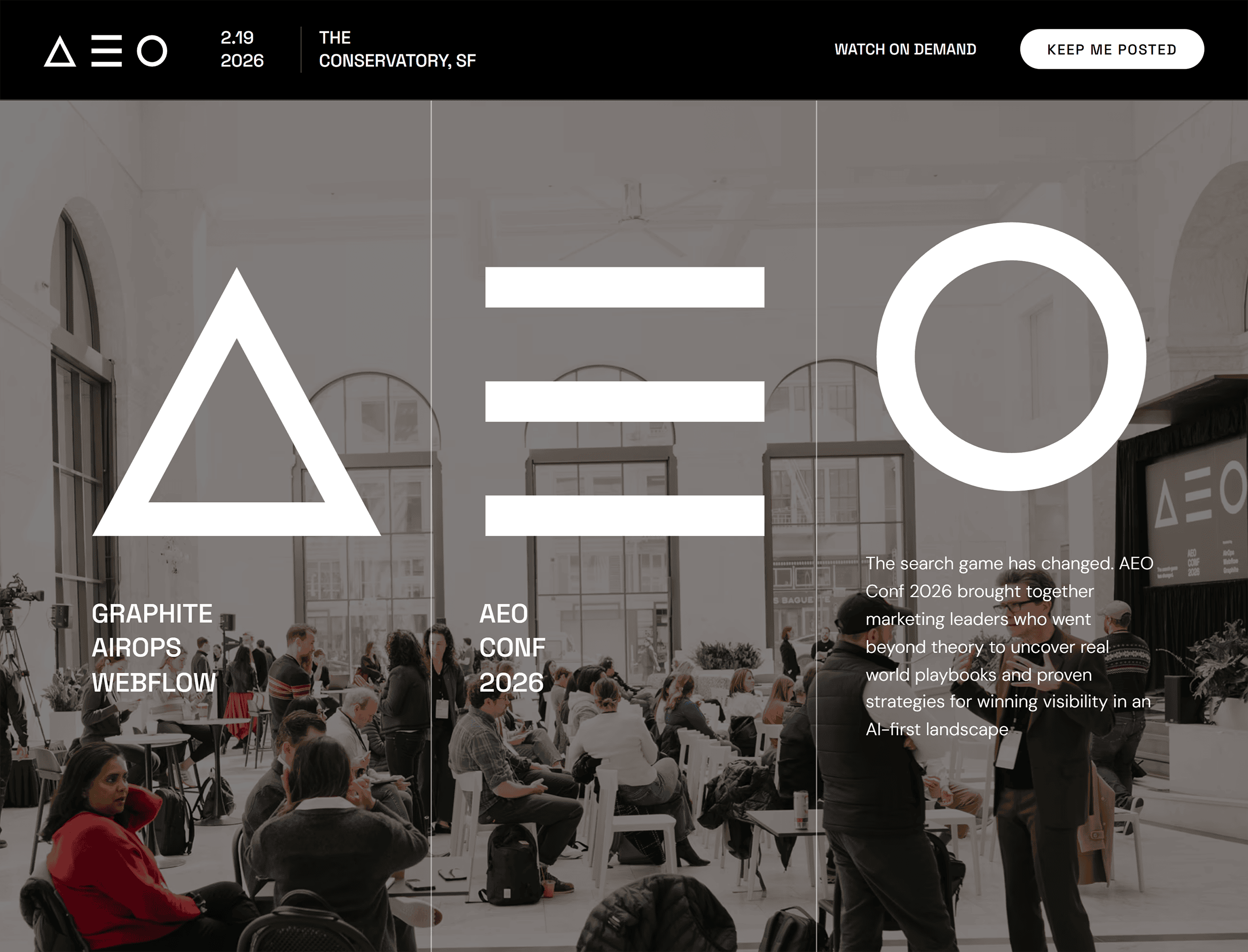
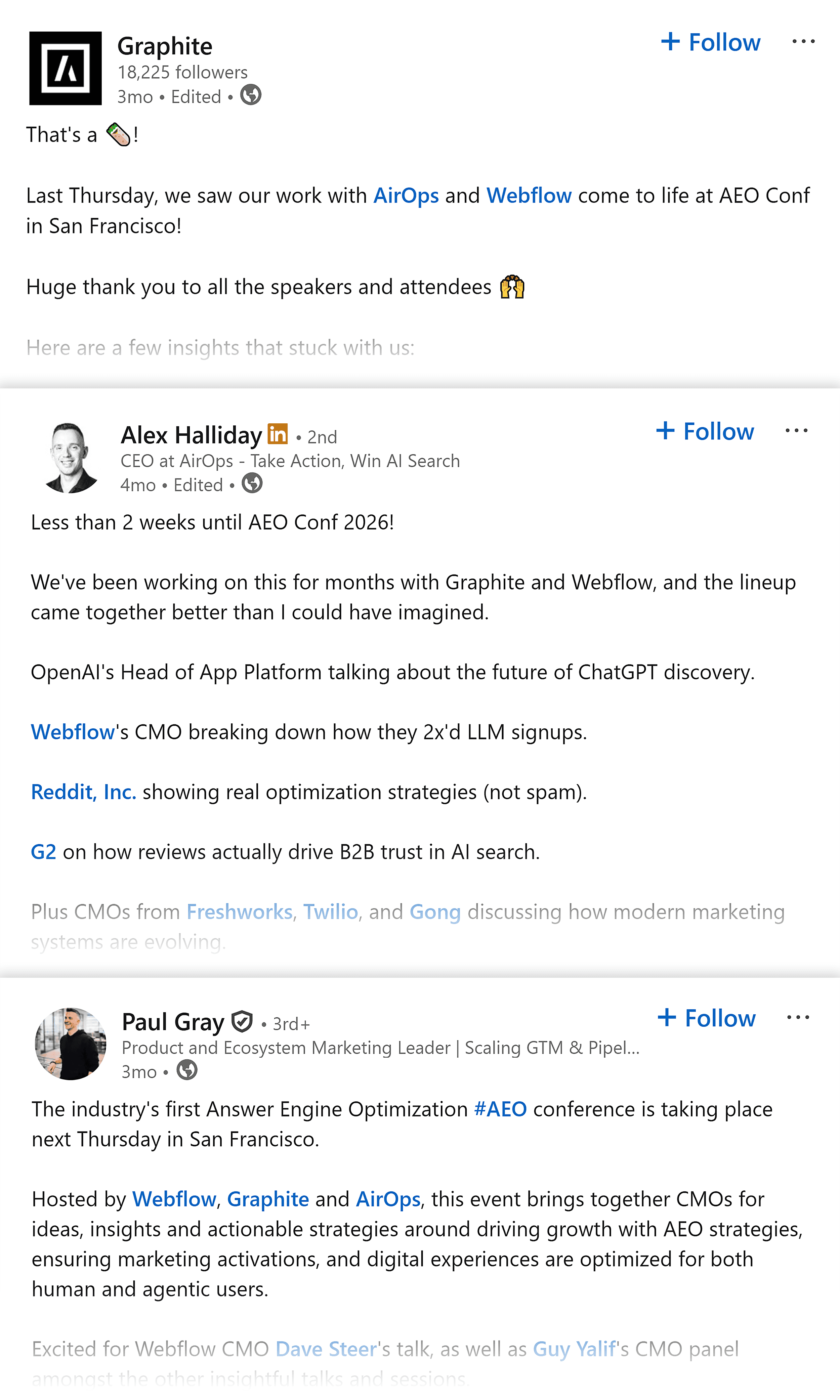
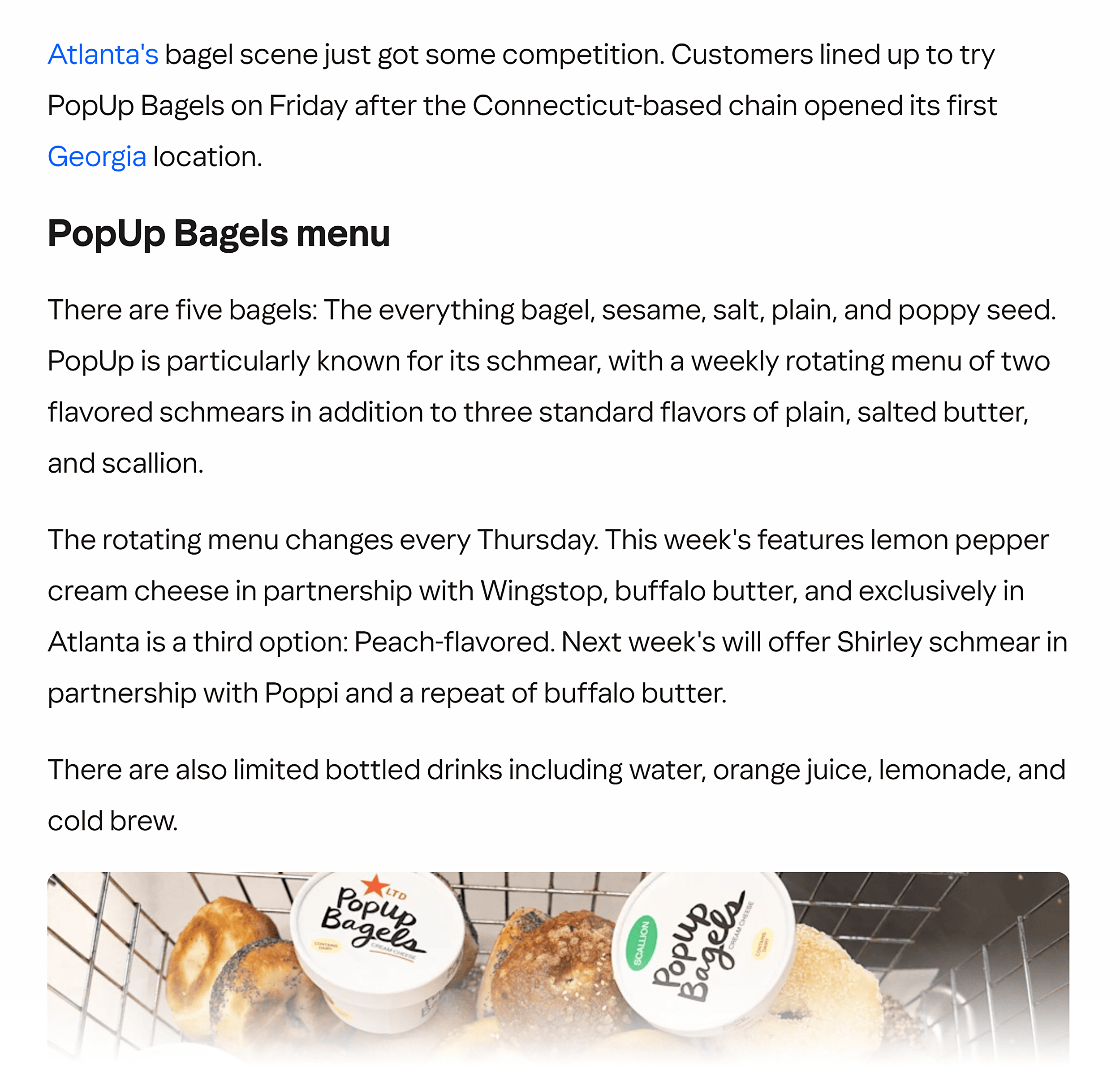
Collaborative marketing campaigns bring together two or more non-competing businesses targeting overlapping demographic segments. Initiatives such as co-hosted industry conferences, joint research reports, or co-branded product releases generate massive waves of synchronized publicity. When promotional materials, speaker announcements, and post-event attendee recaps repeatedly reference the participating brands in tandem, search engines and LLMs register these co-occurrences. This phenomenon strengthens semantic associations between the brands and their core industry topics, bridging the gap between social visibility and AI search prominence.

- Feature Other Brands and Experts in Content Production
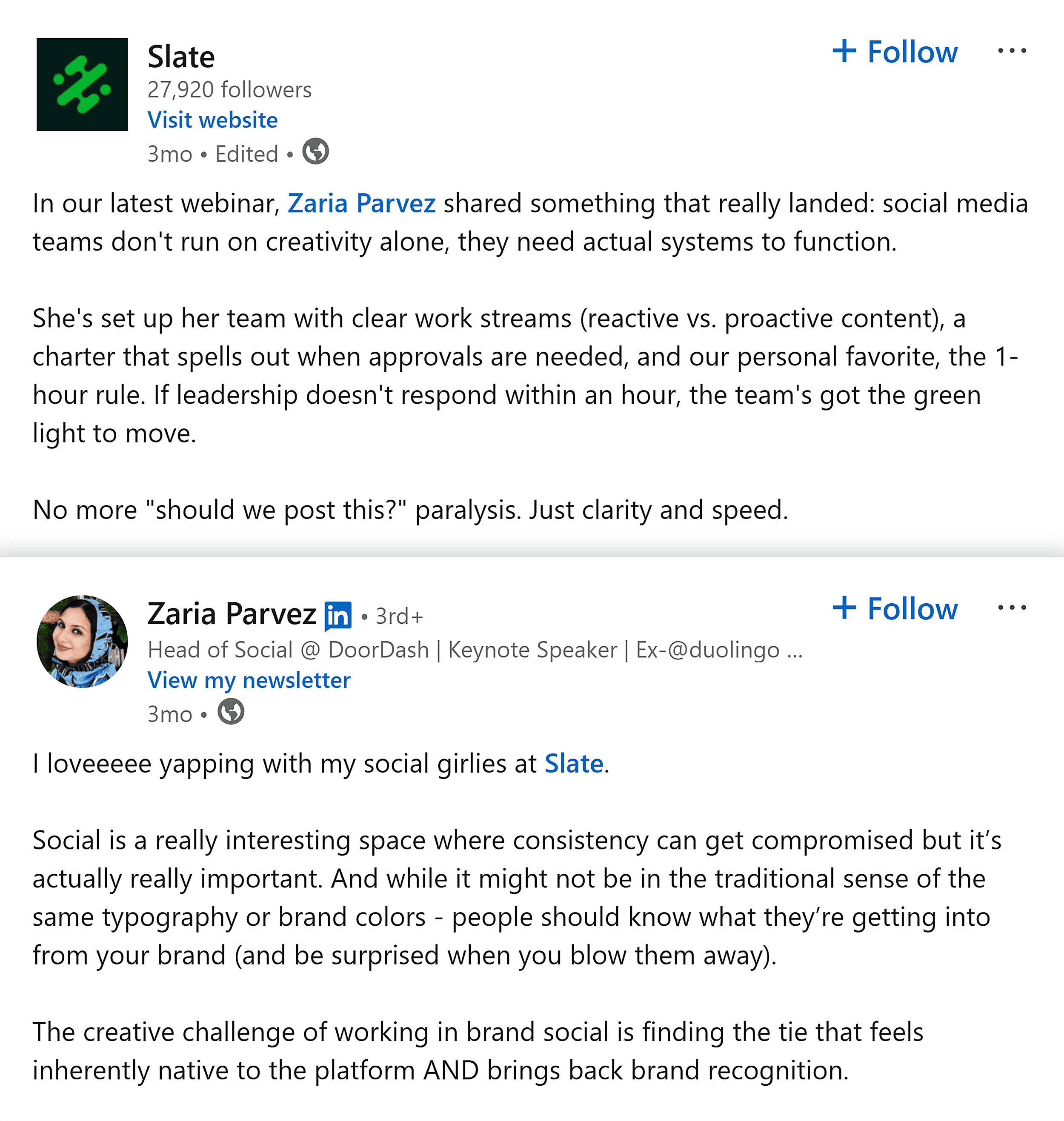
A reciprocal approach to content creation involves spotlighting industry peers, thought leaders, and complementary organizations within proprietary guides, expert roundups, and benchmark reports. When an organization prominently features an expert’s unique perspective, quantitative commentary, or qualitative insights, that contributor is incentivized to share the completed work with their own extensive professional networks. This advocacy organically drives external brand mentions, expands audience reach into adjacent communities, and fosters long-term industry relationships.

- Contribute Subject Matter Expertise Through Digital PR
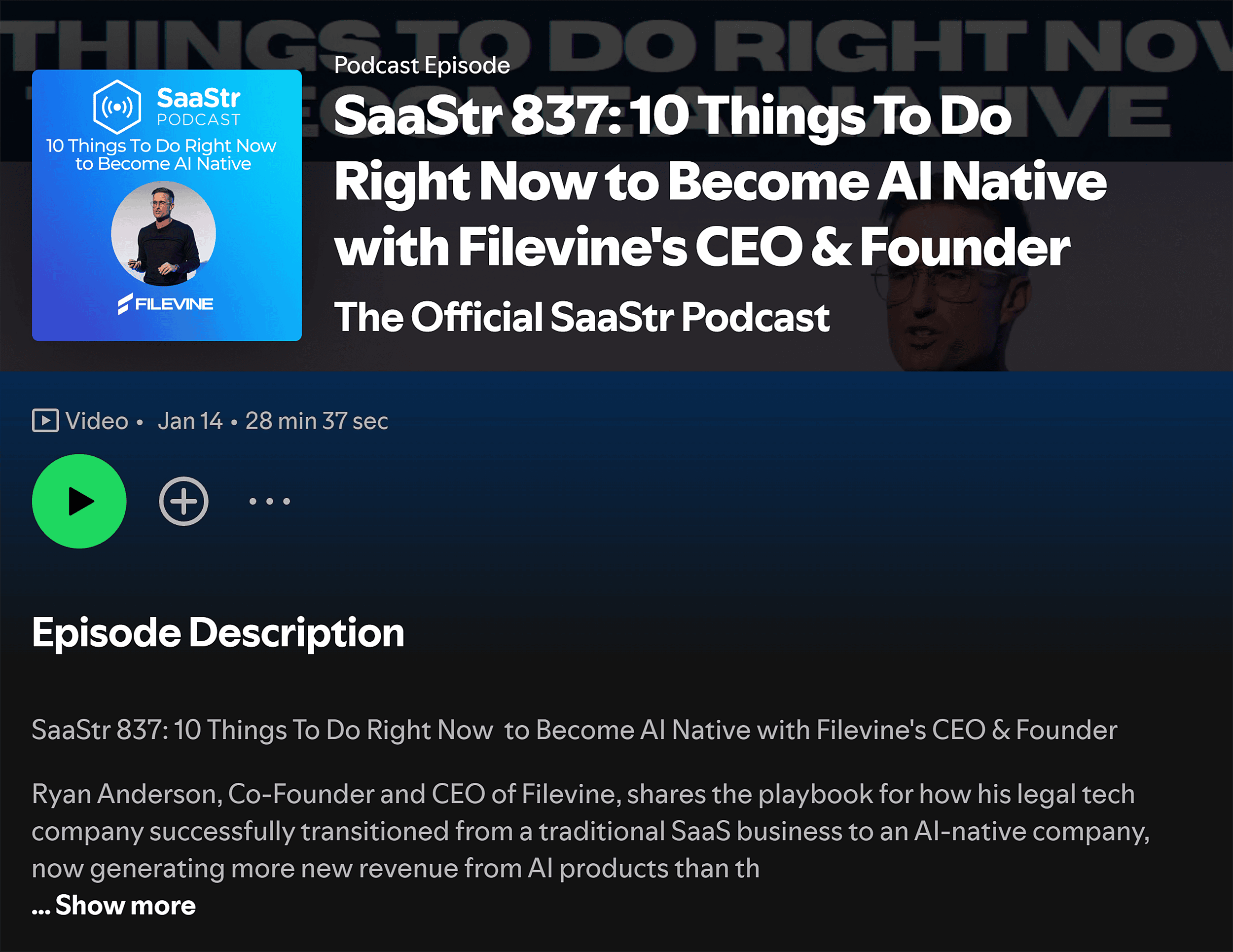
Securing placements on external media platforms through proactive digital public relations elevates brand credibility. Executives and subject matter experts who pitch themselves as knowledgeable commentators for podcasts, guest editorial columns, trade publications, and video interviews provide tangible value to host audiences. Rather than delivering overt sales pitches, effective contributors offer actionable playbooks, framework analyses, and objective industry commentary. Outlets frequently embed these mentions across multi-channel assets—including podcast show notes, YouTube video descriptions, chapter timestamps, and written transcripts—providing diverse training data for search and AI crawlers.

Methodologies for Tracking and Reporting Brand Mentions
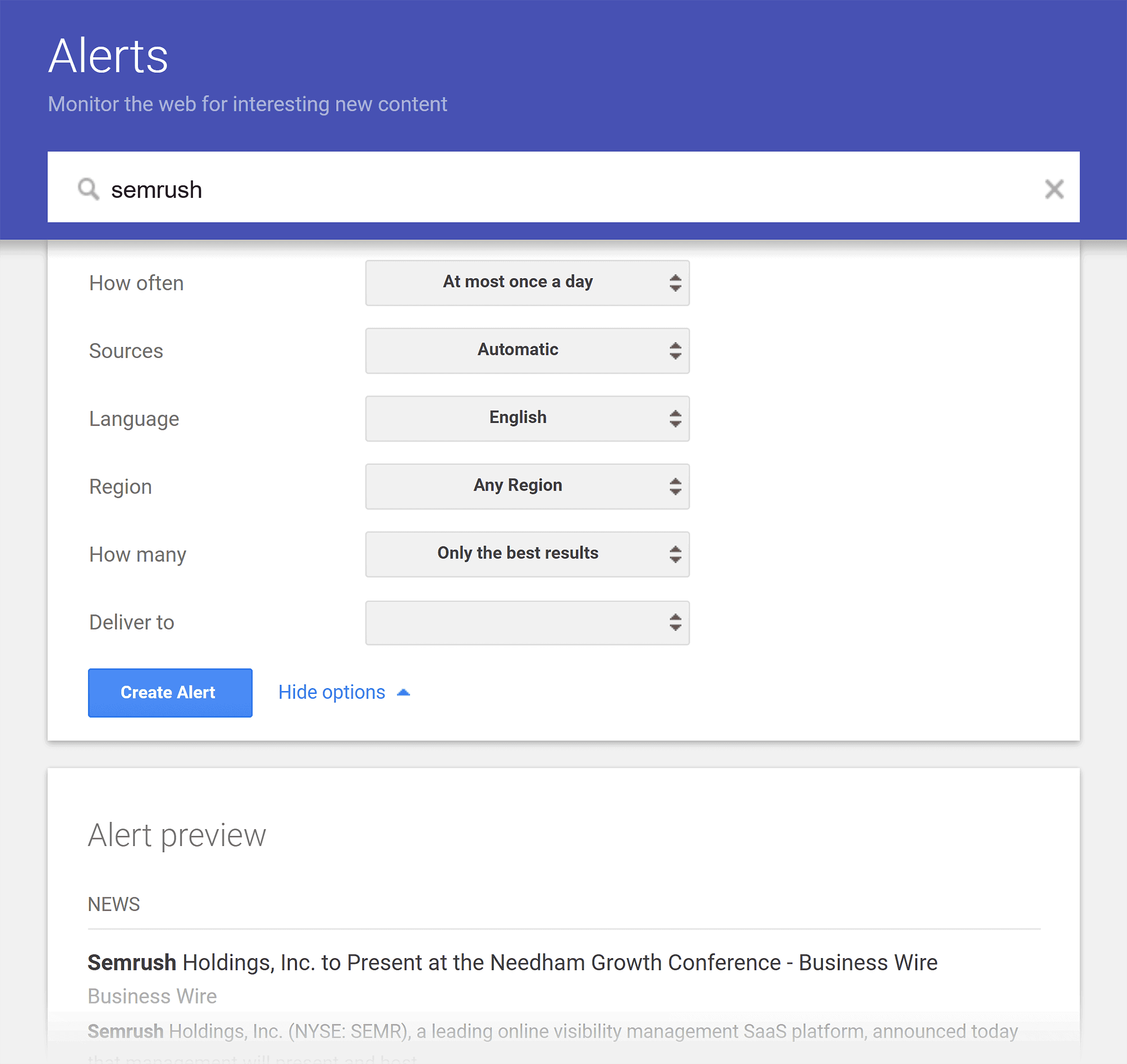
To demonstrate the efficacy of a brand mention strategy to corporate leadership, organizations must deploy a structured measurement and reporting apparatus utilizing a combination of tools and manual audits.

Google Alerts provides a foundational, complimentary mechanism for tracking web references. By configuring alerts for exact brand names, common typographic errors, proprietary product lines, executive names, and primary competitors, communications teams can establish baseline tracking. Because Google Alerts occasionally overlooks niche community forums and specialized subreddits, teams must supplement automated alerts with weekly manual searches across industry-specific news aggregators and social channels.
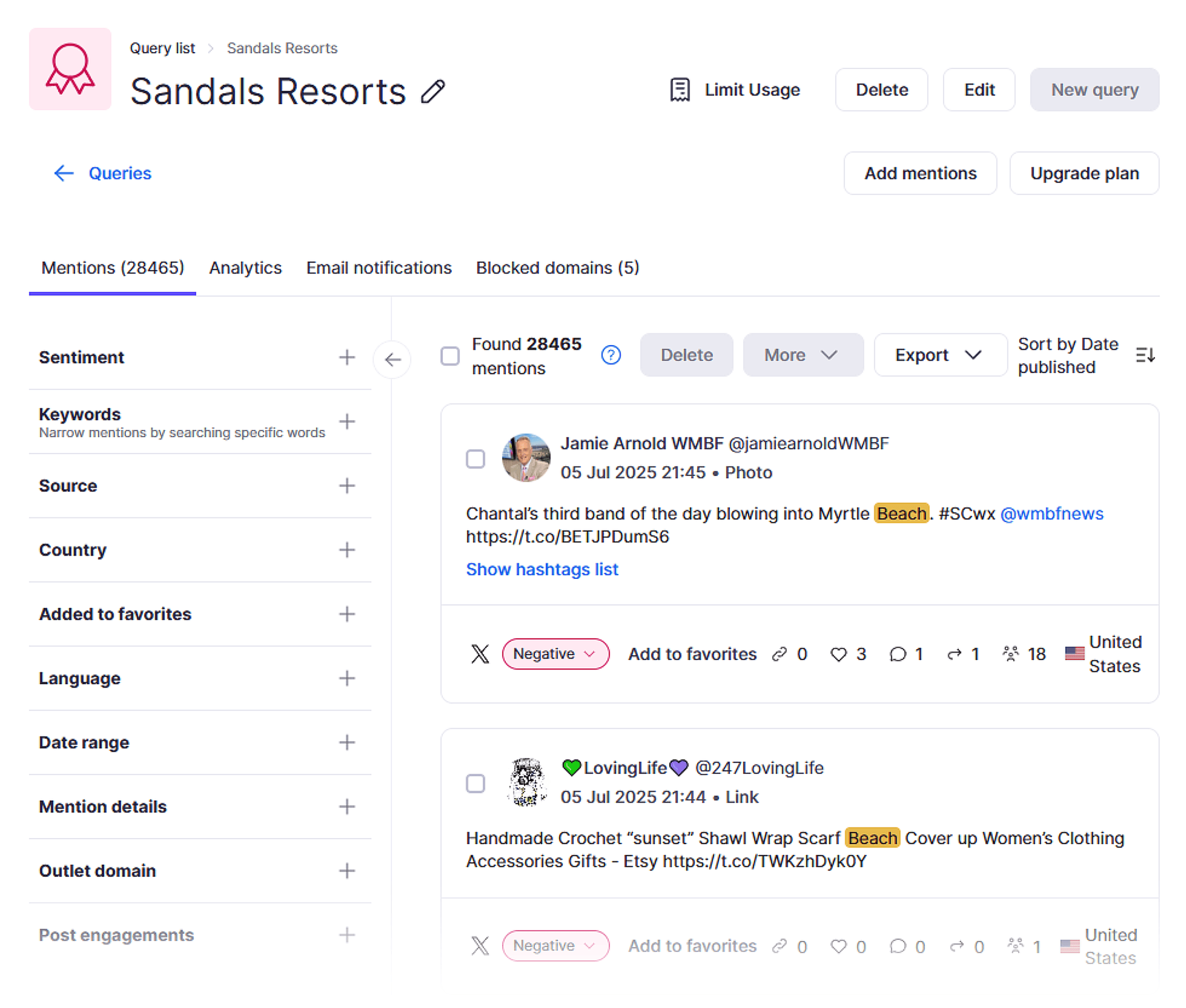
Social listening platforms—such as specialized brand monitoring software suites—offer advanced analytics capabilities. These tools track conversational sentiment, geographic distribution, language parameters, and source categorization across blogs, review platforms, and social networks. Reporting metrics should focus on aggregate mention volume, net sentiment ratios (positive versus negative tracking), and share-of-voice comparisons against key market competitors.
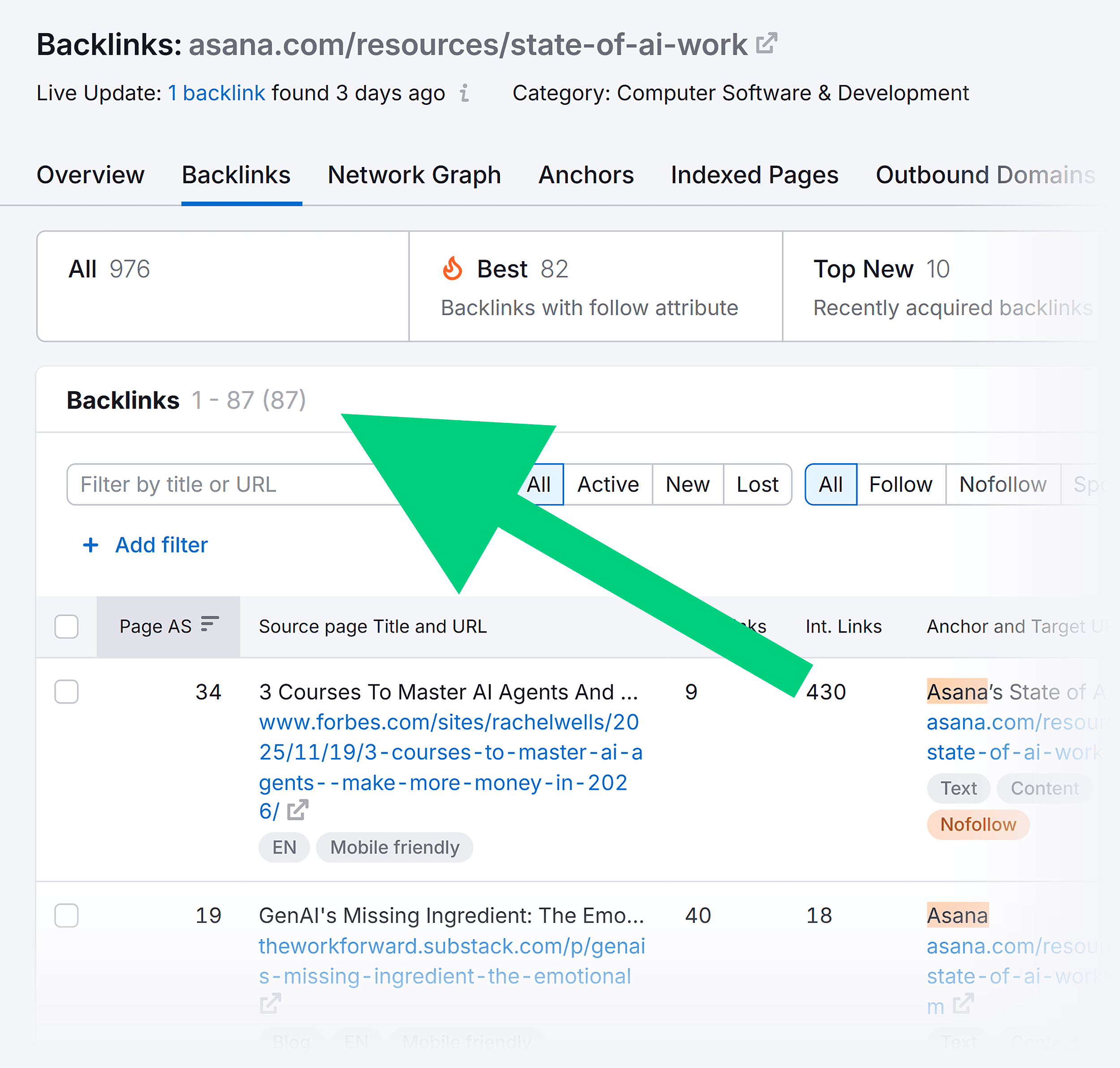
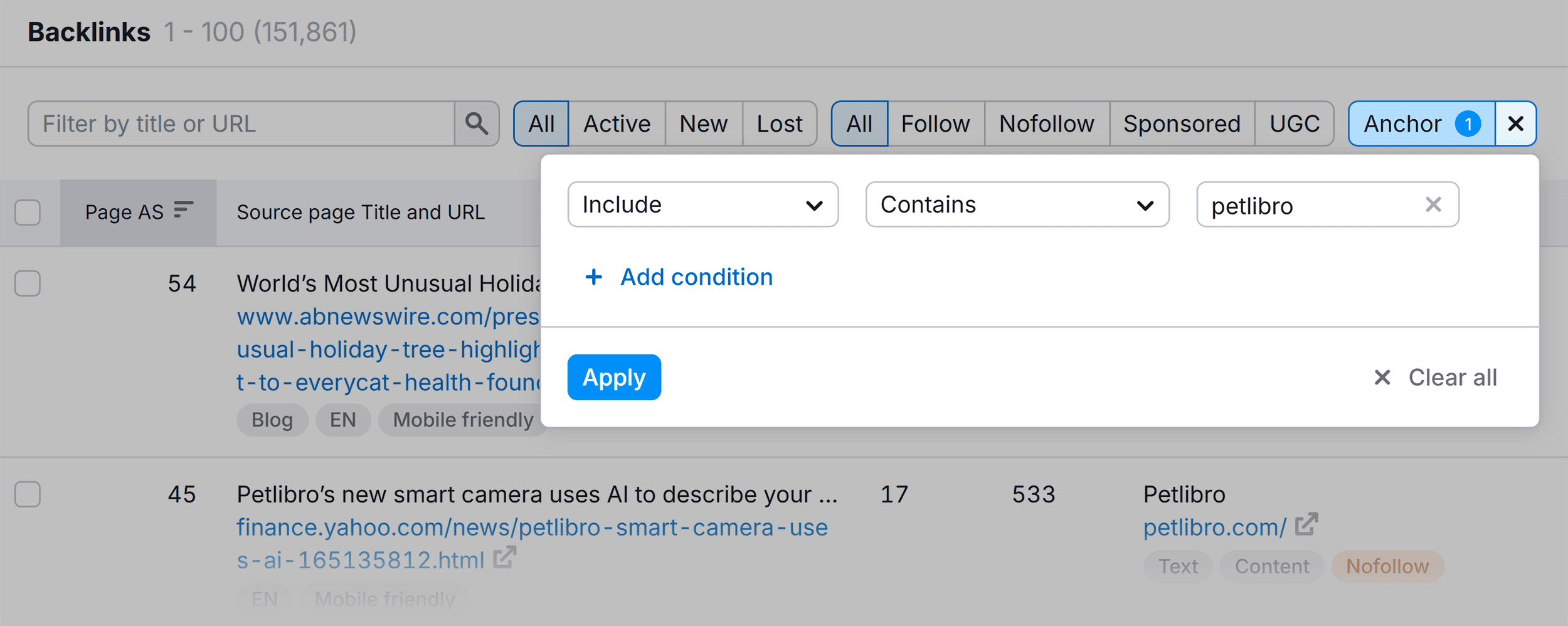
Backlink and mention analysis tools enable digital marketing teams to audit newly acquired links through anchor text filtering. By isolating inbound links where the anchor text explicitly incorporates the brand name, analysts can identify high-authority editorial placements and evaluate the velocity of brand adoption across unique referring domains.
Executive reporting frameworks should pivot away from vanity metrics and instead present a cohesive narrative of brand growth. Quarterly leadership updates should synthesize total mention volume, highlight the acquisition of top-tier media placements with estimated audience reach metrics, and correlate promotional campaign milestones with upward shifts in sentiment and AI search visibility. By treating brand mentions as a core strategic asset, businesses can cement their authority, satisfy complex algorithmic evaluation criteria, and secure dominant positioning across both traditional search engines and emerging conversational AI platforms.