Reflections on Legacy, the Genesis of Stack Overflow, and the Fragile Future of AI Training Data


Software developer, entrepreneur, and prominent industry commentator Jeff Atwood recently published a reflective retrospective examining personal loss, the foundational architecture of modern artificial intelligence, and the vital importance of preserving human-centric online communities. Best known as the co-founder of Stack Overflow alongside Joel Spolsky, Atwood used his platform to connect deeply personal milestones with macro-level technological trends reshaping the software engineering landscape. The essay touches upon his father’s passing, the mechanics of rural economic studies, and a stark warning to artificial intelligence developers regarding the systematic exploitation of crowdsourced human knowledge.
The Intersection of Personal Milestones and Philanthropy
Atwood began his commentary by reflecting on the passage of time and a deeply personal chapter involving his late father and Mercer County, West Virginia. In late 2025, Atwood coordinated a strategic realignment of the Guaranteed Minimum Income (GMI) rural study counties—a philanthropic initiative tied to the Rural Guaranteed Minimum Income Initiative (RGMII)—to ensure that Mercer County was prioritized first. Recognizing that his father’s health was declining, Atwood ensured that the October 2025 study rollout coincided with a final, meaningful visit.
The RGMII represents a $50 million funding commitment dedicated to exploring rural guaranteed minimum income models, aiming to expand economic opportunity and bolster democratic structures across underserved American regions. Atwood’s personal involvement highlights a growing trend among technology veterans who channel capital into empirical socioeconomic research. Reflecting on his father’s passing, Atwood expressed peace, noting that the shared experiences and the deliberate timing of the Mercer County project left him with a profound sense of gratitude rather than grief.
The Architecture of Stack Overflow and the Rise of Generative AI
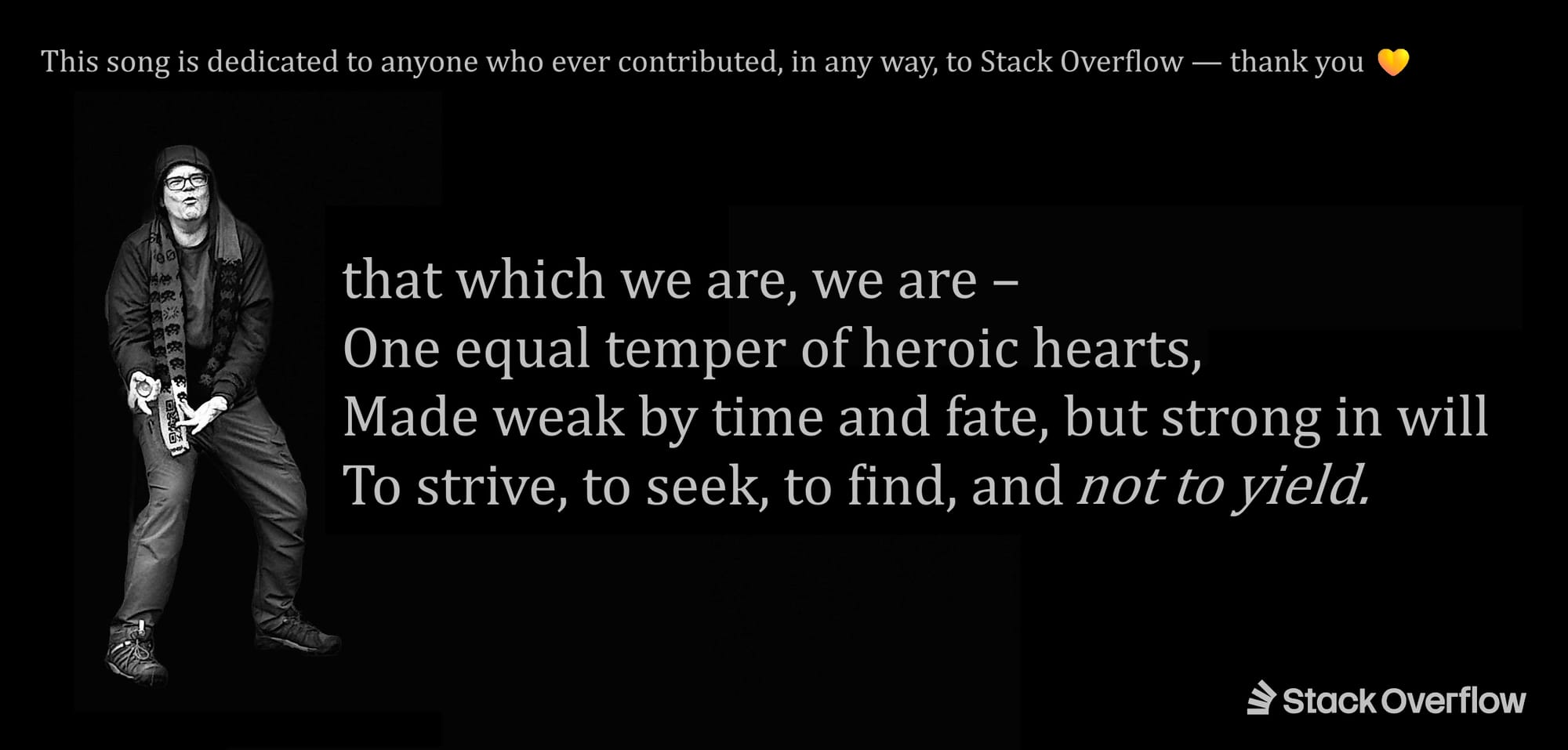
Shifting from personal remembrance to software history, Atwood addressed the monumental impact of Stack Overflow, the Q&A platform he and Joel Spolsky launched in 2008. He extended explicit gratitude to the global community of developers who contributed to the platform over the decades, characterizing the massive repository of programming knowledge as a collective human achievement.
This gratitude served as a bridge to a critical analysis of contemporary generative artificial intelligence. Atwood noted a fundamental technical reality of the current AI boom: large language models (LLMs) rely heavily on high-quality, Creative Commons-licensed programming datasets to achieve advanced code-generation capabilities. Without the decades of human troubleshooting, peer-reviewed answers, and curated discussions hosted on platforms like Stack Overflow, modern code-generation models would lack the foundational training data necessary to function at a professional level.

Industry analysts and machine learning researchers have long acknowledged that publicly available web text, forums, and developer communities form the bedrock of LLM training corpora. While technology companies have increasingly pursued proprietary licensing agreements with major publishers and platform operators, the open web—and community-driven Q&A sites in particular—remains an irreplaceable engine for technical reasoning data.
The Warning Signs for AI Developers: Protecting the Goose That Lays the Golden Eggs
A central pillar of Atwood’s commentary is a stark warning directed at artificial intelligence and general artificial intelligence (GAI) developers. Drawing a parallel to his departure from Stack Overflow to launch the forum-building platform Discourse, Atwood cautioned against policies or economic models that threaten to hollow out the digital communities responsible for generating training data in the first place.
When AI platforms ingest community-generated knowledge to power automated coding assistants, they frequently alter user behavior. If developers find their questions answered instantly by an LLM rather than visiting human-centric forums, the traffic, engagement, and financial sustainability of those forums decline. This dynamic threatens to starve the ecosystem of the fresh, human-validated problem-solving data that future generations of AI models will require to avoid stagnation.

Atwood’s advice to contemporary AI leadership echoes the timeless fable of the goose that lays the golden eggs: under no circumstances should platform operators and AI developers undermine or alienate the human communities that perform the foundational work. Treating contributors with respect and ensuring sustainable models for community survival are framed not merely as ethical imperatives, but as vital self-preservation strategies for the tech industry at large.
Broader Implications for the Software Engineering Ecosystem
The intersection of community-driven knowledge repositories and proprietary artificial intelligence has ignited intense debate across the technology sector. As venture capital and engineering budgets pivot heavily toward automated solutions, questions regarding attribution, compensation, and the long-term health of public forums remain unresolved.
Platform operators face mounting pressure to monetize their data or restrict access to prevent uncompensated scraping by AI developers. Simultaneously, community members who built these repositories over decades are increasingly vocal about fair recognition and the preservation of collaborative spaces. Atwood’s reflections underscore a fundamental truth of the digital age: while algorithms and neural networks can process and synthesize information at unprecedented scales, the spark of human ingenuity, real-world troubleshooting, and community mentorship remain the ultimate catalysts for technological progress.