3 Ways to Enhance Your AI Model’s Interpretability: Bridging the Gap Between Predictive Accuracy and Human Understanding

In an era where machine learning models dictate critical decisions—from loan approvals and medical diagnoses to customer churn prediction—the ability to explain the "why" behind an algorithmic output has become as vital as the accuracy of the prediction itself. For years, the industry operated under the assumption that predictive power was the ultimate metric of success. However, as legislative bodies and regulatory agencies increasingly scrutinize the decision-making processes of automated systems, the era of the "black box" is coming to an end. The European Union’s AI Act, specifically Article 13, has codified this shift, mandating that high-risk AI systems must provide sufficient transparency for users to interpret outputs. This transition marks a departure from viewing interpretability as a niche academic concern toward establishing it as a foundational requirement for industrial-grade machine learning deployments.
The Evolution of Model Transparency
The history of model interpretability is marked by a steady progression from simple, transparent models to complex, high-performing black boxes that defy traditional analysis. In the early 2010s, data scientists relied heavily on linear regression and decision trees, which were inherently interpretable; one could simply look at the coefficients or the splits in a tree to understand the influence of any given feature.
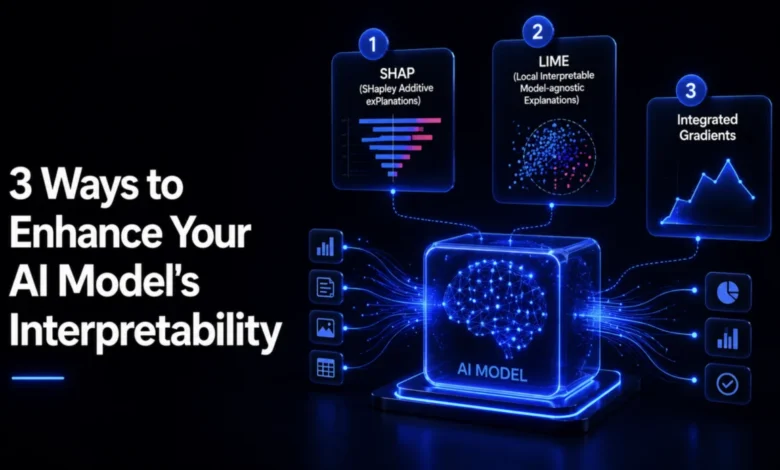
However, as the demand for higher predictive accuracy grew, the industry shifted toward ensemble methods like Gradient Boosted Trees and deep neural networks. These models achieved superior performance by capturing non-linear relationships and high-dimensional patterns, but they did so at the expense of human-readable logic. By 2018, the "black box" problem had become a bottleneck for enterprise adoption. The subsequent years saw a surge in research aimed at "post-hoc" interpretability—methods designed to explain the behavior of a model after it has been trained. Today, practitioners have access to a sophisticated toolkit, including SHAP, LIME, and Integrated Gradients, which allow developers to peel back the layers of complex architectures.
The Limitations of Traditional Feature Importance
For many practitioners, the first instinct remains the use of built-in attributes like feature_importances_ in scikit-learn. While this approach is computationally efficient, it is fundamentally flawed for modern, large-scale deployments. It provides a global summary—telling you which features mattered most across an entire dataset—but fails to address the "local" context.
Consider a churn prediction model. A global importance score might indicate that "tenure" is the most significant factor in customer retention. Yet, if a loyal customer with five years of tenure is suddenly flagged as high-risk, the global score offers no explanation. It cannot account for the specific interaction of variables—such as a spike in support tickets or a change in payment frequency—that triggered the alert for that specific individual. Furthermore, research has shown that these built-in importance metrics can be biased toward high-cardinality features, creating a misleading picture of feature influence that can lead to poor business decisions.
Method 1: SHAP (SHapley Additive exPlanations)
SHAP has emerged as the industry standard for bridging the gap between global trends and local explanations. Grounded in cooperative game theory, SHAP treats each feature as a "player" in a coalition, assigning each a fair share of the model’s prediction based on its marginal contribution.
The power of SHAP lies in its mathematical consistency. Unlike legacy methods, it allows for a seamless transition from aggregate analysis to individual case studies. In a churn model, a SHAP analysis might reveal that while a customer’s tenure usually acts as a "buffer" against churn, the recent volume of support tickets has exerted a disproportionate influence, pushing the risk probability into the high-alert range. While SHAP offers a gold standard for accuracy, it does come with a performance cost. For extremely large models, calculating exact Shapley values is computationally expensive, though specialized variants like TreeSHAP have been developed to mitigate this by exploiting the hierarchical structure of tree-based models.
Method 2: LIME (Local Interpretable Model-agnostic Explanations)
When computational constraints make SHAP unfeasible, LIME provides a practical, high-speed alternative. LIME operates on the principle of local approximation. It creates a "neighborhood" of synthetic data points around a specific prediction and trains a simple, interpretable model—usually a linear regressor—on that local vicinity.
LIME is model-agnostic, meaning it can be applied to virtually any algorithm, including proprietary black-box APIs where the internal weights are inaccessible. For developers working in high-frequency environments where latency is a concern, LIME is often the preferred choice. However, it requires a careful balance; because it relies on random sampling to create local perturbations, it can occasionally exhibit instability. Practitioners are advised to use LIME as a complementary tool, checking if its local explanations align with the broader insights generated by other methodologies.
Method 3: Integrated Gradients for Neural Networks
For deep learning architectures where gradients are accessible, Integrated Gradients (IG) represents the pinnacle of analytical precision. Unlike SHAP or LIME, which treat models as black boxes, IG leverages the internal structure of the neural network. By calculating the integral of the gradients along a path from a neutral baseline input to the actual input, IG provides a comprehensive attribution of the prediction.
In neural networks, this method offers a mathematically grounded way to see exactly which neurons were activated by specific input features. It is particularly effective for high-dimensional data, such as images or complex sequences, where traditional methods struggle. Recent industry benchmarks suggest that for deep learning applications, IG provides the most reliable "sanity check" for model behavior, as its convergence delta—a measure of how well the attributions sum up to the model’s output—can be calculated with high precision.
Implications for Enterprise AI Deployment
The shift toward these interpretability techniques has profound implications for corporate governance and risk management. For instance, in the financial services sector, regulators are no longer accepting "the model predicted it" as a valid justification for credit denial. Financial institutions are increasingly required to provide "adverse action notices" that explicitly list the factors contributing to a negative outcome.
Furthermore, the ability to interpret model behavior is critical for debugging and bias detection. If a model consistently flags specific demographic groups as high-risk, interpretability tools act as an early-warning system, allowing data scientists to identify whether the model is learning from spurious correlations or latent societal biases. By implementing SHAP, LIME, or Integrated Gradients, organizations can move from a state of blind reliance to one of informed oversight.
A Comparative Framework for Choosing the Right Method
Choosing the right interpretability tool is not about finding the "best" one, but about selecting the one that fits the technical constraints of the project.
- Use SHAP if: You require a mathematically rigorous explanation that works for both global and local levels, particularly if your architecture is tree-based.
- Use LIME if: You need a model-agnostic solution for real-time applications where latency is critical and you do not have the time to compute exact Shapley values.
- Use Integrated Gradients if: You are working with differentiable models, such as neural networks, and require a granular understanding of how specific inputs drive the model’s activation.
Conclusion: Toward a Transparent Future
As we look toward the future of artificial intelligence, the divide between "black box" performance and human-readable reasoning is narrowing. The adoption of these three techniques is more than a technical upgrade; it is a professional commitment to accountability. Whether it is a churn prediction model, a diagnostic healthcare tool, or an automated underwriting system, the goal remains the same: to build systems that we can trust, verify, and explain. By adopting these methodologies, the machine learning community can move past the limitations of the past, satisfying both the demands of regulators and the expectations of the public, ultimately fostering a more responsible and effective AI ecosystem. As Article 13 of the EU AI Act continues to shape global standards, the organizations that prioritize interpretability today will be the ones that define the standard for the next generation of intelligent systems.
Related posts: