Beyond Reasoning: How Abnormal AI Deployed Billion-Scale Agentic Compute Infrastructure


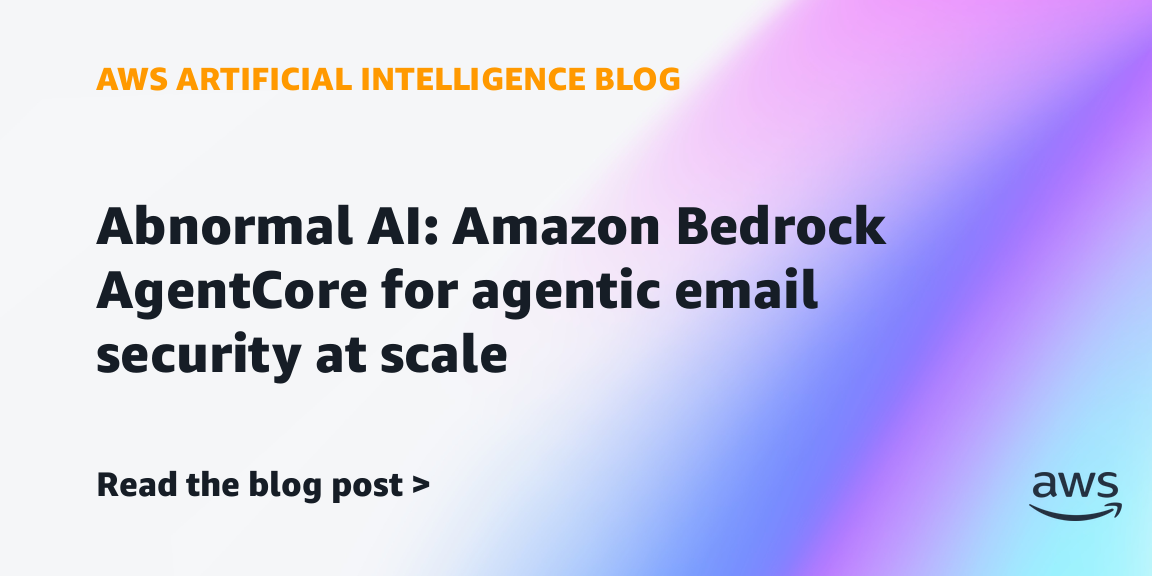
The shift from experimental artificial intelligence to production-grade agentic systems has ushered in a new architectural requirement: the compute scratch pad. As AI agents move beyond simple conversational interfaces to execute complex, multi-step workflows, organizations are discovering that semantic reasoning—the ability of large language models (LLMs) to interpret and generate text—is insufficient for mission-critical operations. To bridge this gap, industry leaders are increasingly adopting sandboxed, ephemeral code execution environments to handle data aggregation, verification, and logic-intensive tasks. A primary example of this evolution is Abnormal AI, a behavioral security firm protecting over 25 percent of the Fortune 500, which has integrated the Amazon Bedrock AgentCore Code Interpreter to manage its massive, real-time email threat detection pipeline.
The Architectural Shift Toward Agentic Infrastructure
For several years, the enterprise AI landscape was dominated by "chatbots" that primarily functioned as sophisticated text-to-text engines. However, the rise of "agentic" workflows—where an AI is granted the autonomy to use tools to achieve a goal—has created a demand for environments that can handle mathematical precision and deterministic logic.
Abnormal AI, which processes billions of messages daily, represents the cutting edge of this transition. By deploying Amazon Bedrock AgentCore Code Interpreter, the company has enabled its agents to write and execute code dynamically. This capability allows the system to move beyond the probabilistic nature of LLMs into the deterministic realm of software execution. In practice, this means that when an AI agent faces an ambiguous threat pattern, it does not merely guess; it writes a script to query data, validates the finding, and updates the security posture in real-time.
A Three-Tiered Defense Architecture
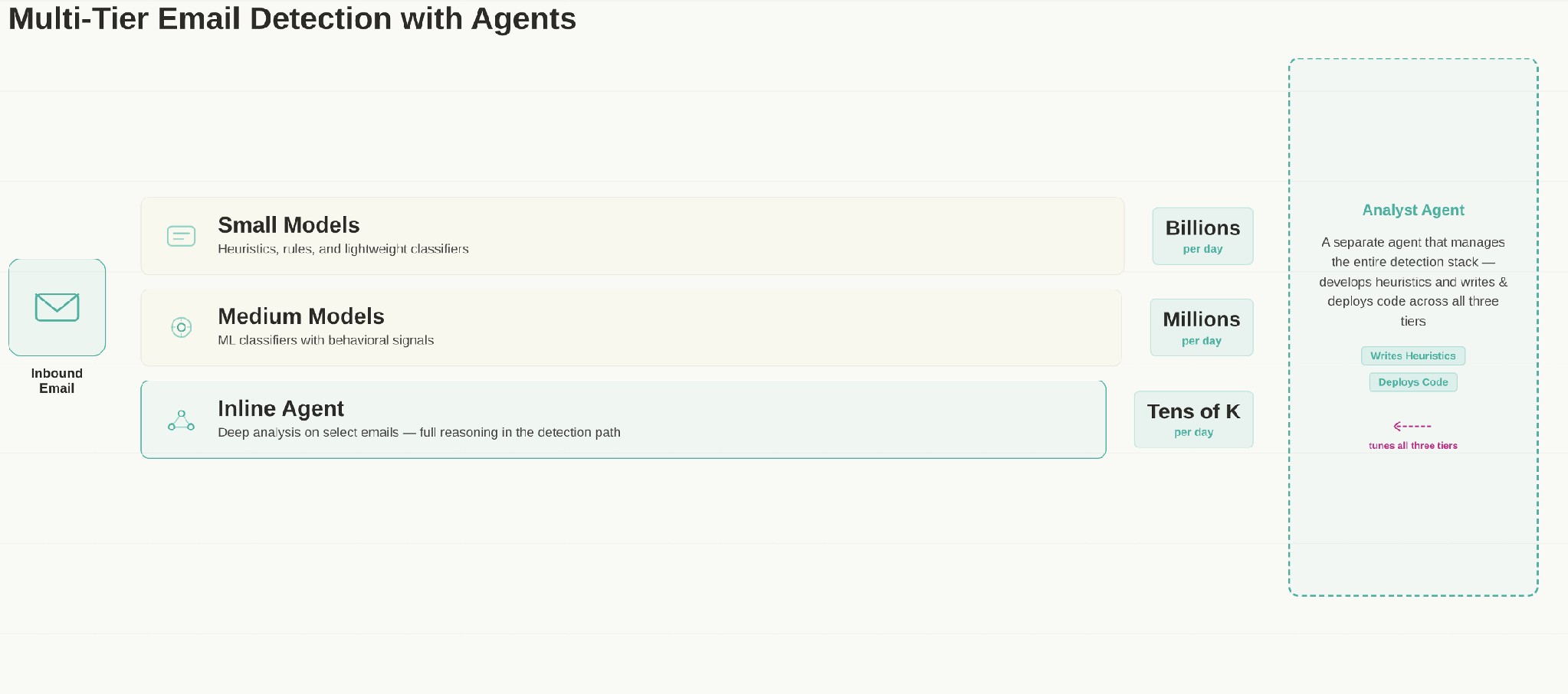
The implementation of this technology is not a monolithic application of AI but rather a sophisticated, tiered strategy. Abnormal AI operates on a pyramid of processing intensity, designed to optimize for both latency and cost.
At the base of the stack lies Tier 1, which processes the vast majority of the billions of emails analyzed daily. This tier utilizes lightweight classifiers and heuristic rules. At this scale, the economic cost of running high-compute models would be prohibitive, and for the clear majority of traffic, unnecessary.
Tier 2 serves as a middle layer, handling messages that exhibit suspicious signals but fail to meet a high-confidence threshold. Here, the company employs medium-sized machine learning and deep learning models to perform behavioral signal analysis.
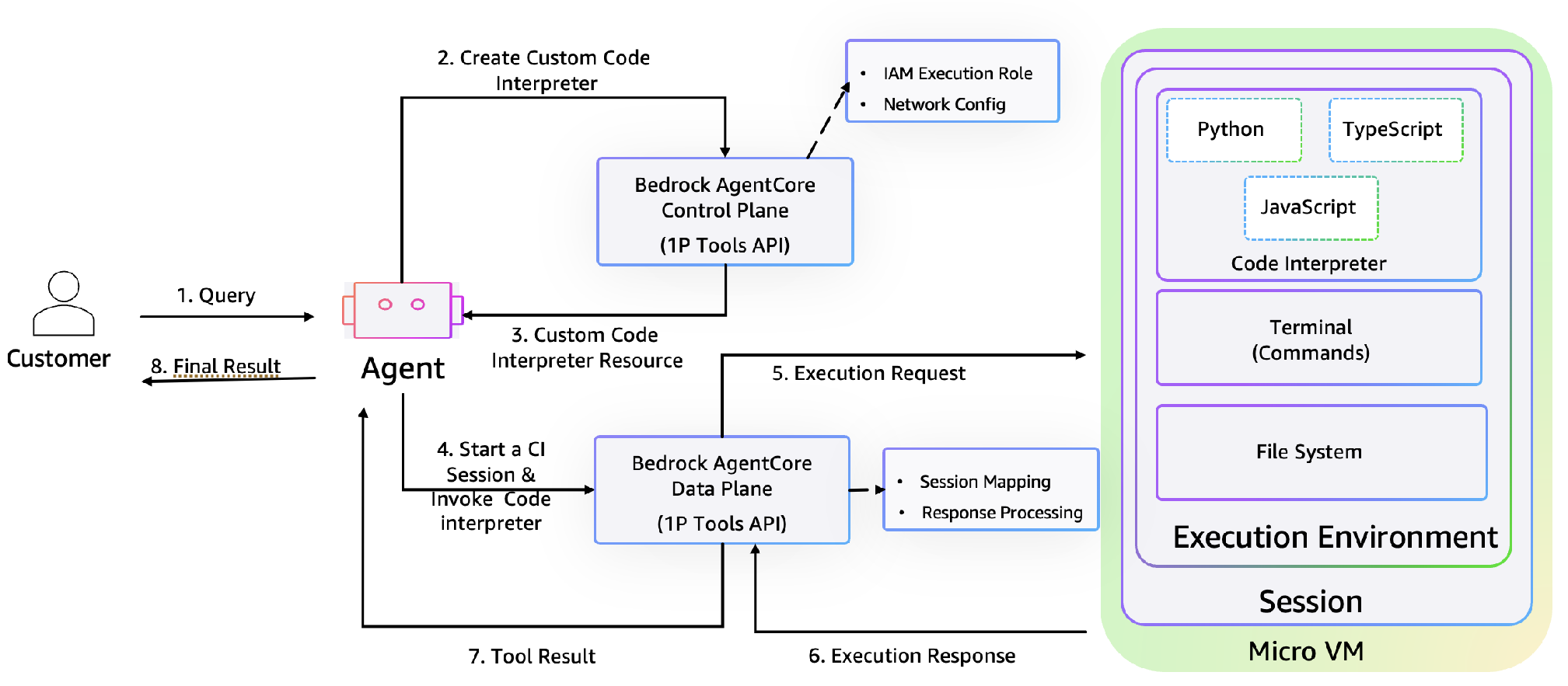
Tier 3, however, represents the most complex deployment. Reserved for the most elusive threats—the "tens of thousands" of messages per day that would typically require human forensic investigation—this tier utilizes inline agents. These agents are equipped with the AgentCore Code Interpreter. When an email evades the first two layers, the Tier 3 agent assumes control. It creates a sandbox, dynamically generates code to parse the threat, and evaluates the results against the company’s internal behavioral models. This automation allows for a response speed that matches the velocity of modern cyberattacks, effectively neutralizing threats before they ever reach an employee’s inbox.
Beyond Real-Time: The Analyst Agent and Batch Intelligence
The utility of the Code Interpreter is not confined to the millisecond-latency requirements of the inbox. Abnormal AI has extended this architecture to a secondary "analyst agent" that functions in a batch processing capacity.
This analyst agent acts as a continuous feedback loop. When the real-time system encounters a misclassification or an anomaly that requires deeper investigation, the data is funneled into a batch job. These operations can span from 30 minutes to entire days. The analyst agent utilizes the Code Interpreter to conduct longitudinal pattern analysis, perform external model training, and iterate on heuristic rules. Once the agent has verified a new detection strategy, the refined logic is pushed back into the Tier 1 and Tier 2 models. This creates a self-improving system where the AI effectively "teaches" itself how to be more accurate, reducing the manual burden on security operations center (SOC) analysts.
Security and the Zero-Trust Sandbox
A critical component of this deployment is the design of the execution environment. By opting for a "no egress" sandbox configuration, Abnormal AI adheres to strict zero-trust principles. Because the agentic code runs in an isolated, ephemeral MicroVM, the risk of a compromised agent interacting with external malicious infrastructure is mitigated.
The Code Interpreter acts as a strictly controlled API. It does not dictate the agent’s internal reasoning process but instead provides a "black box" where the agent can input files and retrieve structured data. This design pattern has proven highly effective for scaling, as it decouples the agent’s logic from the host operating system. Furthermore, the use of programmatic verifiers—such as linting tools and unit tests within the sandbox—ensures that the code generated by the agent is not only functional but also safe to deploy into the production pipeline.
Industry Implications and Best Practices
The success of the Abnormal AI deployment offers a blueprint for other enterprises attempting to operationalize AI agents at scale. Among the key lessons learned is the importance of providing agents with high-level goals rather than rigid, hard-coded workflows. By allowing the AI to determine the most effective approach to a problem, organizations can achieve more flexible and resilient automation.
Furthermore, the "scratch pad" model—the idea that every agent, regardless of its primary function, requires a compute-heavy workspace—is becoming a standard architectural pattern. Whether the agent is writing code, analyzing financial data, or performing threat intelligence, the ability to "calculate" is just as important as the ability to "reason."
The use of file systems as recovery points for long-running tasks is another essential takeaway. By persisting state within the sandbox, the agent can pause, perform external computation, and resume without losing context. This is particularly vital for agents that must perform tasks exceeding the typical lifetime of a standard API request.
The Future of Autonomous Security
The move toward agent-led software development is accelerating. Abnormal AI reports that roughly 80 percent of its code changes are now built with the assistance of an agent, with 40 percent created entirely by autonomous background agents. This statistic underscores a broader industry shift: AI is no longer just a productivity tool for developers; it is the infrastructure upon which modern security software is being built.
As companies continue to integrate tools like Amazon Bedrock AgentCore into their production environments, the distinction between "human-written" and "AI-written" code will continue to blur. The focus for engineering teams is shifting toward building robust harnesses and guardrails—programmatic verifiers that ensure the AI’s output adheres to enterprise security standards.
The deployment at Abnormal AI serves as a definitive case study for the next generation of enterprise architecture. By combining the semantic power of Large Language Models with the computational precision of sandboxed code interpreters, the firm has achieved a degree of autonomous threat detection that was previously considered unattainable at this scale. As the industry moves forward, the "scratch pad" pattern will likely become a foundational element of any sophisticated AI-native stack, enabling agents to handle the complexity of the real world with the reliability of traditional software engineering.
Related posts: