Even Founders Need a Hard Stop: Balancing Sustainable Productivity with High-Intensity Growth Cycles

The modern landscape of entrepreneurship is increasingly defined by a persistent, high-pressure cadence often described as the "startup grind." As companies navigate rapid launch cycles, critical funding milestones, and aggressive market expansion, the traditional demarcation between professional exertion and personal recovery has largely evaporated. Data from the World Health Organization (WHO) and various occupational health studies indicate that burnout is now recognized as an "occupational phenomenon," characterized by feelings of energy depletion, increased mental distance from one’s job, and reduced professional efficacy. For founders and high-level executives, the challenge is not merely working harder, but engineering a sustainable framework that prevents the systemic collapse associated with chronic, unmitigated stress.
The Evolution of the Productivity Cycle
Professional productivity operates in distinct, cyclical phases that require different physiological and cognitive management strategies. Experts categorize these periods into two primary archetypes: the "Grind" and the "Simple" phase. The Grind phase is defined by short-term, high-intensity exertion—typically associated with product launches, mergers, or critical quarterly targets—where personal sacrifices are made for a defined, limited window. In contrast, the Simple phase focuses on maintenance, momentum, and operational stability.
The failure to distinguish between these two modes often leads to "burnout drift," a state where an individual attempts to maintain the intensity of a launch cycle indefinitely. According to a 2024 study on executive performance by the Harvard Business Review, managers who fail to oscillate between high-intensity output and intentional recovery report a 35% decline in decision-making quality over a six-month period. When the calendar is saturated with "Grind-level" tasks, the capacity for strategic oversight diminishes, transforming the sacrifice from a calculated strategy into a structural liability.
Establishing the Sustainable Grind Rule
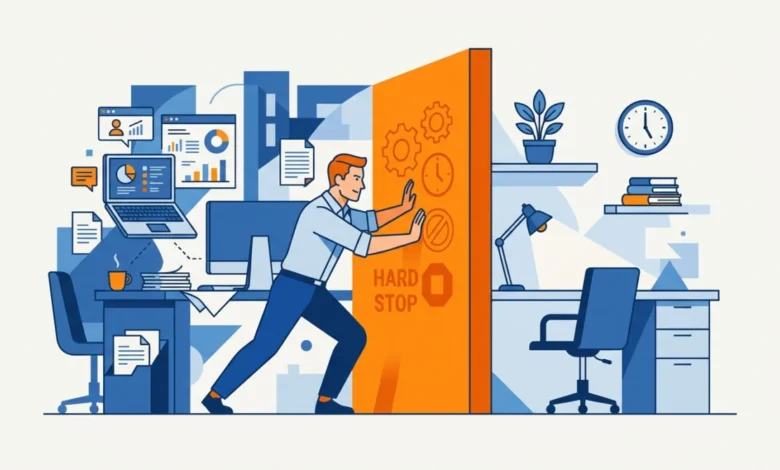
To mitigate the long-term impact of continuous high-intensity work, productivity consultants have introduced the "Sustainable Grind Rule." This framework suggests that even during the most demanding periods of a business lifecycle, total elimination of recovery time is counterproductive. The rule mandates a hard boundary: one full day of complete rest (typically Saturday) and a half-day of reduced activity (Sunday).
This 1.5-day recovery window is designed to prevent the exhaustion threshold from being breached. The physiological reasoning is grounded in the necessity of cognitive downtime; without a hard stop, the brain remains in a state of high-alert, which prevents the consolidation of information and the restoration of creative problem-solving faculties. By formalizing this boundary as a non-negotiable meeting on the professional calendar, founders can ensure that the "engine" of their enterprise remains operational rather than burning out during the critical phases of growth.
The Myth of the Uninterrupted Schedule
A common misconception among high-performers is that significant progress requires massive, uninterrupted blocks of time. This mindset often leads to "temporal paralysis," where tasks are deferred until an idealized, large window opens—a window that, in the reality of a volatile market, rarely appears.
The "Micro-Goal Compound Effect" serves as the evidence-based antidote to this delay. Research into habit formation suggests that consistent, small-scale actions—ranging from five to fifteen minutes—can lead to superior long-term outcomes compared to sporadic, lengthy work sessions. The mechanism of action is two-fold: first, it lowers the barrier to entry, making the task less intimidating; second, it builds neurological momentum. By executing a 15-minute daily strategic review, for example, a founder can maintain the clarity necessary to steer a company without becoming overwhelmed by the administrative burden of larger, more complex tasks.
Prioritizing High-Value Output: The "Eat the Frog" Methodology
The management of daily energy levels is a critical factor in long-term success. Productivity researchers often cite the "Eat the Frog" principle, which advocates for tackling the most difficult, high-impact task at the start of the day. This methodology leverages peak morning alertness—the time when cortisol levels and cognitive function are generally optimized for complex problem-solving.
Data from longitudinal studies on task management indicates that individuals who address their most significant objective early in the day report higher levels of job satisfaction and lower levels of stress compared to those who engage in reactive tasks—such as responding to emails or internal messaging—immediately upon starting work. The failure to prioritize the "frog" often results in the day being dictated by external demands, which, while appearing productive, rarely contribute to the realization of long-term vision.
Broader Economic and Organizational Implications
The implications of burnout in the founder class extend far beyond individual health. When leadership is compromised by chronic exhaustion, the resulting organizational impact is often severe, leading to increased employee turnover, erratic strategic decision-making, and a loss of market agility. In the current economic climate, where speed and precision are paramount, burnout is effectively an organizational tax.
Fact-based analysis shows that companies that integrate structural recovery periods into their operational DNA exhibit higher levels of employee retention and stronger innovation metrics. By treating recovery as a capital investment rather than a luxury, leaders can foster a culture that views performance as a marathon, not a sprint.
Implementation: A Strategic Framework for Change
For those currently operating in a state of chronic high-intensity, the path to recalibration requires a systematic audit:
- Season Identification: Explicitly define whether the current business environment requires a "Grind" or "Simple" approach. If the phase is designated as "Grind," ensure the duration is time-bound.
- Boundary Enforcement: Block mandatory recovery periods on the professional calendar. Treat these blocks with the same professional rigor as a board meeting or a high-stakes client engagement.
- Micro-Goal Integration: Break down long-term strategic goals into 15-minute actionable increments. This ensures that even on the busiest days, the "needle" continues to move.
- Morning Prioritization: Identify the single most vital task for the next morning and execute it before engaging with secondary inputs or administrative noise.
Ultimately, the trajectory of a successful career is determined by the ability to manage energy, not just time. The story that long-term success necessitates a 12-hour-a-day, seven-day-a-week commitment is a fallacy that ignores the biological and cognitive limits of human performance. By shifting focus toward systematic consistency and intentional recovery, founders can ensure that their enterprises remain both productive and sustainable, avoiding the pitfalls of burnout that so frequently derail promising ventures. As the global economy continues to demand higher levels of performance, the competitive advantage will lie with those who have mastered the art of the intentional hard stop.