The Art of Rapid Decision Making: How Startups Can Optimize for Speed and Scale in Uncertain Markets

Building a company in the modern economic climate is fundamentally an exercise in risk management and temporal navigation. Founders often operate with a finite runway of capital and human resources, making the velocity of decision-making a primary determinant of corporate survival. In an environment characterized by shifting market dynamics and intense competition, the traditional, slow-moving approach to executive choices has become a liability. To maintain solvency and growth, startups must transition from hesitant observation to a framework of rapid, evidence-based iteration.
The Economic Imperative of Velocity
The cost of indecision is often quantified by the "burn rate"—the speed at which a venture exhausts its available cash. Data from the Kauffman Foundation indicates that a significant percentage of early-stage failures are linked to the delayed pivoting of business models. When founders spend months contemplating theoretical market shifts rather than executing, they bleed capital without gaining the critical feedback necessary for refinement.
The strategy for modern startups is to implement a structured decision-making framework. By transforming abstract "what-ifs" into actionable experiments, companies can replace uncertainty with data. As the adage popularized by Lewis Carroll in Alice in Wonderland suggests, "If you don’t know where you are going, any road will get you there." In the context of business, a clear, logical path—even if it leads to a pivot—is superior to a state of paralysis.
Chronology of Strategy: Lessons from SaaS Pioneers
Historical analysis of successful Software-as-a-Service (SaaS) entities, such as KISSmetrics and Crazy Egg, reveals a common thread: the transition from intuition-led product development to user-centric, data-validated cycles.
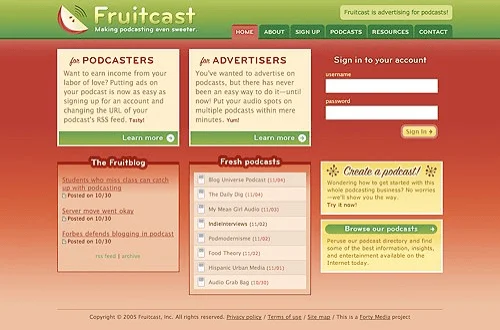
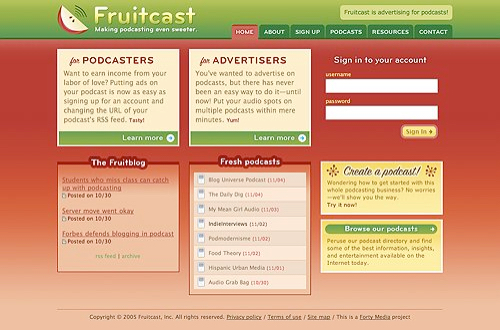
In the mid-2000s, many founders operated on the "build it and they will come" philosophy. This often led to the expenditure of hundreds of thousands of dollars on ill-fated ventures, such as niche podcast advertising networks or redundant web hosting services. The turning point for many of these firms occurred between 2005 and 2010, as the industry shifted toward leaner methodologies. Founders began to recognize that sustainable growth required a rigorous interrogation of the market landscape before committing to a technical roadmap.

Market Research: From Intuition to Data
The fundamental shift in product development strategy involves moving away from the question "What should I build?" to "What are people already using, and how can I provide a superior solution?"
The development of KISSmetrics serves as a case study in this methodology. Market analysis in the late 2000s showed that while Google Analytics was the industry standard, it possessed a significant limitation: it tracked aggregate data rather than individual user behavior over time. The failure of existing tools to provide longitudinal data on purchases and subscription renewals created a vacuum. By identifying this specific pain point—the inability to track user-centric behavioral data—the founders were able to build a solution that addressed an existing, unfulfilled demand rather than inventing a product in search of a problem.
Acquisition Strategy: Aligning Channels with Audience Behavior
The trap of marketing in the startup phase is the pursuit of fashionable, high-cost acquisition channels without regard for audience alignment. History shows that successful early-stage growth is rarely found in broad-spectrum advertising. Instead, it is found in the "working backwards" model: identifying where the target demographic congregates and providing value in those specific ecosystems.

During the launch of Crazy Egg, the team identified web designers as their core audience. Rather than attempting to compete with enterprise-level analytics firms on broad advertising, they analyzed the habits of their target users. They discovered that designers were frequenting platforms like 9rules and Digg to showcase CSS-based website designs. By integrating their product directly into the workflow of these design communities—specifically through heat maps that provided immediate visual value—they achieved opt-in rates exceeding 60-70%. This resulted in over 23,000 early-access signups, validating the product before the official public launch.
Accelerating Return on Investment (ROI)
For many SaaS companies, the challenge is not just acquiring customers, but shortening the duration between acquisition and realized value. The industry standard for "time to value" has compressed significantly over the last decade. Startups that fail to demonstrate ROI within the first few interactions often experience high churn rates.
A notable experiment conducted by the Hello Bar team illustrates this. By implementing a freemium model that allowed users to deploy a banner via a simple JavaScript snippet, the company lowered the barrier to entry. However, the team did not stop there. They implemented a direct feedback loop, asking users who failed to install the tool why they had opted out. By identifying technical friction points—such as the need for easier installation methods for non-technical users—they introduced WordPress plugins and developer-email options. These small, data-driven modifications resulted in an 89% improvement in installation rates over a series of experiments.

Analytical Framework for Future-Proofing
The long-term health of a startup depends on the ability to institutionalize the process of pattern recognition. This involves:
- Defining the Decision Tree: Before a crisis arises, define the criteria for "yes" and "no" decisions. This reduces the cognitive load on leadership and ensures consistency.
- Iterative Validation: Every feature launch or marketing initiative should be treated as a hypothesis. If the data does not support the hypothesis, the "fail-fast" principle must be applied to prevent further resource depletion.
- Customer Development Loops: Formalizing the process of asking "why" when a user chooses not to convert. The qualitative data derived from these interactions is often more valuable than quantitative click-through rates.
Broader Implications and Industry Impact
The shift toward rapid, structured decision-making has profound implications for the venture capital landscape. Investors are increasingly prioritizing founders who demonstrate "velocity of learning." In a market where capital is no longer cheap, the ability to pivot based on real-world evidence is a competitive moat.
Furthermore, the democratization of analytics tools means that startups of all sizes can now access the same quality of data that was once reserved for enterprise corporations. This has raised the barrier to entry for new firms, as the market now demands a high level of operational efficiency from day one.

In conclusion, the successful startup of the future is not necessarily the one with the most funding or the most revolutionary concept, but the one with the most efficient feedback loop. By replacing guesswork with decision-tree systems and prioritizing the speed of value delivery, founders can navigate the uncertainty of the market with a greater degree of precision and resilience. The objective is not to be right 100% of the time, but to be wrong quickly enough that the cost of the error does not compromise the future of the enterprise.
Related posts: