ServiceTitan Market Shock: A 30 Percent Plunge Highlights the Brutal Realities of Tech Growth and AI Transitions

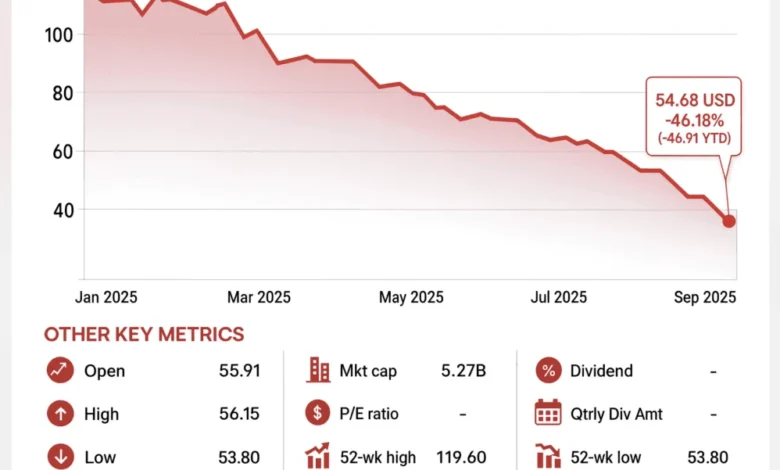
The contemporary landscape of enterprise software and technology markets offers little forgiveness for deceleration, a reality forcefully underscored by recent financial disclosures from ServiceTitan, a prominent vertical SaaS provider tailored for trade contractors. Reporting its fiscal second-quarter 2027 results on September 8—covering the period ended July 31, 2026—the company delivered a fundamentally robust set of financial metrics that surpassed Wall Street consensus estimates. Nevertheless, the subsequent trading session triggered an unprecedented market reaction. ServiceTitan shares plummeted 30 percent in a single day, obliterating more than $2 billion in market capitalization. By the close of the trading week, the equity had touched a 52-week low of $54.16, representing a staggering 52 percent decline over the preceding twelve months.
This sharp contraction was not precipitated by historical performance, but rather by forward-looking disclosures. Management’s updated guidance signaled a pronounced deceleration in top-line expansion, projecting revenue growth of approximately 15 percent for the back half of the fiscal year, down sharply from the 25 percent clip observed just a year prior. Combined with a strategic pivot toward artificial intelligence monetization and deferred expansion into adjacent industry verticals, the report offered a masterclass in the high stakes governing modern software valuations, where growth deceleration commands an immediate and punishing repricing by public markets.
A Beat on the Headline, a Penalty on the Outlook
The core financial metrics for the second quarter of fiscal 2027 provided ample evidence of an operating model executing effectively on its current baseline. ServiceTitan exceeded its internal revenue guidance by approximately $8 million, outpaced consensus estimates compiled by Wall Street analysts, expanded operating margins, and nearly doubled its cash generation from a modest base. CFO-friendly metrics moved uniformly in a positive direction, showcasing fundamental business health and disciplined cost management.
Yet, despite these achievements, the market reaction was swift and unforgiving. The equity closed down $24.46 per share, or 30 percent, in the immediate trading session following the earnings release. Within 24 hours of the report, a cascade of prominent financial institutions slashed their price targets for the stock. Major firms adjusted their valuations downward significantly: TD Cowen reduced its target from $125 to $100; Wells Fargo lowered its target to $105; Piper Sandler and KeyBanc trimmed theirs to $110; BMO Capital Markets reduced its projection from $103 to $90; and Canaccord Genuity adjusted its target from $105 to $90.
Significantly, nearly all reporting firms maintained their constructive Buy ratings while simultaneously slashing their target numbers by 20 to 30 percent. This dynamic illustrates that analysts were not downgrading the fundamental operational integrity of the business, but rather repricing the forward growth trajectory. The sole metric that deteriorated within the release was the projected forward growth rate, shifting from 21 percent for the reported quarter to a guided mid-teens percentage for the upcoming periods.
Deceleration in the Back Half and Contraction in Absolute Dollars
A granular examination of ServiceTitan’s financial trajectory reveals the structural shift concerning institutional investors. During the first half of fiscal 2027, the company sustained a robust growth rate of 22.7 percent. However, management’s forward guidance for the second half anticipates growth settling near the 15 percent threshold.
Quarter-by-quarter arithmetic derived from the company’s official guidance table highlights an even more concerning milestone: projected third-quarter revenue comes in below the second-quarter figure in absolute nominal dollars. Having reported $292.8 million in revenue for Q2, management guided Q3 revenue to approximately $286 million. For a software enterprise operating at a $1.17 billion run rate, signaling a sequential revenue contraction from one quarter to the next presents a difficult narrative for public markets to absorb, irrespective of the underlying strategic rationale.
Operating margins are slated to compress alongside this top-line slowdown. Non-GAAP operating income for the third quarter is projected between $29 million and $30 million on $286 million of revenue, representing an operating margin of roughly 10.3 percent compared to 15.2 percent in the recently concluded quarter. When evaluated through the lens of the Rule of 40—a standard metric for software valuation combining growth rate and profitability margin—the back half of the fiscal year is expected to print a score of roughly 27, down from 36 in Q2 and 37 in the corresponding period of the previous year.
While the full-year revenue guidance was technically raised by $4 million, market participants largely dismissed the adjustment. ServiceTitan initially established fiscal 2027 guidance at a range of $1.11 billion to $1.12 billion in March, subsequently raised it twice, and settled at a new range of $1.139 billion to $1.144 billion. Over that identical timeframe, the company’s equity valuation experienced a drawdown exceeding 50 percent, demonstrating that public equity markets trade aggressively on the slope of deceleration rather than the absolute level of annual aggregate revenue.
Transaction Volume Softness and End-Market Exposure
ServiceTitan’s financial model is structurally tethered to the economic activity of its core customer base. The company derives its revenue largely as a percentage of Gross Transaction Volume (GTV)—the aggregate dollar amount that trade contractors invoice through the platform. In the second quarter, GTV reached $26.8 billion, representing a 17 percent year-over-year increase. The company’s monetization rate—revenue expressed as a percentage of GTV—stood at approximately 1.09 percent, up modestly from 1.06 percent in the prior-year period, effectively capturing roughly one cent of every dollar billed by its users.
While this transactional pricing architecture operates to the company’s advantage during macroeconomic expansions, it exposes the top-line model directly to cyclical volatility within the trades sector. GTV growth decelerated notably from 23 percent in the first quarter to 17 percent in the second quarter.

Management attributed this moderation to specific industry headwinds observed during May and June, heavily concentrated within the heating, ventilation, and air conditioning (HVAC) sector. Lead and job volumes softened across the broader market, and customers did not offset lower job frequencies with larger average ticket sizes. Furthermore, an unseasonably early cooling period likely pulled demand forward into the first quarter, while a calendar anomaly surrounding the July 3 holiday compounded the slowdown. Although lead generation improved progressively through the quarter and stabilized in July, executive leadership refrained from declaring the sector-wide softening fully resolved.
Despite the moderation in GTV growth to 17 percent, top-line revenue still expanded by 21 percent, outperforming underlying transaction volume by four percentage points. Usage-based revenue climbed 24 percent, outpacing GTV due to effective monetization initiatives. Nevertheless, the direct linkage between customer invoicing volume and reported revenue meant that localized end-market softness translated immediately into the quarterly P&L statement, a vulnerability that traditional seat-based SaaS pricing models typically buffer through multi-year commitments and deferred renewal cycles.
The Financial Friction of Artificial Intelligence Adoption
At the center of ServiceTitan’s long-term corporate strategy is "Max," its newly deployed agentic operating system designed to automate administrative and operational workflows for contractors. Customer adoption has progressed rapidly: after surpassing initial goals with over 100 enrolled locations at the close of Q1, the company doubled that footprint in Q2 and now projects more than 700 active locations by the end of the fiscal year.
Paradoxically, the rapid commercialization of Max is currently exerting a tangible downward pressure on near-term reported revenue. Management disclosed two primary structural headwinds associated with the product rollout. First, the company is strategically waiving implementation fees during the initial onboarding phase. Second, the deployment model incorporates commercial incentives that defer billing for the first quarter of the customer contract to reduce friction on change-management decisions that fundamentally alter a contractor’s operational structure.
These onboarding concessions create an immediate revenue headwind estimated between $4 million and $5 million. Consequently, the accelerated adoption of Max suppresses reported top-line figures during the exact quarters in which sales velocity is highest.
The economic logic underpinning this strategy is clear. If the artificial intelligence platform successfully shifts a contractor’s technician-to-administrative staff ratio from 2:1 to 3:1, removing upfront financial friction is a rational customer acquisition tactic. Early adopters have reported revenue expansion exceeding 45 percent. However, this transition means that the artificial intelligence pivot will function as a P&L growth headwind for four to six quarters before manifesting as net expansion. While equity markets in prior years frequently funded such multi-quarter investment troughs, the current market environment penalizes companies immediately, exacting a 30 percent valuation penalty as shareholders wait for the strategy to mature.
Strategic Realignment and Resource Allocation
To adequately fund the development and deployment of the Max operating system alongside its internal software engineering initiatives, ServiceTitan made the conscious decision to narrow its operational scope. Specifically, the company deferred its planned expansion into new commercial and residential exterior trade verticals.
This strategic choice is clearly reflected in internal operating expense allocation. Resources were systematically reallocated away from direct sales expansion into new geographical and vertical markets, and redirected toward engineering, product development, and supporting the existing customer base. Given that ServiceTitan’s existing base boasts a Net Revenue Retention (NRR) rate exceeding 110 percent, deepening wallet share within established accounts represents a more capital-efficient path to growth than acquiring nascent market segments.
Nevertheless, this reallocation removed two vital growth vectors from the forward forecast precisely as the core business experienced cyclical deceleration. Commercial and residential exterior expansion represented the primary headroom in the company’s long-term growth model, and delaying those initiatives coincided with the drop in baseline growth to 21 percent.
Complicating the communications strategy, the company announced the appointment of a new Chief Revenue Officer, Rikus Pretorius, on the exact same day it guided forward growth down by ten percentage points. Delivering a leadership transition in the revenue organization simultaneously with a sharp guidance reduction presented market participants with a complex and challenging set of signals.
Broader Implications for the Enterprise Software Sector
The market’s visceral reaction to ServiceTitan’s earnings report illustrates the uncompromising standards applied to high-multiple technology equities. Delivering 21 percent revenue growth at a $1.17 billion run rate, paired with a net revenue retention rate above 110 percent, platform gross margins of 81 percent, $479.5 million in cash reserves, positive and expanding free cash flow, and a functioning artificial intelligence product with verified customer adoption, represents an operational profile that the vast majority of business-to-business software firms cannot replicate.
Yet, in the investment climate of 2026, fundamental quality and profitability are frequently subordinated to the absolute trajectory of the growth rate. As enterprise software transitions through generative artificial intelligence monetization cycles, companies navigating the friction of new pricing architectures, deferred billing models, and macroeconomic cyclicality must contend with an unforgiving investor base. For ServiceTitan, the immediate challenge lies in executing through the temporary revenue trough engineered by its own technological transformation, proving to the public markets that today’s intentional deceleration serves as the foundation for tomorrow’s durable expansion.