How Leadership Through Continuous Learning Drives Organizational Resilience and Adaptability in the Modern Economy

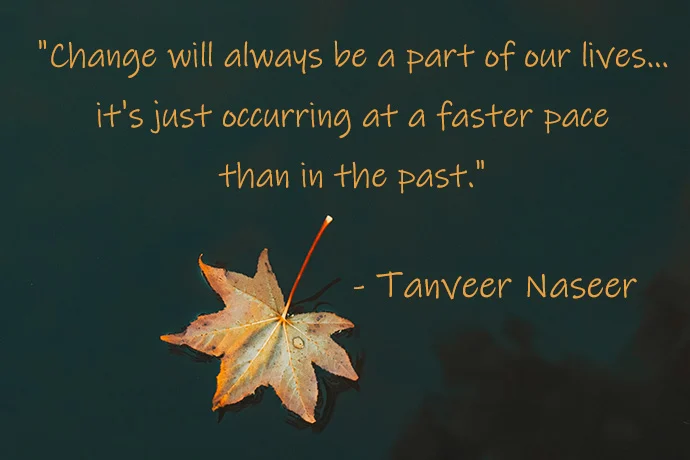
In the contemporary business landscape, one of the most formidable challenges facing executives and organizational leaders is steering their enterprises through an era of unprecedented, accelerated change. Unlike previous decades, where maintaining a competitive edge relied heavily on acquiring cutting-edge technologies, automating operations, or formulating complex strategic blueprints, modern resilience hinges almost entirely on human capability. Specifically, organizational success now depends on how effectively leaders can cultivate, promote, and sustain a robust culture of learning and growth that is inextricably woven into the daily operations and long-term vision of the enterprise.
The Imperative of Adaptability in a Disrupted Market
As global markets face compounding economic pressures, rapid technological advancements, and shifting consumer expectations, static business models face obsolescence. Industry analysts and organizational psychologists note that companies lacking a continuous learning ecosystem struggle to pivot when disruptions occur. Traditional top-down management structures, once prized for their operational predictability, frequently create bottlenecks that stifle innovation and slow response times.
In contrast, organizations that prioritize continuous education and psychological safety empower their workforces to view uncertainty not as a threat, but as a strategic advantage. This shift requires a fundamental reimagining of leadership, moving away from command-and-control directives toward supportive facilitation. Leaders are no longer simply allocators of resources; they are architects of environments where experimentation is encouraged, failures are analyzed rather than penalized, and knowledge is treated as a renewable, collective asset.
A Case Study in Strategic Transformation: Netflix
To understand the practical application of a learning-centric leadership model, one need only examine the historical trajectory of Netflix. Under the guidance of co-founder and former CEO Reed Hastings, the company executed one of the most successful and radical corporate transformations in modern business history.
Founded in 1997 as a mail-order DVD rental service, Netflix faced entrenched industry giants like Blockbuster. Rather than remaining static, Hastings anticipated the inevitable shift toward digital infrastructure and broadband expansion. By the late 2000s, Netflix began pivoting away from physical media distribution to pioneer a media streaming platform. This transition required entirely new logistical frameworks, content acquisition strategies, and technical architectures capable of delivering high-definition video globally.
The evolution did not stop at technological distribution. In the 2010s, Netflix underwent a second major transformation: transitioning from a mere distributor of licensed studio content to a primary producer of original, platform-exclusive films and television series. This multi-billion-dollar gamble required recruiting top-tier creative talent, building state-of-the-art production pipelines, and completely redefining the entertainment industry’s business model. Furthermore, Netflix fundamentally altered global media consumption habits by pioneering the release of entire television seasons simultaneously, a move that birthed the cultural phenomenon of binge-watching.
The Cultural Engine Behind the Transformation
The cornerstone of Netflix’s successful evolution was not simply a stroke of strategic genius, but a deliberate overhaul of the company’s internal culture. Hastings recognized that to innovate continuously, the organization needed to dismantle bureaucratic processes that impede agility.
This realization culminated in the codification of the Netflix "Freedom and Responsibility" culture deck. Under this framework, employees were granted unprecedented operational autonomy to innovate, experiment, and assume calculated strategic risks. Crucially, this freedom was balanced with high performance expectations and a culture of radical candor. Employees were encouraged to own their mistakes openly, conduct transparent post-mortems on failed projects, and participate in unvarnished, constructive feedback loops.
By decentralizing decision-making and removing traditional approval layers, Netflix enabled its teams to adapt to evolving consumer needs significantly faster than legacy competitors. The company effectively institutionalized learning through trial and error, treating every operational misstep as valuable data to refine its overarching strategy.
Three Practical Steps to Build an Organizational Learning Culture
For leaders seeking to replicate this agility within their own enterprises, building a learning culture requires intentional design rather than passive hope. Industry experts and leadership consultants recommend three foundational steps to establish and nurture continuous learning within any organization.
- Establishing Formalized Knowledge-Sharing Structures
Ad-hoc communication is rarely sufficient to drive systemic learning. Organizations must design formal architectures that facilitate the regular exchange of expertise, insights, and lessons learned across departments.
Effective mechanisms include cross-functional knowledge-sharing sessions, structured creative problem-solving forums, and centralized digital collaboration platforms. These spaces allow employees to pool their diverse perspectives, debate strategies openly, and form ad-hoc project teams to test innovative initiatives. By institutionalizing knowledge transfer, companies prevent valuable operational insights from remaining siloed within specific departments.
- Investing in Aligned Skills Development
Professional development cannot be treated as a peripheral human resources perk; it must be strategically aligned with both current corporate objectives and individual career trajectories. When organizations invest in targeted skills training that resonates with an employee’s long-term professional goals, two significant benefits emerge.
First, the workforce becomes demonstrably more capable of executing complex, emerging organizational strategies. Second, employees experience heightened job satisfaction and institutional loyalty, which directly correlates with improved talent retention rates. Modern professionals increasingly prioritize employers who offer clear pathways for career enhancement and mastery.
- Modeling Desirable Learning Behaviors from the Top
Leadership behavior dictates cultural norms. Employees observe and mirror the actions of their superiors far more than they absorb written mission statements or corporate manifestos.
For a learning culture to take root, executives and managers must visibly demonstrate their own commitment to continuous improvement. Whether through acquiring new technical competencies, studying emerging industry trends, or openly admitting knowledge gaps and seeking input from junior staff, leaders set the tone. When teams witness leadership actively embracing vulnerability and lifelong learning, psychological safety expands across the entire enterprise.
Broader Economic Implications and Future Outlook
As the pace of global economic and technological change continues to accelerate, the traditional advantages of scale and capital are increasingly eclipsed by the speed of organizational learning. Macroeconomic data underscores that companies with high adaptability quotients consistently outperform peers during periods of market volatility.
Supply chain disruptions, artificial intelligence integration, shifting regulatory landscapes, and changing labor dynamics mean that uncertainty is now a permanent fixture of the business environment. Consequently, the ability to foster a resilient, learning-oriented culture has transitioned from a desirable managerial skill to an existential prerequisite for long-term survival. Organizations that successfully transition their internal cultures away from rigid compliance toward dynamic, continuous learning will remain best positioned to navigate whatever economic disruptions lie ahead.