The Evolution of Data Drift in Generative AI
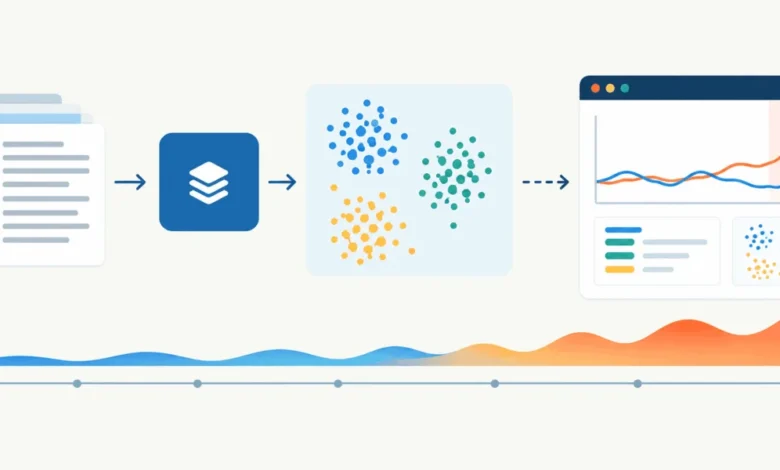
Data drift is a long-standing challenge in traditional machine learning, typically affecting tabular datasets where statistical distributions of features change over time. However, the rise of vector databases and embedding-based architectures has introduced a new layer of complexity. Embeddings are dense, high-dimensional numerical vectors that map semantic meaning into a geometric space. In a production LLM pipeline, these vectors are the "language" the system speaks.
When a user submits a query, it is transformed into an embedding and compared against a vector index. If the distribution of these incoming queries begins to shift—perhaps due to a change in market trends, a viral social media event, or a seasonal shift in user intent—the model’s performance may degrade. This is not necessarily a failure of the model weights themselves, but a misalignment between the model’s "worldview" and the current reality of the data it is processing. If left unchecked, this drift can lead to increased hallucinations, reduced retrieval accuracy in Retrieval-Augmented Generation (RAG) systems, and a decline in user satisfaction.
Chronology of Embedding Monitoring Requirements
The industry’s recognition of embedding drift has evolved in three distinct phases:
- The Pre-LLM Era (2015–2020): Monitoring was primarily focused on feature drift in predictive models. Engineers used tools like Kolmogorov-Smirnov tests to monitor simple input features.
- The Embedding Adoption Phase (2020–2023): As transformer models like BERT and Sentence-Transformers became standard, organizations struggled to apply traditional univariate drift detection to 384- or 768-dimensional vectors. Most companies relied on anecdotal reports of model failure.
- The Current Production-Ready Phase (2023–Present): With the widespread adoption of LLMs, the necessity for automated, high-dimensional drift detection has become an industry standard. Frameworks like Scikit-LLM and advanced monitoring platforms have introduced specialized techniques, such as domain classification and centroid tracking, to quantify drift in real-time.
Core Techniques for Effective Detection
Effectively identifying embedding drift requires a multi-faceted approach. High-dimensional data is notoriously difficult to monitor because the "curse of dimensionality" renders simple statistical distance metrics less effective. Consequently, two primary methods have emerged as the industry standard:
1. The Domain Classifier Approach
The domain classifier method is a robust, supervised approach to drift detection. In this scenario, engineers create a binary classifier—often a Random Forest or a lightweight Gradient Boosting machine—trained to distinguish between the "baseline" data (the data the model was trained on or the "gold standard" set) and the "production" data (the current stream of incoming user queries).
The logic is elegant: if the classifier can easily distinguish between the two datasets, it implies that a significant statistical difference exists. If the classifier fails to distinguish them (achieving an ROC-AUC score near 0.5), the distributions are effectively identical. A score exceeding 0.65 to 0.70 is typically considered a threshold for triggering a human review or an automated retraining pipeline. This method is highly effective because it treats the drift detection as a machine learning problem itself, allowing the model to find non-linear boundaries between datasets that simple distance metrics might miss.
2. The Centroid (Center of Mass) Method
For organizations requiring low-latency monitoring, the centroid method offers a computationally efficient alternative. By calculating the mean vector of the baseline embeddings and comparing it to the mean vector of the production window using Cosine Distance, engineers can identify macro-level shifts in topic or intent.
While this method is less sensitive to subtle, multi-modal shifts, it is excellent for detecting major thematic changes. For example, if a customer service bot suddenly receives an influx of queries regarding a new product launch instead of general account password resets, the "center of mass" of the embedding space will shift significantly. The primary advantage here is speed; calculating the average of a batch of vectors is a trivial operation compared to training a classifier, making it suitable for high-throughput streaming architectures.
Data-Driven Implications and Case Studies
Recent industry analysis suggests that companies failing to implement proactive monitoring for embedding drift see a 15–20% decrease in RAG system performance within the first six months of deployment. The root cause is almost always the "topic migration" mentioned above.
For instance, consider a financial services firm using an LLM to categorize support tickets. During a period of market stability, the embeddings are clustered around "account balance" and "wire transfers." During a market crash, the input data pivots toward "emergency withdrawals" and "market volatility." If the embedding model is not updated to account for the new vocabulary and semantic nuances of the crisis, the system’s classification accuracy drops precipitously.
Official Guidelines and Best Practices
Industry leaders in MLOps, including those developing the Scikit-LLM ecosystem, recommend the following best practices for managing drift:
- Establish a Baseline: Always maintain a static, representative "golden set" of embeddings that reflect the desired performance of the model.
- Windowing Strategy: Implement rolling windows for monitoring. Comparing hourly or daily batches of production data against the baseline ensures that temporary spikes in noise do not trigger unnecessary retraining alerts.
- Automated Alerting: Integrate drift detection into CI/CD pipelines. If a drift score breaches a pre-defined threshold, the system should automatically trigger a data labeling task or a fine-tuning job.
- Human-in-the-Loop: Always ensure that an automated "Drift Detected" alert initiates a manual review by a subject matter expert to determine if the shift is a legitimate change in user behavior or a transient anomaly.
Broader Impact on Enterprise AI
The shift toward automated, model-based monitoring represents a maturation of the AI industry. As LLMs transition from "experimental" to "mission-critical," the ability to maintain their integrity over time becomes as important as the model’s initial architecture. Embedding drift detection is no longer an optional add-on; it is a foundational component of reliable, scalable AI infrastructure.
By employing these techniques, developers move away from the "deploy and forget" mentality. Instead, they foster a "continuous improvement" cycle where the model evolves alongside the user. This ensures that as the real world changes—whether through technological advancement, cultural shifts, or new business requirements—the AI remains a relevant and accurate partner in the enterprise workflow. The future of AI reliability will not be defined by the size of the model, but by the rigor of the monitoring systems that support it.
Related posts: