Replacing Fragile Configuration Dictionaries with Python Dataclasses for Robust Software Architecture

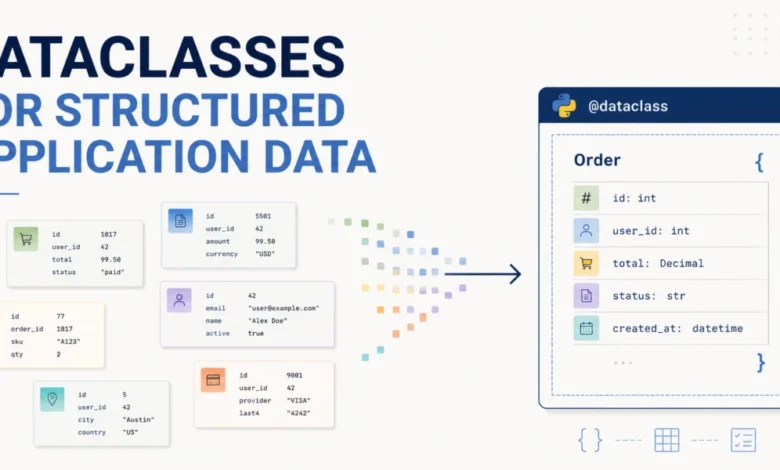
The evolution of modern software engineering has increasingly prioritized the transition from loose, dynamic data structures toward rigid, type-safe models. For years, Python developers have relied on standard dictionaries to manage configuration settings, batch job parameters, and state management. However, as systems scale, these "bag-of-keys" structures often become the primary source of silent failures, subtle bugs, and technical debt. The introduction of the dataclass decorator in Python 3.7—as formalized in PEP 557—offered a standard library solution to these architectural challenges, providing a way to define structured, readable, and maintainable data models without the overhead of heavy-duty validation frameworks.
The Problem with Dictionary-Based Configurations
The ubiquity of the dictionary in Python development stems from its simplicity and flexibility. A developer can instantiate a dictionary, pass it through multiple layers of a system, and inject new keys at runtime with minimal syntax. Yet, this flexibility is a double-edged sword. In a typical batch processing environment, a configuration dictionary might contain nested sub-dictionaries, optional fields with varying default values, and key names that are prone to typographical errors.
Because dictionaries are not inherently typed, a misspelled key such as batchsize instead of batch_size does not trigger a compile-time or runtime error. Instead, the application may silently revert to a default value or fail further down the execution chain, making debugging a time-consuming forensic exercise. As applications grow, the "shape" of these dictionaries often becomes opaque, known only to the original author or discovered through painful trial and error. This lack of a formal contract between producers and consumers of data leads to "configuration drift," where different modules interpret the same dictionary structure in contradictory ways.
The Rise of the Dataclass Standard
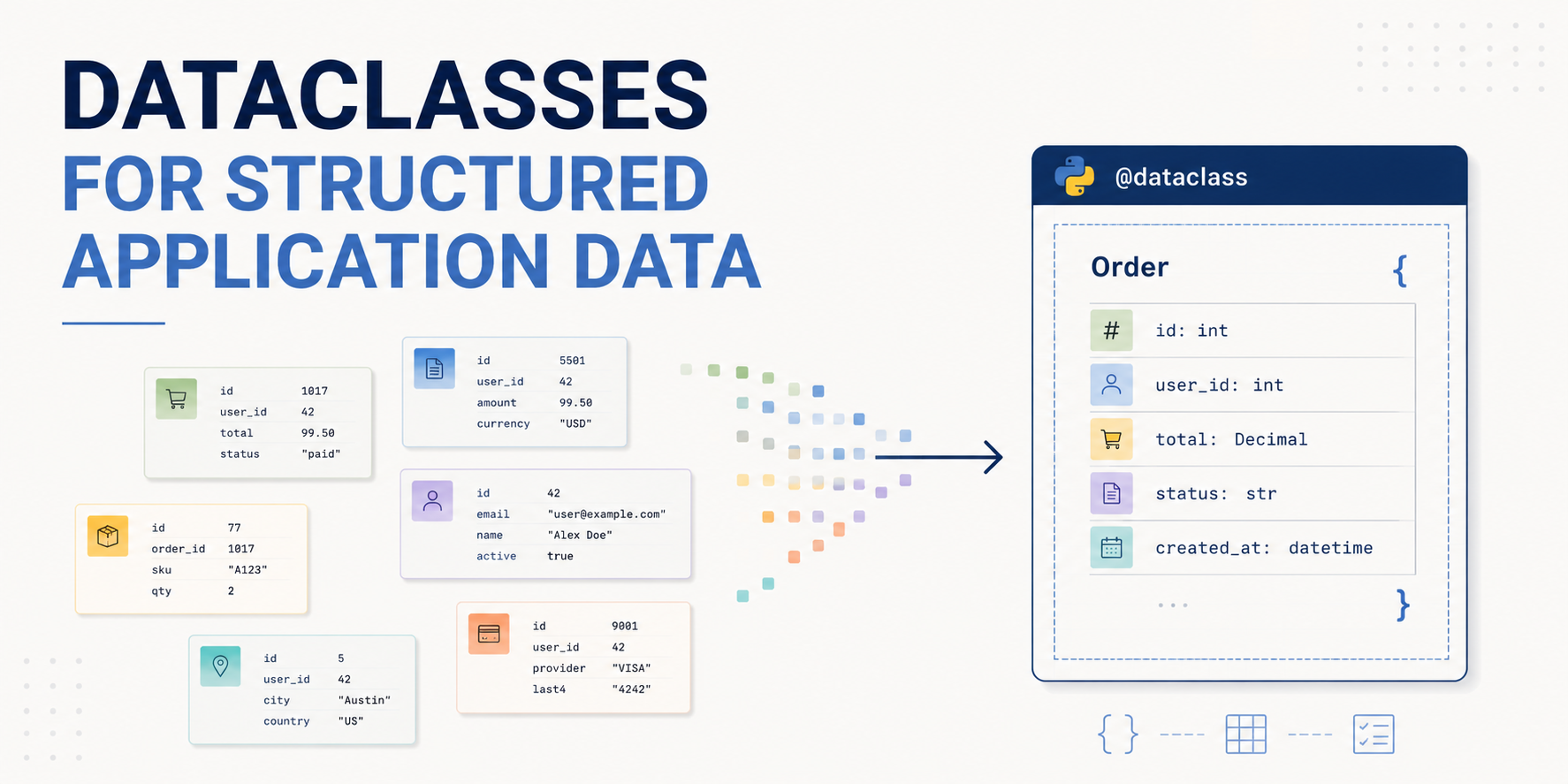
The dataclasses module was introduced to address these pain points by providing a decorator that automatically generates boilerplate methods such as __init__, __repr__, and __eq__. By decorating a class with @dataclass and providing type hints for fields, developers create a formal contract for what the data should look like.
While this approach does not provide runtime type enforcement—meaning a developer could still technically assign a string to an integer field—it transforms the data model into a structured object. The primary benefit is immediate: IDEs and static analysis tools like Mypy can now inspect the class attributes. Any attempt to access a non-existent attribute or provide an incorrect type triggers an immediate warning, shifting the detection of errors from the runtime environment to the development phase.
Chronology of Data Structure Evolution in Python
The shift toward structured data in Python has occurred in several distinct phases:
- The Era of Dictionaries (Pre-2010s): Developers relied on raw dictionaries for everything from API responses to complex system configurations. The lack of structure was accepted as a trade-off for speed.
- The NamedTuple Era (2010–2017): The
collections.namedtupleprovided a way to create lightweight, immutable objects. While useful, it lacked support for default values and complex class-based features. - The Dataclass Arrival (2018–Present): With PEP 557, Python 3.7 introduced
dataclasses, offering a middle ground between the rigidity of complex classes and the informality of dictionaries. - The Rise of Pydantic (2019–Present): As data validation became critical for web APIs and microservices, third-party libraries like Pydantic emerged to provide runtime validation and coercion, building upon the foundations established by dataclasses.
Structural Composition and Managing Complexity
As applications expand, a single flat dataclass can quickly become as cluttered as the dictionary it replaced. Professional software architecture dictates the use of "composition," where complex configurations are broken down into smaller, domain-specific records. For instance, instead of a JobConfig containing twenty fields, it should contain a RetryPolicy object, an OutputConfig object, and a ResourceAllocation object.
By nesting these records, developers ensure that each object is responsible for a single coherent slice of the system’s state. This modularity allows for easier unit testing, as individual components can be validated in isolation. Furthermore, it encourages the use of field(default_factory=...) to manage mutable defaults, preventing the common "shared state" bug where multiple instances of a class inadvertently point to the same list or dictionary in memory.
Enforcing Invariants with Post-Initialization
One of the most critical aspects of robust software is the ability to enforce "invariants"—conditions that must always be true for an object to be valid. In a standard Python class, this requires a custom __init__ method. With dataclasses, the __post_init__ method serves this exact purpose.
By implementing __post_init__, a developer can ensure that a batch_size is always a positive integer or that a max_attempts field falls within a reasonable range (e.g., 1 to 10). If the criteria are not met, the object raises a ValueError at the moment of instantiation. This "fail-fast" mechanism is essential for distributed systems, where an invalid configuration could otherwise be propagated through multiple services before causing a failure.
The Boundary of Immutability
The concept of "freezing" configuration data is a hallmark of defensive programming. By setting frozen=True in the decorator, the dataclass becomes immutable. Once created, its fields cannot be modified. This is particularly valuable for configuration snapshots that should remain constant throughout the duration of a batch process or a request lifecycle.
For scenarios requiring minor adjustments, the dataclasses.replace() function provides a clean, safe way to create a modified copy of an object without mutating the original. This pattern preserves the integrity of the initial configuration while allowing for the necessary flexibility in dynamic environments.
Serialization and the Limits of Dataclasses
A common pitfall occurs when developers attempt to treat dataclasses as a complete replacement for serialization frameworks. While asdict() allows for easy conversion to dictionary format—facilitating JSON serialization—the reverse process is not automatic. Converting a JSON payload back into a nested dataclass requires explicit code, often in the form of a from_dict class method.
This is where the distinction between "internal" and "external" data becomes vital. Dataclasses are optimized for data that the application owns and trusts. When dealing with untrusted external input—such as user-submitted JSON, public API responses, or human-edited configuration files—the overhead of manual validation and type coercion can become excessive.
Decision Matrix: When to Move Beyond Dataclasses
To maintain architectural clarity, engineers should follow a simple heuristic:
- Dictionaries: Use for short-lived, transient, or highly flexible data where the cost of defining a class outweighs the benefits.
- Dataclasses: Use for application-owned data that is generated, consumed, and managed within the internal logic of the system.
- Pydantic: Use for data crossing external boundaries (APIs, databases, user input) where runtime validation, schema enforcement, and type coercion are necessary.
The transition from dictionary-based configuration to structured dataclasses represents a shift toward maturity in Python development. By treating data as a contract rather than a loose collection of keys, teams can eliminate an entire class of runtime errors, improve the legibility of their code, and establish a more resilient foundation for future growth. The goal of this discipline is not merely to write more code, but to write code that is self-documenting and structurally sound, ensuring that when errors do occur, they are caught at the boundaries of the system rather than in the depths of the business logic.