Mastering Project Governance: The Definitive Guide to Implementing Effective Gate Reviews in Modern Organizations


Effective project governance remains a foundational pillar of successful organizational delivery, functioning as the vital mechanism that bridges strategic intent with operational execution. While often perceived as an administrative burden, rigorous project governance ensures that financial investments yield tangible returns and that resources are deployed efficiently across complex portfolios. Within this framework, gate reviews—frequently referred to as stage gates, phase gates, or decision gates—serve as definitive control points designed to evaluate progress, assess risk, and authorize continued investment.
Originally popularized by structured methodologies such as PRINCE2 and heavily integrated into public sector frameworks like the UK Government’s National Infrastructure and Service Transformation Authority (NISTA) assurance toolkit, gate reviews provide a formalized methodology for navigating the project lifecycle. Despite their absence from foundational agile texts like the Project Management Institute’s PMBOK Guide, the underlying principles of phased progression and structured validation have been successfully adapted across predictive, hybrid, and agile delivery environments globally.
Defining the Gate Review Mechanism
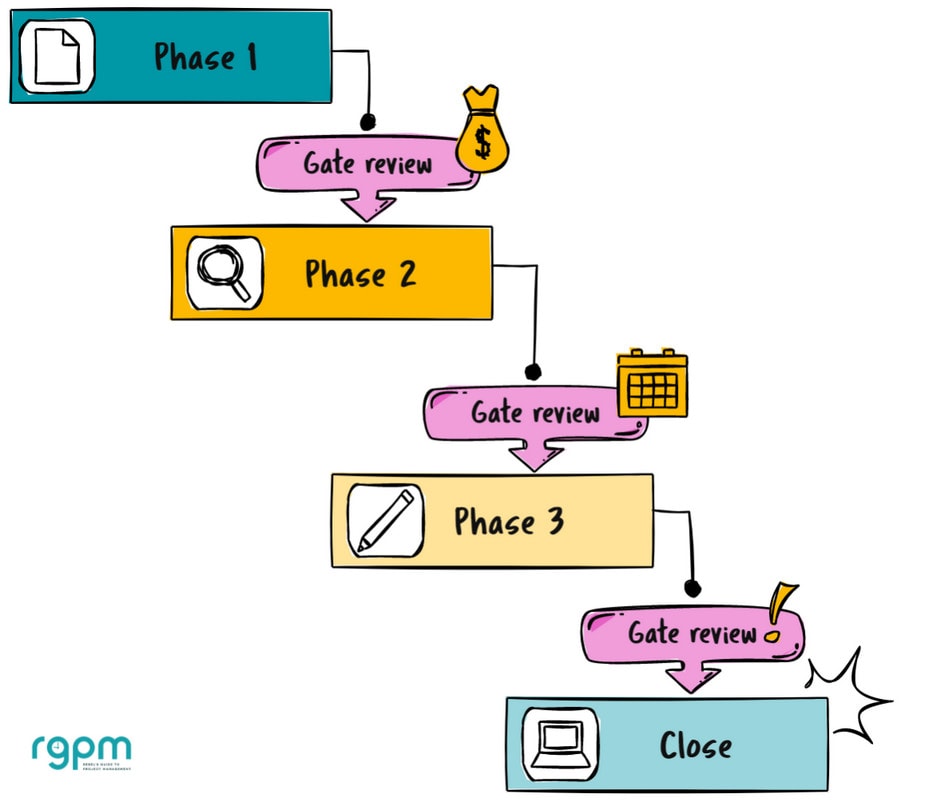
At its core, a gate review functions as a formal go/no-go decision point rather than a routine status update. Unlike standard project meetings that focus on incremental progress, gate reviews require an evaluation based on pre-agreed criteria and verifiable evidence. The primary objective is to determine whether a project warrants further investment of time, capital, and human resources.
The boundary, or "gate," separates distinct phases of the project lifecycle. In traditional predictive environments, these gates correspond to distinct developmental phases, such as moving from the initiation phase into detailed planning, or transitioning from execution to closure. Conversely, in modern agile and hybrid contexts, gates are frequently adapted to authorize continuous investment, product releases, or sprint readiness, rather than evaluating the completion of a traditional waterfall phase. Specialized frameworks, such as the NISTA digital delivery guidelines, mandate the inclusion of agile practitioners on review panels to ensure that governance mechanisms align with iterative delivery models.
Terminology surrounding these control points varies across industries. Organizations may utilize terms such as stage gates, decision gates, toll gates, phase gates, or gateway reviews. Regardless of the nomenclature, the overarching purpose remains consistent: to establish a rigorous checkpoint that safeguards organizational assets and aligns project outputs with overarching strategic goals.

Strategic Benefits and Risk Mitigation
Implementing a structured gate review process yields substantial operational advantages for project managers, sponsors, and PMO leadership alike. By breaking down long-term initiatives into manageable stages, organizations can realize several key benefits:
-
Shorter Planning Horizons: Predicting long-term outcomes accurately remains a persistent challenge in project management. Phased delivery allows teams to focus detailed planning efforts exclusively on the immediate next stage, reducing forecasting errors and adaptability constraints.
-
Enhanced Risk Management: Gate reviews compel project teams to re-evaluate existing risks and formulate robust mitigation strategies. This mandatory evaluation provides portfolio managers with critical insights into residual risk profiles before additional capital is deployed.
-
Sustained Stakeholder Engagement: Periodic governance checkpoints facilitate structured interactions among key stakeholders, reaffirming organizational commitment, clarifying expectations, and maintaining transparent communication channels.
-
Expectation Alignment: Review boundaries offer an ideal opportunity to review project scope and deliverables, actively mitigating potential sources of scope creep and ensuring team-wide consensus regarding project objectives.
-
Increased Delivery Confidence: Systematic oversight and accountability instil greater confidence among executive sponsors and investment committees, significantly improving overall project success rates through enforced rigor and standardized phase transitions.

The Chronology and Process of a Stage Gate Review
Navigating a gate review requires adherence to a structured chronological process that moves a project efficiently from one lifecycle stage to the next. While organizations tailor these workflows to internal best practices, a standard enterprise gate review process typically comprises five distinct steps.
Step 1: Creation of Decision-Led Documentation
The project manager is responsible for compiling comprehensive evidence that directly addresses the core questions posed by the review committee. This documentation must substantiate the project’s ongoing viability by answering critical inquiries regarding strategic alignment, current financial forecasts, schedule integrity, and residual risk acceptance. PMOs typically provide standardized templates, slide decks, or checklists to ensure consistency across all organizational initiatives. Key documentation often includes updated business cases, financial models, risk registers, and resource utilization plans.
Step 2: Initial Stakeholder Approval
Prior to submitting materials to executive governance boards, the project manager must circulate the documentation among the immediate project team, executive sponsors, and key internal stakeholders. This preliminary review prevents unexpected escalations during formal meetings and ensures that executive sponsors are fully aligned with the narrative presented to the governance board.
Step 3: Internal Authorization Checks
Before a project officially reaches the formal gate, internal authorization mechanisms verify that all deliverables from the preceding stage have been satisfactorily completed. This quality control measure prevents projects from advancing prematurely and ensures that foundational tasks have not been bypassed.
Step 4: The Final Governance Decision
With verified documentation in hand, the project is presented to the formal governing body—such as a project board, portfolio steering committee, or investment committee. This multidisciplinary forum evaluates the evidence objectively against pre-established entry and exit criteria. The governing body typically issues one of four outcomes: unconditional approval to proceed, conditional approval subject to minor remediations, a requirement to rework specific components before re-evaluation, or complete project termination.
Step 5: Execution of the Decision
Upon receiving the formal decision, the project team enacts the mandated outcomes. If approved, financial purchase orders are raised for the subsequent stage, and resources are formally allocated. If halted or redirected, the team initiates project closure protocols or executes corrective recovery strategies.
Establishing Objective Entry and Exit Criteria
To maintain objectivity, effective gate reviews rely heavily upon clearly defined criteria established prior to the review meeting.
Entry criteria dictate whether a project is adequately prepared to undergo the review itself. For instance, mandatory entry criteria may require the finalization of a business case, the availability of current financial forecasts, and the formal assignment of risk owners. If entry criteria remain unmet, best practice dictates postponing the review rather than convening a meeting merely to acknowledge a project’s lack of readiness.
Conversely, exit criteria define the exact conditions that must be satisfied before the project is permitted to advance. Examples include formal budget approval, guaranteed resource commitments from functional managers, and executive acceptance of residual project risks.
The Composition of Review Boards
While project managers prepare the necessary evidence and present findings, ultimate decision-making authority resides with executive leadership. Depending on the organizational governance structure, this authority is held by the project sponsor, project steering board, portfolio management office (PMO), or an executive investment committee. Subject matter experts may be invited to provide technical clarifications, but the core decision-making cohort must remain lean to ensure timely and decisive resolutions.
Overcoming Implementation Challenges within the PMO

For Project Management Offices seeking to implement or refine a gate review framework, leadership must champion cultural adoption alongside procedural design. The primary obstacle facing PMOs is often organizational resistance, which requires skilled change management strategies to overcome.
Crucially, gate reviews fail to deliver value when they devolve into mere administrative checkpoints. If every project successfully passes every gate regardless of evidentiary support, the governance process loses its integrity. Similarly, committees must avoid transforming reviews into exhaustive document-completeness audits; the ultimate focus must remain on evaluating whether sufficient evidence exists to justify continued capital investment.
By establishing transparent criteria, maintaining objective oversight, and aligning governance structures with broader strategic objectives, organizations can leverage gate reviews as powerful catalysts for sustainable project delivery and financial stewardship.
Related posts: