Navigating the Rising Tide of Congressional Oversight: A Strategic Framework for Corporate Leadership

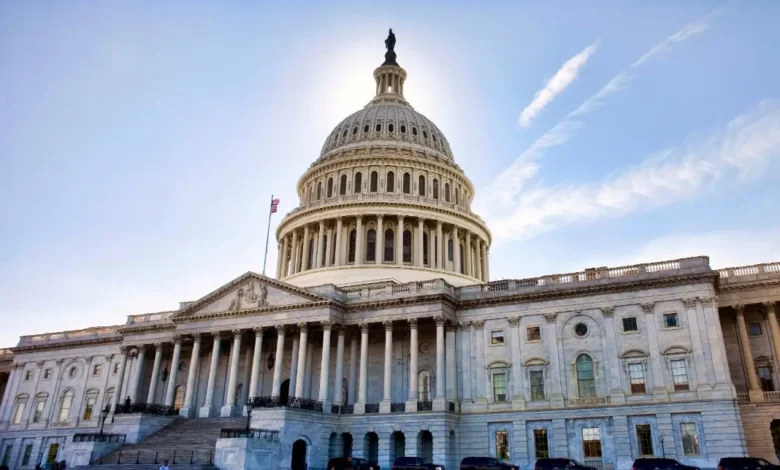
In an era of heightened regulatory scrutiny and partisan volatility, the arrival of a congressional inquiry letter has become a defining test of corporate governance, challenging whether a firm can maintain a consistent narrative across its boardroom, public disclosures, and global operations. When a company receives a formal request from a legislative committee, the immediate impulse is often to treat it as a routine legal matter—a task to be offloaded to outside counsel. However, viewing these inquiries solely through a legal lens is a strategic error. While outside counsel may correctly advise that a committee lacks the immediate power to compel action, such advice fails to account for the broader reputational, market, and political pressures that follow. The true test of leadership is not simply whether a company can satisfy a request for documents, but whether it can articulate a coherent, credible, and consistent account of its decision-making processes under intense public and political pressure.
The Anatomy of an Inquiry: A Chronology of Escalation
Congressional investigations typically follow a predictable, though often accelerated, trajectory. It usually begins with a voluntary letter, a move designed by staff to assess a company’s responsiveness, organizational maturity, and willingness to cooperate. This initial phase is critical; the "first impression" established here often determines whether the inquiry will be resolved quietly or escalate into a high-stakes public spectacle.
In the first week, the focus is on scope and legitimacy. Legal departments often grapple with the ambiguity of these requests, which frequently demand massive data dumps with short deadlines. By the second week, the strategic response must shift toward stakeholder management. If handled poorly, the inquiry can bleed into the public domain, triggering inquiries from financial analysts, investors, and the media.
A subpoena—a formal legal compulsion—is rarely the starting point. It is a tool of last resort, typically deployed when a committee senses that a company is being obstructionist or evasive. However, the absence of a subpoena does not mean a lack of leverage. Minority-party members, even without the power to command documents, can leverage public forums, press releases, and letters to regulatory agencies to create sustained pressure. In many instances, these investigations outlive the political cycles that birthed them, turning what could have been a manageable corporate oversight issue into a long-term liability.
Data and Trends in Modern Oversight
The frequency and intensity of congressional oversight have increased significantly over the past decade. According to data from the Congressional Research Service, the number of investigative hearings and formal information requests has trended upward, particularly in the technology, energy, and financial sectors. Analysis of recent oversight trends suggests that the average duration of a high-profile committee inquiry—from initial letter to final report or hearing—has stretched from three months to nearly nine months, often spanning shifts in legislative control.
Market volatility often mirrors this timeline. For publicly traded companies, the announcement of a probe can lead to a measurable, albeit temporary, compression of valuation multiples. A 2023 study by a leading corporate risk consultancy found that companies that proactively engaged with committee staff to narrow the scope of an inquiry saw a 40% reduction in the likelihood of a formal subpoena being issued compared to those that adopted a strictly adversarial or silent posture.
The Challenge of Global Governance
For multinational corporations, the difficulty of responding to Congress is magnified by the complexity of global operations. A decision that appears perfectly rational within the context of foreign law or local market dynamics can be stripped of that context when examined in a Washington hearing room.
Consider a decision to adjust supply chain logistics to comply with foreign labor regulations. To a board of directors, this may be a matter of operational continuity. To a congressional committee, that same decision might be reframed as a compromise of human rights or a disregard for domestic trade policies. When these narratives diverge, the company loses credibility. If a company has provided different justifications for the same decision to foreign regulators, employees, and investors, the inconsistency becomes the story itself. The goal is not to have identical messaging for every audience—which would be impossible given the varying regulatory requirements—but to ensure the "factual core" of the rationale remains unassailable.
Strategic Governance: Integrating the Response
The most successful companies treat a congressional inquiry as an enterprise-wide issue, not a departmental one. This requires the immediate integration of legal, government affairs, investor relations, and communications teams.
- The Boardroom Protocol: The board of directors must be kept informed, but not overwhelmed. Reporting should focus on "risk pivots"—moments where the inquiry changes in nature, such as the threat of a subpoena, the emergence of contradictory internal documents, or the involvement of a secondary committee.
- Fact-Finding and Documentation: Companies must build a "contemporaneous record." This involves gathering evidence of what the company knew at the time of a decision, how risks were weighed, and why the action served a legitimate business interest. Documents provided to committees are not protected by typical legal privileges; they will be read by staffers, quoted in press releases, and potentially used as exhibits in televised hearings.
- Internal Alignment: There must be a unified factual baseline. If the government affairs team tells a member of Congress one thing, while the legal team produces documents that imply another, the company creates a vulnerability that is easily exploited by investigators.
The CEO’s Role as the Final Witness
When a matter reaches the stage of public testimony, the CEO’s credibility becomes the company’s most valuable, and most fragile, asset. Congressional hearings are not depositions; they are performances. Members of Congress operate in five-minute increments, frequently seeking "soundbite" moments that can be repurposed for social media or news cycles.
Effective CEOs avoid the temptation to provide overly technical or qualified legal answers, which can be perceived as evasive. Instead, they must be capable of discussing business judgment and corporate values. The best witnesses are those who have undergone rigorous preparation—including "murder boards" where counsel poses the most challenging, unpredictable questions imaginable. A CEO who is comfortable admitting when they do not have a specific fact at hand, and who pledges to follow up with the committee later, is far more effective than one who attempts to guess and is subsequently corrected by the record.
Implications and Future Outlook
The broader implication for corporate America is clear: the era of "wait and see" is over. Congressional committees have become highly sophisticated in their ability to synthesize vast amounts of corporate data to build a narrative. For the CEO, the relevant question is not "Can we win this fight?" but rather "Are we prepared to tell our story?"
If a letter arrives on a Monday, the company should be able to identify by Wednesday who is in the room, how the board is being briefed, and what the central account of the facts is. This level of preparation does not imply an expectation of disaster; rather, it provides the company with the structural composure to manage the inquiry as a business process rather than a crisis. Companies that view oversight as a recurring feature of the modern regulatory landscape, and that organize themselves accordingly, are the ones that maintain their reputation and market standing when the cameras finally turn on. As the nexus between corporate policy and political ideology continues to tighten, the ability to maintain a consistent, factual, and defensible account of one’s own operations will remain the definitive metric of effective modern leadership.
Related posts: