Navigating the Modern Era of Heightened Congressional Oversight and Corporate Accountability

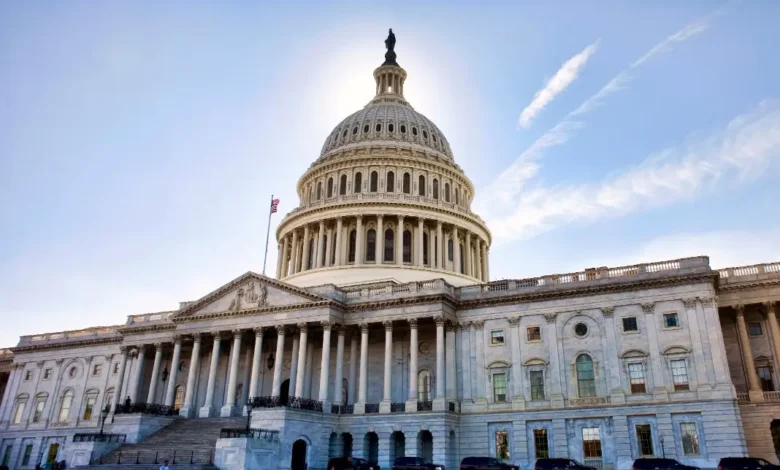
The receipt of a formal inquiry from a congressional committee has evolved from a manageable legal nuisance into a defining moment of corporate governance. In the contemporary regulatory climate, a letter from Capitol Hill, even one lacking the immediate force of a subpoena, serves as a stress test for a firm’s internal cohesion. It demands that a company provide a consistent, fact-based account of its decision-making processes across boardroom deliberations, public disclosures, global operations, and the shifting tides of political cycles.
For modern CEOs, the challenge is no longer confined to legal compliance; it is an enterprise-wide communication and reputation management exercise. When a committee requests documents, the primary question is rarely whether the firm is legally required to comply, but rather how the company will appear when those documents are stripped of their nuance and presented to the public.
The Anatomy of an Inquiry: Beyond Legal Compliance
Congressional investigations often begin with a voluntary request for information. While these requests are technically non-binding, they represent a critical juncture. Congressional staff use these initial interactions to gauge the transparency and organizational competence of an entity. A failure to provide a coherent narrative at this stage can harden the resolve of investigators, often leading to more aggressive oversight, including formal subpoenas, public hearings, and the involvement of secondary regulatory bodies.
Data from the past decade suggests a significant uptick in the use of committee inquiries as a primary oversight tool. According to recent congressional research reports, the volume of oversight letters issued by House and Senate committees has surged by over 40% since 2018. This growth is largely driven by a hyper-partisan environment where the minority party frequently uses letter-writing campaigns to build a public record, conduct shadow investigations, and pressure executive agencies to initiate their own enforcement actions.
Chronology of a Regulatory Crisis
A typical lifecycle for a major congressional investigation rarely follows a linear path. It often proceeds as follows:
- The Initial Inquiry: An unsolicited letter arrives, seeking documents and internal communications regarding a specific business practice, product, or policy.
- The Internal Audit: Management must reconcile its internal documents with its public-facing narratives. This phase often reveals discrepancies between regional practices and global corporate policy.
- The "Information Gap": Staffers evaluate the company’s response. If the information is deemed evasive or disorganized, the investigation shifts from a fact-finding mission to an adversarial pursuit.
- Escalation: The committee may issue a public statement or hold a preliminary hearing, drawing in media coverage and market scrutiny.
- The Record-Building Phase: The company’s documents are integrated into a formal committee report or used as evidence during a televised hearing.
- Resolution or Referral: The investigation concludes with a policy recommendation, a legislative proposal, or, in extreme cases, a referral to the Department of Justice or the SEC for further action.
The Complexity of Global Operations
Global firms face unique hurdles during these inquiries. Decisions made to comply with foreign laws, navigate supply chain complexities, or preserve market access are often scrutinized through a narrow domestic lens. Congress frequently applies a "values-based" filter, questioning whether a corporation’s pursuit of commercial interests in a foreign market—such as China, the European Union, or emerging markets—conflicts with stated corporate principles or U.S. national security interests.
The danger lies in the lack of consistency. If a company provided different justifications to foreign regulators than it did to its own board or the U.S. public, it risks being accused of bad-faith dealings. In the eyes of a committee, a "business rationale" that shifts depending on the audience is often interpreted as a lack of corporate integrity.
Strategic Governance and Enterprise Response
To mitigate these risks, firms must move beyond treating inquiries as a legal "silo" managed solely by outside counsel. Effective response strategies require a cross-functional task force comprising the CEO, general counsel, chief communications officer, and investor relations lead.
The integration of these departments ensures that the "factual core" of the company’s defense remains consistent. When a legal position is taken in a document production, it must align with what the company has told its shareholders in 10-K filings and what it has told the public in press releases. Failure to maintain this alignment allows committees to leverage contradictions, effectively turning the company’s own disclosures against it.
The CEO as the Ultimate Witness
When an inquiry culminates in testimony, the CEO’s credibility becomes the company’s most visible asset. Unlike a standard courtroom deposition, congressional hearings are political theaters. Rounds of questioning are short, designed for soundbites, and frequently punctuated by interruptions.
The most effective witnesses are those who move beyond defensive legalism. They are prepared to articulate the "why" behind the company’s decisions, grounding their testimony in a clear narrative that acknowledges the business realities of the time. The most dangerous mistake for a CEO is to speculate; seasoned witnesses understand that acknowledging a lack of immediate knowledge—followed by a promise to follow up—is a sign of professional discipline, not weakness.
Market Impact and Investor Relations
The market consequences of a congressional inquiry can be profound, even if the legal outcome is benign. Institutional investors, including ESG-focused funds, closely monitor these investigations for signs of underlying management failures or ethical lapses. A public, high-profile inquiry can depress share prices, trigger shareholder derivative lawsuits, and complicate future capital raises.
Furthermore, the volatility introduced by these investigations can last for months, or even years, as political conditions shift. A firm that is currently in the crosshairs of a minority committee may find itself in a more precarious position if that party gains a majority in the next election cycle. Consequently, the best defense is not political maneuvering, but the maintenance of a rigorous, contemporaneous record that demonstrates the company considered all risks and operated in good faith.
Conclusion: Preparing for the Unseen
The most resilient companies operate as if an inquiry is always a possibility. This does not mean they live in a state of permanent crisis; rather, it means they have established the necessary governance structures to act with speed and clarity when the first letter arrives.
Success in this environment is defined by the ability to answer five fundamental questions within 48 hours of an inquiry’s arrival:
- Who is responsible for the internal fact-finding?
- How will the board be briefed, and what are the specific triggers for escalation?
- Which stakeholders, including investors and key partners, require proactive communication?
- What is the consistent narrative that explains the company’s actions?
- Who holds the decision-making authority to negotiate the scope and timeline of the inquiry?
In the current regulatory climate, the companies that thrive are those that recognize oversight as an inevitable component of the business cycle. By treating the response as a matter of enterprise integrity rather than a legal hurdle, leadership can protect both the firm’s market value and its standing with the public. The goal is not to "win" a fight with a committee, but to manage the relationship in a way that allows the company to continue its operations without being defined by the inquiry itself.
Related posts: