The Hidden Cost of Inconsistency: Why Your Business Needs a Noise Audit to Fix Flawed Decision-Making

In the high-stakes world of corporate governance, hiring, and underwriting, organizations often invest heavily in eliminating bias. They implement diversity training, use blind resume reviews, and mandate structured interview rubrics. However, a far more insidious and often invisible threat frequently undermines these efforts: decision noise. A noise audit is a rigorous, structured diagnostic process designed to quantify the unwanted variability in how qualified professionals assess identical cases. By measuring the "scatter" of independent judgments, organizations can identify where their decision-making systems are failing to produce consistent results, ultimately improving both operational efficiency and fairness.
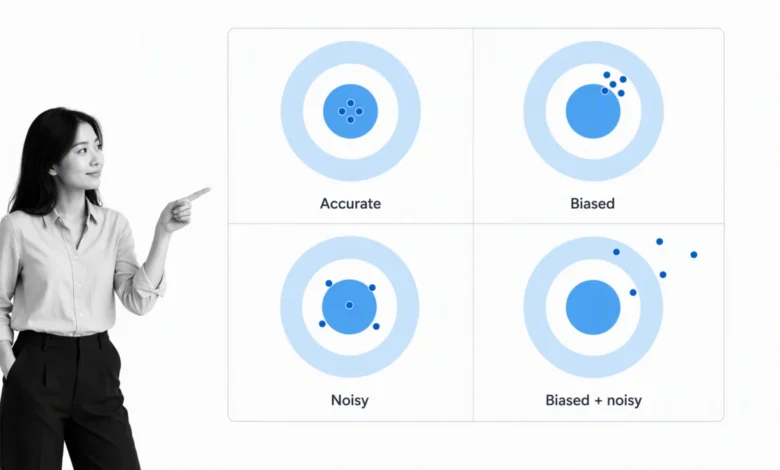
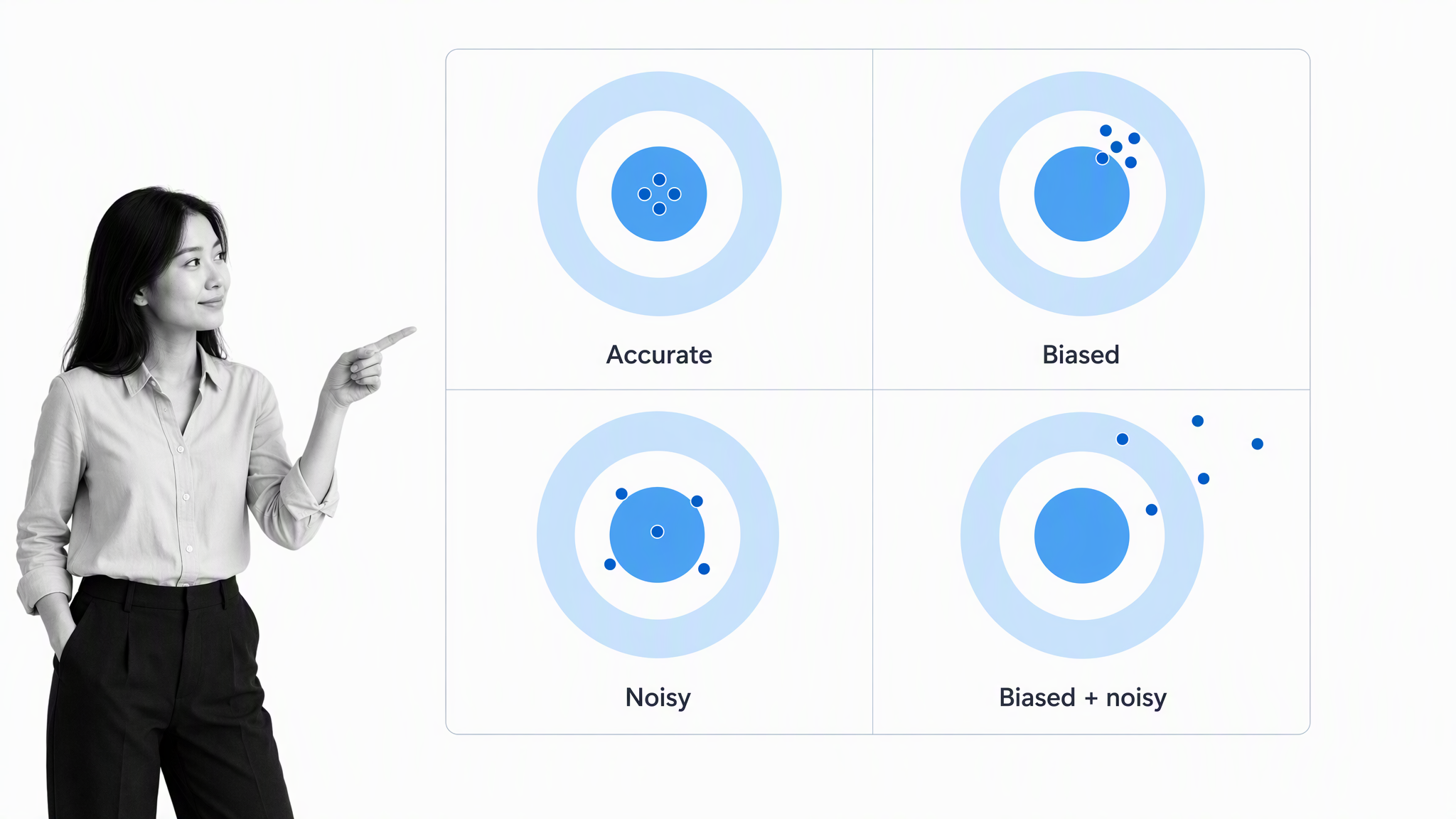
The concept of decision noise gained significant academic and professional traction following the 2021 publication of Noise: A Flaw in Human Judgment, authored by Nobel laureate Daniel Kahneman, organizational expert Olivier Sibony, and Harvard Law School professor Cass R. Sunstein. Their work posits that in any environment where professional judgment is required, the degree of variability is often far higher than leadership expects. While bias represents a systematic error—a consistent deviation in a specific direction—noise represents random, unpredictable variability. In a business context, if two equally qualified underwriters review the same risk profile and arrive at vastly different insurance premiums, the system is suffering from noise.
The Anatomy of Judgment Errors
To understand the necessity of a noise audit, one must first distinguish between the two primary forms of judgment error. Bias is akin to an archer who consistently hits the target two inches to the left of the bullseye. The error is predictable and, therefore, fixable through calibration. Noise, conversely, is akin to an archer whose arrows are scattered randomly across the entire target. There is no pattern to the error, making it significantly harder to diagnose without a formal, repeatable audit process.
Research into judicial and organizational decision-making highlights the severity of this issue. A landmark study published by the American Economic Association analyzed juvenile court sentencing data over a 16-year period. The findings revealed a disturbing correlation: the length of sentences issued by judges was influenced by the outcome of local college football games the previous weekend. When the team lost, sentences grew longer. This phenomenon, often referred to as "irrelevant context," demonstrates how environmental factors—from the weather to a recent negative email—can subconsciously steer a professional’s judgment. If such noise persists in the judiciary, it is almost certainly present in boardrooms, HR departments, and compliance offices, where the stakes—while perhaps not measured in years of incarceration—are measured in millions of dollars and human capital.
Chronology of the Audit Methodology
The methodology for conducting a noise audit follows a structured timeline to ensure results are statistically valid rather than anecdotal.
- Preparation Phase (Weeks 1-2): Management identifies a specific decision-making domain—such as loan approvals or candidate screening—where consistency is paramount. A representative set of 10 to 20 "dummy" or historical cases is selected. These cases must contain sufficient information for a qualified reviewer to make a decision without further inquiry.
- Independent Review Phase (Weeks 3-4): Each participant is asked to review the cases in isolation. Crucially, they are prohibited from discussing their thoughts with colleagues. This prevents "anchoring," where the first person to speak influences the group, or "groupthink," where dissent is suppressed.
- Data Collection and Analysis (Week 5): The results are compiled into a central repository. By comparing the variance in scores across the cohort, the organization can calculate the "noise level." If the standard deviation is high, the system is fundamentally unreliable.
- Remediation and Hygiene (Week 6 onwards): Once the audit reveals the scope of the noise, the organization implements "decision hygiene." This includes establishing rigid scoring anchors, ensuring evidence is presented in a fixed sequence, and mandating that independent evaluations are logged before any group deliberation occurs.
Supporting Data and Statistical Implications
The cost of decision noise is often reflected in lost productivity and diminished quality of output. According to data from the Annual Review of Organizational Psychology and Organizational Behavior, firms that fail to standardize decision-making processes see higher rates of turnover in departments where employees feel "arbitrary" outcomes are the norm.
In a hypothetical hiring scenario involving four evaluators, the noise is revealed when one reviewer deems a candidate "exceptional" while another finds them "unfit" based on identical interview transcripts. When this happens, the organization is not selecting the best talent; it is selecting the candidate who best aligns with the specific, potentially fleeting, mood of the interviewer. When such variances are aggregated across hundreds of hiring decisions, the firm’s competitive advantage is eroded. The audit does not necessarily demand that every individual think exactly alike, but it does demand that the process by which they reach their conclusions is anchored to the same organizational standards.
Professional Reactions and Strategic Implementation
Corporate governance experts argue that the primary barrier to adopting noise audits is the ego of the decision-maker. Professionals are often reluctant to have their judgments "audited," fearing it implies a lack of competence. However, proponents of the methodology emphasize that noise is a systemic flaw, not a personal failing.
"The objective of a noise audit is not to replace human judgment with algorithms, but to build a structure that allows human expertise to flourish without the interference of irrelevant noise," says an organizational process consultant familiar with the framework. By utilizing digital operational platforms, such as those provided by Process Street, teams can transform these concepts into repeatable workflows. These platforms allow for the integration of "conditional logic," ensuring that specific evidence is required for every decision and that an audit trail is created automatically for every case reviewed.
Broader Impact on Business Resilience
The implications of ignoring decision noise extend far beyond immediate efficiency. In sectors such as compliance and underwriting, excessive noise can lead to regulatory scrutiny. If a financial institution’s lending decisions are found to be inconsistent—or "noisy"—it raises questions regarding the robustness of the firm’s internal controls.
Furthermore, as businesses increasingly integrate Artificial Intelligence (AI) into their workflows, the "noise audit" becomes even more critical. AI systems are often trained on historical data. If the historical human decision-making process was noisy, the AI will simply automate and scale that noise, potentially magnifying errors. By auditing the process before automating it, companies ensure they are building on a foundation of clarity rather than a foundation of chaos.
Ultimately, the noise audit is a tool for professional maturity. It acknowledges that human beings are susceptible to context and inconsistency, and it provides a mechanism to mitigate those risks. Whether it is a cathedral spire acting as a beacon for the lost or a standardized audit workflow acting as a beacon for the confused, the message is clear: when the environment is complex, we need stable reference points. For organizations aiming to optimize their decision-making, the first step is to accept that the noise is there—and then, through systematic testing, to quiet it.