Mastering Python Descriptors for Advanced Attribute Control and Data Integrity

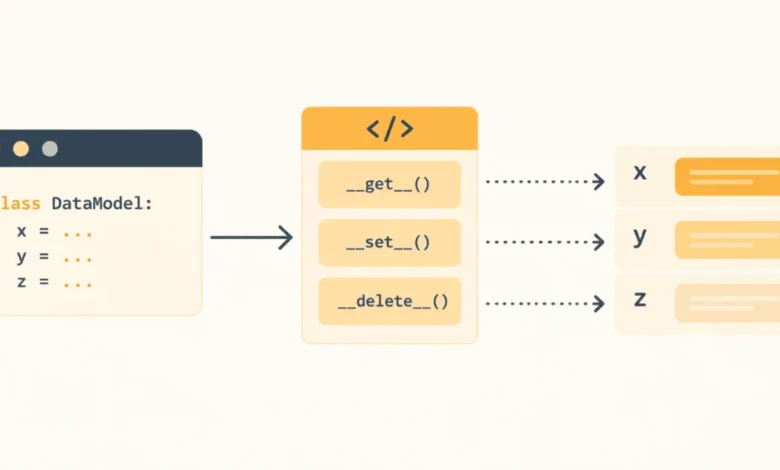
The evolution of object-oriented programming in Python has long been defined by the language’s commitment to readability and simplicity. However, as software systems scale, developers often encounter challenges in managing attribute state, enforcing data validation, and optimizing resource-heavy operations. Python descriptors, a powerful yet frequently underutilized feature of the language, provide a sophisticated mechanism to intercept and customize attribute access. By implementing specific methods within a class—namely __get__, __set__, and __delete__—developers can move beyond standard getter and setter methods, encapsulating complex logic within reusable, declarative structures.
The Mechanics of the Descriptor Protocol
At its core, a descriptor is any object that defines the descriptor protocol. When an attribute access occurs in Python, the interpreter checks the object’s class hierarchy. If a class attribute is an instance of a descriptor class, the language delegates the access to the descriptor’s methods rather than simply returning the underlying value. This behavior is the foundation of many core Python features, including methods, static methods, class methods, and the @property decorator itself.
The protocol gained significant flexibility in Python 3.6 with the introduction of the __set_name__ method. This method allows the descriptor to recognize the attribute name assigned to it within the owner class, effectively eliminating the need for manual name assignment and mitigating potential conflicts in attribute storage. This advancement has enabled cleaner, more maintainable code, particularly when building libraries that rely on declarative configuration.
Practical Implementation: Validated Attributes
Data integrity is a paramount concern in any enterprise-grade application. Often, developers resort to cumbersome boilerplate code inside __init__ methods or repetitive property decorators to ensure that inputs remain within valid ranges. Descriptors offer a cleaner alternative. By creating a validator class, one can enforce constraints globally across multiple attributes.
For example, in a high-traffic travel application managing tour ratings, a ValidatedRating descriptor can be deployed. This class verifies that a user-provided rating is not only a numeric type but also falls within a strictly defined numerical range (e.g., 1.0 to 5.0). If the data fails this validation, the descriptor raises an error immediately upon assignment, preventing corrupted data from entering the application state. This centralized approach ensures that validation logic is consistent, testable, and isolated from the primary business logic.
Dynamic Computation and Read-Only Access
Beyond validation, descriptors excel at managing computed state. In scenarios where an attribute’s value is dependent on other variables—such as currency conversion in a globalized travel platform—descriptors can calculate the required output on demand.
Consider a scenario where a tour price is stored in Japanese Yen (JPY) but must be frequently displayed in US Dollars (USD). A descriptor can be designed to monitor the base JPY price and return a converted value using a real-time or fixed exchange rate. By defining the __get__ method to perform this calculation and explicitly raising an AttributeError in the __set__ method, developers can create "computed read-only" attributes. This architectural pattern prevents accidental modification of derived data while keeping the interface clean and intuitive for the end user.
Optimizing Performance with Lazy Loading
One of the most significant performance optimizations in modern software development is lazy loading, a design pattern that delays the initialization of an object until the point at which it is needed. In data-intensive applications, loading large datasets, such as complex Shinkansen (bullet train) schedules or extensive user itineraries, can create significant latency.
A lazy loading descriptor serves as a gatekeeper. Upon the first access request, the descriptor executes the expensive operation—such as a network request or a database query—and caches the result within the instance’s __dict__. On all subsequent calls, the descriptor bypasses the expensive logic entirely and returns the cached value. This approach drastically reduces initial system load times and minimizes unnecessary memory usage, providing a seamless user experience without sacrificing the robustness of the underlying data retrieval.
Architectural Implications and Best Practices
The adoption of descriptors represents a shift toward more declarative programming in Python. By moving logic into reusable classes, developers can reduce the "code clutter" that often plagues large projects. This modularity not only improves readability but also facilitates easier debugging, as the logic for attribute access is unified in one location rather than scattered across numerous methods or decorators.
However, the use of descriptors requires careful consideration of object lifecycles. Because descriptors operate at the class level, they are shared across all instances of that class. Proper use of __set_name__ and the object’s __dict__ is essential to ensure that instance-specific data remains isolated. Failure to manage this correctly can lead to unintended side effects, where data from one object instance inadvertently leaks into another.
Industry Context and Future Trends
The reliance on descriptors is prevalent in many of the most influential Python frameworks, including Django, SQLAlchemy, and Pydantic. These libraries leverage the descriptor protocol to map database schemas to Python objects, manage relationship integrity, and enforce type hints. As the Python ecosystem continues to emphasize type safety and performance, the role of descriptors as a bridge between high-level abstraction and low-level control is likely to expand.
For developers aiming to build scalable systems, understanding the nuances of the descriptor protocol is no longer optional. It is a fundamental skill that separates novice scripting from professional software engineering. By mastering these three patterns—validated, computed, and lazy-loaded attributes—engineers can build systems that are not only more efficient but also inherently more maintainable and resilient to change.
Conclusion
The utility of Python descriptors lies in their ability to provide a clean, powerful interface for attribute management. Whether the goal is to enforce rigorous data validation, compute dynamic values, or optimize performance through lazy loading, descriptors provide the tools necessary to handle these tasks elegantly. As modern applications continue to demand greater complexity and higher performance, the strategic application of the descriptor protocol remains a vital asset for developers navigating the complexities of large-scale Python development. By shifting the responsibility of attribute behavior from the object instance to a specialized descriptor, developers can ensure that their codebase remains robust, performant, and, above all, maintainable in the long term. This systematic approach to attribute design is a testament to the versatility of Python as a language capable of handling the most demanding software architectures.