Architecting Enterprise-Grade Agentic AI Platforms for Scalable Governance and Operational Security

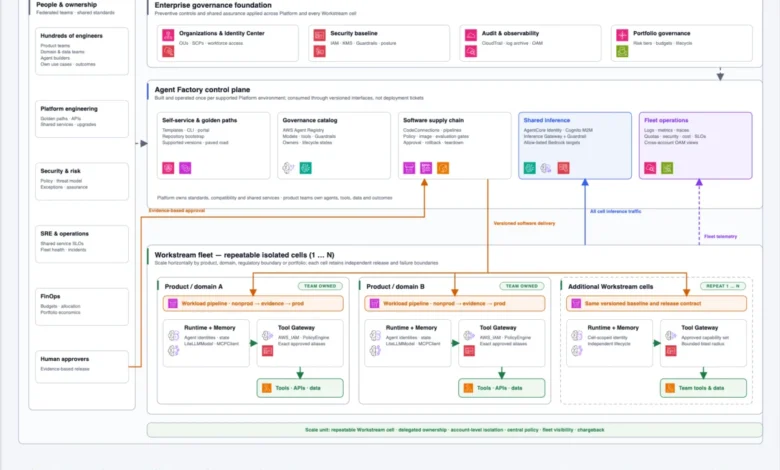
As organizations transition from experimental generative AI prototypes to full-scale production deployments, the primary obstacle has shifted from the underlying model technology to the structural integrity of the surrounding ecosystem. While foundational models and tool-use capabilities have matured rapidly, enterprises are currently grappling with the complexity of multi-team coordination, security boundary enforcement, and fiscal transparency. To address these challenges, engineers are increasingly adopting a platform-centric approach that separates governance—managed by centralized Platform teams—from application-specific execution, managed by decentralized Workstream teams.
The evolution of enterprise AI has followed a distinct trajectory. Initially, organizations focused on proof-of-concept projects where individual developers utilized monolithic environments. By 2024, the limitations of this model became apparent: inconsistent security controls, "shadow AI" deployments, and unpredictable cloud spending. The current industry standard is shifting toward a federated operating model, leveraging frameworks like Amazon Bedrock AgentCore to enforce standardized, repeatable architectures that allow for rapid innovation without sacrificing compliance.
The Shift Toward Federated Agentic Infrastructure
The core challenge for any large enterprise is the "paved road" dilemma: how to provide developer autonomy while ensuring that every agent remains within a strictly defined security boundary. Without a platform-led approach, teams often assemble their own stacks, leading to significant drift in telemetry, evaluation protocols, and identity management. This drift makes auditing nearly impossible and creates massive bottlenecks for security and finance departments.
The industry-wide move toward a multi-account operating model is a response to these risks. By utilizing a "Workstream cell" architecture, companies can isolate the runtime, memory, and tool gateways for every individual agentic project. If a specific agent experiences a runtime error or a security breach, the blast radius is confined to that team’s specific account, preventing systemic failures. This modularity is not merely a technical preference; it is a fundamental requirement for operating AI at scale in regulated sectors such as finance, healthcare, and manufacturing.
Structural Anatomy of the Platform Control Plane
Effective enterprise AI platforms are organized into four distinct planes: the Developer Experience plane, the Platform Control plane, the Workstream Execution plane, and the Assurance and Operations plane.
The Platform Control plane functions as the central nervous system of the organization’s AI strategy. It is responsible for defining the "golden paths"—the pre-approved templates and configurations that teams must use to deploy agents. By standardizing the inference gateway and tool-use interfaces, the Platform team ensures that all agents, regardless of the framework used (such as LangGraph, CrewAI, or Strands), adhere to the same security and observability contracts.
The Workstream Execution plane represents the actual "cell" where the agent lives. Each cell is a self-contained environment that includes its own identity, storage, and specialized tools. Crucially, the deployment pipeline for these cells is automated and gated. An agent cannot reach a production state without passing through a rigorous evaluation pipeline that verifies its adherence to organizational policies, performance benchmarks, and security constraints. This ensures that the platform remains stable even as hundreds of different product teams iterate on their own agents simultaneously.
The Role of Amazon Bedrock AgentCore
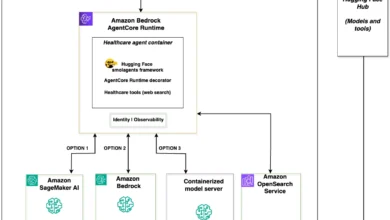
Amazon Bedrock AgentCore has emerged as a critical component in this ecosystem, providing the modular building blocks necessary to scale. By abstracting away the underlying infrastructure for runtime, registry, and memory, AgentCore allows developers to focus on the logic and domain-specific tools of their agents.
When integrated with the Enterprise Agentic AI Platform Blueprint, these services provide a template for "zero-residual" infrastructure. This means that when an agent is retired, the system ensures that every associated resource—from database entries to IAM roles—is completely decommissioned, leaving no orphaned assets that could pose a security or cost risk. This lifecycle management is an essential feature for enterprises looking to maintain a clean and cost-efficient cloud footprint.
Data-Driven Governance and Financial Oversight
A major driver for this architecture is the need for granular cost attribution. In traditional cloud environments, it is often difficult to determine exactly which project or team is responsible for a specific spike in token usage or compute costs. The multi-account topology addresses this directly. Because each Workstream team operates in its own dedicated account, the platform can automatically attribute every dollar spent on inference and tool execution to the specific business unit that owns the agent.
Industry data suggests that companies adopting a structured platform approach see a 40% reduction in "time-to-production" for AI agents, primarily because developers no longer need to spend time configuring infrastructure or security guardrails. Instead, they leverage the pre-approved, versioned templates provided by the Platform team, allowing them to focus on the business logic and agent performance evaluation.
Security, Compliance, and Defense-in-Depth
The security model of a modern Agentic AI platform relies on defense-in-depth, combining preventive Service Control Policies (SCPs) with detective monitoring. SCPs provide the top-level guardrails, ensuring that no user, regardless of their role, can bypass the mandatory security configurations defined by the organization.
However, policy alone is insufficient. The architecture incorporates active evaluation gates within the CI/CD pipeline. These gates serve as an automated, objective check. Before any code is deployed, the system runs a battery of tests against the agent’s logic. If the agent fails to handle a prompt injection attempt, violates a data-access constraint, or fails to meet the required response latency, the pipeline automatically halts the deployment. This "governance as code" approach transforms security from a manual, human-centric bottleneck into an automated, scalable process.
Strategic Implications for the Enterprise
The shift toward this architecture signifies a broader maturation of the AI industry. We are moving away from the era of "AI as a curiosity" and into an era of "AI as a critical business utility." For the C-suite, this means that agentic systems are finally being treated with the same rigor as traditional enterprise software.
The implications of this structural shift are threefold:
- Standardization of Innovation: By providing a "paved road," organizations can foster a culture of rapid experimentation while keeping the enterprise protected. Developers feel empowered to build because they know the "guardrails" are already in place.
- Risk Mitigation: The modular nature of Workstream cells significantly reduces the systemic risk associated with autonomous agents. The ability to isolate, audit, and roll back individual agents is a prerequisite for deploying AI in high-stakes environments.
- Fiscal Accountability: As AI costs scale with usage, the ability to trace expenditure back to specific business outcomes is vital for the long-term sustainability of AI initiatives.
Looking Toward the Future
As companies continue to integrate more complex, multi-agent systems, the platform-based approach will likely become the standard. The reliance on manual configurations or shared, insecure environments is rapidly becoming an unsustainable risk. The blueprint established by frameworks like Amazon Bedrock AgentCore demonstrates that the future of enterprise AI lies in the ability to balance the agility of independent development teams with the absolute requirement for centralized, automated, and auditable governance.
Organizations that succeed in the coming years will be those that view their AI platform not as a static piece of infrastructure, but as a dynamic product. By treating the platform as a product, these companies can ensure that their infrastructure evolves in tandem with the rapidly changing capabilities of generative AI.
The journey to production-ready agentic AI is long and complex, but the path is becoming clearer. By prioritizing the separation of concerns, implementing robust CI/CD evaluation gates, and maintaining strict multi-account boundaries, enterprises can harness the full potential of agentic AI while maintaining the high standards of security, reliability, and cost-efficiency required in the modern digital economy. The tools are now available, the architectural patterns are established, and the transition toward enterprise-grade AI operations is well underway.