Better than Next.js? Is Rust Finally Ready for Full-Stack Web Development? Introducing Topcoat.

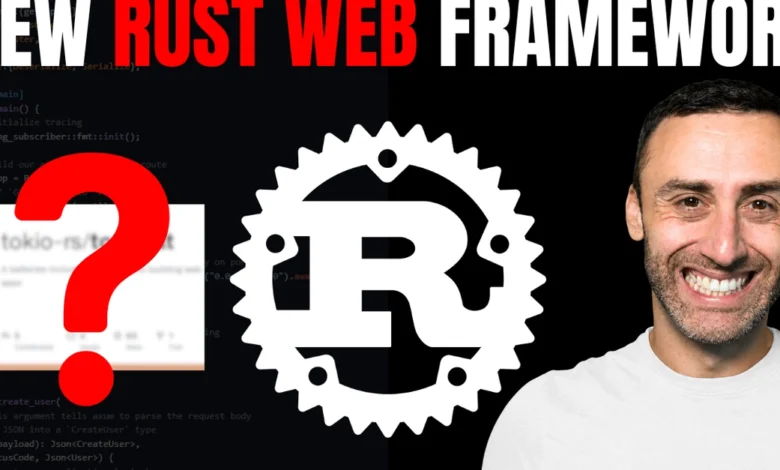
A significant development has emerged within the Rust programming ecosystem with the introduction of Topcoat, a novel, "batteries-included" web framework designed to facilitate full-stack, reactive web application development entirely in Rust. Announced on July 22, 2026, by prominent figures Carl Lerche, the creator of the acclaimed Tokio asynchronous runtime, and Julien Scholz, Topcoat aims to bridge the gap that has long existed in Rust’s web development story: a cohesive, integrated platform akin to established frameworks like Ruby on Rails, Laravel, or Next.js. This initiative signifies a pivotal moment for Rust, traditionally lauded for its performance, safety, and concurrency in backend systems, as it seeks to extend its robust capabilities to the entirety of the web development stack.
The Evolving Landscape of Rust Web Development
Rust has garnered immense popularity in recent years, consistently topping developer surveys as a "most loved" programming language. Its unique blend of memory safety without garbage collection, high performance, and robust concurrency primitives makes it an ideal choice for critical infrastructure, command-line tools, and high-throughput backend services. Frameworks such as Axum, Rocket, and Actix-Web have solidified Rust’s reputation in the server-side domain, enabling developers to build highly efficient and reliable APIs and microservices.
However, the journey from a powerful backend to a complete, full-stack web application in Rust has historically presented a fragmented experience. Developers often find themselves integrating various disparate libraries for routing, templating, state management, asset handling, and client-side interactivity. This "assembly required" approach, while offering maximum flexibility, can introduce considerable boilerplate, increase development time, and raise the barrier to entry for developers accustomed to more opinionated, integrated frameworks. The absence of a unified, comprehensive solution has been a recurring point of discussion within the Rust community, limiting its widespread adoption for projects requiring rapid iteration and a seamless developer experience across the frontend and backend.
Topcoat: A New Paradigm for Full-Stack Rust
Topcoat steps into this void, positioning itself as a comprehensive solution for building reactive web applications purely within the Rust language. Its core philosophy revolves around a fully server-rendered architecture, which allows developers to construct entire web pages, including dynamic components, on the server. This design choice stands in contrast to many modern client-side heavy frameworks that offload significant rendering and logic to the user’s browser via JavaScript.
A key distinguishing feature of Topcoat is its ability to embed asynchronous operations directly within component definitions. This means components can perform complex tasks such as accessing databases, loading application state, or checking user permissions directly on the server before rendering. This integrated server-side logic simplifies development workflows, as developers no longer need to manage separate API layers for data fetching or authorization. The framework aims to reduce the conceptual overhead associated with coordinating between a backend API and a frontend client, offering a more unified programming model.
The minimal application structure provided by Topcoat showcases its streamlined approach. A typical entry point leverages #[tokio::main] for asynchronous execution, while a #[page("/")] macro defines server-rendered routes, encapsulating HTML generation within a view! macro. This syntax suggests a declarative and ergonomic way to define web pages, abstracting away much of the underlying HTTP handling and rendering complexities.
Technical Deep Dive: Reactivity Without WebAssembly
One of the most intriguing aspects of Topcoat is its approach to client-side reactivity. Unlike some other innovative Rust web frameworks, such as Leptos or Dioxus, which compile Rust code to WebAssembly (Wasm) to run directly in the browser for client-side rendering and interactivity, Topcoat opts for a different strategy. It maintains a primarily server-rendered model, enhancing client-side interactivity through a system of "small reactive instructions."
This approach allows the server to render the initial application state and then inject minimal JavaScript or other lightweight mechanisms to enable dynamic updates. When parts of the UI need to change in response to user actions or data updates, Topcoat can re-render only the affected sections on the server and then efficiently replace only those specific parts in the client’s browser. This partial re-rendering mechanism, often referred to as "HTML over the wire," shares conceptual similarities with technologies like HTMX or Hotwire.
The benefits of this server-centric reactivity model are multifaceted. Firstly, it often leads to faster initial page loads (Time To First Byte – TTFB) because the browser receives fully formed HTML directly from the server, ready for display. This can significantly improve user experience, especially for users on slower networks or devices. Secondly, it reduces the amount of JavaScript that needs to be shipped to the client, leading to smaller bundle sizes and less parsing/execution overhead in the browser. This can be particularly advantageous for applications where SEO (Search Engine Optimization) is critical, as search engine crawlers typically prefer pre-rendered HTML. Thirdly, for developers, it can simplify the mental model by keeping more application logic on the server, potentially reducing the complexities of client-side state management and data hydration that are common in Single Page Application (SPA) architectures.

Topcoat’s server-rendered reactivity model makes it particularly well-suited for several application types:
- Internal Tools and Dashboards: Where rapid development, data integrity, and robust backend logic are paramount, and highly complex client-side animations or interactive graphs are less critical.
- Content-Heavy Websites: Blogs, news sites, e-commerce platforms, and informational portals benefit from excellent SEO and fast initial load times.
- Applications with CRUD Operations: Standard Create, Read, Update, Delete interfaces are often efficiently handled by server-rendered pages with partial updates.
- Rapid Prototyping: The integrated nature and reduced boilerplate can accelerate the development of proof-of-concepts and minimum viable products.
However, the framework’s creators acknowledge that for highly interactive browser applications—such as complex real-time editors, intricate data visualizations, or demanding gaming interfaces—a client-heavy framework utilizing WebAssembly or extensive JavaScript might still offer a better fit due to their inherent capabilities for fine-grained client-side control and immediate responsiveness.
The Creators’ Vision: Carl Lerche and Julien Scholz
The introduction of Topcoat is significantly bolstered by the pedigree of its creators. Carl Lerche is a highly respected figure in the Rust community, best known as the primary author of Tokio, Rust’s leading asynchronous runtime. Tokio underpins much of the modern asynchronous Rust ecosystem, providing the foundational tools for building high-performance network applications. Julien Scholz, also a key contributor, has been instrumental in bringing this vision to fruition.
Their motivation for creating Topcoat stems from a desire to provide a more holistic and less fragmented development experience for Rust web developers. In interviews and announcements, Lerche and Scholz have articulated a vision where Rust developers can leverage the language’s inherent strengths for the entire application lifecycle, from data persistence to user interface. They envision Topcoat as the missing piece that integrates routing, component logic, HTML rendering, asset management, and reactive updates into a coherent whole. This aligns with the "batteries-included" philosophy of frameworks like Rails, which prioritizes developer productivity and convention over configuration.
The fact that Topcoat is built upon Tokio is a testament to its foundational robustness and performance potential. By leveraging Tokio’s asynchronous capabilities, Topcoat aims to deliver highly concurrent and scalable web applications, inheriting the benefits of Rust’s efficient resource management and minimal runtime overhead. The creators’ long-term goal appears to be to elevate Rust’s standing in the full-stack web domain, making it a genuinely competitive and attractive option for a broader range of web projects.
Topcoat’s Relationship with Axum and the Tokio Ecosystem
A crucial clarification made by the Topcoat team is that the new framework is not intended to replace existing, lower-level Rust web frameworks like Axum. Axum, also built atop Tokio, remains an excellent choice for developing highly performant APIs, microservices, and handling lower-level HTTP endpoints where granular control and minimal abstraction are desired.
Instead, Topcoat operates at a higher level of abstraction. While Axum provides the building blocks for HTTP services, Topcoat aggregates these functionalities, adding layers for component-based UI development, integrated routing, server-side rendering, and reactive updates. It abstracts away much of the boilerplate associated with manually connecting these different concerns.
This distinction suggests that projects could readily utilize both. A complex application might employ Axum for its core API services, handling data and business logic, while using Topcoat for its user-facing web interface, leveraging its integrated rendering and reactivity features. This symbiotic relationship allows developers to choose the right tool for each part of their application, benefiting from both the flexibility of lower-level frameworks and the productivity gains of a higher-level, opinionated solution. The deep integration with the Tokio ecosystem ensures seamless compatibility and performance benefits for both.
Chronology and Development Milestones
The official announcement of Topcoat on July 22, 2026, marks a significant public debut for the framework. While the exact internal development timeline is not fully detailed, such a comprehensive framework typically involves months, if not years, of architectural design, prototyping, and iterative development by a dedicated team. The public announcement, accompanied by a dedicated blog post on the Tokio website and a GitHub repository, signals that Topcoat has reached a stage of maturity where it is ready for broader community engagement and testing.
The early release is indicative of the team’s commitment to open-source development, inviting contributions and feedback from the wider Rust community. The inclusion of a public GitHub repository and a video discussion with the creators underscores a transparent development process, aiming to foster collaboration and accelerate the framework’s evolution. As with any nascent framework, the initial phase will likely focus on refining core functionalities, addressing reported issues, and expanding the feature set based on community needs and real-world usage.

Broader Implications for the Rust Ecosystem and Web Development
Topcoat’s emergence carries substantial implications for both the Rust ecosystem and the broader web development landscape.
For Rust developers, Topcoat promises a significantly streamlined workflow. The "batteries-included" approach can dramatically reduce the time and effort spent on integrating disparate components, allowing developers to focus more on application logic and less on infrastructure. This could lower the barrier to entry for web developers new to Rust, making the language a more attractive option for projects requiring full-stack capabilities. It also provides a clear, opinionated path forward for building web applications, a feature that has been highly requested by the community.
For the web development industry as a whole, Topcoat represents a compelling alternative in an increasingly diverse framework market. As the pendulum swings between client-heavy SPAs and the resurgence of server-rendered architectures (driven by concerns like performance, SEO, and developer complexity), Topcoat offers a robust, performant, and safe option from the Rust camp. It challenges the dominance of JavaScript-centric frameworks by demonstrating that a language like Rust can provide a competitive and even superior developer experience for certain application types, especially those prioritizing reliability and raw speed.
Furthermore, Topcoat’s architectural choice of server-rendered reactivity aligns with a growing trend towards simpler client-side deployments and reduced reliance on heavy JavaScript bundles. This "post-JavaScript fatigue" sentiment sees developers increasingly embracing approaches that leverage server power while maintaining a degree of client-side dynamism. Topcoat contributes to this paradigm shift, offering a high-performance, type-safe alternative to existing solutions like Phoenix LiveView (Elixir) or even the server components in frameworks like Next.js.
The potential for increased adoption of Rust in enterprise web development is also significant. Companies already leveraging Rust for their backend infrastructure might find Topcoat an ideal solution for their internal tools, dashboards, and even customer-facing applications, allowing them to standardize on a single, highly performant language across their entire stack. This consolidation can lead to reduced operational overhead, improved code consistency, and easier knowledge transfer within development teams.
Challenges and Future Outlook
Despite its promising debut, Topcoat, being an early-stage framework, faces several challenges. The creators have openly acknowledged that its reactivity system is still in its nascent stages, implying ongoing development and refinement are necessary to achieve the robustness and flexibility of more mature solutions. Expanding the component library, improving developer tooling, and providing comprehensive documentation will be crucial for accelerating adoption.
Community building is another vital aspect. For Topcoat to thrive, it needs a vibrant and active community of developers contributing code, providing feedback, and building extensions. The learning curve for new Rust developers, while potentially eased by Topcoat’s integrated nature, still exists, and robust educational resources will be essential.
The long-term success of Topcoat will depend on its ability to evolve, address limitations, and keep pace with the rapidly changing web development landscape. However, its strong foundation in the Tokio ecosystem, coupled with the expertise of its creators, positions it as a formidable contender. The framework’s commitment to bringing a "batteries-included", server-rendered, and reactive experience to Rust web development marks a transformative step, promising to unlock new possibilities for the language in the full-stack domain.
In conclusion, Topcoat is not merely another web framework; it represents a strategic move to complete Rust’s story in the web development arena. By offering a cohesive, productive, and performant alternative to established paradigms, it invites developers to consider Rust not just for their backend powerhouses, but for crafting entire, reactive web applications with unparalleled safety and speed. The question of whether it can truly stand "better than Next.js" remains to be answered by future adoption and evolution, but it unequivocally positions Rust as a serious contender for full-stack web development.