Euki App Hailed by Mozilla Foundation as Premier Choice for Reproductive Health Data Privacy Amid Escalated Concerns

Period tracking applications, once considered simple tools for monitoring menstrual cycles and fertility, have rapidly evolved into repositories of highly sensitive personal health data. While convenience has driven their widespread adoption, a recent and comprehensive privacy audit by the Mozilla Foundation has cast a critical spotlight on the data security practices of many popular apps, identifying significant vulnerabilities. In a landmark finding released on July 20, 2026, the Mozilla Foundation unequivocally recommended Euki as the leading option for individuals prioritizing the privacy of their reproductive health information. This endorsement comes at a crucial juncture, as political and legal landscapes globally, particularly in the United States following the overturning of Roe v. Wade, have amplified concerns regarding the potential weaponization of personal digital data in legal proceedings related to abortion and birth control access.
The Intensifying Demand for Digital Privacy in Reproductive Health
The digital age has ushered in an era where personal data, from browsing history to location services, is routinely collected, stored, and often shared by technology companies. For health-related applications, this data can be exceptionally intimate and, in certain contexts, legally perilous. Period trackers, which log details about menstrual cycles, ovulation, sexual activity, and even emotional states, gather information that can reveal sensitive aspects of an individual’s reproductive life. Historically, the primary concern was often data monetization through targeted advertising. However, recent legal shifts have introduced a far more ominous threat: the potential for this data to be subpoenaed and used as evidence in criminal investigations.
The overturning of Roe v. Wade in June 2022 by the U.S. Supreme Court, which eliminated the constitutional right to abortion, served as a watershed moment. This decision effectively returned the authority to regulate or ban abortion to individual states, leading to a patchwork of laws across the country, some of which impose severe restrictions or outright bans. In this new legal environment, individuals seeking or providing abortion care in states with restrictive laws face the risk of prosecution. Digital footprints, including messages, search histories, and indeed, period tracking data, have emerged as potential evidentiary tools for law enforcement. Reports have already surfaced documenting instances where digital data, such as private messages and search queries, has been utilized in legal cases involving alleged abortions, underscoring the tangible risks associated with insecure health data. This chilling reality has spurred a heightened sense of urgency among privacy advocates and users alike to find digital tools that genuinely safeguard sensitive information.
Mozilla Foundation’s Comprehensive Privacy Audit: A Deeper Dive
Responding to these escalating concerns, the Mozilla Foundation, a non-profit organization dedicated to a healthy internet, undertook a rigorous privacy audit of six of the most widely used period tracking applications. The audit, part of their "Nothing Personal" series, aimed to evaluate these apps against stringent privacy and security benchmarks. The criteria extended beyond mere encryption, scrutinizing how data was collected, where it was stored, who had access to it, and the transparency of privacy policies.
The findings, published on July 20, 2026, revealed a stark contrast in privacy practices. The audit identified "serious privacy flaws" in several prominent apps, including Stardust, SpotOn, Period Calendar, Flo, and Clue. These flaws often stemmed from practices such as storing user data on company servers, opaque data-sharing agreements with third parties (including advertisers), and insufficient safeguards against potential data access by external entities, including governmental requests. For instance, some apps, despite claims of anonymization or aggregation, still retained the capability to link data back to individual users under certain circumstances, or their terms of service left loopholes for data disclosure.
In stark contrast, the Mozilla Foundation lauded Euki as an exemplary model for privacy-conscious users. Their report stated, "We strongly recommend Euki for anyone who puts privacy first," highlighting its architectural design choices that prioritize user control and data minimization. This commendation positions Euki not just as a functional period tracker but as a vital tool for digital self-defense in an increasingly scrutinized landscape.
Euki’s Unparalleled Commitment to Data Privacy
Euki’s distinction lies in its fundamental design philosophy: local data storage. Unlike most period tracking apps that transmit user data to remote servers operated by the app developer or third-party cloud providers, Euki keeps all user data stored exclusively on the user’s device. This architectural decision is a game-changer for privacy, as it eliminates the most common vector for data breaches and governmental access requests. If data never leaves the user’s phone, it cannot be intercepted, accessed by company employees, or legally compelled from a corporate entity.

The app is freely available on both iOS and Android platforms, with no in-app purchases, further reinforcing its user-centric approach. A key indicator of its privacy commitment is the absence of an account creation requirement; users can simply download and begin using the app immediately, without linking it to an email address or any other identifying information. The Apple App Store’s privacy labels confirm that Euki’s developer does not collect any data from the app, a rare claim in the ecosystem of health and lifestyle applications.
Beyond local storage, Euki integrates several innovative privacy features designed to protect users even in the event of physical device compromise or coerced access:
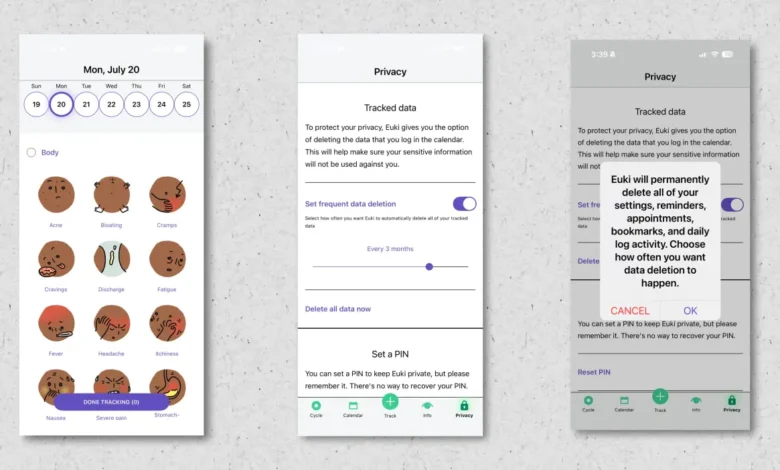
- PIN Protection with a "Fake PIN" Feature: Users can set a primary PIN to secure their data. Crucially, Euki offers a "fake PIN" option. If this fake PIN is entered, the app displays a message indicating technical difficulties, effectively concealing the real data and preventing unauthorized access without raising suspicion. This feature is particularly valuable in situations where an individual might be compelled to unlock their phone.
- Scheduled Data Deletion: Euki empowers users with robust data management options. In addition to a manual "delete all previous data" button in the settings, users can configure a schedule for automatic deletion of old data. This ensures that even locally stored data does not accumulate indefinitely, further minimizing potential exposure.
- Comprehensive Tracking without Compromise: Despite its stringent privacy measures, Euki does not compromise on functionality. It allows users to log a wide array of information relevant to reproductive health, including bleeding patterns, emotional states, body symptoms, sexual activity, appointments, and even specific health device checks, such as IUD string checks. This breadth of tracking ensures that users receive the full benefit of a period tracker while maintaining absolute control over their sensitive information.
The Broader Implications for Digital Health and Consumer Awareness
The Mozilla Foundation’s audit and Euki’s strong endorsement carry significant implications for the landscape of digital health applications and consumer data privacy.
Shifting Industry Standards: The spotlight on Euki’s privacy-by-design approach may serve as a catalyst for other app developers. As consumer awareness about data privacy grows, there will likely be increased pressure on companies to adopt more transparent and secure data handling practices. This could lead to a broader industry shift towards local data storage options, enhanced encryption, and more explicit, user-friendly privacy policies. Developers who fail to adapt may find themselves losing market share to more privacy-conscious alternatives.
Empowering Consumer Choice: The audit provides invaluable information for consumers, enabling them to make informed decisions about which apps to trust with their most personal data. For too long, users have been forced to accept opaque privacy policies or assume a baseline level of security that often does not exist. Reports like Mozilla’s empower individuals to demand better and to choose products that align with their privacy values. This increased awareness is particularly vital for vulnerable populations whose safety may depend on the security of their digital footprint.
Regulatory Scrutiny: The findings may also draw further attention from regulatory bodies. While existing data protection laws like GDPR (General Data Data Protection Regulation) in Europe and CCPA (California Consumer Privacy Act) in the U.S. aim to protect user data, the specific vulnerabilities exposed in health apps might prompt calls for new, targeted legislation. Regulators could mandate specific technical requirements for health applications, such as default local storage or strict limitations on data sharing, to ensure robust protection for highly sensitive medical and reproductive information.
The Role of Advocacy Organizations: The Mozilla Foundation’s initiative underscores the critical role of independent advocacy organizations in holding technology companies accountable. By conducting thorough, unbiased audits and publicly reporting their findings, these organizations provide a vital public service, bridging the gap between complex technical practices and understandable consumer advice. Their work is essential in navigating the evolving challenges of digital privacy.
Beyond Apps: A Call for Comprehensive Digital Hygiene
While choosing a privacy-focused app like Euki is a crucial step, it is also important to recognize that digital privacy is a multi-faceted challenge. As PCMag’s guide to private period tracking highlights, alternative methods such as leveraging built-in privacy features of operating systems (e.g., Apple Health, which offers robust local data encryption and control) or even returning to low-tech, DIY methods like coded notes on a physical calendar, remain viable and highly secure options. The key takeaway is the need for a comprehensive approach to digital hygiene, where individuals are mindful of all the digital touchpoints where their sensitive information might reside.
The release of the Mozilla Foundation’s audit on July 20, 2026, marks a pivotal moment in the ongoing discourse about digital privacy, especially concerning reproductive health. By identifying Euki as a beacon of privacy in a sea of potentially leaky applications, the foundation has provided a clear, actionable recommendation for millions of users worldwide. As technology continues to intertwine with every aspect of our lives, the ability to control and protect our most personal data becomes not just a convenience, but a fundamental right and a necessity for personal safety and autonomy. The Euki app, with its commitment to local data storage and user-centric privacy features, stands as a testament to what is possible when design prioritizes protection over profit, offering a vital tool for individuals navigating an increasingly complex and sensitive digital landscape.