From Digital Soundtracks to Digital Sovereignty: The Evolution of Ian Rogers and the Rise of Ledger

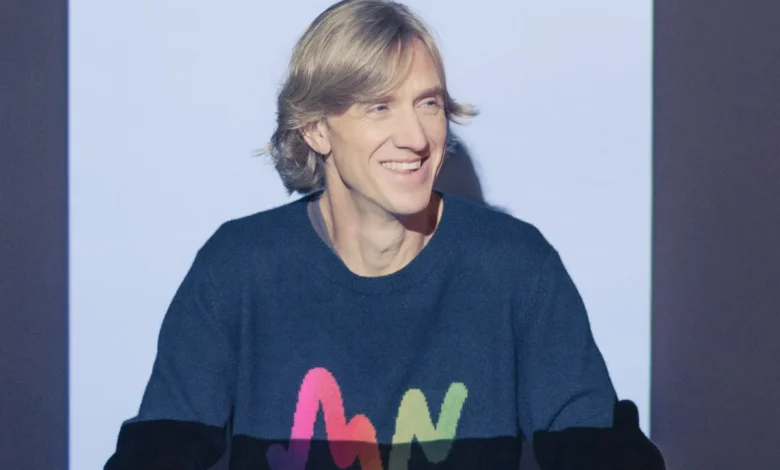
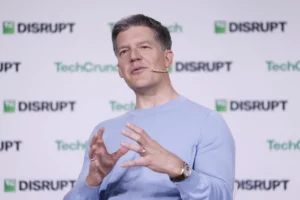
Ian Rogers has spent the better part of three decades at the bleeding edge of the digital revolution. From his early days in Indiana witnessing the birth of the World Wide Web to his pivotal role in reshaping how the global population consumes music, Rogers has consistently identified shifting paradigms before they hit the mainstream. Today, he is applying that same foresight to the complex and often precarious world of cryptocurrency and digital identity, serving as the Chief Human Agency Officer at the $1.5 billion security startup, Ledger.
The transition from the world of streaming media to the realm of self-custody and cybersecurity is not merely a change of industry for Rogers; it is a calculated response to what he identifies as the most critical challenge of the next decade: the protection of human agency in an increasingly automated, AI-driven world.
A Career Defined by Technological Inflection Points
To understand Rogers’ current mission at Ledger, one must examine his trajectory, which mirrors the maturation of the internet itself. Born in Indiana, Rogers entered the field of computer science during the early 1990s, a formative era when the internet was transitioning from an academic curiosity to a commercial infrastructure.
His professional life began in earnest with a departure from academia. After dropping out of graduate school to tour with a band, he found himself in California, the epicenter of the dot-com boom. It was here that he demonstrated his knack for identifying market gaps. In 1999, he played a critical role in the development of an MP3 player technology that caught the attention of AOL, leading to a successful acquisition. This set the tone for his career: build, iterate, and integrate.
Following his work with AOL, Rogers assumed leadership roles at Yahoo, where he oversaw Yahoo Music from 2003 to 2008. This period was pivotal in the evolution of digital music, as the industry grappled with the disruptive transition from physical media to digital files. His subsequent venture into the creation of Beats Music—later acquired by Apple in 2014—placed him at the heart of the streaming revolution. As Senior Director of Apple Music, he was instrumental in the 2015 launch of the service that would eventually define the modern listening experience for millions.
The Apple Blueprint: Ecosystems and User Experience
Rogers’ tenure at Apple remains a cornerstone of his professional philosophy. When discussing his approach to product design and consumer adoption, he emphasizes the concept of the "ecosystem." According to Rogers, Apple’s dominance was not merely the result of high-quality hardware; it was the creation of a closed, seamless, and deeply integrated experience.
"When you buy an iPhone, you’re not buying a piece of hardware," Rogers observes. "You’re buying blue bubbles instead of green bubbles; you’re buying AirDrop; you’re buying FaceTime." This philosophy—that the value of a product lies in the collective utility of its integrated features—is something he has carried into his work at Ledger.
Following his departure from Apple, Rogers pivoted to the high-end luxury sector, serving as the Chief Digital Officer at LVMH. This move surprised many in the tech industry, but it served as a masterclass in digital transformation. Under his guidance, the luxury conglomerate transitioned from a 3% e-commerce footprint in 2015 to a robust, 100% online-capable operation by the onset of the global pandemic. This experience proved that even the most traditional, physical-first industries could be successfully modernized through digital integration.
The Ledger Mandate: Securing the Digital Asset Class
In 2021, Rogers joined Paris-based Ledger, a company founded in 2014 by Nicolas Bacca, Eric Larcheveque, and Joel Pobeda. Ledger operates on a fundamental premise: as the world moves toward digital currencies and assets, the necessity for robust, offline security becomes paramount.
The company’s core product line—hardware crypto wallets—functions as a secure vault for private keys, the essential digital passwords required to authorize transactions on a blockchain. By keeping these keys in cold storage (offline), Ledger eliminates the vulnerability of internet-connected devices, which are susceptible to sophisticated hacking attempts.
With a valuation of $1.5 billion following its Series C funding, Ledger has successfully scaled its operations to include over eight million users. Its latest iteration, the $179 NanoGen 5, represents the company’s ongoing commitment to protecting not just financial assets, but the broader concept of digital identity.
Redefining Human Agency in the Age of AI
Rogers’ current title, Chief Human Agency Officer, is a deliberate statement. As the influence of artificial intelligence expands across all sectors of the economy, Rogers argues that the primary threat to the individual is the loss of control over their own digital footprint and decision-making processes.
"AI security is a top-three problem for humanity at the moment," Rogers states. "What I realized is that it’s not about AI; it’s actually about humans. The job here is keeping humans secure and in control."
This perspective aligns with a broader trend in the tech industry: the growing tension between the convenience of automated AI agents and the need for personal accountability. As AI systems become more capable of executing tasks on behalf of users, the infrastructure that manages these interactions must be inherently secure and transparent. Rogers posits that the future of technology will be defined by "agentic" workflows, where humans initiate processes and validate results, while autonomous agents handle the intermediate heavy lifting.
Strategic Advice for the Next Generation of Founders
For those looking to replicate his success in the coming years, Rogers offers a pragmatic, albeit challenging, set of instructions. He suggests that the most valuable skill for a 25-year-old today is the ability to manage and orchestrate AI agents. He views the intelligence revolution as an inevitable shift in labor, comparing it to the ubiquity of personal computers on desks in the 1990s.
"We will all become the managers of AI agents," he says. "The same way that we’re all information peddlers today, we’re having an intelligence revolution that is actually computers taking actions on our behalf."
Beyond technical skill sets, Rogers emphasizes a shift in how entrepreneurs approach market selection. He warns against the common pitfall of building products based solely on personal interest, such as the saturation of music or hospitality-focused startups. Instead, he advocates for an analytical approach to "unsexy" industries—such as logistics, insurance, or cybersecurity—where real-world pain points are acute and quantifiable.
"You find the pain, and then you make a painkiller," Rogers advises. "You don’t make a painkiller and then go looking for pain."
Looking Toward the Future
As Ledger continues to navigate the volatile landscape of the cryptocurrency market and the encroaching regulatory pressures on digital asset providers, Rogers’ role is one of strategic stabilization. By focusing on the user experience and the necessity of personal sovereignty, Ledger is attempting to move crypto from the fringes of speculative finance to a standard component of digital life.
The broader implications of this work are significant. As identity verification and asset ownership become increasingly digitized, the entities that provide the security layer for these transactions will hold unprecedented influence. Whether Ledger can maintain its trajectory in an increasingly competitive security market will depend on its ability to balance the technical complexity of blockchain technology with the intuitive, frictionless experience that Rogers championed at Apple and LVMH.
For Ian Rogers, the journey from the early web to the current era of artificial intelligence and digital assets is a continuous thread of empowerment. Whether it was giving users control over their music collections or providing them with the tools to secure their financial independence, his career is a testament to the idea that technology is most effective when it places the individual firmly at the center of the ecosystem. As he works from rural Italy to steer the future of a $1.5 billion company, the focus remains the same: ensuring that in an automated world, the human remains in the driver’s seat.
Related posts: