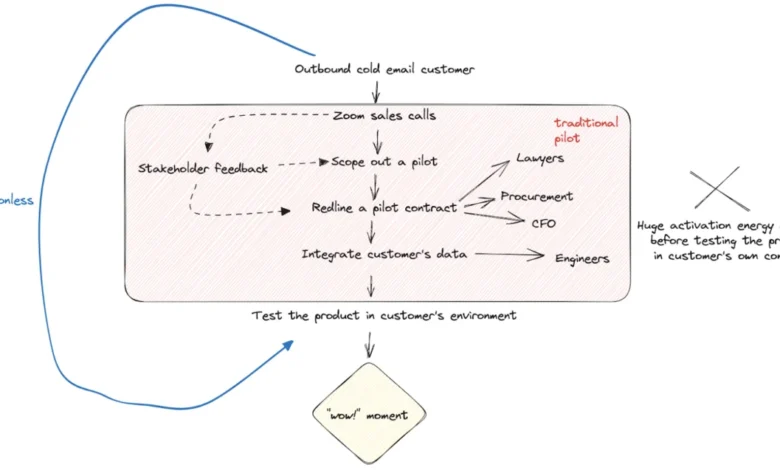
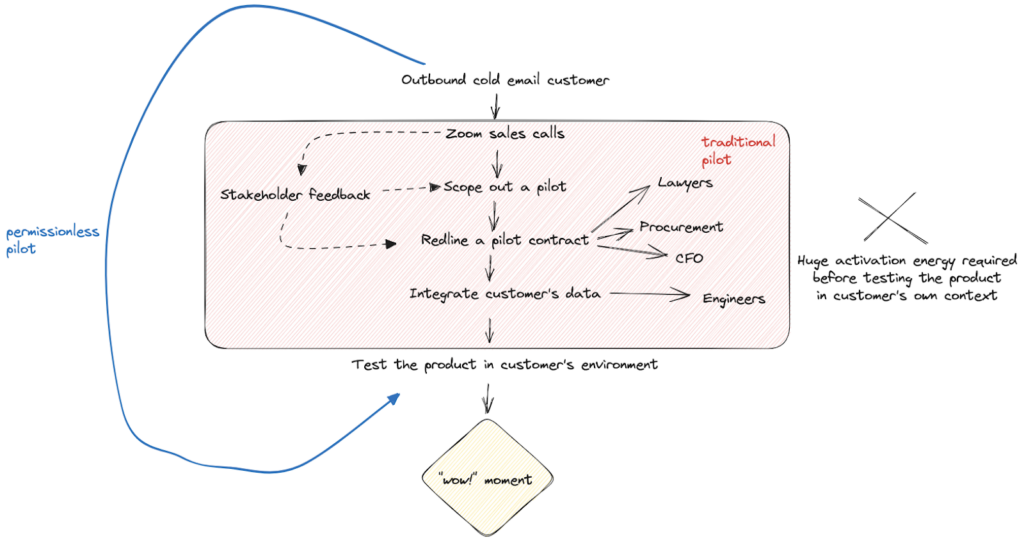
The modern enterprise software-as-a-service (SaaS) sales cycle has long been characterized by a grueling sequence of introductory calls, security questionnaires, legal reviews, procurement hurdles, and tedious technical integrations. For decades, software startups operated under the assumption that prospective buyers needed to traverse this entire obstacle course before they could witness the true value of a product. However, a growing cohort of early-stage technology companies is successfully inverting this traditional framework by introducing what industry observers call the "permissionless pilot"—a strategic shift that brings the product’s core value proposition to the very beginning of the buyer’s journey.
The Evolution of the Enterprise Sales Bottleneck

A decade ago, the concept of "Time to Wow!" became a foundational metric in the SaaS ecosystem. Popularized by veteran SaaS investor and entrepreneur David Skok, the philosophy emphasized that the faster a customer experiences a moment of profound realization regarding a product’s utility—the "Wow! moment"—the higher the likelihood of closing a deal and securing long-term retention.
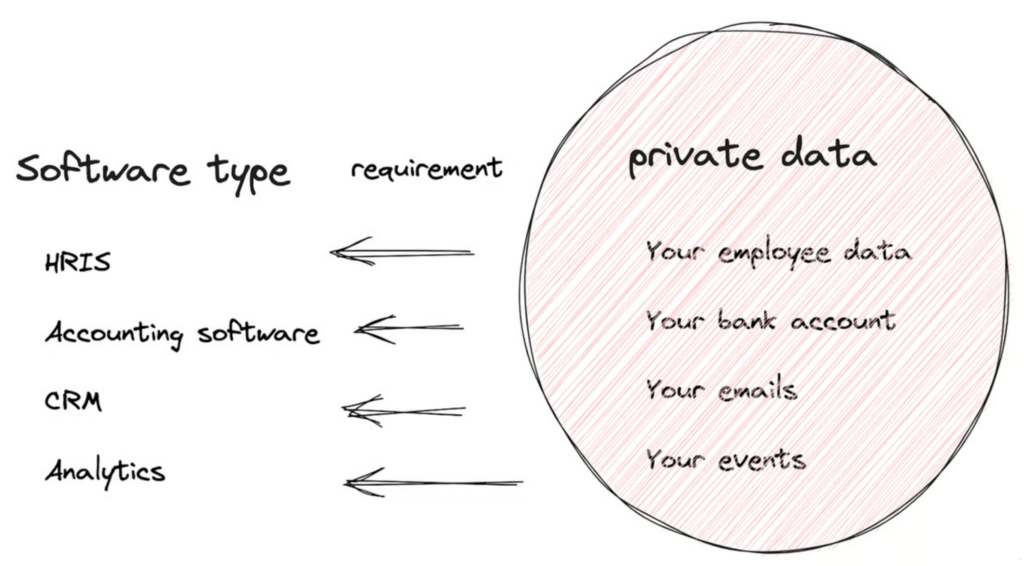
Despite the acknowledged importance of minimizing time-to-value, enterprise sales traditionally delayed this critical juncture. Most enterprise software products are inherently data-dependent; they require access to a customer’s proprietary datasets to function properly. Historically, sales teams attempted to circumvent this requirement by utilizing simulated dummy data during product demonstrations. While useful for high-level overviews, generic placeholders function similarly to watching a commercial rather than test-driving a vehicle.
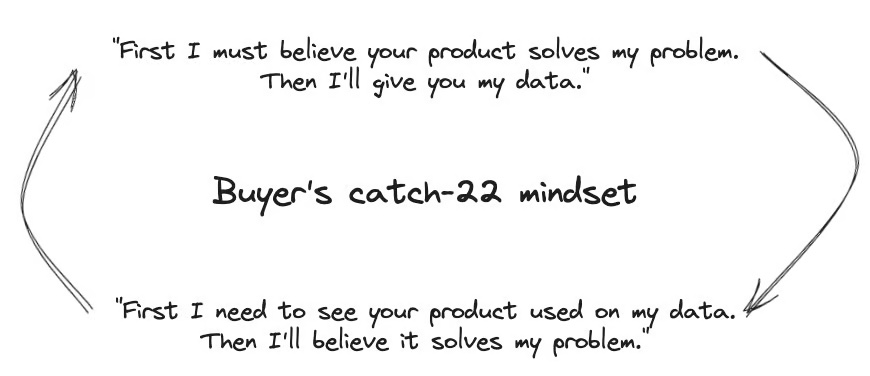
Consequently, prospective enterprise buyers are routinely trapped in a classic Catch-22: they are unwilling to expend the political capital, security clearances, and legal hours required to share internal company data with a third-party vendor until they are entirely convinced the software will work. Yet, they cannot realistically achieve that level of conviction without first seeing the product operate within their specific operational context using their own data. Navigating this impasse often resulted in prolonged sales cycles that tested the patience of both startups and prospective clients.
Decoding the Permissionless Pilot
To dismantle this structural barrier, innovative startups are leveraging public data and advanced automation to engineer permissionless pilots. Defined as a product demonstration that utilizes publicly available, customer-specific data to instantly deliver a product’s defining value proposition, the permissionless pilot effectively reduces a prospect’s time-to-value to zero.
By definition, these pilots require no prior consent, data-sharing agreements, or technical configuration from the prospective client. Instead of asking a prospect to invest time and trust upfront, the software vendor proactively performs the heavy lifting. By harnessing publicly accessible data sources—ranging from open-source code repositories and regulatory filings to digital storefront listings and web-based applications—startups can generate customized, highly relevant analytical insights before the target company even realizes it is being pitched.
Industry Analysts and Market Implications
Market research indicates that the proliferation of accessible big data over the past decade, paired with exponential advancements in machine learning architectures such as computer vision and large language models (LLMs), has vastly expanded the viability of permissionless pilots. Modern algorithms can rapidly structure, analyze, and interpret vast quantities of unstructured public data, unlocking use cases that were technologically or economically unfeasible ten years ago.
From an economic perspective, this strategy alters customer acquisition costs (CAC) and sales velocity. By shifting proof-of-concept validation to the top of the marketing and sales funnel, startups can bypass traditional gatekeepers and directly engage end-users. When prospective buyers discover a detailed, highly accurate performance audit or optimization report concerning their own digital assets, the psychological dynamic shifts from skepticism to immediate engagement. Rather than enduring a cold sales pitch, the prospect encounters a functional solution to an existing operational inefficiency.
Real-World Implementation: The Emerge Tools Case Study
A prime illustration of this methodology in practice is Emerge Tools, a mobile application performance management and optimization platform. Founded to help development teams reduce the binary size of mobile applications—thereby improving download times, reducing data consumption, and accelerating app launch metrics—the startup scaled rapidly without relying on a traditional outbound sales force. Within three years of operation, Emerge secured enterprise contracts with prominent technology corporations, including DoorDash, Square, Airbnb, Duolingo, and Dropbox.
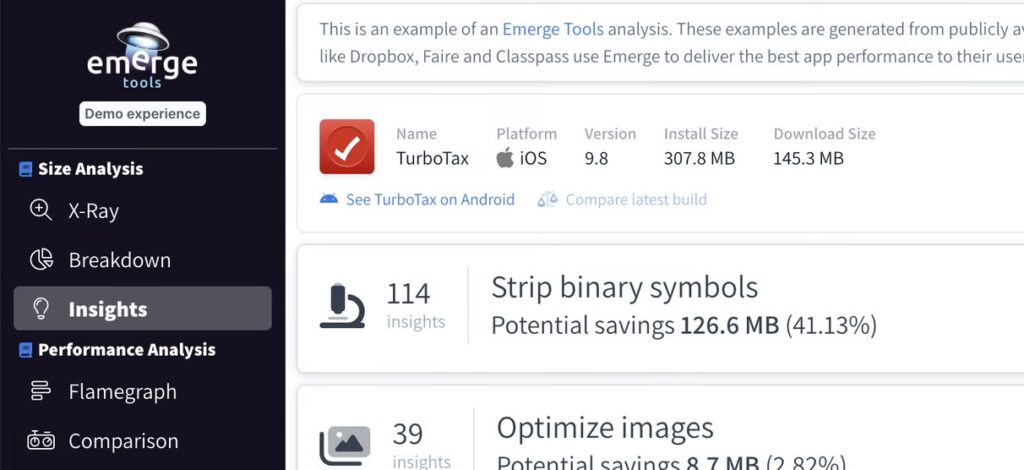
The cornerstone of Emerge’s go-to-market strategy was the deployment of permissionless pilots at scale. Recognizing that securing internal buy-in from mobile engineering groups typically involves navigating protracted corporate bureaucracies, the startup engineered an automated system capable of reverse-engineering the publicly available binary code of any native mobile application found in the iOS App Store and Google Play Store.
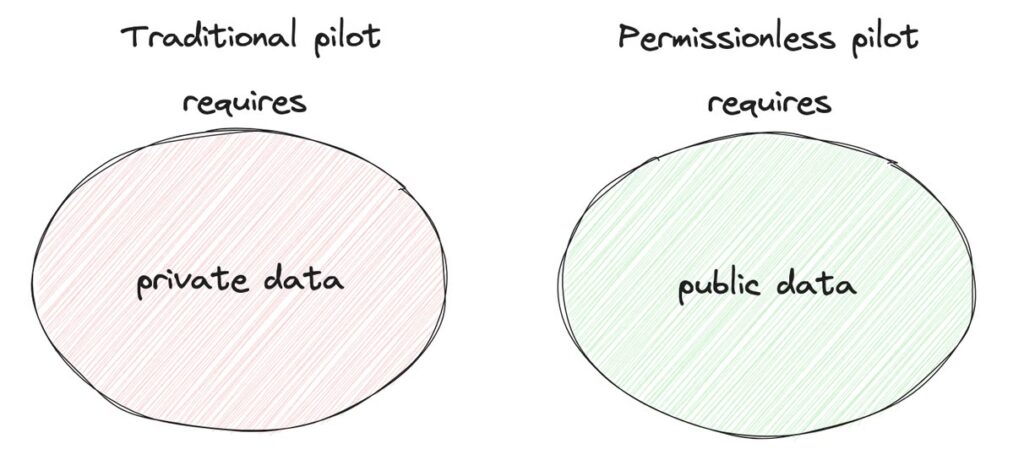
Instead of demanding internal source code or proprietary metrics from a prospective client, Emerge’s automated pipeline began generating comprehensive optimization analyses for public applications. By early 2023, the platform scaled its automated analysis cadence from approximately 500 apps to over 10,000 public applications.
These automated assessments were subsequently published on distinct, indexable public URLs. When engineers from target enterprises searched for performance insights regarding their own applications, they frequently encountered these reports organically. The resulting visibility generated significant engagement across social channels and professional networks, driving a 400% increase in organic search traffic, keyword rankings, and follower metrics. Crucially, because the insights directly addressed specific technical vulnerabilities within the prospect’s own software, developers routinely shared the reports internally via collaboration tools like Slack, effectively serving as internal champions for the vendor before any commercial conversation had even commenced.
Cross-Sector Applications and Frameworks

While mobile application development represents a fertile ground for binary analysis, the underlying mechanics of the permissionless pilot can be adapted across diverse industry verticals. Market observers have identified multiple sectors where public data streams serve as viable foundations for automated value delivery:
- Search Engine Optimization (SEO): Startups in the digital marketing space can ingest public Google search results and site structures to automatically deliver customized performance audits and ranking improvement recommendations to prospective e-commerce brands, echoing the growth strategies deployed by firms like Conductor.
- E-Commerce Optimization: By cross-referencing millions of active retail product listings, optimization platforms can highlight immediate pricing discrepancies, descriptive flaws, and visual content deficiencies to drive conversion rate optimizations, a methodology historically utilized by portfolio companies such as Salsify.
- Cybersecurity and Vulnerability Management: Automated white-hat scanning of public-facing web applications enables threat-detection platforms to identify security vulnerabilities proactively, demonstrating immediate utility similar to the models leveraged by HackerOne.
- Financial Technology and Hedge Funds: Advanced analytics platforms, such as Bedrock AI, parse publicly available SEC filings and legal disclosures to deliver forensic intelligence capable of detecting earnings quality failures and potential compliance risks before institutional investors formally engage the vendor.
- Web-Based Personalization: Marketing automation platforms, including Mutiny, allow prospective clients to preview customized landing page experiences tailored to specific audience segments without requiring formal account creation or software installation.
Strategic Considerations and Best Practices
Despite the clear commercial advantages associated with permissionless pilots, industry strategists advise caution regarding execution. Because these pilots operate proactively and without direct client consent, companies must maintain rigorous standards of accuracy, professionalism, and brand stewardship. An improperly executed or inaccurate automated audit can alienate a prospective client rather than attract them.
Furthermore, the objective of a permissionless pilot is not necessarily to provide a comprehensive, flawless enterprise solution on the first interaction, but rather to establish immediate credibility through a demonstrable display of technical competence. By prioritizing product-led growth and shifting the moment of realization to the very first point of contact, modern SaaS companies are demonstrating that the traditional, friction-heavy enterprise sales cycle is no longer the only path to commercial scale.
Related posts: