Mastering Growth: A Strategic Framework for Optimizing Marketing Channels and Conversion Rates


In the contemporary digital marketing landscape, organizations are often overwhelmed by an abundance of choices. With hundreds of potential channels—ranging from social media advertising and search engine optimization to influencer partnerships and email automation—marketers frequently succumb to the temptation of spreading their resources too thin. Attempting to manage dozens of disparate tactics simultaneously often results in a dilution of focus, leading to a loss of clarity and diminishing returns on investment. To counteract this, industry experts are increasingly advocating for a return to the fundamental mathematical principles of customer acquisition: total signups are strictly a product of traffic volume multiplied by conversion rate.
The Mathematical Foundation of Digital Growth
The core equation governing modern digital marketing is deceptively simple: New Signups = Traffic × Conversion Rate. Every marketing effort, regardless of its complexity or the platform utilized, must be evaluated against these two specific metrics. Traffic represents the top-of-funnel volume—the number of unique visitors arriving at a digital asset—while the conversion rate represents the efficacy of the landing page or content in prompting a specific, desired action, such as a product trial signup or a subscription.
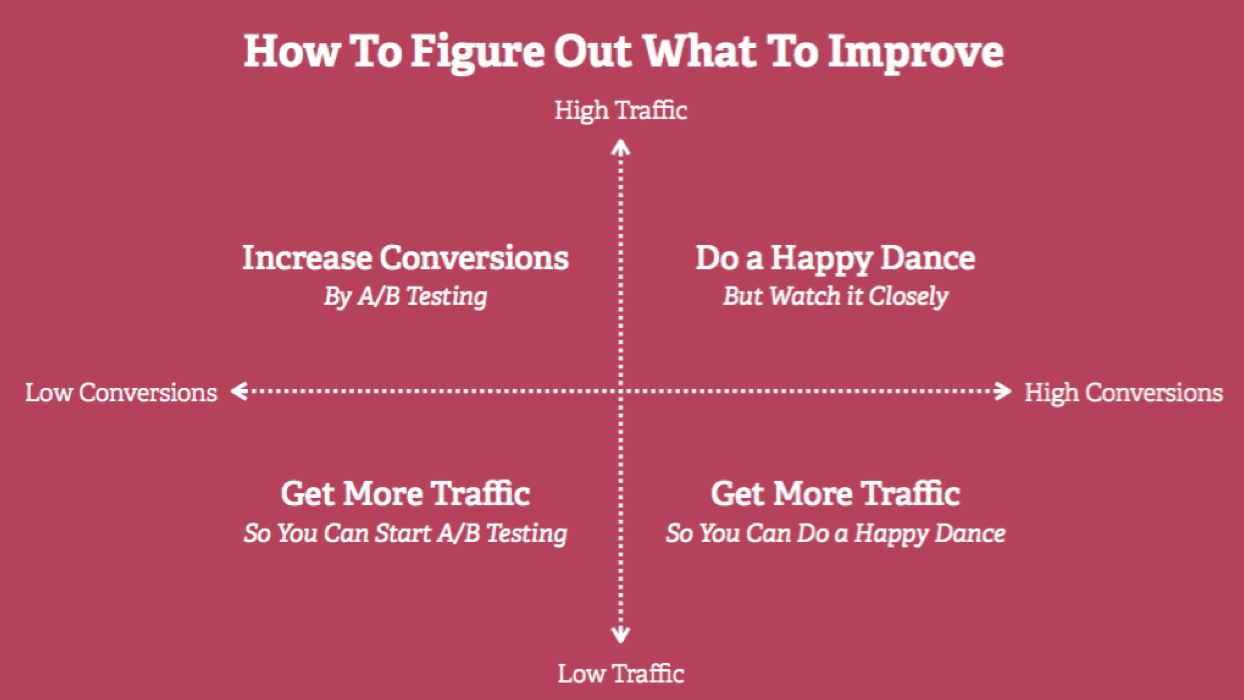
By viewing every campaign through this dual-lens framework, marketers can move away from speculative "Hail Mary" tactics and toward a data-driven, systematic process of growth. This methodology requires an audit of all active marketing channels, categorizing them into a four-quadrant matrix based on their current performance metrics.

The Four-Quadrant Conversion Mapping Strategy
To effectively deploy this framework, teams must categorize their existing assets into four distinct performance buckets. This categorization allows for precise resource allocation:
- High Traffic, Low Conversion: These channels represent the most immediate opportunities for growth. Because the volume of visitors is already substantial, the sample size is sufficient for statistically significant A/B testing. By optimizing call-to-action buttons, messaging, and user experience, firms can see immediate upticks in total signups without the need to acquire new, expensive traffic.
- Low Traffic, High Conversion: These segments are often characterized by high-intent, specialized content. While the audience size is small, the visitor quality is high. The strategic objective here is to scale traffic through broader reach, such as search engine optimization (SEO) or strategic content distribution, while maintaining the integrity of the conversion process.
- Low Traffic, Low Conversion: This quadrant serves as the testing ground for new initiatives. In the early stages of a startup or product launch, most efforts fall into this category. The goal is to rapidly iterate until these assets either move toward higher traffic or higher conversion, or are abandoned in favor of higher-performing channels.
- High Traffic, High Conversion: These represent the company’s "cash cows." These assets require minimal intervention but must be monitored to ensure their performance does not degrade over time. These high-performing channels often provide the necessary capital to fund experimental efforts in the other quadrants.
Chronology of Channel Optimization
For organizations looking to implement this framework, a disciplined, chronological approach to execution is essential. The process begins with an audit, followed by immediate optimization of "low-hanging fruit."
- Phase 1 (The Audit): Organizations map every landing page, social channel, and blog post onto the four-quadrant matrix. Data is collected over a consistent period—typically 30 to 90 days—to ensure the traffic and conversion samples are representative of current performance.
- Phase 2 (Immediate Correction): Focus shifts to the High Traffic/Low Conversion quadrant. By performing iterative testing—such as modifying headlines, adjusting landing page copy, or streamlining form fields—marketers can unlock substantial revenue increases without increasing their marketing budget.
- Phase 3 (Expansion): Once the conversion rates on major assets are optimized, efforts pivot to increasing traffic to the Low Traffic/High Conversion channels. This phase often involves repurposing high-performing content into different formats to reach new audience segments.
- Phase 4 (Maintenance): The final stage involves establishing a cadence of routine performance reviews to ensure that previously high-performing assets do not suffer from "audience fatigue" or technical decay.
Supporting Data and Industry Context
Recent industry reports from firms like HubSpot and various SaaS analytics providers demonstrate that the cost of customer acquisition (CAC) through paid channels like Google AdWords has risen steadily over the past decade. Consequently, businesses that prioritize organic conversion optimization frequently outperform those that rely solely on paid acquisition.
For instance, companies that utilize data-backed A/B testing frameworks often report a 10% to 30% improvement in conversion rates within the first quarter of implementation. In contrast, those that continuously chase new, unproven channels without first optimizing existing traffic streams often experience a higher CAC and lower long-term customer lifetime value (LTV).

Expert Perspectives on Scaling
Market analysts emphasize that content marketing and conversion optimization are "long games." While the temptation to invest in viral, short-term trends is high, the most resilient growth models are built on the accumulation of high-quality, high-converting assets. As one industry expert noted, when a business builds "little islands of content," they are essentially creating digital real estate. Over time, these islands connect, forming a broader, more authoritative presence that drives sustainable, cost-effective traffic.
This sentiment is echoed by founders who have utilized similar frameworks at scale. The transition from a "one-off tactic" mindset to a "process-driven" mindset is often cited as the primary differentiator between startups that stall at the early stages and those that achieve significant market penetration.

Broader Implications for the SaaS Industry
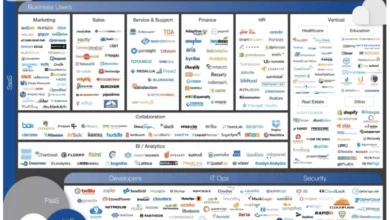
The implications of this framework are particularly profound for the SaaS sector, where customer retention and conversion are critical to survival. As the market reaches a state of maturity—often referred to as "Peak SaaS"—the competition for user attention has reached a fever pitch. In this environment, the ability to squeeze maximum value out of existing traffic is a competitive advantage.
Companies that ignore the "Low Traffic, High Conversion" segments often fail to identify their core value proposition. If a piece of content converts well, it indicates that the messaging is resonating with the target demographic. By failing to scale such content, companies inadvertently leave market share on the table. Conversely, those that successfully bridge the gap between niche expertise and broad-market appeal are the ones that typically see sustained, compound growth.

Strategic Conclusion
In summary, the path to efficient growth is not found in the acquisition of more channels, but in the rigorous application of a conversion-first mindset. By auditing existing assets, prioritizing the high-traffic/low-conversion opportunities, and methodically scaling the high-converting niches, businesses can build a sustainable marketing engine. This approach requires patience, a commitment to data-driven decision-making, and the discipline to ignore the "shiny object" syndrome that plagues modern digital marketing. Ultimately, those who master the conversion map will be best positioned to weather market volatility and achieve long-term success.