Reflections on a Life Well-Lived, the Foundation of Stack Overflow, and the Precarious Future of AI Training Data


Software developer, entrepreneur, and prominent industry commentator Jeff Atwood recently shared a reflective look back at his life, mourning the passing of his father while offering a critical assessment of the modern artificial intelligence landscape. In a personal yet wide-ranging essay published via his digital channels, Atwood connected deeply personal milestones—such as his philanthropic involvement with the Rural Guaranteed Minimum Income Initiative (RGMII)—with broader structural concerns facing the technology sector, specifically the reliance of large language models (LLMs) on crowdsourced human knowledge.
The intersection of personal legacy and professional achievement formed the emotional core of Atwood’s commentary. Noting that he has lived 663 months since his birth, he reflected on the passage of time and the recent loss of his father. Through deliberate coordination with the RGMII rural study counties initiative, Atwood ensured that Mercer County, West Virginia—his father’s home region—was prioritized in the study schedule in October 2025. That strategic scheduling allowed Atwood a final, meaningful visit with his father before his passing. Citing a philosophical perspective inspired by comic literature, Atwood emphasized that profound personal experiences are never truly lost, but rather absorbed as a cumulative gain over a lifetime.
Beyond personal remembrance, Atwood pivoted to a systemic evaluation of the digital infrastructure that underpins contemporary artificial intelligence. As a co-founder of Stack Overflow—alongside Joel Spolsky—Atwood addressed the foundational role that community-driven Q&A platforms have played in the technological revolution. He highlighted a reality acknowledged by industry insiders and AI developers alike: current large language models would lack functional coding capabilities without access to the vast, highly curated Creative Commons programming datasets built by millions of human developers over decades.
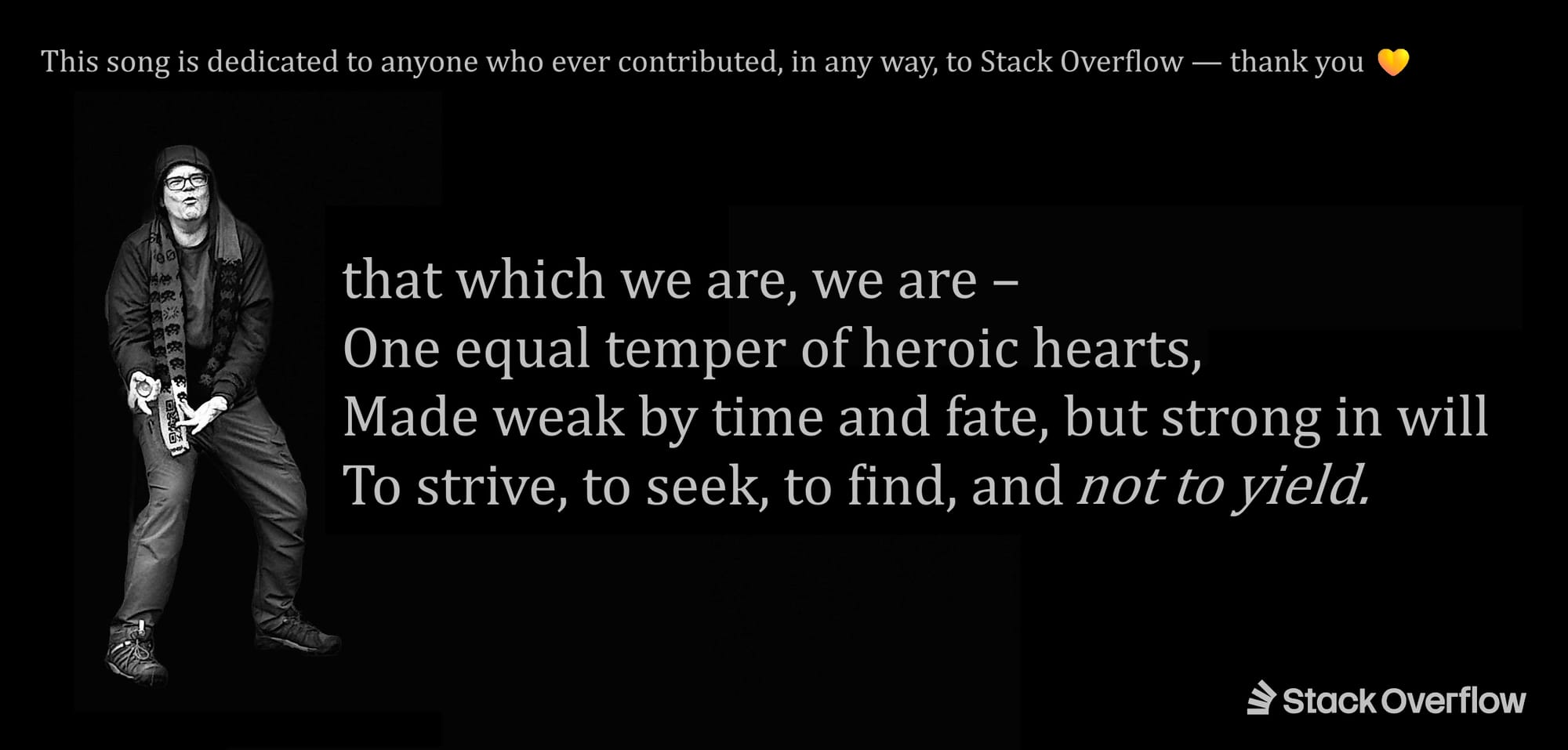
The Evolution and Impact of Stack Overflow
Founded in 2008, Stack Overflow transformed the landscape of software development by replacing fragmented expert forums with a gamified, peer-reviewed knowledge repository. For more than fifteen years, developers across the globe have contributed millions of questions, answers, code snippets, and debugging solutions. This crowdsourced repository eventually evolved into one of the most valuable training corpora for artificial intelligence models designed to generate, parse, and optimize code.
Industry analysts have frequently pointed out that foundational models trained on generic web text struggle with complex logic and specialized syntax. Specialized coding assistants, ranging from early completion tools to advanced reasoning models, achieved commercial viability largely because they could ingest structured, high-intent technical discussions. Without the meticulous moderation, upvoting systems, and peer review native to Stack Overflow and similar technical forums, the generative AI boom in software engineering would have faced severe data scarcity bottlenecks.
However, this reliance has created a complex economic and social paradox. While AI firms utilize these community-generated datasets to power commercial products valued in the tens and hundreds of billions of dollars, the underlying communities responsible for creating the data have experienced shifting traffic patterns, declining user engagement, and diminished incentives to contribute.

The Warning to Generative AI Enterprises
Atwood issued a direct caution to executives and developers within the generative artificial intelligence sector, drawing parallels to his departure from Stack Overflow to launch Discourse, an open-source discussion platform. He invoked a classic business adage: do not kill the goose that lays the golden eggs.
According to Atwood, if AI-driven search tools and automated code generators ultimately hollow out the human communities that produce foundational training data, the industry will face severe consequences. When users can extract immediate answers from an LLM without visiting, contributing to, or sustaining original creator websites, the incentive structure for human participation breaks down. Without new human contributions, the pipeline of fresh, high-quality training data risks stagnation.
Experts in data governance note that future AI models trained predominantly on synthetic data—content generated by other AI models—can suffer from "model collapse," a phenomenon where iterative training cycles degrade output quality, introduce bias, and amplify errors. Consequently, the preservation of active, healthy human communities is not merely an ethical consideration for tech platforms, but an operational necessity for the sustainability of artificial intelligence systems themselves.

Broader Implications for the Digital Ecosystem
Atwood’s commentary arrives at a critical juncture for the internet economy. The traditional model of web monetization—driven by user acquisition, community interaction, and search engine traffic—is undergoing structural displacement by conversational AI interfaces that summarize web content without directing traffic to primary sources.
Legal battles, licensing agreements, and data-scraping disputes between publishers, developer platforms, and AI labs have accelerated. While some major forums have negotiated multi-million-dollar data-access partnerships with tech giants, smaller communities lack the legal leverage or resources to protect their intellectual property. Observers suggest that sustainable models will require robust revenue-sharing mechanisms, attribution frameworks, and active investment in human infrastructure by the AI enterprises that benefit most from public data pools.
As Atwood continues his work across new entrepreneurial ventures—including his third startup initiative—his reflections serve as both a personal tribute and a cautionary reminder. The technological leaps of the present remain entirely dependent upon the collective labor of human communities past and present. Preserving those communities, Atwood argues, remains the single most important safeguard for the future of technological innovation.