Stop Kicking Off Every AI Task by Hand: Transitioning from Manual Prompts to Autonomous Systems

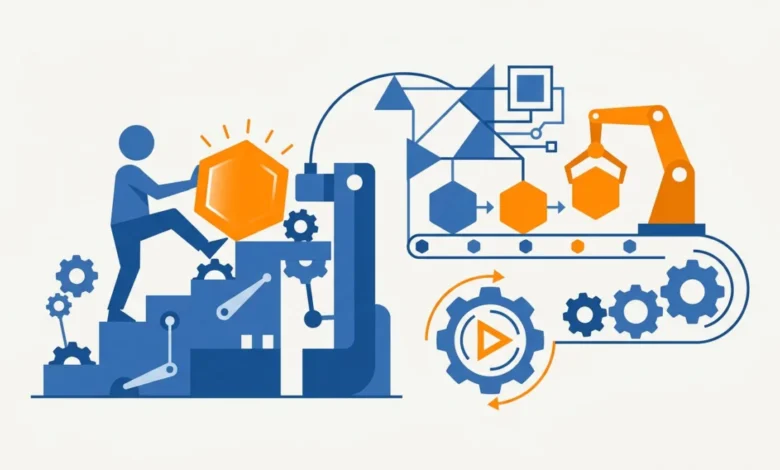
The professional landscape is currently undergoing a structural transformation as knowledge workers move away from fragmented, manual AI interactions toward integrated "Software Factory" workflows. This shift marks the end of the "kickoff vibe"—a phase defined by individual, task-specific prompts—and the beginning of an era characterized by continuous, automated systemic execution. As organizations and independent professionals seek to scale their operations, the focus is pivoting from mere prompt engineering to the construction of durable, self-improving operational machines.
The Shift from Manual Intervention to Systemic Automation
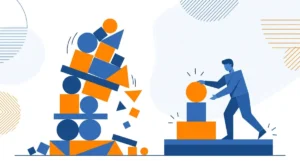
For many, the current standard for AI integration is reactive. A user identifies a task, opens an AI interface, provides context, waits for a response, and then manually edits the output. This cycle is repetitive and prone to human error, as evidenced by recent workflow audits. For instance, a common failure point involves date-related inaccuracies—such as a recent case where a user published content with a June date instead of July.
While the immediate reaction to such an error is a "human fix"—manually correcting the timestamp—the more effective approach is to identify the root cause within the workflow. By treating the error as a systemic failure rather than a singular oversight, professionals can apply the "One Tweak a Week" principle. This methodology transforms the review process into a continuous improvement loop, where the workflow itself is modified to catch specific error classes in the future. By updating a prompt or a skill set, the system becomes more resilient, effectively removing the need for recurring manual vigilance.
The Five Layers of AI Integration
To successfully transition into a Software Factory model, experts suggest categorizing AI integration into five distinct functional layers: Capture, Triage, Planning, Execution, and Review. Attempting to automate all five layers simultaneously is widely considered a recipe for operational failure. Instead, industry analysts recommend identifying the specific layer causing the greatest amount of friction and focusing automation efforts there.
- Capture: The foundational layer. If an AI system does not have automated access to email, Slack, and meeting transcripts, it operates in a vacuum, forcing the user to manually paste context.
- Triage: Once information is captured, it requires organization. Advanced users are replacing traditional folder-based sorting (such as legacy tools like Hazel) with AI-driven filing assistants capable of categorizing documents and images in real-time.
- Planning: This layer coordinates the work, turning captured insights into actionable tasks.
- Execution: The phase where the work is generated. By utilizing "Taste.md" files—centralized repositories of aesthetic guidelines, tone, and brand standards—users can provide the AI with a permanent "style guide," reducing the need for repetitive feedback.
- Review: The diagnostic phase where errors are analyzed and fed back into the system as permanent improvements.
Data-Driven Contextual Integration
The "Capture" layer is widely regarded as the highest return-on-investment (ROI) starting point. Research into professional workflow bottlenecks suggests that approximately 40% of time spent on AI-assisted tasks is lost to context-switching—copying and pasting information from one platform to another.
By establishing direct, automated integrations between AI models and communication suites (e.g., Slack, Microsoft Teams, or Gmail), professionals can ensure that small commitments made in daily chat are captured without human intervention. For instance, teams utilizing the browser-based version of Microsoft Teams can now allow AI models to analyze visual context through screenshots, a capability that significantly enhances the model’s situational awareness. When the AI is granted background access to these communication streams, it can surface commitments that would otherwise be lost in the deluge of daily correspondence.
The Evolution of the "Taste.md" Standard
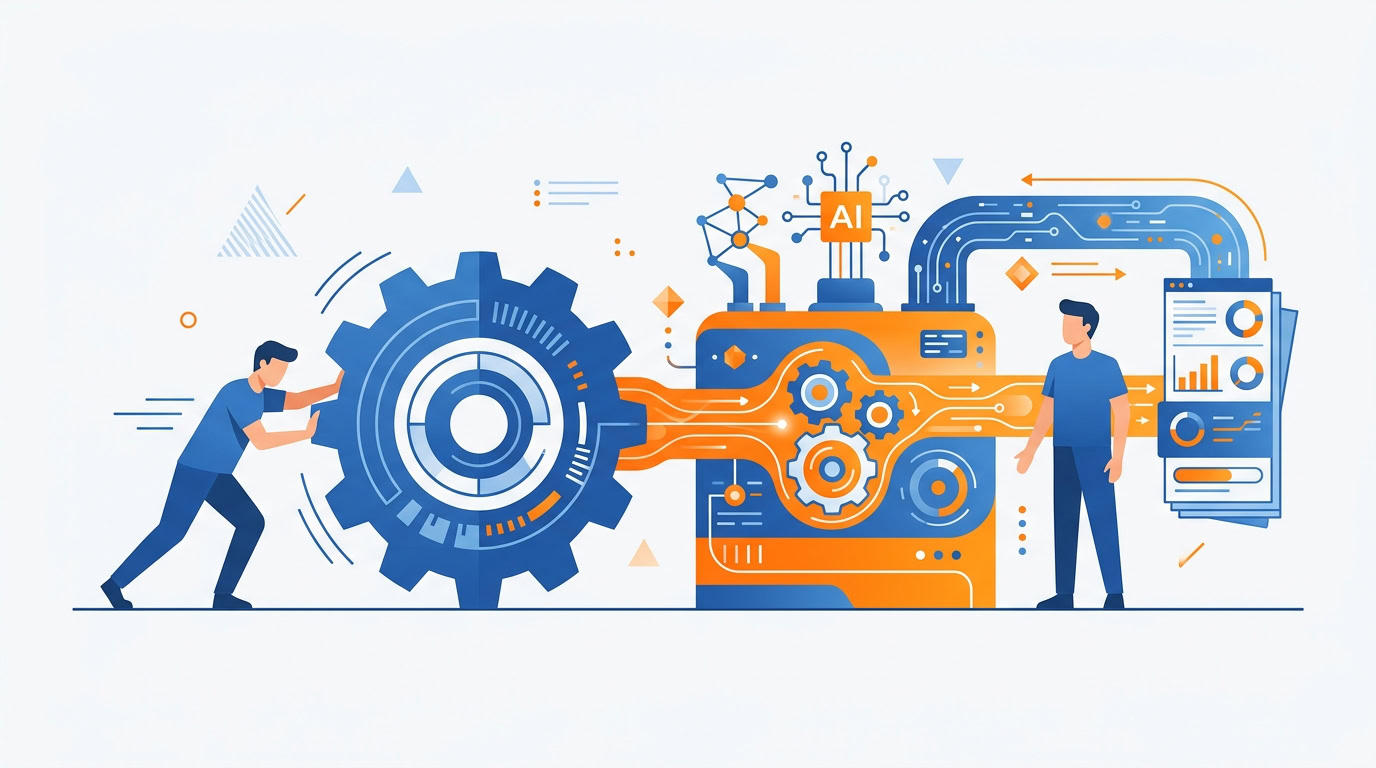
A significant challenge in AI adoption is the "robotic" nature of early-stage outputs. To combat this, power users are adopting the "Taste.md" protocol. By creating a singular, comprehensive document detailing design preferences, tone-of-voice nuances, and editorial rules, the AI can be instructed to self-reference these standards before completing a task.
This approach shifts the user’s role from "writer" to "tuner." Rather than spending hours editing an AI’s final product, the user engages in a concentrated feedback loop—often involving four to five iterations—early in the project lifecycle. This process trains the AI on specific stylistic markers, allowing it to produce drafts that require minimal human intervention. Once the "Taste.md" file is finalized, it acts as a permanent configuration for all future work, ensuring consistency across disparate projects.
Implications for Workflow Resilience and Kaizen
The concept of the "Software Factory" is deeply rooted in the philosophy of Kaizen, or continuous improvement. In this context, the review process is not merely a quality control check; it is an engineering task. When an error is identified, the response must be twofold: first, the specific instance must be corrected; second, the workflow must be altered so that the specific category of error becomes impossible to replicate.
This systemic approach to error correction is critical for scaling. As AI agents become more autonomous, the human worker must spend less time performing the work and more time architecting the environment in which the work is performed. The implications are significant: those who treat their workflows as a machine to be tuned, rather than a task list to be executed, will likely see a compound growth in output quality and efficiency.
Strategic Roadmap for Adoption
For professionals looking to implement this model, the immediate next step is an audit of current bottlenecks. If the issue is a lack of context, the priority should be integrating AI with existing communication platforms. If the issue is inconsistent output, the priority should be the development of a "Taste.md" file.
The transition to a Software Factory is not about adopting the latest software, but about building a cohesive system where the AI is not just a tool, but a permanent, improving component of the professional stack. By starting with the layer causing the most friction and iteratively refining the system, the burden of manual, task-by-task interaction can be successfully offloaded, allowing the professional to focus on high-level strategy and oversight. As the landscape of work continues to shift, those who master the art of the "tuner" will maintain a significant competitive advantage in an increasingly automated economy.