The Ultimate Gift Guide for the Dedicated E-Book Reader: Beyond the Traditional Paperback

Shopping for an avid reader has historically been a high-stakes guessing game. Selecting a physical book carries the underlying risk of choosing a title the recipient has already read, one that does not align with their literary tastes, or worse, inadvertently sending a passive-aggressive message regarding their preferred genres. Furthermore, gifting a beloved personal favorite often leads to disappointment if the recipient fails to prioritize it in their reading queue.
In recent years, the exponential growth of the digital reading market has shifted consumer habits significantly, offering a safer and often more practical alternative for gift-givers. Rather than gambling on a specific manuscript, consumers can select from an expanding ecosystem of e-readers, specialized hardware accessories, and ergonomic add-ons designed to enhance the digital reading experience. This evolution in reading culture has given rise to an entire sub-industry of peripheral devices, transforming how publishers, hardware manufacturers, and consumers interact with literature.
The E-Reader Hardware Landscape: From Pocket-Sized Gadgets to Productivity Powerhouses
The hardware market for e-reading devices has diversified well beyond the traditional Amazon Kindle ecosystem. While Amazon continues to dominate market share with its Paperwhite and Oasis lines, competing manufacturers have introduced specialized form factors that target specific consumer needs, such as ultra-portability and digital minimalism.

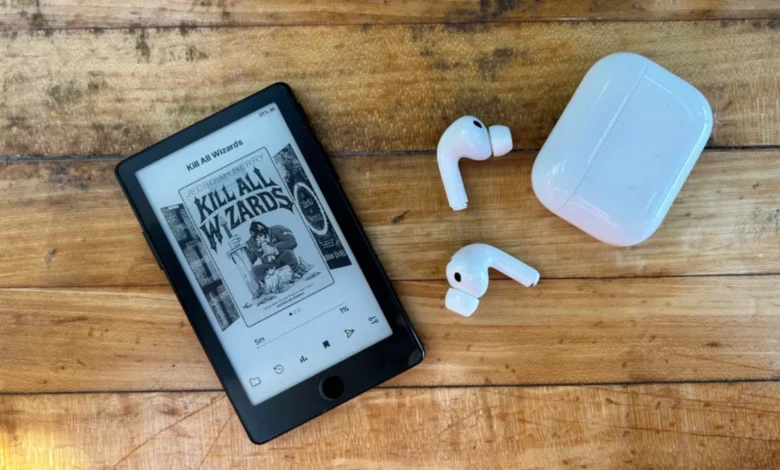
Among the standout devices capturing consumer attention in 2026 is the Xteink X4 Pro, retailing at approximately $99. Popularized largely through digital creator communities on platforms like TikTok and Reddit, this pocket-sized, single-purpose e-ink device addresses a specific niche for users who prioritize extreme portability. Measuring small enough to disappear into a standard pocket—and frequently marketed with magnetic attachments for smartphone backs—the X4 Pro represents a shift away from traditional tablet-sized reading interfaces. Iterating on earlier, bulkier iterations from smaller tech startups, the X4 Pro integrates a faster processor, expanded RAM, an integrated touchscreen, and a dedicated front light. Industry analysts note that while such devices may not replace a primary, high-capacity e-reader for long-form reading at home, they serve as effective secondary gadgets for commuting and travel.
For consumers seeking a more transformative and multifunctional device, options like the Boox Palma 2 Pro ($399.99) bridge the gap between traditional e-readers and smartphones. Featuring a 6.13-inch color e-ink screen and operating on an open Android architecture, the device provides access to the Google Play Store. This open-ecosystem approach allows users to consolidate reading applications from multiple platforms—such as Kindle, Kobo, and Nook—onto a single device. Beyond reading, the Palma 2 Pro supports mobile connectivity and stylus input, positioning it as a productivity tool designed intentionally to mitigate smartphone addiction by offering a visually muted, less stimulating interface that discourages doomscrolling while retaining essential modern functionalities.
Chronology and Evolution of E-Reader Accessories
The proliferation of e-reader peripherals is a relatively recent phenomenon that mirrors the maturation of the e-book market over the past two decades. When dedicated e-ink devices first gained mainstream traction in the late 2000s, hardware ecosystems were largely closed, and accessories were restricted to basic leather folios and protective sleeves.
By the mid-2010s, widespread adoption of Bluetooth technology and capacitive touchscreens enabled developers to experiment with remote interaction interfaces. The introduction of Bluetooth page turners marked a pivotal turning point in accessory design. Initially developed to assist individuals with motor control limitations, arthritis, or other physical disabilities that make repetitive screen tapping or device gripping difficult, these remotes quickly found a broader consumer base. Devices such as the Boox Tappy ($30) allow users to turn pages remotely while keeping their hands positioned comfortably beneath blankets or engaging in secondary activities like dining.

However, hardware compatibility remains a significant fragmentation point within the market. Proprietary ecosystems, most notably Amazon’s Kindle line, historically lack native support for standard Bluetooth page-turner remotes, requiring users to rely on radio-frequency alternatives that physically manipulate the touchscreen via mechanical actuators. Conversely, open-ecosystem devices and Kobo hardware maintain broader cross-compatibility with standard Bluetooth accessories, influencing consumer purchasing decisions based on their existing library ecosystems.
Ergonomics, Comfort, and Customization in Modern Reading
As digital reading sessions extend in duration, ergonomics has emerged as a central focus for hardware designers and accessory manufacturers. Although e-readers are remarkably lightweight compared to traditional hardcover books, prolonged static gripping can induce hand fatigue and strain.
To combat this, manufacturers have introduced specialized gripping hardware. Products such as the Strapsicle ($20) utilize tension bands that fit across the corners of specific e-reader models, enabling users to secure the device to their hands without maintaining an active pinch grip. Universal alternatives have similarly flooded the market to accommodate varied device dimensions.
Concurrently, stationary reading accessories have evolved to support hands-free consumption. Tablet pillow stands, including fuzzy, adjustable designs priced around $45 that double as receptacles for reading snacks, reflect a broader consumer preference for comfort-driven home integration. When paired with wireless page-turners, these stands eliminate the physical labor of holding a device entirely, catering to consumers who read for extended blocks of time in domestic environments.

Device personalization has also undergone a design renaissance. Rather than relying on pre-patterned folding cases that may not match a recipient’s specific aesthetic, transparent polycarbonate cases—such as the CoBak clear plastic case equipped with a magnetic ring ($14)—have become standard recommendations. These cases allow users to customize their devices internally using decorative stickers and inserts, while the integrated magnetic ring supports modular accessories like collapsible grip stands.
Market Implications and Industry Outlook
The expansion of the e-reader accessory market highlights a broader trend in consumer electronics toward modularity and personalization. As major manufacturers solidify their baseline hardware offerings, third-party developers and niche startups are finding lucrative pathways by addressing specific ergonomic and lifestyle pain points.
Industry data indicates that steady growth in the e-book and audiobook sectors continues to drive robust demand for hardware enhancements. Consumers are increasingly willing to invest in peripheral ecosystems that customize their reading setups, transforming a solitary digital device into a personalized reading station. Whether through specialized form factors that combat screen fatigue or ergonomic straps that extend reading comfort, the modern e-reader accessory market underscores a fundamental shift: technology is no longer just about delivering content, but about seamlessly integrating that content into the physical comfort of daily life.