The Human Element Lost in the AI Revolution: A Former Air Force Servicemember’s Reflection on Stack Overflow and the Crisis of Digital Community

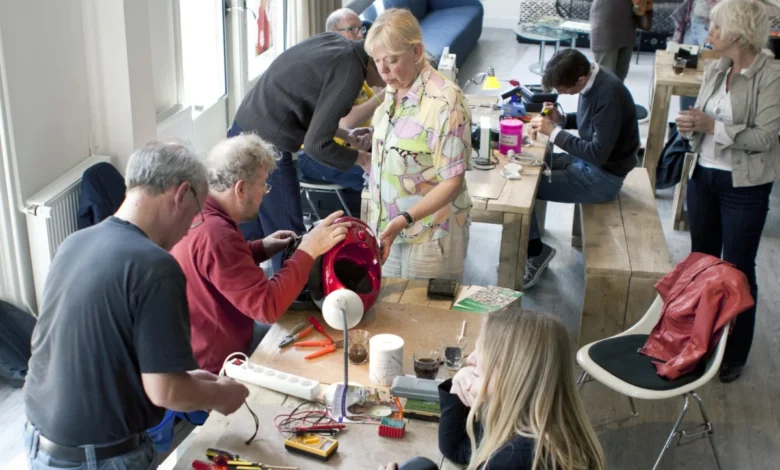
The rapid ascent of generative artificial intelligence and large language models (LLMs) has fundamentally transformed how software engineers interact with code, troubleshoot problems, and acquire technical knowledge. While automated coding assistants and instantaneous query engines have driven efficiency metrics to unprecedented heights across the technology sector, a profound cultural cost has emerged beneath the surface of these productivity gains. The erosion of human-centric technical communities, most notably peer-to-peer knowledge-sharing platforms like Stack Overflow, has sparked a rigorous debate regarding the intangible value of human collaboration. This discourse was underscored recently by a poignant testimonial published by Stack Overflow co-founder Jeff Atwood, featuring an unvarnished account from a former active-duty U.S. Air Force servicemember who detailed how human strangers on the internet literally and figuratively sustained him through a combat zone deployment.
The correspondence, shared with personal identifying details redacted, illuminates a side of software development culture that automated algorithms cannot replicate: empathy, shared vulnerability, and the validation of human worth. As developer ecosystems increasingly hollow out in favor of isolated, machine-driven interactions, industry observers, sociologists, and technologists are forced to re-evaluate what is lost when transactional utility entirely replaces community-driven connection.
Main Facts and the Catalyst of the Debate
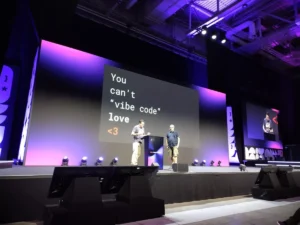
The conversation originated as a critical reader response to Atwood’s essay, "You Can’t Vibe Code Love," which examined the limitations of relying exclusively on AI-generated codebases and the superficiality of modern automated workflows. The responding email came from a software engineer—identified only by the initial "D"—who recalled a harrowing period in his life a decade prior when he was simultaneously serving on active duty in the U.S. Air Force, completing a full-time remote undergraduate degree, and caught in the middle of active urban warfare.
In 2013, D was deployed to Zamboanga City in the Philippines when the Zamboanga Siege erupted—a multi-week military conflict involving armed factions and government forces that displaced over 120,000 civilians and resulted in more than 100 fatalities. Amidst the chaos of exploding ordnance, structural fires, and continuous deployment responsibilities, D faced stringent academic deadlines for his computer science curriculum. Missing assignments or failing examinations carried severe operational and personal risks during an already high-stress deployment.
Operating out of a volatile environment where the smell of smoke drifted through the cracks of his quarters and sleep was a rarity, D relied on a ruggedized Microsoft Surface tablet. He went so far as to swap out a ceramic plate in his military body armor to slide the device into his tactical vest, ensuring he could carry his coursework and remain connected to his education if forced to evacuate on short notice.
When complex programming hurdles and compiler errors inevitably brought his academic projects to a standstill, D sought assistance from his immediate social and professional circles. He approached family members who worked as software engineers and reached out to personal acquaintances in the industry. The uniform response, however, was a mix of dismissal and the traditional, often isolating programming mantra instructing him to "do it himself."
Left with few options, D turned to Stack Overflow. There, random volunteer programmers—individuals with no financial incentive, professional obligation, or personal connection to him—took the time to review his code, offer targeted guidance, and nudge him past his technical roadblocks. For a servicemember enduring psychological trauma and physical isolation in a combat zone, those interactions transcended mere debugging assistance; they served as a lifeline of human empathy.
Chronological Context of the Zamboanga Siege
To fully understand the gravity of the environment in which D sought technical assistance, the historical chronology of the Zamboanga Siege provides essential context. The crisis began on September 9, 2013, when a faction of the Moro National Liberation Front (MNLF), led by Nur Misuari, entered Zamboanga City with the intent of hoisting a declaration of independence and occupying city hall.
The Armed Forces of the Philippines (AFP) and the Philippine National Police responded swiftly, precipitating urban combat that paralyzed the coastal city for nearly three weeks. The chronology of the conflict highlights the relentless pressure faced by military personnel stationed in the area:
- September 9, 2013: MNLF fighters infiltrate coastal villages of Zamboanga City, taking civilian hostages and engaging government security forces in heavy street battles.
- September 10–15, 2013: The conflict escalates into intense urban warfare. Thousands of residents flee their homes, overwhelming evacuation centers as fires consume residential neighborhoods trapped in the crossfire.
- September 16–25, 2013: Military operations push back insurgent positions block by block. U.S. military advisors and logistics personnel, alongside Philippine forces, manage emergency responses, intelligence coordination, and humanitarian relief efforts.
- September 28, 2013: The Philippine government officially declares the end of combat operations after the remaining insurgents are neutralized, captured, or forced to surrender, leaving extensive infrastructural damage and tens of thousands of displaced civilians.
Operating within this theater of operations, D was tasked with vital military duties while simultaneously attempting to maintain his academic standing. The stark contrast between the cold indifference of his immediate professional network and the compassionate responsiveness of anonymous Stack Overflow contributors cemented his view of the platform not merely as a database of technical solutions, but as a genuine human community.
Quantitative Shifts in Developer Ecosystems and Traffic Trends
The emotional resonance of D’s letter arrives at a critical juncture for Stack Overflow and similar peer-driven knowledge repositories. Over the past three years, the proliferation of large language models—such as OpenAI’s GPT models, Anthropic’s Claude, and specialized coding assistants like GitHub Copilot—has fundamentally altered developer behavior.
Industry data reflects a significant downward trend in organic traffic, user engagement, and new question creation across legacy Q&A platforms. While comprehensive longitudinal datasets from independent analytics firms confirm that developer queries have largely migrated toward chat-based LLM interfaces for instant, context-aware code generation, the structural impact on human communities has been severe:
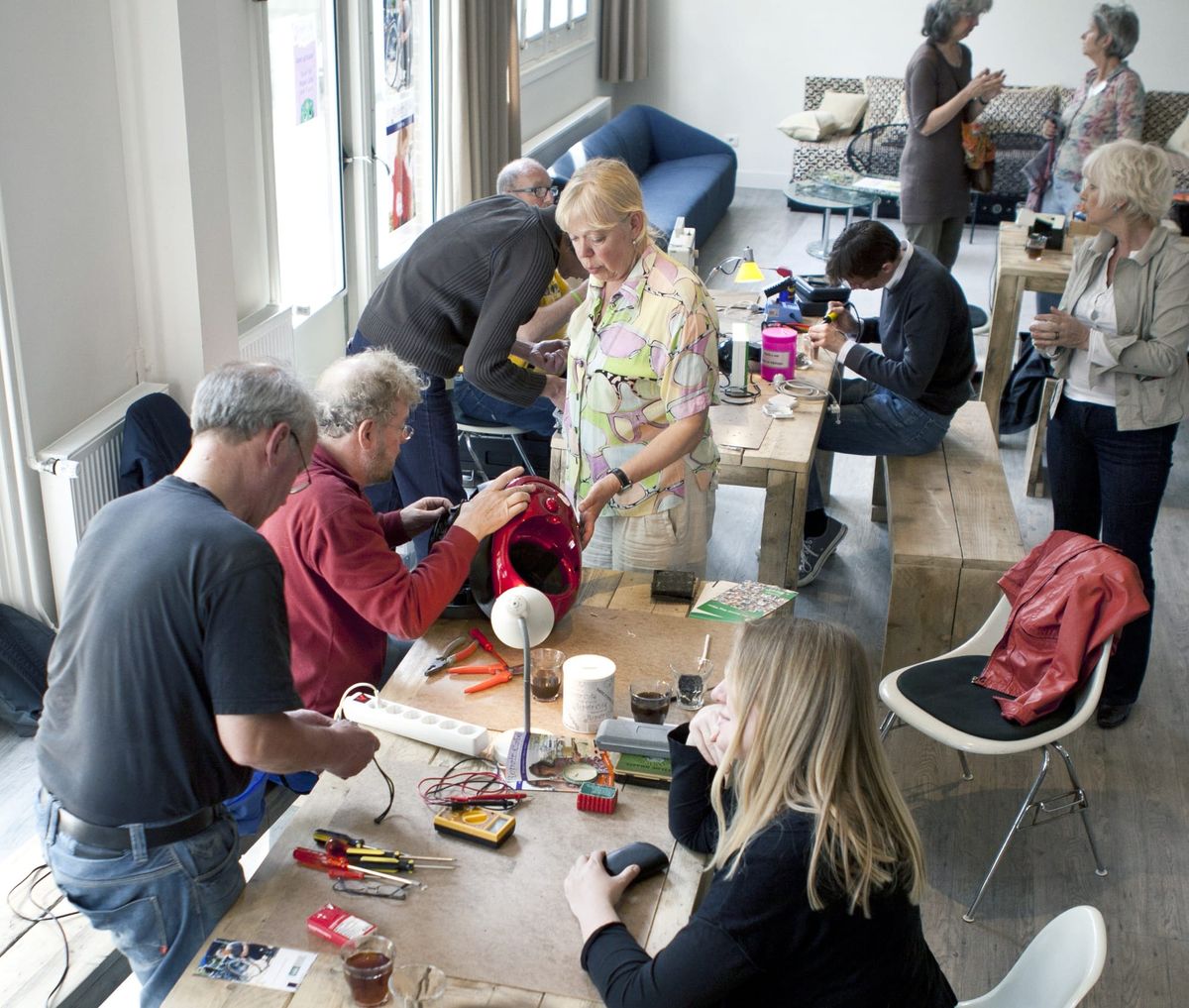
- Traffic and Engagement Decline: Public analytics indicate that platform traffic for Stack Overflow and similar developer forums experienced double-digit percentage drops following the widespread public release of generative AI tools in late 2022.
- Reduction in Novice-Level Queries: Basic syntax, fundamental debugging, and standard library questions—the very interactions that historically built entry-level user engagement—have nearly vanished from public forums as developers rely on instant AI responses.
- Community Attrition: Long-term volunteer contributors, often referred to as "super-users" or moderators, have reported declining satisfaction and increased burnout as the proportion of constructive human-to-human interactions shrinks.
This quantitative shift toward automated self-service has optimized software development velocity, allowing engineers to bypass the traditional friction of searching forums, reading outdated threads, and formatting questions for human review. However, as D’s narrative illustrates, optimization often comes at the expense of social cohesion.
Comparative Analysis: Algorithmic Efficiency Versus Human Empathy
The core philosophical tension highlighted in the correspondence rests on a fundamental distinction: the difference between receiving an accurate technical answer and experiencing human validation.
An LLM can analyze a snippet of broken C++ or Python code, identify a logical error, and output a corrected version in milliseconds. In terms of raw productivity, the algorithm outperforms human volunteers by orders of magnitude. It does not grow fatigued, it does not require precise grammatical framing, and it harbors no personal biases regarding the user’s background or skill level.
Yet, as D articulated in his message to Atwood, the utility of the tool does not equate to emotional sustenance. At a time when he was surrounded by structural destruction, psychological distress, and the looming threat of physical harm, his primary deficit was not merely informational—it was existential. He wrote: "At the time, I needed to know somebody cared enough to help me… You gave me your time. That made me feel like I mattered."
From a psychological perspective, collaborative problem-solving serves as a cornerstone of social bonding. When an individual poses a question to a public forum and receives a thoughtful response from an anonymous stranger halfway across the globe, a psychological contract of mutual assistance is established. Both parties acknowledge each other’s existence, intelligence, and humanity.
Conversely, interacting with an LLM is inherently solipsistic. The user engages with an advanced predictive text engine reflecting their own inquiries back to them in structured formats. While highly efficient for production environments, this isolation removes the accidental serendipity of human mentorship—the unexpected tip from a veteran engineer, the encouragement from a peer facing similar struggles, and the shared identity of belonging to a global guild of creators.
Broader Implications for the Software Industry and Digital Culture
The decline of organic developer communities carries long-term implications that extend far beyond the technology sector. As artificial intelligence reshapes educational paradigms and professional training pipelines, industry analysts are beginning to examine how the next generation of engineers will acquire tacit knowledge—the unwritten, intuitive expertise traditionally passed down through mentorship, peer review, and community participation.
1. The Mentorship Void for Junior Engineers
Historically, platforms like Stack Overflow, GitHub repositories, and independent developer forums acted as training grounds where junior developers learned not only how to write code, but how to communicate technical concepts, accept constructive criticism, and contribute to collaborative problem-solving. If new programmers rely entirely on AI assistants, they risk entering the workforce lacking the collaborative soft skills required for large-scale enterprise software engineering.
2. The Commodification of Knowledge
When knowledge generation is monopolized by proprietary AI models trained on public data, the open-source ethos—wherein knowledge is freely contributed, curated, and maintained by a collective public—faces an existential threat. If platforms like Stack Overflow can no longer sustain active user bases due to traffic migration toward commercial chat interfaces, the foundational corpus of human-verified technical knowledge risks stagnation.
3. The Re-evaluation of Online Spaces
Atwood concluded his commentary with an urgent call to action for modern technologists: the deliberate cultivation of independent, human-centric digital communities that are owned and operated by their participants rather than corporate entities or billionaire-backed conglomerates.
"Perhaps the LLMs are a reminder that we should make an extra effort to cultivate relationships with each other and form communities online," Atwood noted, emphasizing that the act of stopping to help a fellow human being is fundamental to the learning process itself. "And if we do not stop to help each other… what do we become?"
As the technological landscape continues its rapid evolution toward automated autonomy, the testimony of a former Air Force servicemember serving in the crucible of Zamboanga City serves as a powerful reminder. While algorithms can solve complex technical equations, they cannot replicate the simple, profound reassurance of a fellow human being demonstrating that someone, somewhere, cares enough to lend a hand.