The Emergence of Specialized AI Workflows: A Paradigm Shift in Post-Meeting Productivity.

The landscape of artificial intelligence is rapidly evolving, pushing past the initial fascination with monolithic, general-purpose tools towards a more sophisticated understanding of specialized AI applications. What began as a widespread tendency to employ a single AI solution for diverse tasks, akin to using a Swiss Army knife for every conceivable job, is now giving way to a strategic approach where specific AI tools are meticulously chained together to optimize complex workflows. This shift represents a maturation in AI fluency, moving beyond basic prompt engineering to a profound appreciation for each tool’s inherent design philosophy and optimal use case. The goal is no longer simply to automate, but to enhance human cognition and operational efficiency by matching the right AI to the right job, particularly in critical areas like post-meeting information processing.
The Pervasive Challenge of Post-Meeting Information Processing
In the modern corporate environment, meetings are ubiquitous, yet their productivity remains a consistent challenge. Numerous studies underscore the time and resource drain associated with ineffective meetings. A report by the National Bureau of Economic Research, for instance, indicated that executives spend an average of 23 hours per week in meetings, a figure that has steadily climbed over the past decades. Despite this significant time investment, the tangible outcomes and actionable insights from these sessions often dissipate rapidly. The common practice of jotting down quick notes or relying on rudimentary AI-powered meeting summaries frequently falls short. Critical perspectives, emergent problems, strategic confirmations, or newly unveiled opportunities captured during a call often remain undigested, buried within transcript files or digital notebooks, slowly fading into obscurity.
The core problem isn’t merely the capture of meeting content, but its effective processing and integration. True value extraction demands a deeper engagement: understanding the nuanced implications, connecting new information to existing knowledge bases, and aligning it with ongoing projects and strategic objectives. This intellectual heavy lifting traditionally consumes significant human time and cognitive effort, often leading to a backlog of unprocessed insights that could otherwise drive innovation and decision-making.
A New Paradigm: Specialized AI for Enhanced Workflow
The burgeoning sophistication of AI tools now offers a compelling solution to this enduring productivity dilemma. The key lies in recognizing that not all AI is created equal, nor is it designed for identical functions. Instead, the most effective strategies involve leveraging the distinct strengths of different AI models in a sequential, integrated workflow. This approach segments complex tasks into their constituent parts, allocating each part to the AI tool best equipped to handle it.
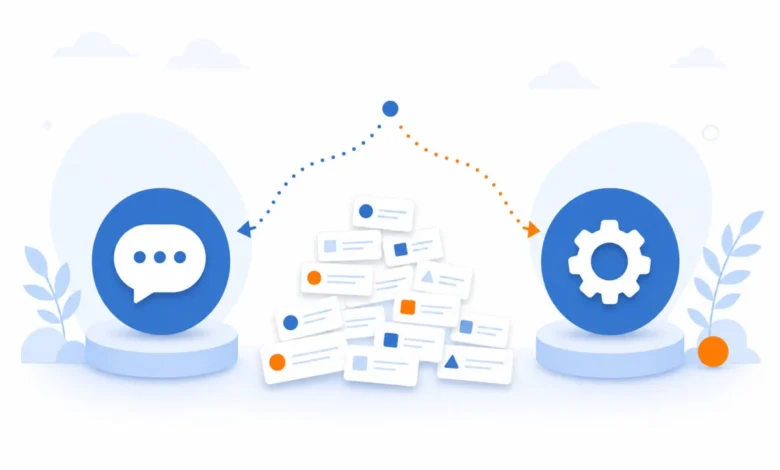
Consider the critical post-meeting phase. This period demands both deep cognitive engagement and precise operational execution. Rather than attempting to force a single AI to perform both, a more effective strategy involves a two-pronged AI attack: one tool for "thinking" and another for "acting."
Phase 1: Deep Thinking and Strategic Clarification with Conversational AI
Immediately following an important meeting, when perspectives have shifted or new directions have emerged, the initial need is for profound analytical engagement. This is where a sophisticated conversational AI, such as ChatGPT, excels as a "thinking partner." Unlike conventional AI notetakers that merely summarize, a conversational AI can be prompted to engage in open-ended exploration and reasoning.
The workflow begins by feeding the complete meeting transcript into the conversational AI. Crucially, this is accompanied by a carefully crafted prompt that sets the context for strategic analysis. For instance, a prompt might read: "Here is a verbatim transcript of a recent strategic discussion. Provide the overarching context of my current business strategy. Help me critically evaluate what this meeting signifies for my strategic trajectory and ongoing initiatives. Feel free to ask probing questions to deepen my understanding."
This type of prompt transforms the AI from a passive summarizer into an active intellectual sparring partner. The conversational AI does not merely distill facts; it connects disparate dots, identifies underlying themes, highlights potential discrepancies, and, most importantly, asks incisive follow-up questions. These questions are designed to challenge assumptions, clarify ambiguities, and compel the user to articulate their genuine thoughts and insights regarding the meeting’s content. This iterative dialogue pushes the user beyond surface-level comprehension, facilitating a robust cognitive process that leads to genuine clarity.
The strength of conversational AI in this phase lies in its capacity for generative reasoning and its ability to simulate an exploratory dialogue. It excels when the task is inherently ambiguous and requires collaborative ideation rather than deterministic output. Through several exchanges, the user can achieve a comprehensive understanding of the meeting’s implications, determining what, if anything, needs to be adjusted in their plans or strategies.
Once this clarity is achieved, the user can then instruct the conversational AI to synthesize these insights into a structured format. A subsequent prompt might be: "Based on our discussion, generate a concise, actionable memo detailing the key insights from the meeting and outlining specific updates required for my master strategy document. Format this memo for integration with an automation tool." The AI then produces a structured, specific, and actionable memo, ready for the next phase.
Phase 2: Precision Execution and Integration with Automation AI
With the strategic thinking and memo generation complete, the workflow transitions to the execution phase, leveraging a specialized automation AI like Lindy. This category of AI is fundamentally different from conversational models. Its design philosophy is centered on deterministic execution and seamless integration with external tools and platforms. Automation AIs are not built for exploratory dialogue; their strength lies in reliably carrying out specific instructions across a connected ecosystem of applications such as Google Docs, email clients, calendars, and Customer Relationship Management (CRM) systems.
The memo generated by the conversational AI is then fed into the automation AI. Lindy, in this example, receives clear, specific instructions. Its role is not to interpret or question, but to act. It can access the designated master strategy document stored in Google Drive, identify the specified sections, and accurately incorporate the updates outlined in the memo. This direct, programmatic execution ensures that insights are not just understood, but are actively integrated into the organizational knowledge base and operational plans.
This two-stage process elegantly separates the "thinking" from the "acting." The conversational AI facilitates the nuanced, often messy, process of ideation and clarification, while the automation AI handles the precise, reliable implementation of the resulting decisions.
The Rationale for Dual-Tool Synergy: Beyond the Monolithic Approach
The immediate question often arises: "Why use two tools when a single, powerful AI like ChatGPT, with its plugins, could theoretically perform both functions?" The answer lies in the fundamental design and optimization of these distinct AI categories.
ChatGPT and its peers are engineered for conversation and exploratory interaction. Their core strength is their ability to generate helpful, contextually relevant responses in a dynamic dialogue. When pressed to perform highly deterministic actions through plugins, their performance can sometimes be inconsistent. This is because their underlying architecture prioritizes conversational fluidity and helpfulness over rigid, error-proof execution across diverse external systems. The experience of using a conversational AI for direct integration can often involve more supervision, troubleshooting, and less reliability than desired for critical operational tasks.
Conversely, automation AIs like Lindy are purpose-built for execution. Their design emphasizes robust integrations, precise instruction following, and a high degree of reliability in carrying out predefined workflows. They lack the conversational depth for open-ended exploration but excel at performing specific tasks with minimal human intervention once configured. Attempting to use an automation AI as a thinking partner would be futile; it is not designed to engage in abstract reasoning or ask clarifying questions.
Therefore, these tools are not competitors but complements. Their synergistic deployment leverages their individual strengths, resulting in a workflow that is both intellectually robust and operationally efficient. This separation of concerns mirrors established principles in software engineering, where specialized modules are often more effective than monolithic applications for complex tasks.
Broader Implications for AI Fluency and Workplace Evolution
This specialized AI workflow represents a significant leap in "AI fluency." It moves beyond the rudimentary understanding of what prompts work best to a deeper appreciation of the distinct capabilities and optimal contexts for various AI tools. True AI fluency involves discerning which tool is best suited for each phase of work—be it thinking, deciding, acting, or communicating—and orchestrating them into a cohesive system.
Impact on Individual Productivity: For individuals, this approach transforms post-meeting processing from a daunting chore into a streamlined, intellectually stimulating exercise. It ensures that valuable insights are not lost but actively integrated, fostering continuous learning and strategic agility. This can significantly reduce cognitive load, allowing professionals to focus on higher-level tasks.
Impact on Organizational Efficiency: At an organizational level, the widespread adoption of such workflows can lead to substantial gains in efficiency and knowledge management. By ensuring that insights from critical discussions are consistently captured, processed, and integrated into strategic documents, companies can make more informed decisions, react more swiftly to market changes, and maintain a more accurate, up-to-date repository of organizational knowledge. This reduces the risk of strategic drift and improves overall operational responsiveness.
The Future of Work and Skill Development: This paradigm shift also has profound implications for the future of work. The demand for "AI architects" or "workflow designers" who can intelligently chain AI tools will likely increase. Future skill sets will emphasize not just using AI, but designing intelligent systems that augment human capabilities. This includes understanding the strengths and limitations of various AI models, ethical considerations in data handling (especially with meeting transcripts), and the ability to integrate diverse technologies seamlessly.
Addressing Potential Concerns and Future Outlook
While the benefits are clear, adopting such advanced AI workflows also presents considerations. Data privacy and security are paramount, especially when handling sensitive meeting transcripts. Organizations must ensure that the AI tools and platforms chosen comply with stringent data protection regulations and internal policies. The initial setup and integration of these tools may also involve a learning curve and require technical expertise, underscoring the need for robust training and support.
Looking ahead, the trend towards specialized and interconnected AI tools is likely to accelerate. We can anticipate more sophisticated integration platforms that simplify the chaining of different AI services. The development of more intelligent "meta-AIs" that can dynamically select and orchestrate other specialized AIs based on task requirements is also a plausible future direction. This evolution promises to unlock unprecedented levels of productivity and cognitive augmentation, fundamentally reshaping how individuals and organizations manage information and make decisions.
Implementing the Specialized AI Workflow
For individuals or teams looking to explore this advanced approach, a phased implementation is recommended:
- Start Simple: Identify a recurring, information-rich interaction, such as a weekly team meeting or client call, that consistently generates valuable but unprocessed insights.
- Select Your Thinking Partner: Choose a robust conversational AI (e.g., ChatGPT, Claude) that excels in open-ended dialogue and reasoning. Experiment with prompts that encourage deep thinking, questioning, and strategic analysis.
- Identify Your Executor: Select an automation AI (e.g., Lindy, Zapier, Make.com) that offers reliable integrations with your existing document management systems (e.g., Google Drive, SharePoint).
- Design the Hand-off: Practice generating a structured memo from the conversational AI that contains clear, actionable instructions for the automation AI. Ensure the format is consistent and easily parsable by the execution tool.
- Iterate and Refine: Begin with a small-scale trial, monitor the effectiveness of the workflow, and refine prompts and integration points based on experience. The goal is not to automate every conceivable task from day one, but to establish a reliable system for retaining and acting upon critical insights.
Ultimately, the objective is to prevent the rapid decay of knowledge gleaned from important conversations. Most insights gained in a meeting are fleeting, often forgotten within 24 to 48 hours. By strategically employing specialized AI tools as thinking partners and diligent executors, individuals and organizations can build robust systems that ensure these vital insights are captured, processed, integrated, and leveraged, transforming ephemeral discussions into enduring strategic assets.