The Evolution of AI Agency and Workforce Readiness Through the Arizona State University and will.i.am Agentic Self Program

In an era defined by the rapid acceleration of artificial intelligence, Arizona State University (ASU) and creative innovator will.i.am have launched a pioneering educational initiative titled "The Agentic Self." Established in 2025, the course represents a significant shift in pedagogical approaches to technology, moving beyond the functional use of large language models (LLMs) toward the creation of personalized AI personas. This collaboration, centered at the FYI campus in Hollywood, aims to empower individuals to build digital agents that reflect their unique beliefs, interests, and professional goals, thereby bridging the gap between technological access and true workforce readiness.
The Architectural and Conceptual Foundation of the Agentic Self
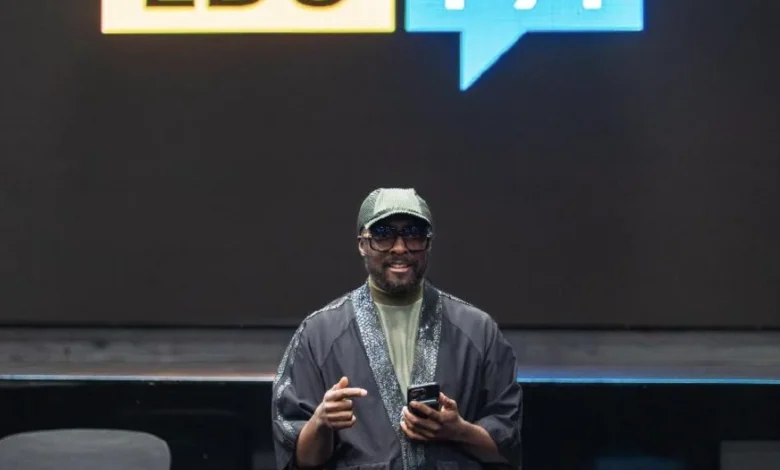
The program is hosted at the FYI (Focus Your Imagination) campus, a facility envisioned by will.i.am—the frontman of the Black Eyed Peas and a long-time tech entrepreneur—as a modern "innovation factory." The physical space is designed to foster a specific type of collaborative environment. Modeled after the United Nations, the primary learning room utilizes a U-shaped format where each participant is equipped with dedicated microphones and interface tools. This layout is intentional, facilitating seamless integration between physical attendees and virtual guests, emphasizing the global and interconnected nature of the AI landscape.
The core philosophy of the course, as articulated by will.i.am, centers on the "Agentic Self." This concept involves an individual claiming their personal data and deploying it through an AI agent that acts as a digital extension of their persona. Unlike standard AI tools that provide generic responses, these agents are designed to reflect the user’s specific passions, ethical concerns, and professional expertise. The initiative posits that in a world increasingly managed by algorithms, maintaining a human-led approach requires individuals to take active command of their digital counterparts.
Chronology of Development: From Concept to Enterprise Deployment
The development of the Agentic Self curriculum follows a timeline of rapid iteration that began in early 2024, coinciding with the broader corporate shift from generative AI to agentic AI. The program’s first cohort in late 2025 served as a testing ground for how these tools could be applied to complex professional challenges.
A primary case study emerging from the inaugural class involves the evolution of a "conversational skill builder." This project illustrates the trajectory of AI application over a two-year period:
- Initial Exploration (2024): The concept began as a basic interaction within ChatGPT. The goal was to determine if AI could effectively simulate "hard conversations" for professional training, providing a safe space for users to practice interpersonal skills.
- Enterprise Scaling (Early 2025): The project moved to Microsoft’s Copilot Studio. During this phase, the focus shifted to how such a tool could be deployed within a large-scale organization—specifically Providence St. Joseph Health. This transition highlighted the friction between innovative ideas and the constraints of organizational governance, security, and strategic alignment.
- Multimodal Enhancement (Mid-2025): Using the Acolyte platform, developers integrated avatars and multimodal experiences. This added a layer of realism to the learning process, allowing for visual and auditory feedback that improved the efficacy of the skill builder.
- Full Agentic Integration (Late 2025 – 2026): Finally, the project was integrated into the FYI platform. This stage transformed the tool from a simple "skill builder" into a system for "AI-guided mastery." By utilizing personally configured personas, users could engage in deeper, action-based learning that moved beyond static prompts into dynamic, scaffolded support.
Addressing the Workforce Readiness Gap
The partnership between ASU and will.i.am addresses a critical disconnect in the current labor market. While many organizations have successfully licensed AI tools and established basic governance, a "readiness gap" persists. Data suggests that while early adopters are moving quickly, a significant portion of the workforce remains hesitant, unsure of how to integrate AI into their specific roles without compromising professional integrity or quality.
Brad Bigelow, founder of Acolyte AI and a collaborator on the program, notes that the primary obstacle to AI adoption is rarely technical. Instead, it is often cultural or architectural. According to Bigelow, organizations frequently overinvest in AI access while underinvesting in the structures that help employees use the technology with confidence. The Agentic Self program argues that readiness is a human problem, not a technology problem. To close this gap, organizations must foster environments that prioritize "courageous curiosity" and psychological safety, allowing employees to explore AI through the lens of their own professional identity.
Strategic Implications for Leadership and Innovation
For executive leadership, the lessons derived from the FYI campus suggest that the "best fit" for technology is more important than the "latest" technology. When an AI tool aligns with the specific environment and culture of a company, adoption rates increase, and internal performance strengthens. Conversely, even the most advanced AI can fail if it is forced into a rigid or misaligned organizational structure.

The program emphasizes that exploration should not be viewed as a "side quest" but as a core component of the build process. In a fast-shifting market, curiosity is rebranded as a vital professional capability. Leaders are encouraged to design learning cultures that develop the "agentic self" of their employees, moving away from a model of compliance-based training toward one of empowered exploration.
Case Study: Providence St. Joseph Health
The practical application of these theories is currently being realized at Providence St. Joseph Health, one of the largest healthcare systems in the United States. After navigating a rigorous governance process, the organization is deploying an AI-driven learning innovation at scale. This deployment serves as a real-world benchmark for how high-stakes industries—where ethics and precision are paramount—can adopt agentic AI.
The healthcare model focuses on personalized, guided reflection for staff, allowing practitioners to prepare for difficult clinical and administrative interactions. By moving the project from a conceptual spark to an enterprise reality, Providence demonstrates that human-first AI work is achievable even within highly regulated and complex environments.
The Ethical Framework of Human-Led AI
A central tenet of the ASU and will.i.am collaboration is the maintenance of a strong moral and ethical compass. As AI agents become more autonomous, the risk of replacing human agency rather than expanding it becomes a primary concern for educators and ethicists. The FYI platform is positioned as a "tribe" and a community for those who believe AI should be a tool for human empowerment.
The course teaches that the "company you keep" and the "rooms you enter" significantly impact the trajectory of technological development. By surrounding learners with a community that prioritizes human-led innovation, the program seeks to ensure that the future of AI is collaborative rather than extractive.
Analysis of Broader Impact
The long-term impact of the Agentic Self program is expected to resonate across several sectors:
- Higher Education: ASU’s model suggests a move toward more vocational, tech-integrated curriculum that pairs celebrities and industry leaders with academic researchers. This hybrid model could become the standard for future-proofing degrees.
- Corporate Training: The shift from "static PDFs" and "traditional videos" to "adaptive, scaffolded support" marks the end of one-size-fits-all corporate e-learning. Personalized AI mentors will likely become the primary mode of professional development.
- The Gig Economy and Individual Agency: As individuals develop their own AI personas, the ability to port these agents from one job to another could redefine the relationship between employees and employers, placing more power in the hands of the individual creator.
Conclusion: The Path Forward for Learning Organizations
The Agentic Self course at Arizona State University stands as a testament to the idea that innovation is a product of the environment in which it is nurtured. The journey of the conversational skill builder—moving through various platforms to eventually reach a state of AI-guided mastery—highlights the necessity of continuous exploration.
For organizations looking to lead in the age of artificial intelligence, the invitation is to create spaces similar to the FYI campus: rooms where curiosity is encouraged, and where technology is used to amplify the human spirit. As the world moves toward an agentic future, the distinction between those who are merely equipped with AI and those who are truly ready to lead with it will define the next generation of industry leaders. The work being done by will.i.am and ASU suggests that the most valuable asset in an AI-driven world is not the data itself, but the human agency that directs it.