The modern corporate landscape is undergoing a significant shift in how leadership defines and implements accountability. For decades, the term has been synonymous with top-down performance management—a reactive process triggered only when expectations are unmet. However, recent organizational management research suggests that this traditional approach is fundamentally flawed. Experts argue that true accountability is not a disciplinary conversation to be dreaded, but a proactive, collaborative agreement established before any work begins.
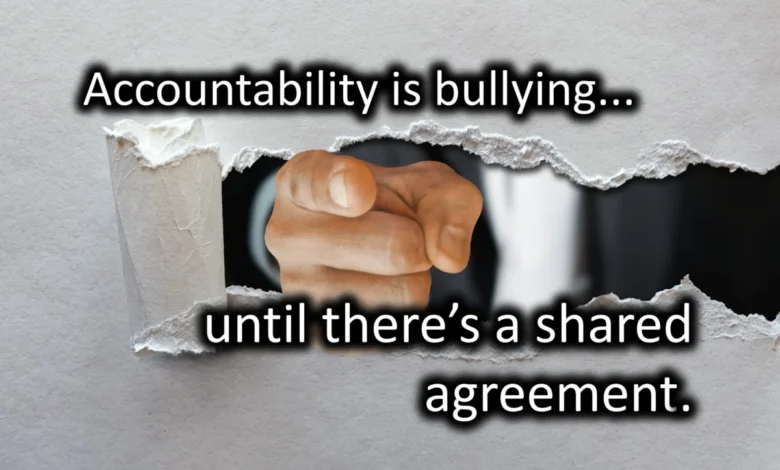
This transition from punitive oversight to shared responsibility is central to the arguments presented in the forthcoming book, Tough Enough: How to Lead a Team to Greatness Without Being a Jerk, by executive coaches John Baird and Matt Hunter. The core thesis of this emerging management philosophy is that when leaders attempt to hold employees accountable without a pre-existing, mutually agreed-upon framework, they are not practicing management; they are practicing bullying.
The Anatomy of a Failed Agreement
Data from the American Management Association suggests that roughly 60% of performance issues stem from a lack of role clarity rather than a lack of individual competence. When a manager tasks an employee with "doing their best," they have failed to establish a baseline for success. In professional environments, "doing your best" is an expression of encouragement, not a measurable standard.
Without a defined "finish line," employees are left to interpret their responsibilities subjectively. This disconnect frequently leads to the "backwards accountability" cycle, where management intervenes only after a project has faltered or a deadline has been missed. This reactive stance creates a culture of fear, where the anticipation of a negative review inhibits innovation and risk-taking.

Establishing the Framework: A Chronology of Success
To move away from punitive measures, organizational psychologists propose a four-step framework that must be initiated during the onboarding or project-planning phase. This sequence shifts the burden of proof from the employee’s character to the clarity of the initial agreement.
- Negotiation of Outcomes: The process begins with defining the deliverable. This involves a rigorous dialogue regarding three pillars: the specific output required, the quality standard expected, and the firm timeline for completion. By negotiating these variables rather than imposing them, leaders foster a sense of ownership.
- Designation of Ownership: A common failure point in team-based projects is the "diffusion of responsibility." While a team may execute the work, a project without a designated champion often collapses under the weight of ambiguity. Leaders must explicitly assign an individual who is responsible for monitoring progress and escalating issues if the project begins to deviate from the established path.
- Proactive Monitoring: Rather than waiting for a post-mortem review, teams must schedule "check-in" milestones. These are not intended to be micromanagement sessions but rather opportunities to adjust resources or timelines while the project is still in flux.
- Adaptive Contracting: If a milestone is missed, the focus must shift from blame to remediation. The leader must facilitate a fact-based inquiry: Was the failure due to a lack of effort, a skill gap, a conflict in priorities, or a deficiency in resources? Once the root cause is identified, the original agreement is revised to reflect the new reality.
Supporting Data and Organizational Impact
The implications of this shift are quantifiable. According to a study published by the Harvard Business Review, teams that operate under "shared agreement" frameworks report a 25% increase in project completion rates and a 40% reduction in workplace stress.
In organizations where accountability is viewed as a supportive mechanism, employee engagement scores—a key metric for long-term productivity—consistently trend higher. Conversely, companies that rely on "gotcha" management styles suffer from higher turnover rates. The financial cost of this turnover is significant; the Society for Human Resource Management (SHRM) estimates that replacing a single employee can cost between 50% and 200% of their annual salary.
Perspectives from the Field
In their recent analysis, John Baird and Matt Hunter emphasize that the primary barrier to effective accountability is the leader’s own lack of discipline in setting terms. "Coercion is not accountability," they note. "True follow-through is the result of a commitment made with full understanding of the stakes and the support systems in place."
Industry analysts observe that this approach requires a fundamental shift in the leader’s ego. Many managers use the threat of accountability to maintain power dynamics. However, those who embrace the "shared agreement" model often find that they spend significantly less time on conflict resolution and more time on high-level strategic planning.

Broader Implications for Corporate Culture
The shift toward proactive accountability is also influencing how remote and hybrid teams function. In an environment where direct supervision is less feasible, the reliance on clearly defined agreements becomes even more critical. When employees understand exactly what is expected of them and know that they have the support of their leadership, the need for constant surveillance evaporates.
This philosophy also addresses the "soft skills" gap that many organizations are currently trying to close. By teaching leaders how to negotiate, track progress, and pivot effectively, companies are building a more resilient workforce. The ability to hold oneself and others accountable without resorting to bullying is increasingly cited as a top-tier competency for mid-to-senior level management.
Final Analysis: The Credibility Gap
Ultimately, the credibility of any accountability system rests on the leader’s consistency. If a manager demands adherence to a timeline but fails to provide the necessary resources, the agreement is voided. The most successful organizations are those where leadership holds themselves to the same standard of transparency and follow-through as they do their subordinates.
As the professional landscape continues to evolve, the distinction between "bullying" and "accountability" will become a defining feature of employer branding. Companies that prioritize clear, mutually beneficial agreements will likely attract higher-quality talent and foster more innovative, high-output environments. The era of the "dreaded" accountability conversation is coming to a close, replaced by a model of collaborative, objective-driven success.
By rejecting the backwards approach—where accountability is merely a post-failure assessment—leaders can prevent crises before they manifest. The practice of building accountability before it is needed is not just a management tactic; it is an organizational imperative for long-term survival in an increasingly complex and interconnected global economy.