The Medium-Voltage Paradigm: How AI Data Centers Are Forcing a Complete Redesign of Grid Architecture

The rapid expansion of artificial intelligence infrastructure is pushing electrical grids to their absolute limits, exposing fundamental vulnerabilities not merely in power generation, but in the structural engineering of data centers themselves. While public and private discourse heavily prioritizes securing additional generation sources—such as wind, solar, and natural gas turbines—recent large-scale grid disturbances in critical tech hubs have demonstrated that the core crisis is architectural. As gigawatt-scale AI campuses come online, legacy power protection models are failing, forcing utility operators, regulators, and data center developers to rethink how electricity is delivered, conditioned, and managed from the substation to the server rack.
Recent events in Northern Virginia, widely recognized as the data center capital of the world, highlight the severe risks associated with outdated facility design. On July 22, 2026, a transmission line fault in Ashburn triggered an instantaneous load drop exceeding 3 gigawatts across the PJM Interconnection grid. This sudden shedding of power sent shockwaves through regional infrastructure. This incident followed a strikingly similar event two years prior, when a single failed surge arrester caused approximately 60 Virginia facilities to drop 1,500 megawatts simultaneously. In both instances, the root cause was not a lack of available electrons from power plants, but rather an automated protection response. Hundreds of facilities reacted uniformly to upstream voltage fluctuations, abruptly disconnecting from the grid because their internal safety logic interpreted standard grid disturbances as catastrophic failures.
To understand why modern AI infrastructure behaves so differently from traditional industrial loads, industry analysts point to the fundamental shift in electrical consumption patterns. Historically, heavy industrial loads—such as steel mills, chemical refineries, and large-scale manufacturing plants—drew power smoothly and predictably. Even when experiencing operational anomalies, traditional industrial facilities rarely exhibited the erratic, lightning-fast volatility characteristic of modern high-density computing clusters.
AI data centers, by contrast, operate on an entirely different physical and operational scale. During intensive model training runs, a single AI campus can swing up to 70 percent of its total electrical load within milliseconds. Conversely, at the first sign of an upstream anomaly, these same facilities can trip offline almost instantaneously to safeguard billions of dollars in specialized hardware, such as graphics processing units (GPUs) and specialized tensor processing units. While this protective shutdown is a rational economic decision for individual operators, the simultaneous offline transition of multiple gigawatt-scale campuses creates an unprecedented shock to regional transmission organizations (RTOs). Grid operators are left scrambling to manage massive, sudden imbalances between supply and demand, threatening widespread blackouts and systemic instability.
This operational volatility collides directly with a data center power architecture that has remained fundamentally unchanged for decades. In a standard legacy design, medium-voltage power enters the facility, large transformers step it down to lower voltages, and low-voltage uninterruptible power supply (UPS) systems condition the electricity before it finally reaches the server racks. However, when subjected to the extreme demands of AI-scale computing, this traditional power stack breaks down in three distinct ways.
First, the physical placement and capacity of traditional UPS batteries are fundamentally misaligned with AI workloads. Designed primarily as an emergency stopgap to keep systems alive for a few minutes during a total outage, these batteries are incapable of continuously absorbing rapid, multi-megawatt load swings occurring around the clock.
Second, legacy converters are notoriously inefficient, leading operators to run systems in "eco-mode" to minimize energy waste. In eco-mode, a static bypass switch feeds the server racks directly from the utility grid, bypassing internal filtration. Consequently, the massive, raw load swings generated by the compute hardware flow unchecked back into the grid, while sub-millisecond grid transients—fleeting electrical anomalies capable of damaging sensitive hardware—strike the facility faster than mechanical switches can react.
Third, legacy protection schemes were engineered during an era when a "large load" rarely exceeded 50 megawatts. Modern protection logic is largely blind to the broader health of the high-voltage grid it now influences. When a minor voltage dip occurs upstream, these systems often rely on rigid algorithms that mandate total disconnection after a predetermined number of anomalies. In major grid events, such as the 2024 and 2026 Virginia incidents, a significant portion of lost load directly traced back to protection systems executing precisely as programmed—disconnecting at the worst possible microsecond.
To resolve these systemic challenges, power systems engineers and infrastructure developers are proposing a comprehensive modernization strategy centered on three core architectural shifts: moving power protection up in voltage, moving it outside the physical data hall, and embedding it directly into the primary power path.
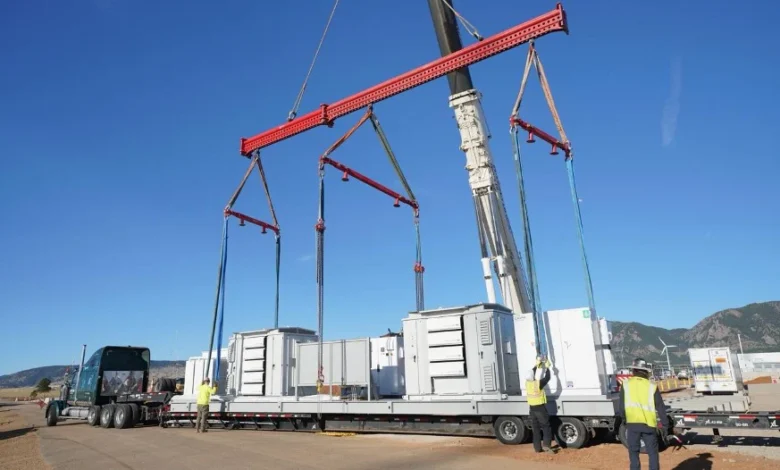
The first strategy involves elevating protection systems from low voltages—typically 480 volts—up to medium voltage, generally 13.8 kilovolts and higher, which is the voltage tier at which large facilities initially draw power from utility transmission lines. The second strategy relocates bulky power conditioning and backup hardware entirely out of the main data center building and into modular enclosures positioned near the utility substation. This isolates the computing infrastructure and its complex cooling systems from the heavy electrical infrastructure. The third and most critical shift places the medium-voltage system directly inline with the power path. Rather than relying on standby batteries that merely watch and react to disturbances, every incoming electron runs continuously through a robust, medium-voltage conditioning layer. By eliminating bypass modes and reactive switching delays, the system absorbs electrical volatility at the source before it ever impacts server hardware or destabilizes the grid.
Implementing this new architectural model fundamentally transforms the operational economics and permitting timelines for data center operators. When thousands of high-performance GPUs ramp up simultaneously, an inline medium-voltage system instantly absorbs the load swing, presenting the local utility with a completely flat, predictable load profile. Conversely, when external grid disturbances occur, the downstream computing infrastructure remains entirely unaffected.
For utility providers and grid regulators, this transformation radically simplifies the interconnection process. Instead of conducting exhaustive reviews of every individual transformer, UPS unit, chiller, pump, and switchgear assembly located inside a sprawling facility, utilities can certify a single, standardized medium-voltage boundary box. This standardization allows operators to upgrade internal chip architectures and server generations without triggering mandatory, time-consuming re-study processes, shaving months or even years off facility permitting timelines.
Furthermore, within the data center itself, the removal of massive indoor UPS rooms frees up valuable square footage that can be reallocated for additional compute capacity or high-density liquid cooling infrastructure. This optimization significantly increases revenue-generating density per construction dollar. Financially, medium-voltage systems deployed outdoors and equipped with integrated energy storage often qualify for federal and state clean energy tax credits. Additionally, these systems can actively participate in lucrative grid services programs, such as peak shaving and demand response. Backup power transitions from a passive, sunk-cost insurance policy into an active revenue-generating asset.
Rigorous empirical testing has begun to validate the efficacy of these advanced architectures. In early 2026, engineers conducted full-scale operational tests at the National Laboratory of the Rockies, a premier U.S. Department of Energy research facility. As the only institution in the Western Hemisphere capable of simultaneously replicating real-world grid faults and AI-scale load swings within a unified testing loop, the laboratory subjected a full-scale medium-voltage inline system to extreme stress from both directions.
During the evaluations, authentic AI training load profiles were slammed into the compute side at full medium voltage, while severe utility-side grid disturbances—including complete zero-voltage events—were simultaneously introduced. The results demonstrated that the compute infrastructure experienced zero operational disruption, while the utility interface seamlessly cleared the stringent large-load voltage ride-through requirements mandated by grid operators such as the Electric Reliability Council of Texas (ERCOT).
As regional transmission organizations implement stricter compliance standards to protect grid stability against the massive influx of digital infrastructure, traditional data center operators increasingly view these regulations as burdensome hurdles. However, an inline, medium-voltage architectural approach satisfies regulatory compliance inherently out of the box, transforming regulatory adherence from an added engineering challenge into a natural byproduct of the core design.
Ultimately, industry experts suggest that much of what appears to be a generation crisis in the broader AI buildout is, at its core, a localized infrastructure and architectural failure rooted in legacy equipment. By elevating power protection to medium voltage, relocating conditioning hardware outside the primary building envelope, and integrating systems directly into the power path, the data center industry can convert a major grid liability into a vital grid asset. As developers map out the next generation of hyperscale AI factories, adopting advanced medium-voltage topologies ensures that the explosive growth of artificial intelligence acts as a stabilizing force for the electrical grid rather than a persistent threat to its survival.